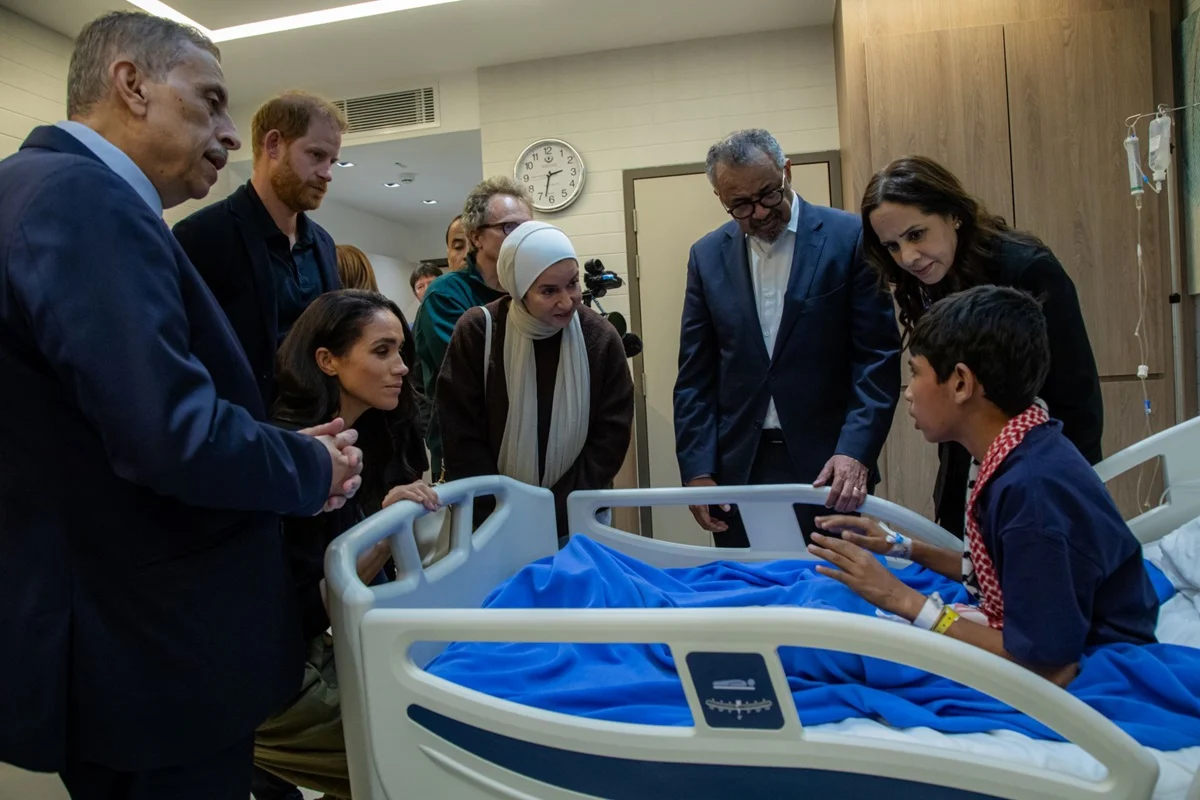
The Director-General of the World Health Organization (WHO), Dr Tedros Adhanom Ghebreyesus, concluded the intensive first day of his high-profile two-day State visit to the Hashemite Kingdom of Jordan today, focusing heavily on universal health coverage (UHC), mental health integration, and vital humanitarian health actions across the region. Accompanied by high-level international figures and key global health advocates, Dr Tedros used the visit to spotlight Jordan’s exemplary role as a regional humanitarian anchor, providing shelter and specialized medical care to millions of displaced individuals fleeing conflict from neighboring nations, particularly Syria and Gaza.
The visit comes at a critical juncture for Middle Eastern geopolitics and healthcare infrastructure. With health systems across the region buckling under the weight of protracted conflicts, population displacements, and economic strains, the diplomatic mission underscores the WHO’s ongoing efforts to forge resilient public health frameworks. Jordan has increasingly positioned itself not only as a sanctuary for refugees but as a strategic logistical and medical hub capable of administering advanced clinical care under extraordinary geopolitical pressures.
High-Level Engagements: Meeting with His Majesty King Abdullah II
A central pillar of the first day’s itinerary was a private audience and strategic consultation with His Majesty King Abdullah II. The discussions between the WHO Director-General and the Jordanian monarch centered on the imperative of reinforcing health systems, expanding equitable access to clinical care, and securing sustained international financial and logistical support for emergency medical responses throughout the region.
Particular emphasis was placed on Jordan’s ongoing humanitarian obligations toward the Palestinian people, specifically concerning patients medically evacuated from the Gaza Strip for specialized treatment, alongside the millions of refugees currently hosted within the Kingdom’s borders.
Dr Tedros expressed profound gratitude to the Jordanian monarch, praising the nation’s enduring humanitarian ethos. “I wish to express my appreciation to His Majesty King Abdullah II for his commitment to advancing universal health coverage,” Dr Tedros stated during the proceedings. “I also extend my thanks to His Majesty and the people of Jordan for their solidarity and generosity in providing health services to more than three million refugees, primarily from Gaza and Syria, who are living in the country.”
Furthermore, Dr Tedros specifically lauded Jordan’s innovative humanitarian architecture, highlighting His Majesty’s Medical Corridor initiative. This critical operational framework facilitates the swift and secure transfer of critically ill and injured children from the besieged Gaza Strip to advanced medical facilities in Jordan, ensuring they receive life-saving interventions that would otherwise be entirely inaccessible. Through these measures, Jordan continues to demonstrate to the international community a steadfast commitment to prioritizing human life and dignity amidst regional volatility.
Field Inspections: Witnessing Frontline Care for Evacuated Children
Moving beyond diplomatic chambers, Dr Tedros transitioned from high-level political talks to direct field engagements, visiting a specialized, WHO-supported hospital in Amman dedicated to treating pediatric patients evacuated directly from Gaza.
During the hospital tour, the WHO Director-General interacted closely with young patients, their families, and the frontline medical personnel working under immense pressure. These healthcare workers provide comprehensive, life-saving treatments ranging from acute trauma and surgical interventions to complex oncology care for children suffering from cancer and other critical conditions.
The visit served to underscore the irreplaceable value of the medical evacuation corridor operating through Jordan. Public health officials note that as medical facilities within conflict zones continue to collapse, maintaining open, secure transit routes for severely ill patients is an absolute humanitarian necessity. Dr Tedros emphasized that the international community must step up financial and logistical backing to ensure these corridors remain viable, preventing further preventable loss of life among vulnerable pediatric populations.
Strategic Financing and Donor Coordination
In addition to clinical visits, Dr Tedros convened a high-level strategic roundtable meeting in Amman, gathering key health partners, international donor nations, United Nations agencies, and prominent philanthropic organizations.
The agenda for the multilateral session focused squarely on securing predictable, long-term financing priorities aimed at fortifying Jordan’s domestic health infrastructure. Discussions also addressed the financial sustainability of ongoing humanitarian health operations, specifically the scaling up of psychosocial and mental health services designed to meet the acute psychological trauma experienced by refugee populations and host communities alike.
Public health economists note that countries hosting large-scale refugee populations absorb massive structural costs, straining public health budgets originally scaled for domestic populations alone. Dr Tedros welcomed the robust collaboration demonstrated by international partners, urging continuous and expanded investments in Jordan’s health sector as a strategic investment in broader regional stability and security.
Bilateral Talks with Jordan’s Minister of Health
In parallel with multilateral discussions, Dr Tedros held focused bilateral talks with the Jordanian Minister of Health. The dialogue concentrated on legislative and structural reforms required to fully realize universal health coverage across the Kingdom.
Jordan has emerged as a global frontrunner in successfully integrating primary healthcare approaches to achieve UHC. Notably, the Jordanian health ministry has integrated mental health services directly into routine primary care facilities, ensuring that psychological support is treated with the same urgency and accessibility as physical medicine. This milestone reform has been substantially supported by the WHO Director-General’s Special Initiative for Mental Health, establishing a replicable blueprint for middle-income nations dealing with high-stress demographic pressures.
Archewell Philanthropies and Global Mental Health Advocacy
Adding significant global visibility to the visit, Dr Tedros was accompanied during several key engagements by Prince Harry, the Duke of Sussex, and Meghan, the Duchess of Sussex, in their formal capacities as founders of Archewell Philanthropies and long-standing strategic partners of the World Health Organization.
Archewell Philanthropies has a documented history of supporting major WHO public health initiatives, ranging from global advocacy for equitable access to COVID-19 vaccines during the pandemic to targeted funding for emergency medical evacuations and comprehensive mental health programs.
During the joint engagements, Prince Harry participated actively as a leading global advocate for the WHO’s mental health agenda. He emphasized the critical importance of embedding mental health support within community frameworks and emergency response settings, drawing specific attention to the often-overlooked psychological needs of men, adolescents, and children living through protracted crises.
Addressing the media alongside the WHO leadership, Dr Tedros commended the royal couple for their dedication. “I want to thank our partners, including Prince Harry, Duke of Sussex and Meghan, Duchess of Sussex, whose commitment to mental health and humanitarian action has helped bring visibility, resources and hope to some of the world’s most vulnerable communities. Their collaboration is helping to advance WHO’s mission to ensure health for all.”
Echoing these sentiments, Prince Harry detailed the motivations behind their ongoing partnership with the UN health agency. “It is an honour to join the Director-General of the World Health Organization in Jordan, a country that is leading by example in compassion, resilience and innovation,” Prince Harry remarked.
“Through our work with Archewell Philanthropies, my wife and I have seen first-hand the impact of WHO’s efforts to support mental health and deliver life-saving care in emergencies. We remain deeply committed to advancing awareness, reducing stigma and expanding access to mental health support for all those affected by conflict and crisis. Mental health is fundamental to recovery, dignity and long-term peace, and we are proud to stand with WHO and partners around the world to make it a global priority.”
Timeline and Agenda for Day Two of the State Visit
As the first day of the official mission concludes, preparations are already underway for a dense schedule on the second and final day of Dr Tedros’s State visit to Jordan.
The itinerary for tomorrow includes a high-profile visit to Jordan’s National Center for Rehabilitation of Addicts. Supported technically and operationally by the WHO, the facility delivers comprehensive, integrated medical, psychological, and social rehabilitation services to individuals struggling with substance use disorders, reflecting a progressive public health approach to addiction treatment in the region.
Furthermore, the WHO Director-General is scheduled to hold grassroots consultations with local community leaders and prominent women’s advocacy organizations, including representatives from the Jordanian Hashemite Fund for Human Development (JOHUD). These sessions are designed to evaluate grassroots health delivery mechanisms and community-led resilience programs.
The state visit will subsequently feature a comprehensive tour of the renowned King Hussein Cancer Center (KHCC). Discussions at the KHCC will center on cutting-edge advancements in oncology, regional clinical collaboration, and the expansion of specialized cancer treatment protocols for patients referred from across the Middle East.
The high-level mission will formally conclude with final strategic consultations involving international humanitarian operations partners. These closing engagements are designed to solidify Jordan’s enduring operational status as an indispensable logistical corridor for medical evacuations, rapid emergency health responses, and long-term health system resilience throughout the Eastern Mediterranean region.