Decades of relentless community-led advocacy in Boston’s Dorchester neighborhood are finally bearing fruit, charting a new path for sustainable urban transit in the United States. What began in the mid-1990s as a protest against equity disparities in local transportation has evolved into a historic $765 million initiative to electrify the Massachusetts Bay Transportation Authority’s (MBTA) Fairmount Line. By 2030, the 10-mile urban rail corridor will introduce a fleet of battery-powered trains, a move that promises to slash thousands of tons of carbon dioxide emissions, clean up toxic particulate pollution in historically marginalized communities, and increase the frequency of regional service.
This milestone moment not only marks a major victory for environmental justice advocates but also places Boston at the forefront of an emerging global experiment in railway electrification. As transit agencies across the United States—including those in the San Francisco Bay Area and Chicago—look to modernize aging fossil-fuel fleets, the Fairmount Line project serves as both a case study in grassroots persistence and a testing ground for cutting-edge zero-emission rail technology.
The Genesis of Community Resistance
The story of the Fairmount Line’s transformation traces its roots back to the early 1990s, when Marvin Martin, then an active community member and later the head of the transit advocacy organization Action For Equity, made an observation that would catalyze a decades-long movement. Standing in the Four Corners area of Dorchester, Martin watched a commuter rail train speed past on tracks heading straight into downtown Boston. Through the windows, he saw comfortable passengers reading morning newspapers.
Yet, the train bypassed his neighborhood entirely, offering no local stops despite cutting directly through communities of color. Instead, neighborhood residents were left to crowd into slower, congested diesel buses. To Martin and his fellow residents, the daily spectacle was a glaring symbol of transit inequity: a commuter line that served predominantly white, affluent suburbanites while ignoring the urban neighborhoods it physically traversed.
Martin decided that the status quo was unacceptable. In 1995, he joined forces with fellow community organizers and residents to pressure the MBTA—colloquially known as "the T"—to expand local service and integrate the Fairmount Line into the rapid transit network of the city.
A Decades-Long Chronology of Change
The campaign for equitable transit on the Fairmount Line required extraordinary patience and political stamina. The chronology of the corridor’s evolution spans nearly thirty years of incremental victories:
- 1995: Community organizing begins, with grassroots leaders launching sustained campaigns demanding that the MBTA add local stops along the Fairmount commuter rail corridor to serve Dorchester and Mattapan.
- 2012–2013: After more than 15 years of advocacy, negotiations, and planning, the MBTA officially opens three new stations along the Fairmount Line in Dorchester, bringing long-awaited rail access to the neighborhood.
- 2019: A fourth station opens in Mattapan, further embedding the commuter rail line into the fabric of the local transit grid and boosting ridership among transit-dependent residents.
- Recent Years: Advocacy shifts from expanding physical access to eliminating the public health hazards posed by the line’s aging diesel locomotives, with leaders like Martin demanding zero-emission operations.
- 2030 (Projected): The MBTA plans to launch a 15-year lease agreement for seven four-car, battery-powered trainsets built by the Swiss manufacturer Stadler, officially replacing diesel operations on the line.
Transitioning to Zero-Emission Technology
Under the newly finalized plans, the MBTA will invest $765 million to lease and deploy battery-electric trainsets on the Fairmount Line. The technology represents a strategic compromise for transit agencies seeking to eliminate diesel emissions without shouldering the astronomical costs and logistical complexities associated with installing traditional overhead catenary wires.
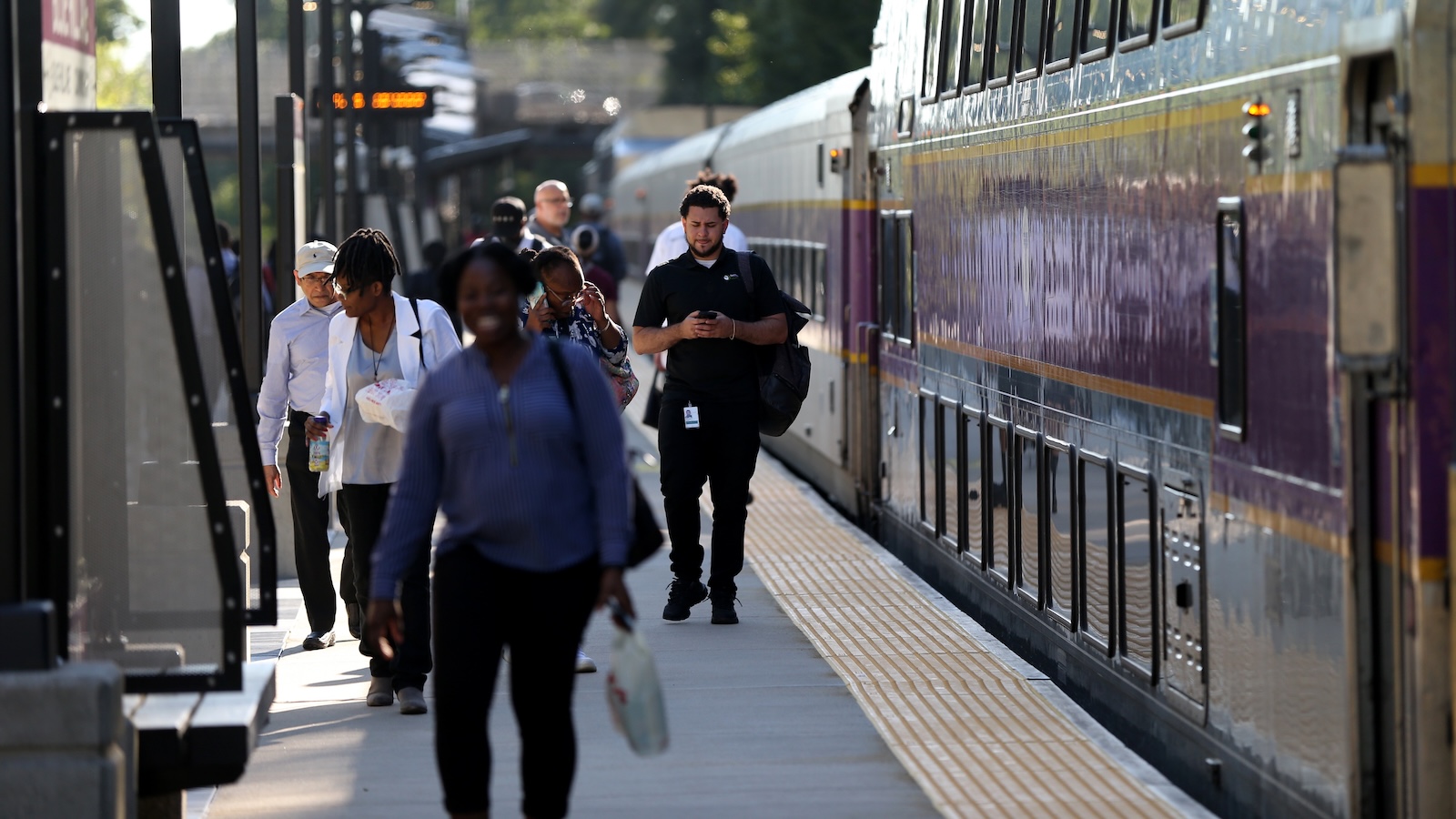
According to projections from the MBTA, the introduction of these battery-powered trains will increase service frequency along the 10-mile route, dropping headways from every 30 minutes to every 20 minutes. Furthermore, the transition is expected to eliminate 17,700 tons of carbon dioxide emissions annually, replacing the dirty exhaust of legacy diesel locomotives with clean electric propulsion.
The trains themselves are manufactured by Stadler, a prominent Swiss rolling stock builder, and are scheduled to begin carrying passengers by the end of the decade. While battery-powered rail offers undeniable environmental advantages, the decision has also sparked debate among transit experts regarding its readiness for high-volume urban corridors.
Weighing the Benefits Against Technological Uncertainty
Boston is certainly no stranger to the history of electric rail. The city introduced its first electric streetcar in 1889, and the Tremont Street Subway—now a vital underground segment of the MBTA’s Green Line—opened in 1897 as the first electric subway in North America and the third worldwide, trailing only Budapest and London.
However, modernizing a 21st-century commuter rail network with battery technology introduces new variables. Chris Friend, interim executive director of the transit advocacy group TransitMatters, points out that while the Fairmount Line is a logical starting point due to its status as the MBTA’s shortest commuter route, battery-powered trains have yet to be deployed at scale on heavily utilized networks around the world.
"So, is this the thing," Friend asked, reflecting on the potential pitfalls, "or are we going to end up in another quagmire of an unproven technology?"
Proponents of battery-electric trains point to successful international deployments as evidence of viability. In Germany, battery-powered trainsets manufactured by Alstom operate successfully across a 50-mile route, serving roughly 2 million passengers annually. Dani Simons, Alstom’s vice president of communications in the Americas, notes that surging fossil fuel costs have made electrification increasingly attractive to transit operators worldwide. With average diesel prices spiking significantly in recent years, alternative powertrains offer a crucial hedge against volatile energy markets.
Simons concedes that battery technology is currently best suited for "medium ridership" lines, but emphasizes that transit agencies should pursue a diversified portfolio of decarbonization strategies, including overhead catenary wires and diesel-electric hybrids, depending on the specific operational demands of each corridor. Demonstrating this multi-pronged approach, the MBTA is also planning to deploy a combination of battery and catenary technologies on its busier Providence Line.
Historical Context: A Return to Electric Roots
The push to electrify American railways represents, in many ways, a return to the past. Albert Churella, a history professor at Kennesaw State University, explains that urban transit systems underwent a massive transition from horse-drawn vehicles to electric streetcars during the final decades of the 19th century. Concurrently, steam railroads facilitated the growth of suburbs by connecting urban cores to outlying areas.
At the turn of the 20th century, early leaders in regional rail recognized the necessity of electricity. Major commuter networks—such as routes connecting New York to New Haven, Philadelphia to Paoli, and the Long Island Rail Road—underwent early electrification. In underground environments, such as Boston’s nascent subways, electricity was mandatory; steam locomotives produced dense clouds of smoke that posed severe asphyxiation risks to passengers and workers.
Yet, as Nicholas Dagen Bloom, a historian and author of The Great American Transit Disaster, notes, the vast majority of American commuter lines were never electrified. Many routes operated on tracks shared with freight and long-distance passenger services, environments that favored the operational flexibility of steam and later diesel locomotives. Following World War II, as passenger rail ridership plummeted, private railroads sought to divest from passenger operations entirely, favoring diesel power because it avoided the heavy capital investments required to install miles of overhead electrical infrastructure.
The Proven Impact of Full Electrification
While battery-powered trains represent an emerging frontier, comprehensive data from fully electrified systems illustrate the profound benefits of moving away from diesel.
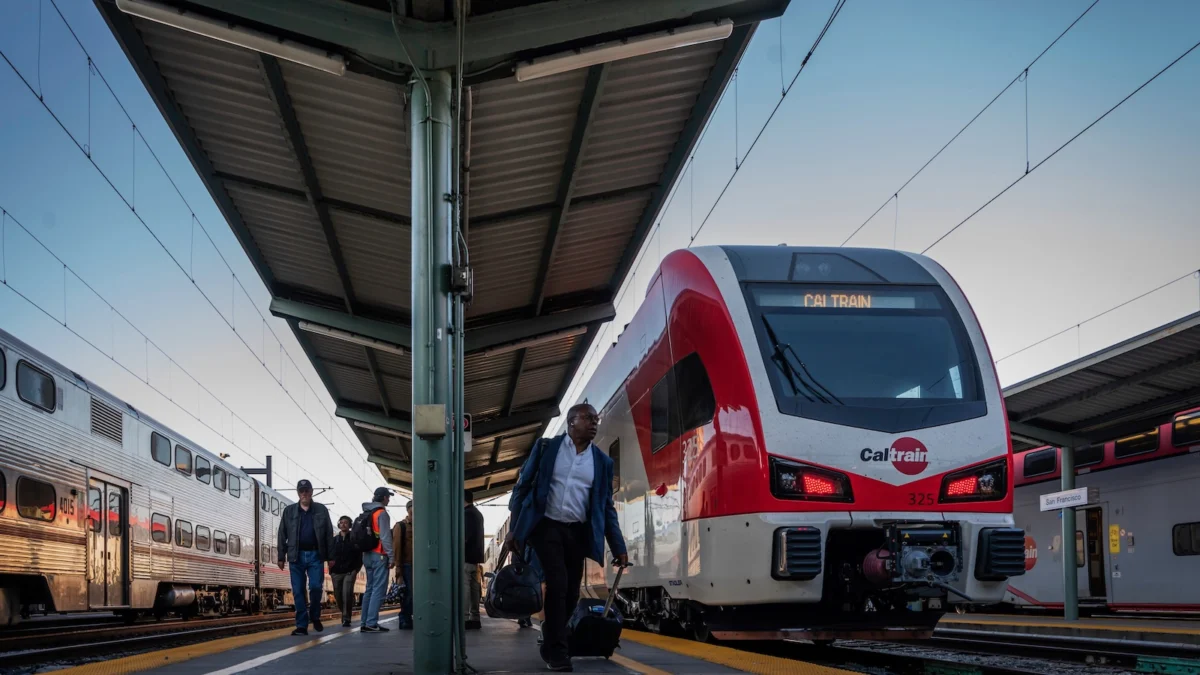
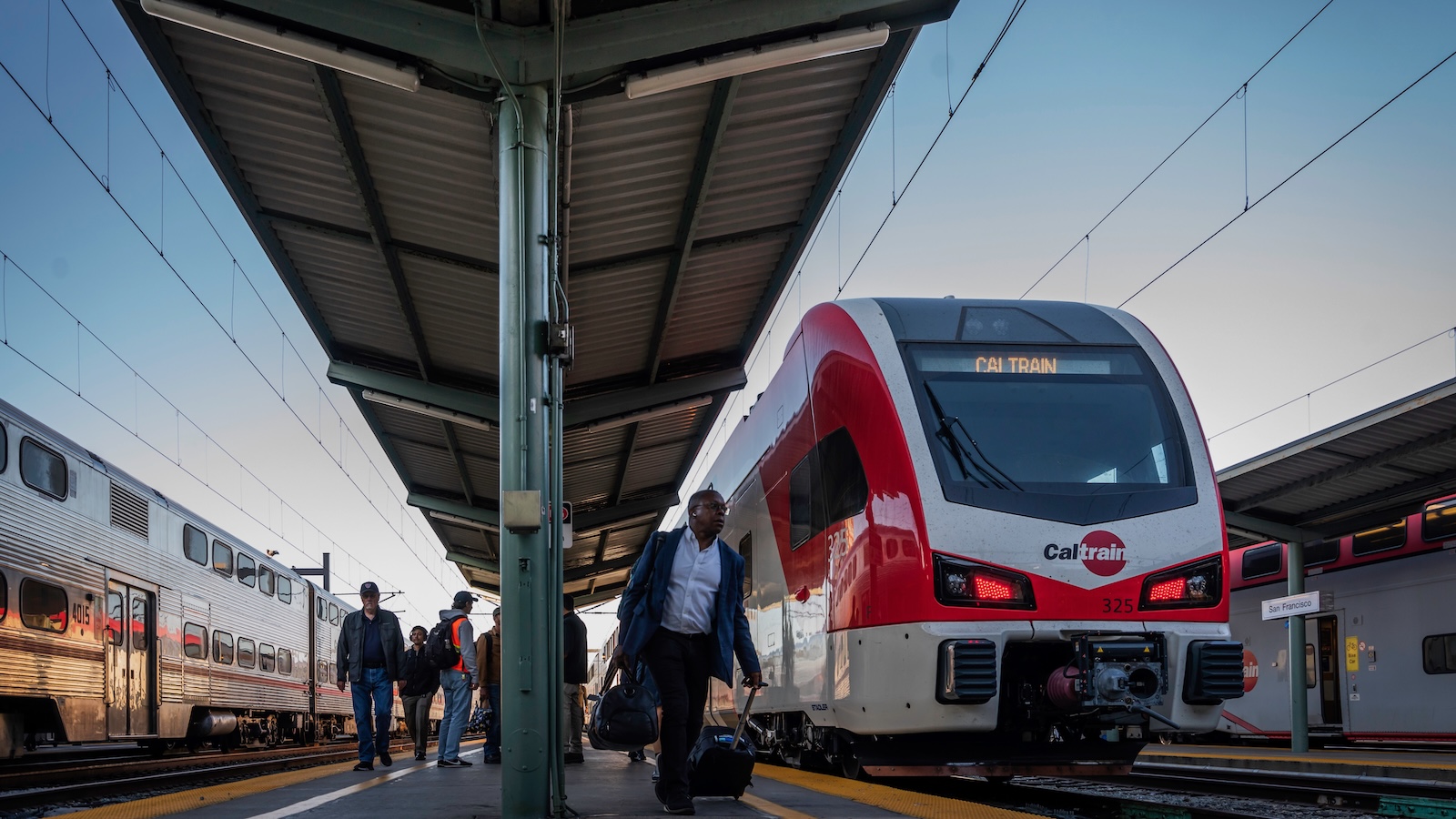
In California, Caltrain completed the electrification of its 51-mile corridor between San Francisco and San Jose, replacing its aging diesel fleet with high-performance electric trains powered by overhead catenary wires. The results have been transformative. Commute times dropped by as much as 23 percent due to the superior acceleration rates of electric multiple-unit trains. Passenger satisfaction soared, leading to a 60 percent surge in ridership.
Beyond transit efficiency, the public health dividends have proven extraordinary. Joshua Apte, an environmental engineer at the University of California, Berkeley, conducted post-electrification air quality studies on the Caltrain corridor and discovered that passenger exposure to black carbon—a harmful component of diesel exhaust—dropped by an astounding 89 percent. Apte noted that this single infrastructure upgrade yielded air quality improvements comparable to what California cities achieved through three decades of stringent regulatory interventions.
"Given the number of commuter rail systems that still rely on older diesel locomotives," Apte observed, "you might see similar air quality gains if you electrify them." While battery-electric trains may operate at a slightly lower efficiency than continuous overhead wire systems, Apte affirms that they remain exceptionally powerful tools for combating urban air pollution.
A Legacy Secured for Dorchester
For Marvin Martin, the complex debates over battery chemistry, charging infrastructure, and rolling stock specifications ultimately take a back seat to the human reality of what the project represents.
Reflecting on the decades of meetings, protests, and negotiations that brought the Fairmount Line to this juncture, Martin acknowledges that the introduction of clean, quiet electric trains to Dorchester will feel like a novelty. He remains mindful that neighborhood residents will continue to breathe diesel exhaust until the new Stadler trains officially enter service in 2030.
Nevertheless, looking back on a 30-year journey of civic engagement, Martin views his lifelong advocacy as an undeniable triumph for environmental justice and community self-determination.
"I’m pretty satisfied with where we ended up," Martin said. "As long as we still get that train."