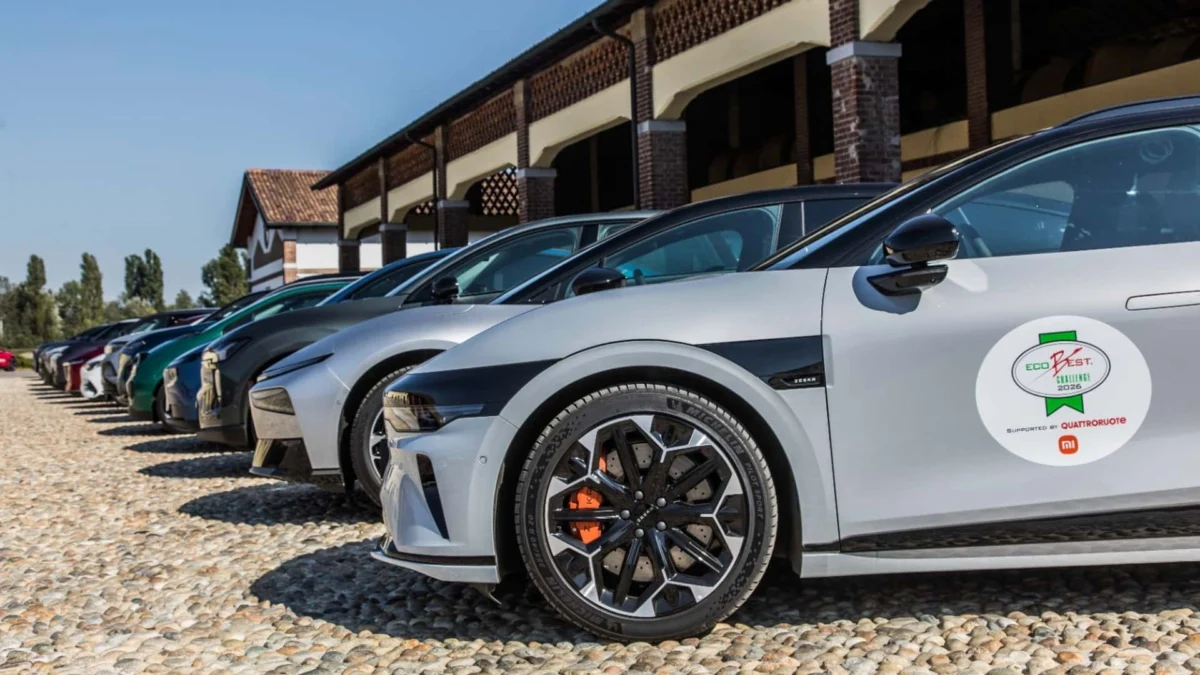
The anxiety surrounding electric vehicle range, commonly referred to as "range anxiety," remains one of the most significant barriers to mass adoption for prospective buyers. While manufacturers provide official range figures based on standardized testing cycles like the WLTP or EPA, real-world performance often varies. A critical, yet frequently misunderstood, aspect of this ownership experience is the "reserve" energy—the distance a vehicle can travel after the dashboard displays zero percent battery or zero miles of remaining range. The 2026 ECOBEST Challenge, organized by the independent automotive organization AUTOBEST, recently conducted a comprehensive, real-world stress test of 15 new electric vehicles to determine exactly what happens when the digital gauge hits the bottom.
The findings are stark: while every vehicle tested proved capable of moving for some distance after the dashboard signaled an empty battery, the margin of safety varies wildly between manufacturers. The Leapmotor B10 emerged as the top performer, traveling an additional 19.9 miles (32 km) after reaching zero, narrowly outpacing the Tesla Model Y. At the other end of the spectrum, the Xpeng P7+ offered a minimal buffer, coming to a halt just 0.6 miles (1 km) after the warning. Across the board, the 15 participating vehicles averaged 10 miles (16 km) of travel post-zero, suggesting that while software buffers exist, relying on them is an inherently risky strategy.
Methodology and Execution of the 2026 ECOBEST Challenge
To ensure the integrity of the data, the AUTOBEST team established a rigorous testing protocol near Milan, Italy. The route was meticulously curated to simulate a diverse array of driving environments, incorporating urban city streets, winding country roads, and high-speed highway segments. By avoiding a closed-loop track for the primary duration of the test, the organizers ensured that the vehicles encountered real-world variables such as varying gradients, traffic congestion, and wind resistance.
The test utilized a rotating driver system, with personnel switching vehicles every 19 miles (30 km) to mitigate the impact of individual driving habits—such as aggressive acceleration or regenerative braking techniques—on the final results. All vehicles were maintained in standard driving modes, with climate control systems operational and tire pressures set to manufacturer-recommended specifications. Ambient temperatures during the test remained stable, hovering between 68°F and 77°F (20°C–25°C), which is considered an optimal window for lithium-ion battery efficiency.
The "final stand" portion of the challenge occurred at the Vairano proving ground. Once a vehicle’s dashboard hit 0% charge or 0 miles of range, the driver continued to operate the car at a consistent speed until the powertrain could no longer sustain motion. This provided a definitive, empirical measurement of the vehicle’s "hidden" capacity.
The Role of Auxiliary Infrastructure
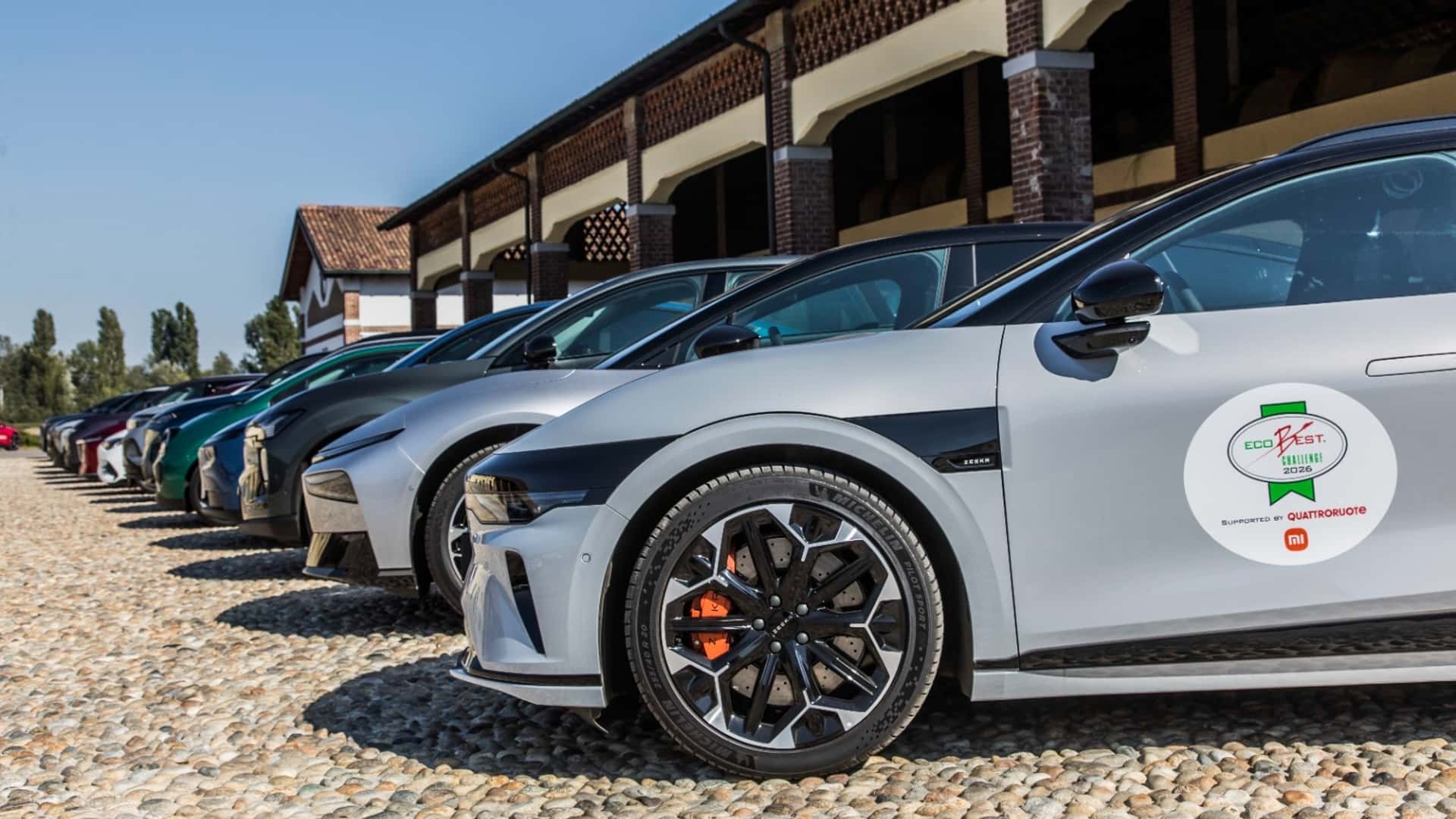
A notable logistical innovation during this test was the use of a Zeekr 7GT as a mobile power bank. Rather than relying on traditional flatbed trucks or external charging vans, the organizers utilized the Zeekr’s vehicle-to-load (V2L) capabilities. By transferring energy directly from the Zeekr’s high-voltage battery pack to the stranded vehicles, the team was able to rapidly restore enough power for the dead EVs to reach a conventional charging station. This process highlighted the growing utility of bidirectional charging, a feature that may soon become a standard expectation for EV owners looking for increased operational security.
Understanding Battery Buffers and Energy Management
To understand why these vehicles can travel after the dashboard reads zero, one must look at the chemistry and software management of modern EV battery packs. Manufacturers intentionally incorporate a "buffer" to protect the battery health. Lithium-ion batteries are susceptible to degradation if they are discharged completely, a state that can cause irreversible chemical damage to the cells.
When an EV displays 0% charge, it is not necessarily physically empty. Instead, the Battery Management System (BMS) has reached a pre-programmed threshold where it restricts power output to prevent the cells from dropping into a dangerously low voltage range. This buffer is effectively a safety net designed by engineers to ensure that the car does not experience a "hard" power failure while in motion, which could pose a safety risk to the driver and other motorists.
However, the size of this buffer is a design choice that varies by manufacturer. Some companies, such as Tesla, have historically been more transparent with their range estimation algorithms, while others may implement conservative software cut-offs that prioritize battery longevity over maximum range extraction. The discrepancy between the Leapmotor B10’s 19.9-mile buffer and the Xpeng P7+’s 0.6-mile buffer demonstrates that there is no industry standard for how much "emergency" energy should be withheld from the user.
Data Analysis and Implications
The data from the 2026 ECOBEST Challenge serves as a reminder that range figures are estimates, not absolute guarantees. The fact that the Leapmotor B10 outperformed the Tesla Model Y in this specific post-zero test does not necessarily reflect the overall efficiency of the vehicles, but rather how their respective BMS software handles the final stage of depletion.
Furthermore, the study confirms that the correlation between "miles remaining" and "percentage of charge" is not linear. In previous industry tests, including those involving the Tesla Model 3, it has been observed that a vehicle might reach 0% battery while still projecting a small amount of remaining range, or conversely, show 0 miles of range while still holding a significant percentage of charge. This suggests that dashboard interfaces often prioritize different metrics—some favor distance, others favor raw energy percentage—leading to confusion for the average consumer.
Strategic Implications for the EV Industry
The implications of these findings are twofold. For consumers, the results reinforce the importance of maintaining a "safety margin" in daily driving. Even if a vehicle has the technical capability to travel 10 or 15 miles past zero, doing so frequently can accelerate battery degradation and leaves the driver with no margin for error in the event of detours or malfunctioning public charging infrastructure.
For automakers, the disparity in post-zero performance highlights a need for improved communication between the vehicle and the driver. As EVs become the primary mode of transportation for millions, the accuracy and transparency of the remaining range display are becoming vital consumer trust issues. If one vehicle provides a 20-mile safety buffer while another provides less than a mile, the former offers a significantly more forgiving experience for a driver who miscalculates their distance to the next charger.
Looking ahead, the industry is likely to move toward more standardized display protocols. As vehicle-to-load technology becomes more common, the fear of being stranded may diminish, but the engineering challenge of managing the "bottom" of the battery pack will remain. The 2026 ECOBEST Challenge underscores that while battery technology is advancing rapidly, the software that interprets that energy is just as important as the kilowatt-hours themselves.
In conclusion, while the vehicles tested in the 2026 ECOBEST Challenge proved resilient enough to travel several miles past their reported empty point, this should be viewed as an emergency feature rather than an extended driving range. The wide variance between the top and bottom performers suggests that the "zero" on your dashboard is a fluid, manufacturer-defined boundary rather than a hard physical reality. For the average owner, the most reliable strategy remains adhering to the internal prompts of the vehicle and planning charging stops well before the gauge hits the bottom, ensuring that the buffer remains exactly what it was intended to be: a last-resort safeguard.