The intersection of global celebrity culture and the hyper-sensitive political climate in China has claimed its latest high-profile victim: soccer superstar Kylian Mbappé. The Real Madrid forward, widely considered one of the most marketable athletes on the planet, is currently contending with a swift and severe commercial backlash after making a remark during a French online talk show that was interpreted as a disparaging reference to Mao Zedong. The incident has triggered a wave of contract terminations, a state-media-led broadcast blackout, and a scramble for diplomatic damage control by his club and league officials.
This event serves as a stark reminder of the "China trap"—a phenomenon where multinational corporations and international public figures find their access to the world’s second-largest economy abruptly curtailed due to perceived slights against national sentiment, history, or political sensibilities.
A Chronology of the Controversy
The sequence of events unfolded with rapid velocity, characteristic of modern social media-driven outrage. During a broadcast appearance in late October 2026, Mbappé engaged in a lighthearted segment involving internet memes. When presented with a specific image, he made a comment labeling the figure as a "Chinese dictator." While the context was intended as humor, the remark was rapidly circulated across Chinese social media platforms, including Weibo and Douyin.
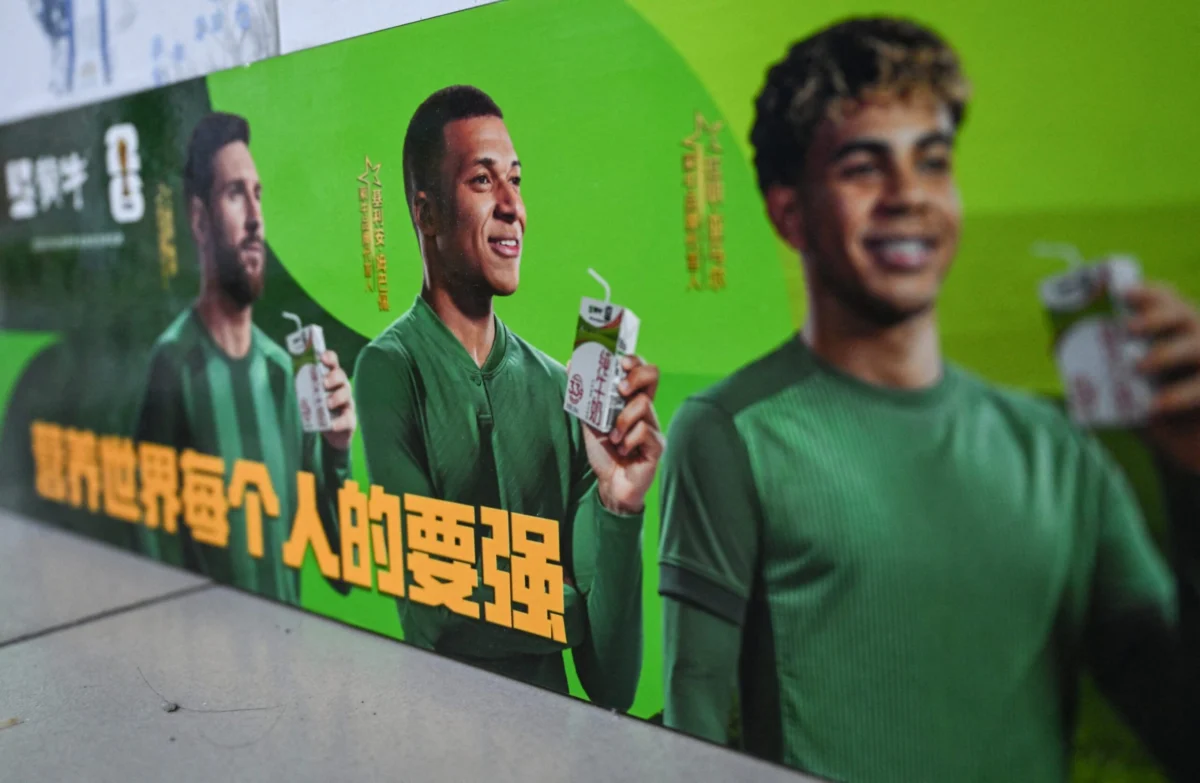
Within 48 hours, the online discourse transformed into institutional action. On October 27, three major Chinese brands—beverage manufacturer Dongpeng, dairy giant Mengniu, and cheese producer Milkground—officially severed their sponsorship agreements with the athlete. Simultaneously, China Media Group (CMG), the state-run broadcaster that holds significant influence over sports programming, announced a suspension of all broadcasts featuring LaLiga matches, specifically targeting content involving Mbappé. This effectively erased the player’s visual footprint from the country’s most important media outlet.
By October 28, the situation had escalated to a diplomatic level. Real Madrid issued a formal apology, emphasizing the club’s "deep respect for China, its history, its culture, and its citizens." Shortly thereafter, Mbappé took to the platform X to offer a personal apology, stating, "My comment was ill-judged, and I now understand that it hurt many people in China and in Chinese communities around the world."
The Economic and Diplomatic Aftermath
The economic implications for Mbappé are significant. China represents a critical growth market for top-tier European soccer players, who often leverage regional sponsorships to augment their base salaries. While the exact financial value of the terminated contracts has not been publicly disclosed, industry analysts estimate that top-tier endorsements in the Chinese market can account for 15% to 25% of an elite athlete’s total off-pitch earnings.
The institutional response from LaLiga highlights the systemic anxiety caused by the incident. Javier Tebas, the president of LaLiga, sought an urgent meeting with the Chinese ambassador to Spain. The intent was to isolate the "individual episode" from the broader commercial relationship between the league and the Chinese market. For LaLiga, which has invested heavily in broadcast rights deals and grassroots development programs in China, the risk is not merely the loss of one player’s exposure but the potential for a wider, long-term boycott of the entire league.
Historical Precedents: The "China Trap"
Mbappé’s experience is not an isolated incident but rather the latest chapter in a long history of foreign entities struggling to navigate Chinese nationalism. The pattern typically follows a predictable trajectory: a comment or action is deemed offensive, it gains traction on local social media, the state media amplifies the criticism, and commercial partners distance themselves to avoid becoming the next target of the consumer base.
The most notable precedent remains the 2019 "Morey tweet" incident. Daryl Morey, then the general manager of the Houston Rockets, posted a single image supporting pro-democracy protests in Hong Kong. The backlash was instantaneous and devastating for the NBA’s relationship with China. CCTV pulled all NBA games from its schedule for three years, a move that cost the league hundreds of millions of dollars in lost revenue and severely hampered its efforts to capture the Chinese basketball audience.
In 2021, the Swedish fashion retailer H&M faced a massive boycott after it issued a statement expressing concern over reports of forced labor in the Xinjiang region. The company saw its products scrubbed from major Chinese e-commerce platforms like Tmall and JD.com, leading to a precipitous drop in local sales that persisted for several quarters.
Navigating Cultural and Political Minefields
Even when brands attempt to localize their strategies, the margin for error is razor-thin. In June 2026, Lululemon found itself embroiled in a controversy surrounding an event on the Great Wall of China. The brand’s use of a Japanese taiko drum in a promotional video was perceived by nationalist netizens as a cultural insult, as the drum was seen as encroaching on a site of Chinese heritage. Despite the oversight appearing to be a lack of cultural sensitivity rather than a malicious political act, the brand was forced to issue a public apology and purge its digital channels of the content to mitigate the damage.
The case of Louis Vuitton illustrates how even legal victories can be perceived as cultural provocations. In 2026, the luxury house successfully sued the Chinese milk tea chain Molly Tea for trademark infringement. While the legal merits of the case were upheld by a Chinese court, the subsequent $1.5 million penalty drew ire from segments of the public who felt the global brand was bullying a domestic "guochao" (national tide) brand. The resulting boycott contributed to a 5% organic revenue decline for LVMH’s fashion and leather goods division in the region, proving that brand prestige is not a shield against nationalist sentiment.
Analysis: The Cost of Globalism
For multinational brands and individual celebrities, the incident involving Kylian Mbappé underscores the fragility of the "Global Citizen" persona. In an era where digital content transcends borders instantly, the concept of a "local joke" no longer exists. Every public comment is subject to the scrutiny of global audiences with vastly different historical contexts and sensitivities.
The business implications are twofold. First, there is the immediate loss of revenue and brand equity within the Chinese market. Second, there is the long-term risk of "de-coupling" from the Chinese sports and entertainment ecosystem. For entities like Real Madrid and LaLiga, the path forward requires a delicate balancing act: maintaining a global appeal while strictly adhering to the political and cultural red lines established by the Chinese government and its populace.
Economists observing these trends note that the barrier to entry for Western brands in China is no longer just financial or logistical; it is now fundamentally cultural. The "social license to operate" in China is contingent upon an active and ongoing alignment with the prevailing national narrative. As the cases of Nongfu Spring—a domestic brand that was itself boycotted for allegedly using Japanese imagery—show, even local players are not immune to the volatility of this environment.
Conclusion: A New Era of Celebrity Risk
As the dust settles on the Mbappé controversy, the sports world is left to contend with a new reality. The era of the "apolitical athlete" is effectively over, especially when those athletes command global influence. The speed with which three major Chinese sponsors acted suggests that corporations have become increasingly risk-averse, preferring to preemptively drop a partner rather than face the unpredictable wrath of a mobilized online public.
For Mbappé, the incident will likely lead to a period of professional reassessment. His apology, while standard for such crises, highlights the limitations of corporate communication in a market where public perception is guided by state-aligned sentiment. As the global sports industry continues to expand, the lesson from this episode remains clear: in the digital age, a single moment of levity can have profound, long-lasting consequences for the world’s most recognizable icons. The question remains whether international stars and their management teams can adapt to these constraints without sacrificing the spontaneity and personality that made them global superstars in the first place.