At only 26 years of age, designer Kartik Kumra has rapidly evolved from a collegiate entrepreneur into a formidable presence within the contemporary global fashion landscape. Operating with a measured and deliberate ethos, Kumra has quietly built a brand that bridges the gap between traditional Southeast Asian artistry and modern Western silhouettes. Raised in New Delhi, Kumra’s trajectory in the industry is marked by a series of unconventional milestones that began five years ago inside a dormitory at the University of Pennsylvania. Today, his imprint stretches from a brick-and-mortar storefront in New York City’s Lower East Side to high-profile political endorsements and prestigious international exhibition platforms.
The journey of the young designer highlights a broader shift in the modern fashion industry, wherein independent creators are increasingly seeking to bypass traditional conglomerate structures by investing directly in proprietary manufacturing infrastructure, localized artisan communities, and sustainable supply chains. As Kumra prepares for his most prominent international showcase to date, his brand stands at a critical juncture of commercial expansion and artistic maturation.
From a Dorm Room Enterprise to an International Footprint
The chronology of Kumra’s brand reflects the accelerated pace of digitally native, direct-to-consumer labels that nevertheless retain a deep respect for physical retail and artisanal heritage. Five years ago, while balancing coursework at an Ivy League institution, Kumra initiated the enterprise that would become his signature label. Operating out of a small University of Pennsylvania dorm room, he began conceptualizing garments that merged his New Delhi upbringing with the contemporary sensibilities of American urban streetwear.
Following his collegiate beginnings, Kumra systematically expanded his operational capabilities. A significant milestone in his retail strategy was the establishment of a brick-and-mortar flagship location in New York City’s Lower East Side—a neighborhood historically recognized as a incubator for independent designers and subcultural fashion movements. This physical presence allowed the brand to cultivate a direct dialogue with its consumer base, testing the waters for more complex garment offerings and higher-end tailoring.
The brand’s cultural resonance was further underscored when a distinctive tie of Kumra’s design was worn by Zohran Mamdani at his official swearing-in ceremony. Such high-profile political and cultural placements signal a transition for the label from a niche independent project to a recognized signifier of modern civic style and progressive cultural identity.
The pinnacle of Kumra’s institutional recognition arrived with the announcement that he has been selected as a guest designer for the upcoming Pitti Uomo trade fair in Florence, Italy. Widely regarded as one of the most influential men’s fashion platforms in the world, Pitti Uomo has historically served as a launching pad for boundary-pushing independent designers poised to enter the global luxury market. For Kumra, the invitation validates a half-decade of meticulous design development and underscores the growing appetite within the traditional menswear establishment for designers who work outside the standard European luxury capitals.
Bringing Production Home: The New Factory in India
While public attention has naturally gravitated toward retail openings and high-profile exhibitions, a more transformative development has been taking place behind the scenes. Kumra has been actively constructing a dedicated manufacturing facility in his native India. This strategic move brings design, production, and operational logistics under a single roof, offering the designer unprecedented control over his supply chain.
In the contemporary fashion industry, vertical integration—the consolidation of manufacturing and retail operations—is typically reserved for well-capitalized multinational conglomerates. For an independent designer of Kumra’s age and scale, establishing a private factory is an ambitious and capital-intensive undertaking. However, the move is designed to address logistical bottlenecks while preserving the integrity of the labor-intensive techniques that define the brand’s aesthetic.
The new facility will streamline complex production processes such as block-print dyeing, intricate hand embroidery, and various other localized handcraft traditions native to the region. By housing these operations internally, Kumra aims to eliminate the friction often associated with outsourcing artisanal production to disparate third-party contractors.
Industry analysts note that direct ownership of production facilities allows emerging brands to maintain stringent quality control, reduce lead times, and ensure fair labor practices throughout the supply chain. For Kumra, the motivations are equally artistic. In recent interviews, the designer emphasized that the factory initiative will bring him closer to the foundational elements of his work: "closer to the cloth, closer to the hand, closer to the decisions that define what a garment becomes."
Expanding Horizons: The Paris Showcase and Diversification
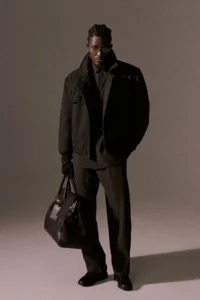
The tangible results of Kumra’s operational restructuring were prominently on display during the spring collections presentation in Paris. The expansive collection revealed two significant strategic evolutions: a deliberate expansion into womenswear and a broadened offering of sophisticated tailoring.
Nominally inspired by the Golconda Ashram in Pondicherry, India—an architectural and philosophical retreat designed by the renowned modernist George Nakashima—the collection demonstrated a mature synthesis of structural modernism and organic tradition. The introduction of structured tailoring was, in large part, a direct commercial and creative response to the newly established Indian factory, which now employs a dedicated team of in-house tailors capable of executing precise sartorial construction. Simultaneously, the expansion into womenswear was driven by sustained organic demand from the brand’s existing clientele, many of whom had previously cross-shopped men’s outerwear and accessories.
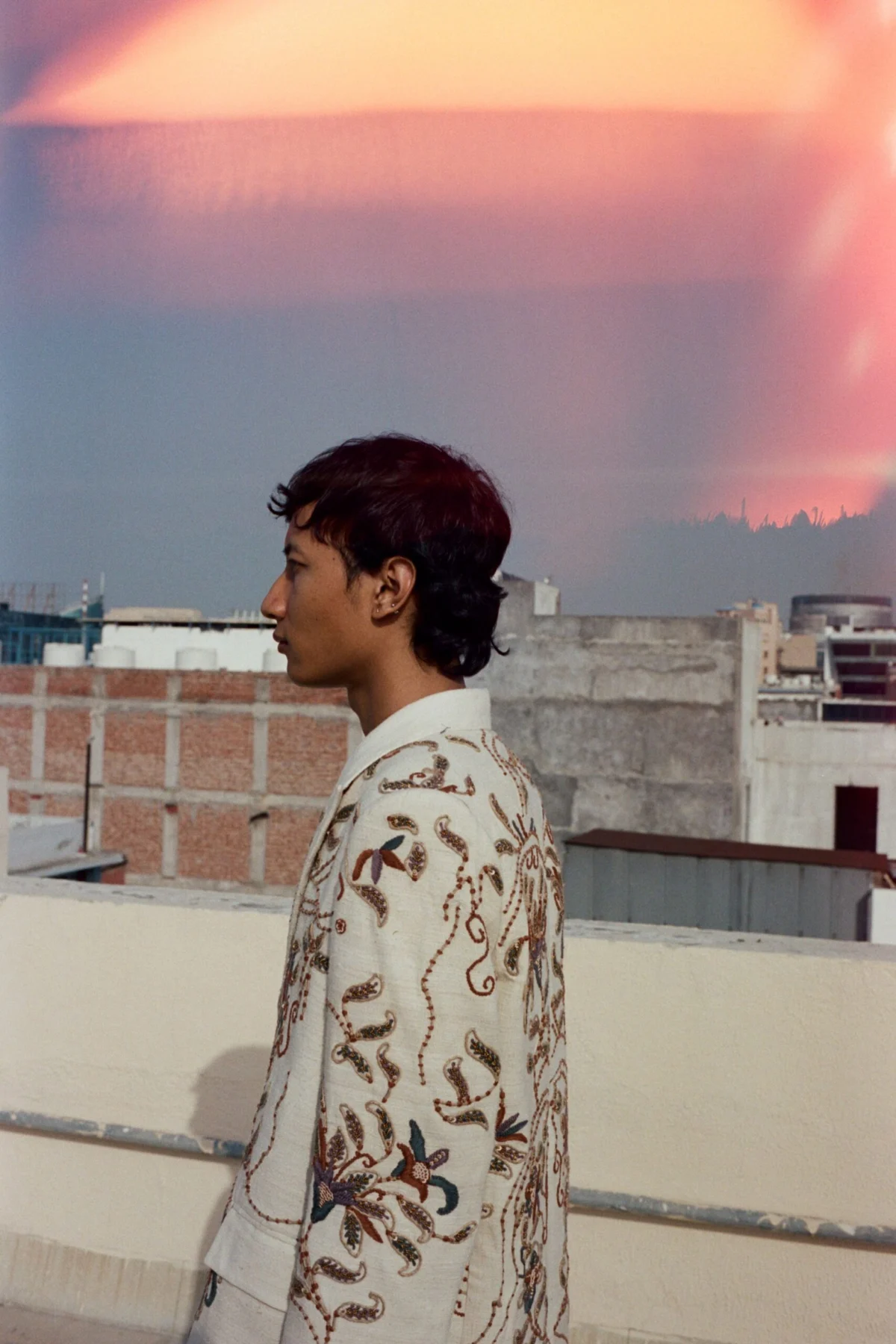
Despite these structural expansions, the collection remained firmly anchored in Kumra’s established visual vocabulary. The garments featured relaxed silhouettes heavily influenced by traditional Southeast Asian attire, constructed from natural, breathable textiles, and elevated through folkloric detailing.
Materiality, Detail, and the Balance of Contrasts
A close examination of the individual pieces within the Paris presentation reveals a meticulous approach to surface ornamentation and textile manipulation. Rather than relying on stark, minimalist statements or loud branding, Kumra achieves visual interest through subtle contrasts and hidden flourishes.
A salmon-colored chore coat, outfitted with a contrasting collar, features a refined vine motif that organically blooms across the torso. A tobacco-colored suede blouson-style jacket appears understated from a distance, yet reveals a flash of glittering embellishment hidden along the inside of the collar. A lightweight, zip-front jacket is rendered in a faded, tapestry-like print that has been meticulously overlaid with delicate embroidery.
The womenswear offerings mirror this philosophy of restrained opulence. A collarless leather jacket is decorated with a floral motif that climbs the torso and extends down the sleeve, punctuated by subtle touches of sparkle. Elsewhere, a sporty, funnel-neck block-printed velvet jacket is paired with a lean, floor-grazing skirt, creating a dynamic tension between athletic utility and formal elegance.
Almost every garment in the collection incorporates some form of decorative flourish, adornment, or thoughtful architectural detail. Yet, these elements avoid feeling overwrought or precious. This balance is achieved through the use of an earthy, autumnal palette dominated by shades of umber, moss, and terracotta. Furthermore, the relaxed silhouettes—which successfully bridge the gap between traditional workwear and contemporary streetwear—ground the collection in practical utility.
Market Implications and Industry Analysis
Kumra’s trajectory offers a compelling case study in the shifting economics of modern menswear. As traditional luxury houses grapple with shifting consumer demographics and a demand for greater authenticity, independent designers who control their own production pipelines are uniquely positioned to capture market share.
By integrating traditional Indian handcrafts with contemporary Western silhouettes, Kumra taps into a growing global appreciation for cross-cultural design narratives. Furthermore, his ability to scale production through his new facility while maintaining artisanal standards addresses one of the primary challenges facing sustainable and craft-based fashion brands today.
As he prepares for his upcoming showcase at Pitti Uomo, the broader implications of Kumra’s work extend beyond his own commercial success. He represents a new generation of designers who refuse to choose between global market ambitions and local manufacturing integrity. By keeping production close to home, investing in dedicated in-house artisans, and refusing to compromise on material detail, Kartik Kumra is demonstrating that quiet dedication and structural foresight can be just as potent as traditional marketing machinery in shaping the future of global fashion.