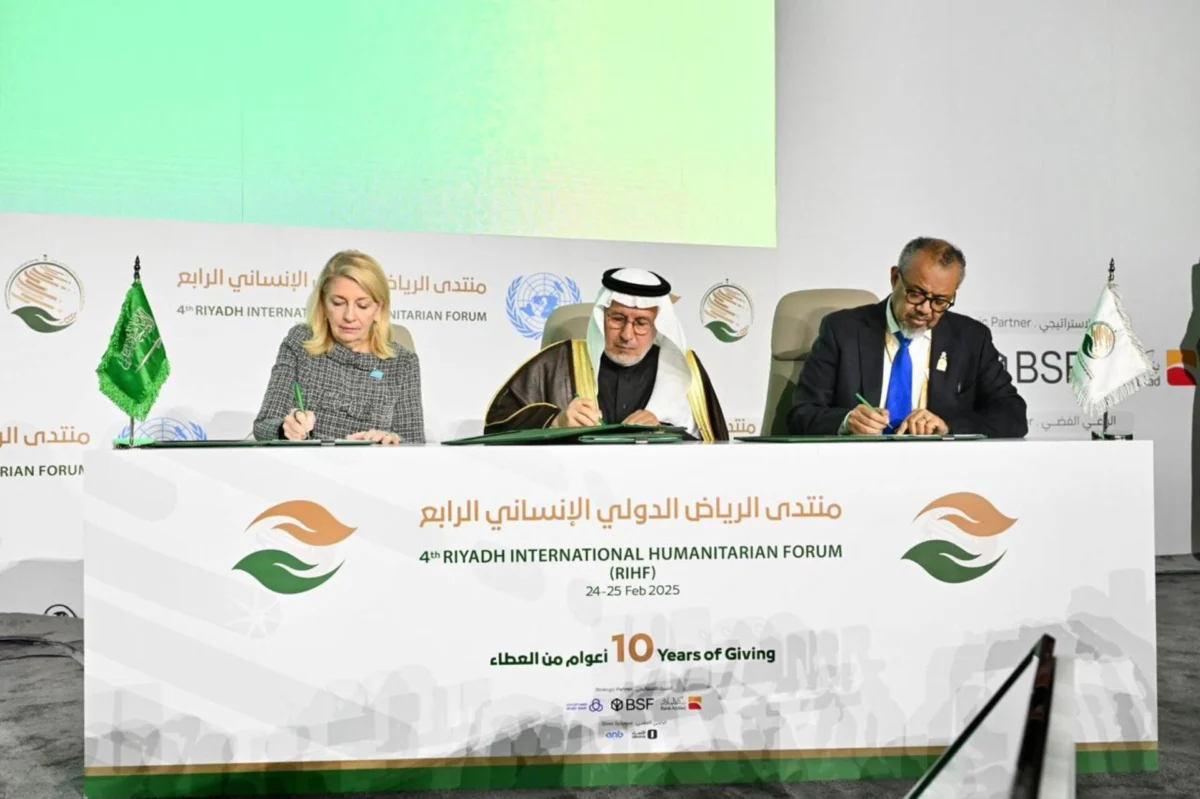
The global humanitarian landscape gathered in the capital of Saudi Arabia on February 24–25, 2025, for the Riyadh International Humanitarian Forum, a landmark event that coincided with the tenth anniversary of the King Salman Humanitarian Aid and Relief Centre (KSRelief). Against a backdrop of escalating geopolitical conflicts, climate-induced displacement, and resurgent infectious diseases, world leaders, health diplomats, and international agency heads convened to address critical vulnerabilities affecting millions worldwide. The high-level gathering served not merely as a retrospective of a decade of Saudi-led philanthropic and emergency interventions, but as a dynamic platform for forging multi-million-dollar partnerships. Among the most significant outcomes of the two-day summit were sweeping funding agreements finalized between the World Health Organization (WHO), UNICEF, and KSRelief, targeting deadly disease outbreaks in the Middle East and solidifying a massive global commitment to eradicate polio once and for all.
Chronology of the Riyadh International Humanitarian Forum 2025
The momentum leading up to the February 2025 forum has been years in the making, reflecting the institutional maturation of KSRelief since its establishment in May 2015 by King Salman bin Abdulaziz Al Saud. Over the past decade, the organization has evolved from a regional responder into a cornerstone of international humanitarian assistance, operating in dozens of countries spanning multiple continents.
In April 2024, a pivotal milestone was reached when the Kingdom of Saudi Arabia initially pledged US$ 500 million toward the Global Polio Eradication Initiative (GPEI). This substantial commitment set the stage for the formalization of legal and financial mechanisms at the Riyadh forum ten months later.
On the opening day of the forum, February 24, 2025, discussions immediately turned to the practical execution of health diplomacy, the protection of frontline humanitarian workers, and the prioritization of human dignity in crisis zones. Panel sessions scrutinized the alarming degradation of health systems in conflict-torn regions, setting a serious tone for bilateral negotiations on the sidelines.
By February 25, the diplomatic discourse translated into concrete financial instruments. In the presence of high-ranking dignitaries—including KSRelief Supervisor-General Dr. Abdullah Al Rabeeah, WHO Director-General Dr. Tedros Adhanom Ghebreyesus, and UNICEF Executive Director Catherine Russell—a series of landmark agreements were officially signed. These pacts immediately injected millions of dollars into localized healthcare delivery in Yemen and Egypt, while structurally formalizing the disbursement of the multi-million-dollar GPEI pledge to safeguard hundreds of millions of children globally.
Targeted Interventions: Combating Malaria, Cholera, and Regional Displacement
The newly minted agreements between the World Health Organization and KSRelief directly target some of the most fragile humanitarian environments in the Middle East and North Africa, where years of continuous conflict have severely incapacitated local healthcare infrastructure.

In Yemen, a nation experiencing one of the world’s most protracted humanitarian crises, the healthcare system operates on the brink of total collapse. To counter this, KSRelief allocated a vital US$ 12 million package dedicated exclusively to comprehensive malaria prevention programs. Malaria remains a persistent and deadly threat, particularly for children under five and pregnant women in under-resourced governorates. By strengthening vector control, scaling up diagnostic testing, and distributing insecticide-treated nets and therapeutics, the initiative aims to drastically reduce morbidity and mortality rates across vulnerable Yemeni communities.
Compounding the health crisis in Yemen is the persistent threat of waterborne epidemics. To address this, an additional US$ 2.1 million was earmarked specifically for the expansion and reinforcement of cholera treatment centers. Cholera outbreaks thrive in environments compromised by destroyed sanitation facilities, lack of clean drinking water, and displaced populations. The new funding will enable the WHO and local health partners to establish decentralized treatment nodes, secure intravenous fluids and oral rehydration salts, and train community health workers to rapidly isolate and treat suspected cases before they escalate into uncontrollable epidemics.
Beyond the Arabian Peninsula, the spillovers of regional conflicts continue to strain neighboring host countries. The prolonged civil conflict in Sudan has driven millions of people across international borders, creating an unprecedented refugee crisis in North Africa. Recognizing the acute medical needs of those fleeing the violence, KSRelief and the WHO Egypt Country Office finalized a US$ 3.6 million agreement. This funding is dedicated to providing continuous, life-saving dialysis treatment for Sudanese refugees residing in Egypt. Renal failure patients require uninterrupted, resource-intensive care; without this targeted intervention, displaced Sudanese individuals suffering from chronic kidney conditions would face fatal outcomes due to the unavailability of affordable treatment in exile.
The US$ 500 Million Global Polio Eradication Initiative Partnership
Undoubtedly, the crown jewel of the financial commitments cemented at the 2025 Riyadh forum was the operationalization of Saudi Arabia’s monumental US$ 500 million pledge to the Global Polio Eradication Initiative (GPEI). Initially announced in the spring of 2024, the formal signing ceremony brought together the top leadership of KSRelief, the WHO, and UNICEF to divide and deploy the capital strategically.
The total package was formally split into two major institutional agreements: a US$ 300 million allocation managed through the WHO and a US$ 200 million allocation channeled through UNICEF. This collaborative funding model leverages the unique strengths of both United Nations agencies—combining WHO’s epidemiological surveillance and technical health expertise with UNICEF’s unmatched logistical capacity in cold-chain vaccine distribution, social mobilization, and last-mile delivery.
The primary objective of this massive injection of capital is to immunize approximately 370 million children annually against the poliovirus. While global eradication efforts have brought the world to the brink of eliminating wild poliovirus entirely, stubborn reservoirs persist in deeply challenging operational environments. The GPEI funding will focus heavily on high-risk, conflict-affected, and hard-to-reach areas where the virus has unfortunately resurged in recent years. Prime among these targets are Afghanistan and Pakistan—the last remaining endemic strongholds—as well as crisis zones like the Gaza Strip, where the destruction of basic sanitation and public health infrastructure has created terrifying vulnerabilities for infants and young children.
Official Responses and Statements from Global Leadership
The signing ceremonies in Riyadh drew widespread international praise, underscoring the vital importance of strategic partnerships in modern humanitarian response architecture. Leaders from the participating organizations emphasized that these agreements represent a profound shift from short-term emergency patching to sustainable, resilient health system reinforcement.
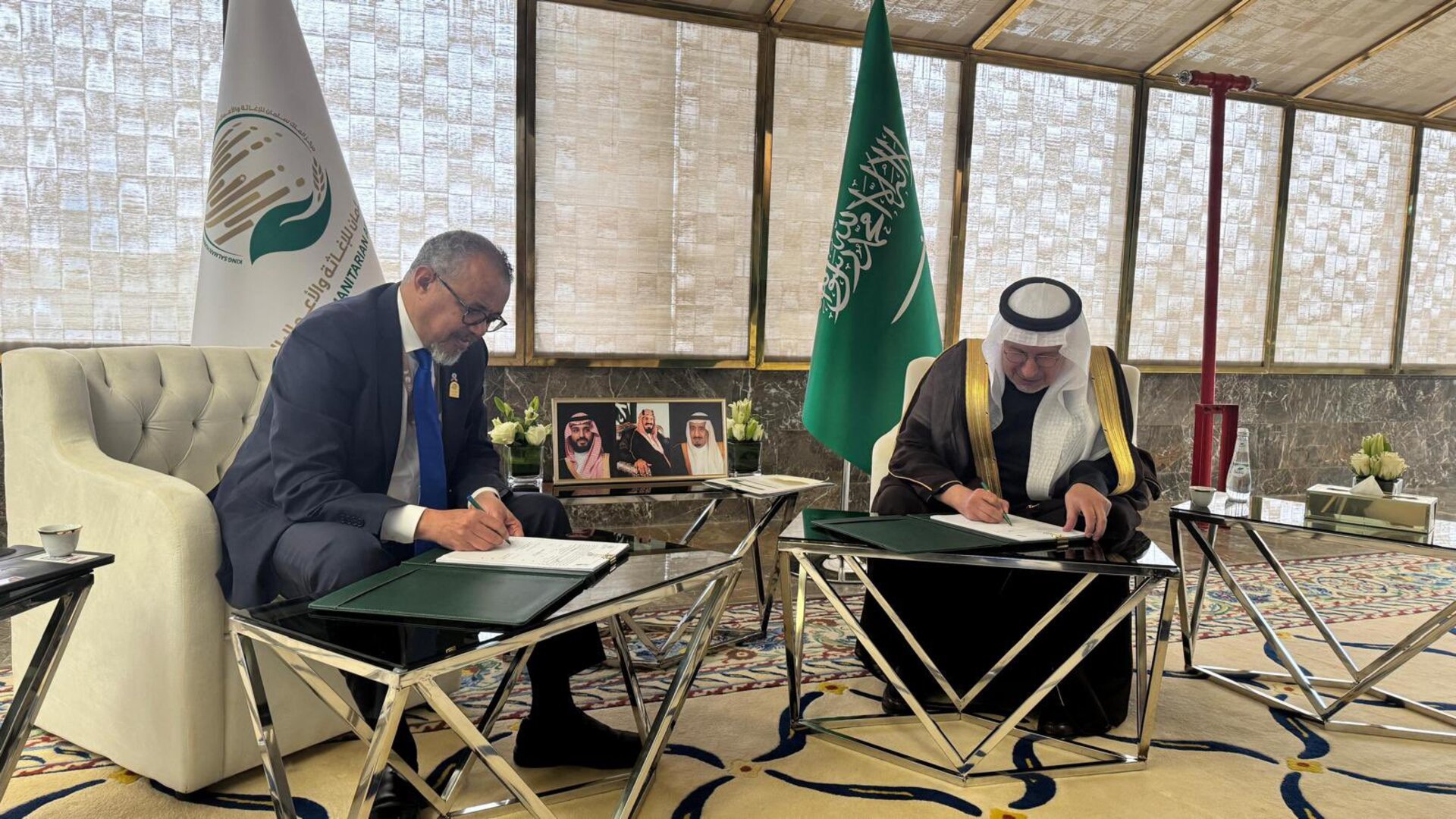
Dr. Tedros Adhanom Ghebreyesus, Director-General of the WHO, took to digital platforms and official press briefings to laud the enduring collaboration between the UN health agency and Saudi Arabia. Highlighting the discussions on health diplomacy during the forum, Dr. Tedros emphasized that saving lives in active conflict zones requires not only financial generosity, but also unwavering political will and guaranteed security for aid workers operating on the front lines. The WHO chief noted that the timely injection of funds for Yemen’s malaria and cholera programs, alongside the regional dialysis support for Sudanese refugees, exemplifies the tangible impact of international solidarity.
Echoing these sentiments, Dr. Abdullah Al Rabeeah, Supervisor-General of KSRelief and Advisor at the Royal Court, reiterated the Kingdom’s steadfast dedication to alleviating human suffering regardless of geography, race, or politics. Marking the tenth anniversary of KSRelief, Dr. Al Rabeeah pointed out that the organization has consistently prioritized evidence-based, high-impact health interventions. He stressed that the partnership with the WHO and UNICEF in executing the multi-million-dollar polio eradication strategy and disease-control initiatives reflects Saudi Arabia’s broader vision of fostering global stability through humanitarian leadership.
UNICEF Executive Director Catherine Russell, who participated directly in signing the GPEI agreements, underscored the critical nature of the US$ 200 million allocation managed by her agency. Russell noted that vaccinating 370 million children annually is an extraordinarily complex logistical undertaking that requires absolute precision, particularly in active war zones where health workers risk their lives to deliver drops of vaccine. She emphasized that the collaboration with KSRelief provides the necessary financial backbone to reach children in the most perilous corners of the earth, ensuring that no child is left paralyzed by a preventable disease.
Broader Impact and Strategic Implications
The 2025 Riyadh International Humanitarian Forum and the resultant agreements carry profound strategic implications for the future of global health security and humanitarian aid delivery. As the humanitarian sector faces unprecedented funding gaps, rising operational costs, and increasing hostility toward aid workers globally, the Saudi-led initiatives offer a vital blueprint for sustainable multilateral cooperation.
From an epidemiological standpoint, the targeted funding for Yemen and Egypt addresses acute, localized flashpoints before they metastasize into wider regional catastrophes. Cholera and malaria control initiatives do more than treat individual patients; they stabilize fragile communities, reduce the burden on overwhelmed clinical workforces, and prevent cross-border transmission of infectious diseases. Similarly, sustaining dialysis care for Sudanese refugees in Egypt prevents secondary mortality spikes among displaced populations whose chronic health needs are frequently overlooked in emergency response cycles.
On a macro level, the operationalization of the US$ 500 million GPEI commitment represents one of the single largest non-traditional donor contributions to polio eradication in recent history. By focusing heavily on conflict zones such as Afghanistan, Pakistan, and Gaza, the initiative directly confronts the hardest-to-reach reservoirs of the virus. Public health analysts note that achieving global polio eradication is an all-or-nothing endeavor; as long as the virus circulates in fragile states, children everywhere remain at risk. The joint deployment of funds through the WHO and UNICEF ensures a comprehensive approach that combines rigorous epidemiological tracking with robust, community-level immunization campaigns.
Ultimately, the Riyadh International Humanitarian Forum demonstrated that effective health diplomacy can bridge geopolitical divides and channel critical resources where they are needed most. By solidifying these multi-million-dollar partnerships on its tenth anniversary, KSRelief has reinforced its position as a central pillar of international humanitarianism, setting a high standard for global solidarity in an increasingly complex and crisis-ridden world.