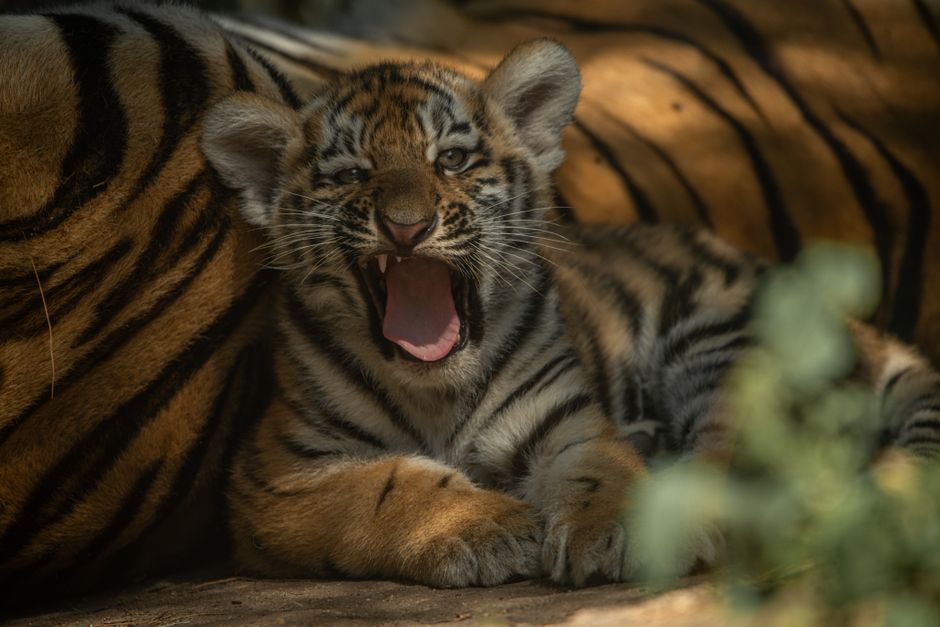
Tiger Cubs: A Spectacle of Strength and Survival in the Wild
The raw power of nature is never more evident than in the burgeoning strength of a tiger cub. These miniature predators, born into a world of both immense beauty and brutal competition, spend their early lives mastering the physical prowess that will ultimately determine their survival. Witnessing a tiger cub flex its nascent muscles is to observe the intricate dance of evolution, a display of innate programming honed through playful exploration and the urgent need to prepare for a life of hunting and territorial defense. The seemingly innocent bouts of wrestling and pouncing are, in fact, sophisticated training sessions, each clumsy tumble and exaggerated stretch a step towards becoming a formidable apex predator. Their developing musculature, fueled by nutrient-rich milk and later by the prey their mothers provide, is the physical manifestation of their genetic legacy, a silent promise of the magnificent hunters they are destined to become. Understanding this process offers a profound glimpse into the resilience and adaptability of these iconic big cats, highlighting the critical role of early development in their journey from vulnerable offspring to solitary, powerful adults.
The development of muscle mass and coordination in tiger cubs is a rapid and critical process, directly linked to their future hunting success and overall survival rates. From birth, a cub’s primary focus is growth, supported by the high-fat, high-protein milk of its mother. As they mature, this internal growth is complemented by a rigorous regimen of physical activity. Play is not merely a pastime for tiger cubs; it is a vital training ground for the complex motor skills required for hunting. Wrestling with siblings, stalking and pouncing on imaginary prey (or even their mother’s tail), and practicing mock charges all contribute to the development of their muscular skeletal system. These seemingly random bursts of energy are, in fact, finely tuned exercises. They build endurance, strengthen limbs, and refine balance – essential for a life that demands explosive bursts of speed, incredible agility, and the ability to take down prey significantly larger than themselves. The flexing of their muscles, whether in a playful swat or a preparatory crouch, signifies the hardening of these essential tools.
The maternal instinct plays an indispensable role in guiding and facilitating this muscular development. A tigress is fiercely protective of her cubs and actively encourages their physical development. She will often present them with small prey items, allowing them to practice their predatory instincts in a controlled environment. These early encounters with prey, even if unsuccessful, teach valuable lessons in stalking, pouncing, and the mechanics of a killing bite. The tigress also provides a living, breathing sparring partner. Her playful nudges and gentle swatting encourage the cubs to engage, to learn how to defend themselves, and to test their developing strength against a formidable opponent. This continuous interaction, characterized by both nurturing and a subtle form of controlled aggression, is crucial for the cubs to learn the nuances of combat and to build the confidence that comes with overcoming challenges. The flexing of a cub’s muscles under the watchful eye of its mother is a signal of its increasing readiness to engage with the world and to learn the harsh realities of its environment.
Sensory development is intrinsically linked to the physical development of tiger cubs. As their muscles strengthen, so too do their senses of sight, hearing, and smell. These senses are the primary tools of a predator, and their refinement is essential for locating prey, avoiding danger, and navigating their territory. The cubs’ keen eyesight allows them to track the slightest movement, while their acute hearing can detect the rustle of leaves or the faintest whisper of approaching danger. Their developing sense of smell helps them to identify prey, mark their territory, and recognize their mother and siblings. The coordination between these senses and their developing motor skills is paramount. A cub that can hear prey in the distance must also possess the muscular control to stalk silently towards it, the agility to pounce with precision, and the strength to subdue its quarry. The seemingly random twitching of ears or the tentative sniffing of the air by a cub are precursors to the sophisticated sensory integration that will define their adult hunting prowess. Each flex of a muscle is thus a response to sensory input, a physical embodiment of their growing awareness of their surroundings.
The genetic blueprint for a tiger’s hunting prowess is imprinted from birth, but its realization depends on environmental stimuli and consistent physical exertion. Tiger cubs are born with an innate predatory drive, but this drive needs to be nurtured and honed through practical application. The natural environment of a tiger’s habitat – dense forests, grasslands, and riverine areas – provides a complex landscape that challenges their developing bodies and minds. Navigating uneven terrain, climbing trees, and crossing water bodies all contribute to building strength and balance. The constant need to be alert for predators, such as other large carnivores or even older, territorial tigers, further hones their reflexes and encourages them to maintain a high level of physical readiness. This active engagement with their environment, driven by the inherent need to survive and thrive, is what transforms raw genetic potential into functional, powerful muscles. The flexing of a cub’s muscles is a continuous testament to this ongoing process of physical refinement, a silent declaration of their readiness to inherit the wild.
The social dynamics within a tiger litter also play a significant role in fostering muscular development. Sibling rivalry, while sometimes appearing aggressive, is a crucial component of learning and adaptation. The constant wrestling, chasing, and mock fights among cubs help them to develop different fighting techniques, to understand their own physical limitations and those of their rivals, and to build a robust immune system through exposure to a variety of pathogens. Dominance hierarchies can emerge within a litter, and these often involve displays of strength and assertiveness. Cubs that are more physically developed and assertive are often more successful in these interactions, gaining preferential access to food and maternal attention. This creates a natural selection process even within the family unit, where physical prowess is rewarded and encouraged. The flexing of muscles in these interactions is a direct communication of strength and a bid for position, solidifying the learning process and preparing them for the solitary struggles of adulthood.
The energy expenditure required for rapid growth and intense physical activity necessitates a diet of exceptional quality. The tigress’s milk is rich in fats, proteins, and essential nutrients, providing the building blocks for muscle development and overall growth. As the cubs begin to wean, their diet gradually shifts to incorporate solid food, typically small prey animals that their mother catches. The act of consuming and digesting these prey animals provides the protein and energy needed to support their ever-increasing muscular demands. Learning to hunt and consume prey is a complex process that involves not only physical strength but also the development of specialized digestive systems capable of processing large amounts of meat. The flexing of a cub’s muscles is a visible indicator of its energy reserves and its capacity to utilize the nutrients it consumes for both growth and immediate physical exertion.
The development of specialized muscles for hunting is a key aspect of a tiger cub’s growth. Tigers possess incredibly powerful forelimbs, designed for delivering killing blows and grappling with prey. Their hindquarters are built for explosive bursts of speed and powerful leaps. The development of these specific muscle groups is stimulated by the activities they engage in. Pouncing exercises strengthen the hind leg muscles, while wrestling and batting practice builds the strength and agility of their forelimbs. Their jaws and neck muscles also develop significantly as they learn to bite, hold, and dismember prey. The subtle, yet powerful, flexion of a cub’s neck as it attempts to bite its sibling or a dangling toy is a precursor to the vise-like grip they will employ on their prey as adults. This targeted muscle development is directly driven by the physical challenges they encounter and the inherent predatory nature they possess.
The environmental factors that influence tiger cub development extend beyond direct physical challenges. Stress and resource availability can significantly impact a cub’s ability to grow and develop. In environments where prey is scarce or competition is intense, cubs may experience chronic stress, which can inhibit growth and development, including muscular development. Conversely, in environments with abundant resources and a protective mother, cubs are more likely to reach their full physical potential. The health of the mother is also paramount. A healthy, well-nourished tigress can produce milk rich in nutrients and is better able to hunt and protect her cubs, thereby providing them with the optimal conditions for muscular growth. The flexing of a cub’s muscles is therefore a reflection not only of its internal physiology but also of the external conditions that either support or hinder its development.
The long-term implications of a tiger cub’s early muscular development are profound. Cubs that are well-nourished, physically active, and have ample opportunities to practice their predatory skills are more likely to survive into adulthood, establish their own territories, and successfully reproduce. Conversely, cubs that are stunted in their growth due to poor nutrition, disease, or lack of opportunities for physical development may struggle to compete with their peers, may be more susceptible to predation, and may have lower reproductive success. The seemingly small instances of a cub flexing its muscles are, in essence, snapshots of a vital developmental process that dictates the future trajectory of an individual tiger and, on a broader scale, the health and viability of tiger populations in the wild. Each twitch, each stretch, each playful lunge is a testament to the relentless drive for survival and the magnificent evolutionary journey of these magnificent striped felines. The spectacle of tiger cubs flexing their muscles is not just a charming display of youthful energy; it is a powerful reminder of the intricate biological and environmental forces that shape apex predators and ensure the continuation of their species in an ever-changing world. The strength they build in their youth is the foundation of their dominion.
