Four years after NASA initiated a daring, high-stakes experiment to alter the trajectory of a celestial body, the European Space Agency’s (ESA) Hera mission has reached the Didymos-Dimorphos binary asteroid system, providing humanity with its first up-close look at the aftermath of a planetary defense test. In September 2022, NASA’s Double Asteroid Redirection Test (DART) spacecraft successfully slammed into the moonlet Dimorphos at a velocity of 13,700 mph, releasing approximately 10 billion joules of kinetic energy. The mission was a resounding success, shortening Dimorphos’s orbital period around its parent asteroid, Didymos, by roughly 33 minutes—a shift 25 times greater than the most conservative mission requirements. While ground-based telescopes and a small CubeSat provided initial confirmation of the impact’s success, the arrival of Hera marks the beginning of a detailed forensic investigation into how such a collision physically transforms an asteroid.
The Hera spacecraft, which departed Earth two years ago from Florida, arrived in the vicinity of the double asteroid system this month to begin a six-month intensive survey. The mission’s objective is to transition from observing the "what" of the DART impact to understanding the "how." By studying the composition, internal structure, and mass of the target, scientists hope to move beyond basic orbital dynamics and develop a predictive framework for planetary defense.
A Chronology of the Collision and Investigation
The story of the Didymos system began long before human intervention, but the modern timeline is defined by the DART mission’s launch in November 2021. After a ten-month cruise, the DART impactor made history on September 26, 2022. The collision was designed to test the kinetic impactor technique—a method of nudging a potentially hazardous near-Earth object off its collision course with our planet.
The immediate aftermath, as observed by the Hubble Space Telescope and the James Webb Space Telescope, showed a massive plume of debris ejecting from the impact site. Astronomers were able to calculate the change in the asteroid’s orbit with high precision, confirming that the impact had been far more effective than anticipated. However, the exact physical changes—the size of the crater, the state of the surface, and the stability of the asteroid—remained obscured by distance.
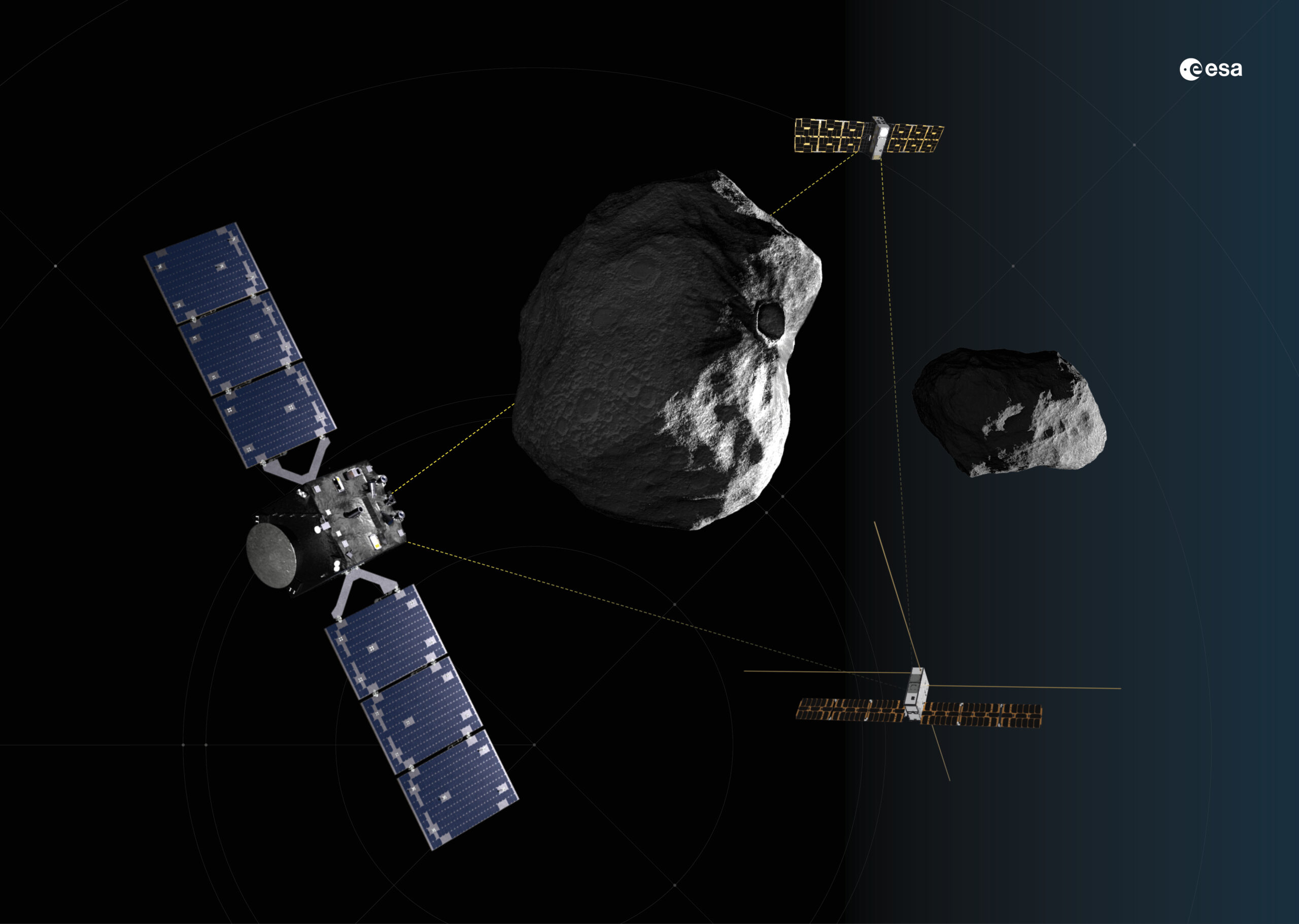
Hera’s arrival in late 2024 represents the secondary phase of this international effort. The spacecraft is equipped with advanced instrumentation, including high-resolution cameras and two deployable CubeSats, Juventas and Milani, which will perform close-proximity operations and attempt to land on the surface. These instruments are designed to map the impact scar and analyze the seismic response of the asteroid to the DART strike.
The Scale of the Impact and Structural Transformation
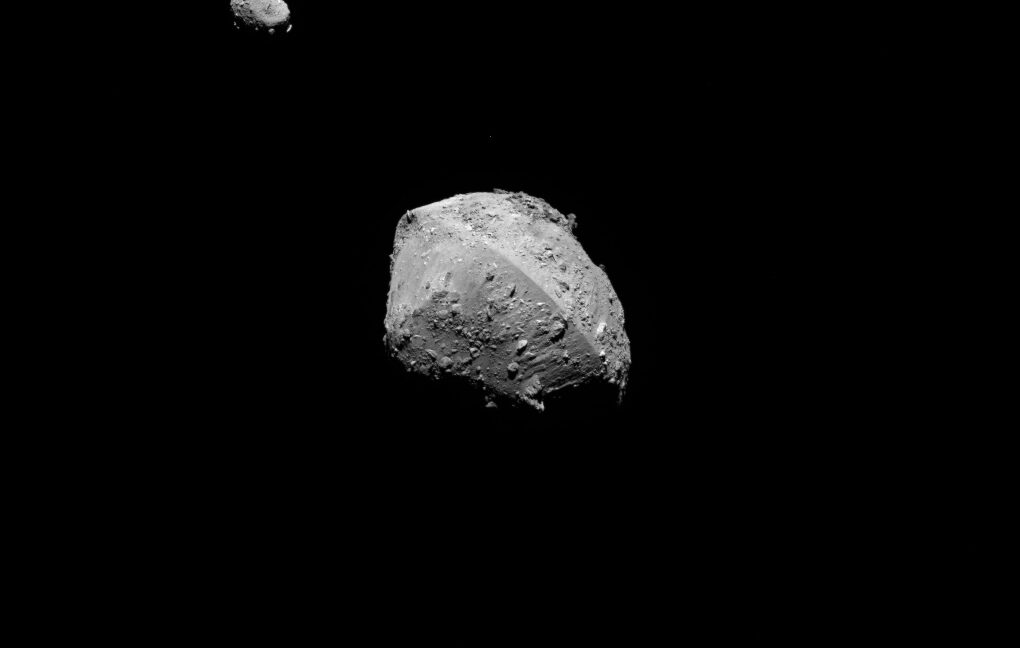
The first images transmitted by Hera have revealed a landscape drastically altered by the DART impact. While scientists had hypothesized that the collision would either form a crater or lead to a global deformation, the reality is a combination of both. The impact created a crater the size of a stadium, spanning a significant portion of the 500-foot-wide Dimorphos. This scale of destruction has left the moonlet in a state of "tumbling," with its rotation no longer synchronized or stable as it was prior to the impact.
Patrick Michel, the mission’s principal investigator from the Côte d’Azur Observatory, noted that the system is currently in a state of transition. The sheer size of the crater relative to the body of the asteroid suggests that the internal material might have shifted or been redistributed, effectively changing the shape of the moonlet. This phenomenon provides critical, albeit complex, data for planetary scientists who must now re-evaluate how asteroids of varying densities and compositions react to high-velocity impacts.
The Debris Cloud: A Field of Boulders
Perhaps the most unexpected discovery during Hera’s initial approach was the density of the debris environment. While earlier imagery from Hubble suggested a trail of material, the proximity of the Hera mission has revealed hundreds of boulders orbiting the binary system. These fragments range in size from the dimensions of a football to those of a large household appliance.
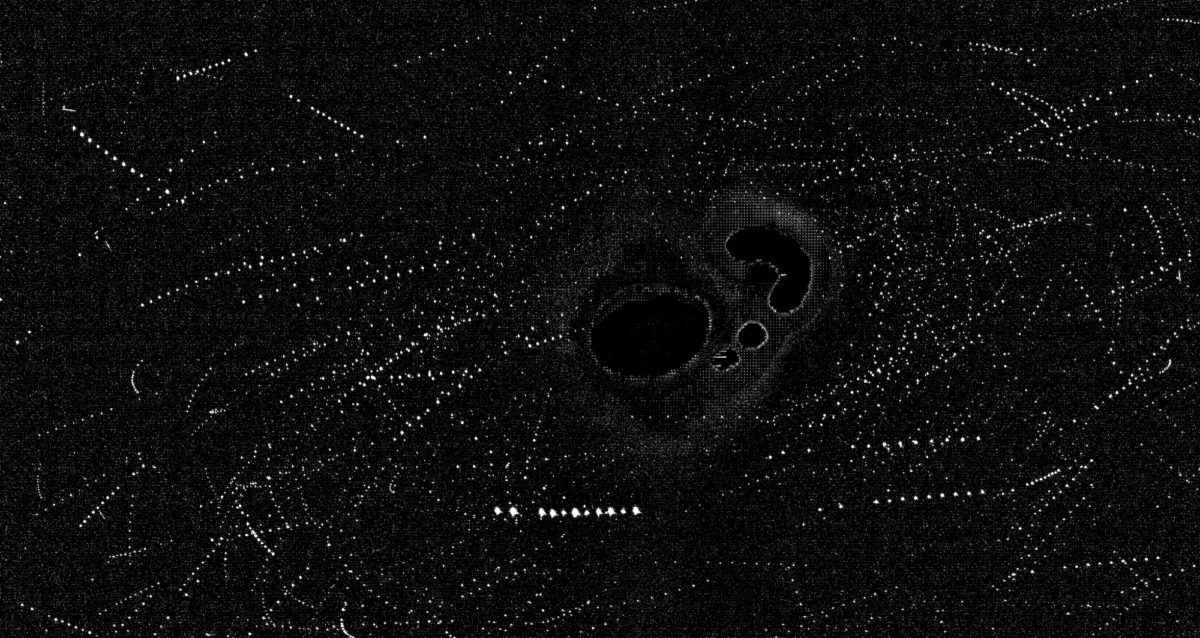
Naomi Murdoch, a planetary scientist at the Institut Supérieur de l’Aéronautique et de l’Espace, characterized the scene as a surprisingly crowded environment. By digitally subtracting the primary asteroids from composite long-exposure images, researchers identified a massive, swirling cloud of rock fragments. The question currently facing the science team is determining which of these boulders are newly ejected remnants of the DART impact and which are ancient debris from the asteroid’s formation.
Understanding this distinction is vital. If the boulders are predominantly fresh, they provide a snapshot of the material strength and structural integrity of Dimorphos. If they are ancient, they suggest that the Didymos system has been in a state of flux for much longer than previously understood. This distinction will be a primary focus of the CubeSats, which will analyze the mineralogical composition of the debris to determine its origin.
Implications for Planetary Defense
The primary motivation for this multi-mission effort is the long-term safety of Earth. Near-Earth asteroids vary significantly in their composition—some are solid, monolithic rocks, while others are "rubble piles" held together by gravity and friction. DART proved that we can move a moonlet, but Hera is intended to teach us exactly how much force is required for different types of celestial bodies.
The "breakthrough" that Michel alluded to involves anchoring predictive computer models in real-world data. Currently, simulations of asteroid deflection rely on assumptions about porosity, material cohesion, and internal density. By measuring the precise mass and composition of Dimorphos, Hera will transform these simulations from speculative models into reliable tools for mission planners.
If a future, hazardous asteroid were identified on an Earth-bound trajectory, policymakers and space agencies would need to know whether a kinetic impactor would successfully deflect the object or simply crater its surface. The lessons learned from the "mess" created by DART are the missing pieces of that puzzle. As the mission proceeds over the next six months, the data gathered will form the cornerstone of global planetary defense strategies.
Future Operations and Expected Data
As Hera continues its survey, the release of the Juventas and Milani CubeSats will represent the most ambitious aspect of the mission. By landing on Dimorphos, these small probes will conduct "ground truth" measurements, using radar and gravimeters to peek beneath the surface. These instruments will help determine if the interior of the asteroid is as fractured as its exterior appears, or if it possesses a solid core that helped it survive the DART impact.
The international cooperation between NASA and the European Space Agency on this project underscores the global nature of planetary defense. The combined findings will be shared with the broader scientific community, effectively creating a "manual" for future asteroid redirection missions. By the time Hera concludes its mission, humanity will have moved from a position of theoretical vulnerability to one of informed readiness. The chaos left by DART, once perceived as a simple crater, is now being recognized as a vast, data-rich laboratory that will define the future of space security for generations to come.