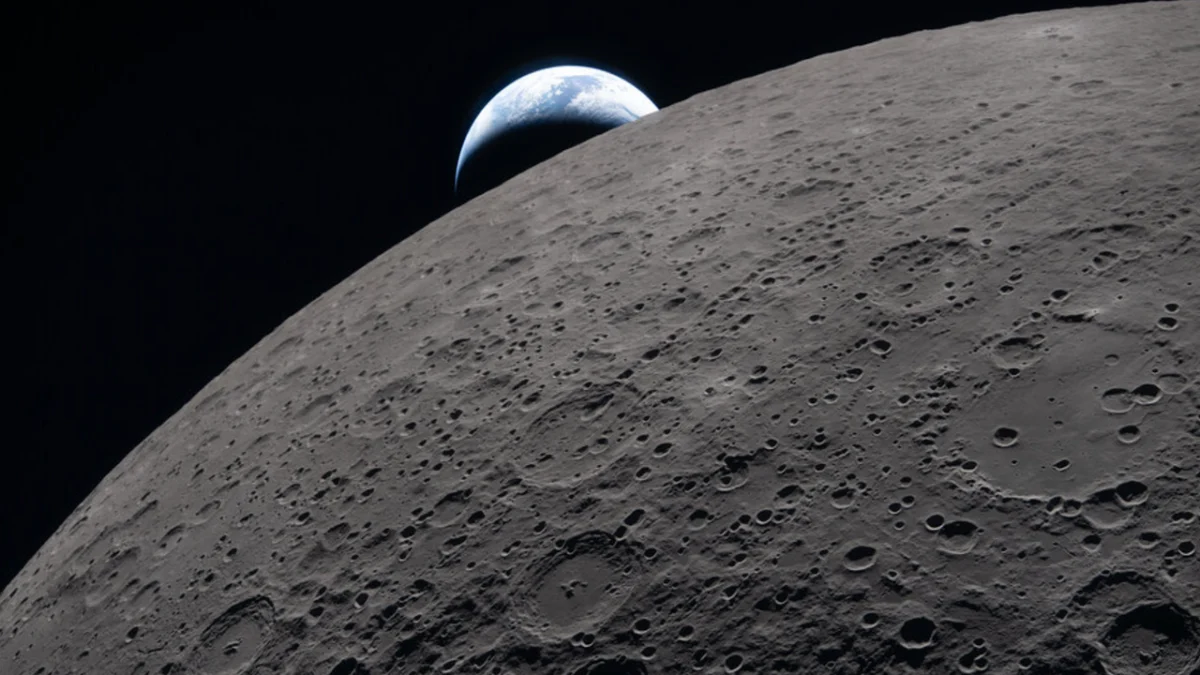
The Artemis 2 mission, a monumental leap for humanity’s return to the lunar realm, has not only achieved its ambitious objectives but has also profoundly rekindled the awe and wonder associated with space exploration, echoing the profound impact of its predecessors. The crew of Artemis 2, comprising astronauts Reid Wiseman, Victor Glover, Christina Koch, and Jeremy Hansen, embarked on a historic seven-hour lunar flyby aboard the Orion spacecraft, named "Integrity." This mission, culminating in April 2026, has provided a new generation with breathtaking perspectives and a deeply personal connection to the cosmos, mirroring the emotional resonance of the Apollo era while embracing the advancements of modern technology.
The author, Andrew Chaikin, a renowned space historian and author of "A Man on the Moon," eloquently captures this sentiment, drawing a direct parallel between his childhood fascination with space and the transformative experience of witnessing the Artemis 2 mission unfold. His personal narrative, starting from his five-year-old self in 1961 captivated by artist conceptions of space travel, to his twelve-year-old self in 1968, a self-proclaimed "space fanatic" glued to the television during the Apollo 8 mission, underscores the enduring power of lunar exploration to inspire. The fuzzy, almost dreamlike quality of the Apollo 8 broadcasts, as Borman, Lovell, and Anders became the first humans to orbit the Moon, left an indelible mark. Chaikin recalls the 20 hours the Apollo 8 crew spent in lunar orbit during Christmas week of 1968, and particularly the two TV broadcasts, which offered mesmerizing glimpses of craters gliding past the spacecraft windows. This raw, distant imagery, he reflects, perfectly encapsulated the momentous nature of the event and the vast gulf separating humanity from its celestial neighbor.
A New Era Dawns: The Artemis 2 Mission Unveiled
As the Artemis 2 mission approached, Chaikin admits to a palpable sense of anticipation mixed with a touch of uncertainty: Would this new endeavor evoke the same profound feelings of wonder that had characterized his youth? These doubts were quickly dispelled as the mission commenced. The Artemis 2 crew, launched in the Orion spacecraft, "Integrity," embarked on a journey that reactivated dormant parts of his fascination, parts that had lain quiet since the Apollo missions concluded in 1972. The seven-hour lunar flyby, meticulously documented and broadcast, offered an experience far removed from the Christmas Eve of 1968. NASA’s contemporary coverage featured extensive, high-definition views from within the Orion cabin, allowing viewers to witness the astronauts’ activities with a clarity that made them feel almost as if they were aboard the International Space Station, rather than a quarter-million miles from Earth.
This technological leap, however, was not merely about visual fidelity. The emotional tenor of the Artemis 2 mission stood in stark contrast to the more reserved, "Right Stuff" demeanor of the Apollo astronauts. Chaikin notes the astronauts’ uninhibited expressions of exhilaration and joy, a testament to the evolving human element in space exploration. The richness of detail shared in real-time, from geological observations to personal reflections, created an unprecedented level of intimacy between the crew and the global audience. Christina Koch’s poetic description of nascent lunar craters resembling "a lampshade with tiny pinprick holes and the light shining through. They’re so bright compared to the rest of the Moon," and Victor Glover’s visceral account of peering through a telephoto lens at the long shadows of the lunar terminator, imagining himself "off-road driving among jagged peaks," all served to immerse listeners in the alien yet strangely relatable lunar landscape.
The Spectacle of an Extended Lunar Eclipse
Perhaps the most awe-inspiring moment of the Artemis 2 mission, as recounted by Chaikin, was when "Integrity" passed into the Moon’s shadow, initiating a total solar eclipse that lasted nearly an hour – an event over ten times longer than most total solar eclipses visible from Earth. The external cameras captured the slow disappearance of the solar corona behind the Moon’s limb, a celestial ballet of light and shadow. Aboard Orion, the astronauts allowed their eyes to adjust, witnessing the Moon’s dark side silhouetted against a dim glow, with a crescent Earth hanging in the void, illuminated by Earthshine. Victor Glover’s exclamatory "We’ve just gone sci-fi" perfectly encapsulated the surreal nature of the experience. Reid Wiseman, struggling to find words, confessed, "No matter how long we look at this, our brains are not processing this image in front of us. It is absolutely spectacular. Surreal. There’s – I know there’s no adjectives. I’m gonna need to invent some new ones to describe what we are looking at out this window." This moment highlighted the profound limitations of human language in the face of such extraordinary cosmic phenomena.
A New Dawn for Deep Space Photography
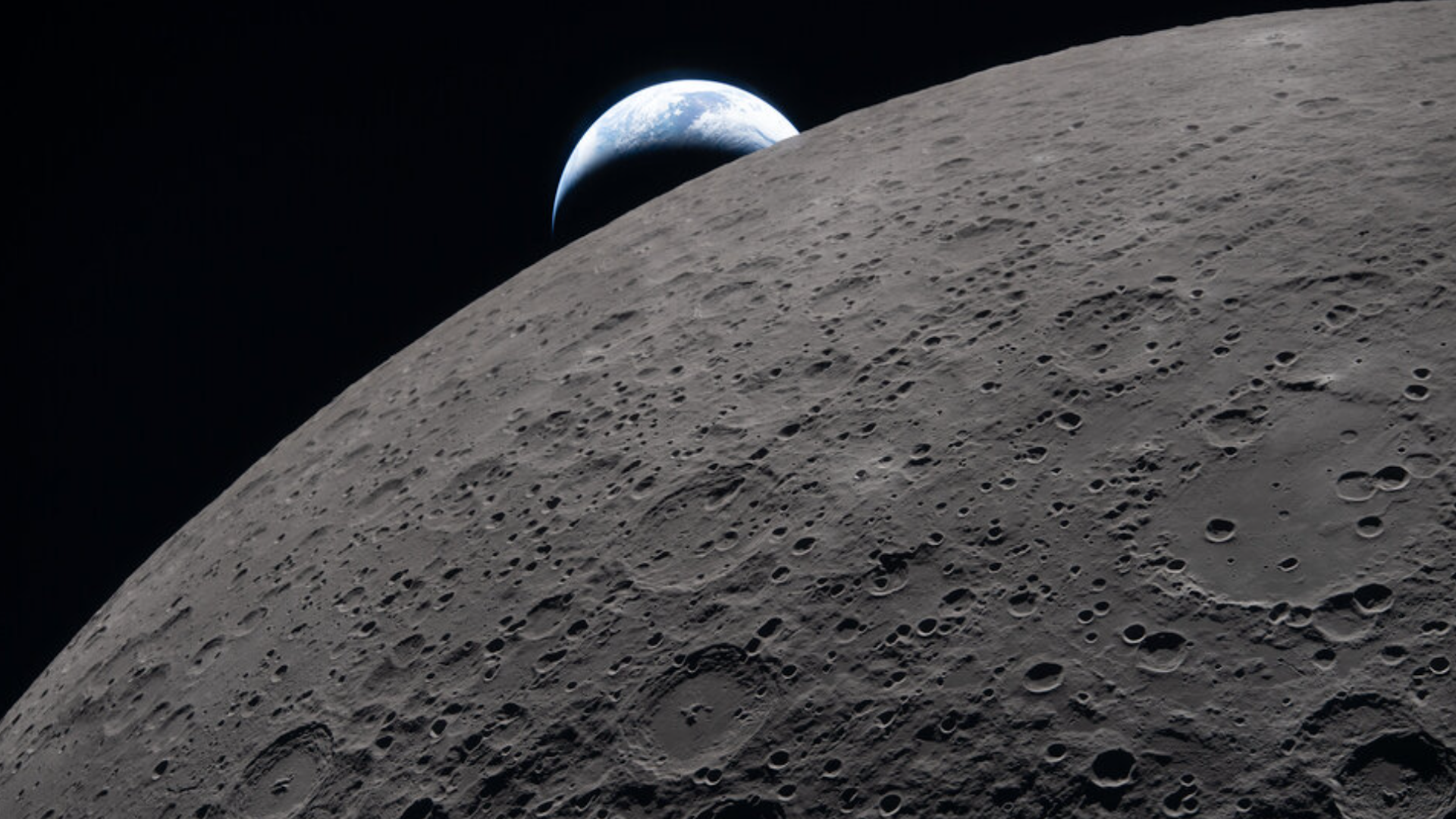
The morning after the lunar flyby, the astronauts’ photographic contributions further amplified the mission’s impact. Chaikin describes opening his laptop to discover the high-resolution digital images beamed back by the crew. This marked a significant departure from the post-Apollo era, where high-definition scans of mission film were not readily available for decades. Within hours of the event, Chaikin was presented with images of unparalleled beauty, including stunning portraits of a vibrant blue and white crescent Earth setting and then rising behind the stark, lifeless expanse of the lunar far side. These photographs were captured from the farthest point in deep space ever reached by humans, a record-breaking achievement for the Artemis 2 mission. The realization that a new era of human deep space exploration had truly begun, marked by such clarity and accessibility of imagery, filled Chaikin with a profound sense of excitement and relief.
Historical Context and Technological Advancements
The Artemis 2 mission builds upon the legacy of the Apollo program, which successfully landed humans on the Moon six times between 1969 and 1972. The Apollo program, a monumental undertaking during the Cold War, not only achieved a significant scientific and technological feat but also served as a powerful symbol of human ingenuity and ambition. The images captured by Apollo astronauts, particularly the iconic "Earthrise" photograph taken by the Apollo 8 crew, profoundly altered humanity’s perspective on its home planet, fostering a sense of global unity and environmental consciousness.
Artemis 2, part of NASA’s broader Artemis program, aims to establish a sustainable human presence on the Moon and eventually pave the way for human missions to Mars. The program represents a significant investment in space exploration, involving international partnerships and cutting-edge technology. The Orion spacecraft, designed for deep space human exploration, is a crucial component of this endeavor, built to withstand the rigors of long-duration spaceflight. Its advanced life support systems, navigation capabilities, and communication technologies enable a level of real-time interaction and data sharing that was unimaginable during the Apollo era.
Broader Implications and Future Prospects
The success of Artemis 2 has far-reaching implications. It reignites public interest in space exploration, inspiring a new generation of scientists, engineers, and astronauts. The detailed scientific data gathered during the mission will contribute to a deeper understanding of the Moon’s geology, its potential resources, and its role in the evolution of the solar system. Furthermore, the mission’s emphasis on human experience and emotional resonance underscores the intrinsic value of space exploration beyond its scientific and technological advancements. The ability to share such profound moments with people across the globe fosters a collective sense of achievement and shared humanity.
The lessons learned from Artemis 2 will be invaluable as NASA and its international partners prepare for future Artemis missions, including Artemis 3, which aims to land the first woman and the next man on the lunar surface. The data and experiences gained from these missions will be critical for developing the technologies and strategies necessary for long-duration stays on the Moon and eventual human missions to Mars. The journey that began with the distant, fuzzy images of Apollo 8 has now evolved into an immersive, deeply personal experience, thanks to the technological prowess and human spirit embodied by the Artemis 2 crew. As Andrew Chaikin concludes, looking ahead, the future of human exploration is not just about looking back at past achievements but about boldly venturing into the unknown, carrying the spirit of wonder and discovery to new frontiers. The echoes of the past are clearly heard in the present, fueling an optimistic outlook for the continued exploration of space.
Andrew Chaikin, the author of the celebrated book "A Man on the Moon: The Voyages of the Apollo Astronauts" (Viking, 1994), continues to be a prominent voice in the space exploration community. His website, www.DoSpaceBetter.com, serves as a platform for his ongoing insights and contributions to the discourse on space. Chaikin’s extensive background as a contributing writer for Space.com, coupled with his bestselling works such as "John Glenn: America’s Astronaut" and "A Passion for Mars," solidifies his position as a leading authority on human spaceflight. A graduate of Brown University, his early career included an internship at NASA’s Jet Propulsion Laboratory, where he contributed to the Mars Viking missions, providing him with invaluable firsthand experience in the field of planetary science and exploration.