In a landmark achievement for experimental physics, a research team at Northwestern University has successfully isolated, trapped, and cooled a single positron—the antimatter counterpart to the electron—to temperatures approaching absolute zero. This development, detailed in the journal Physical Review Letters, represents a significant leap forward in our ability to manipulate antimatter with the same level of precision previously reserved for ordinary matter. By creating what the team terms a "one-positron quantum cyclotron," researchers have opened a new window into the Standard Model of particle physics, potentially offering a path to resolve one of the most perplexing contradictions in modern science: the asymmetry between matter and antimatter in the early universe.
The Great Cosmic Mystery
The foundational mystery driving this research is rooted in the Big Bang theory. According to the Standard Model, the primordial conditions of the early universe should have produced equal quantities of matter and antimatter. When these two substances meet, they undergo instantaneous annihilation, releasing energy and leaving behind nothing but radiation. If the model were perfectly symmetrical, the universe as we observe it—composed almost entirely of matter—should not exist. The current reality suggests that there is a fundamental "crack" in our understanding of physics, a mechanism that allowed matter to survive while antimatter largely vanished.
Gerald Gabrielse, the Board of Trustees Professor of Physics at Northwestern’s Weinberg College of Arts and Sciences and director of the university’s Center for Fundamental Physics, has spent decades interrogating this discrepancy. "The big mystery of the universe is that the Big Bang should have created equal amounts of matter and antimatter," Gabrielse explained. "If that were true, they would annihilate, and we would be left with nothing. There is clearly something wrong with that theory, and that is what we are trying to figure out."
Chronology of Antimatter Research
The journey toward this achievement is the culmination of decades of incremental progress in high-precision measurement and particle trapping.
- 1932: Carl Anderson discovers the positron, confirming Paul Dirac’s theoretical prediction of antimatter.
- 1980s–1990s: The development of the Penning trap—a configuration of electric and magnetic fields—revolutionized the ability to hold individual charged particles in a vacuum.
- Early 2000s: Gabrielse’s team pioneered techniques for slowing and cooling antiprotons, laying the groundwork for low-energy antimatter physics.
- 2010s: The research group refined the "one-electron quantum cyclotron," achieving a record-breaking precision in measuring the magnetic moment of an electron—to within one part in 10 trillion.
- 2024: The current achievement, led by doctoral student Thomas Myers, applies this established electron-control framework to the much more volatile positron, marking the first time a positron has been held and manipulated with such quantum-state precision.
Technical Challenges: Trapping the Untrappable
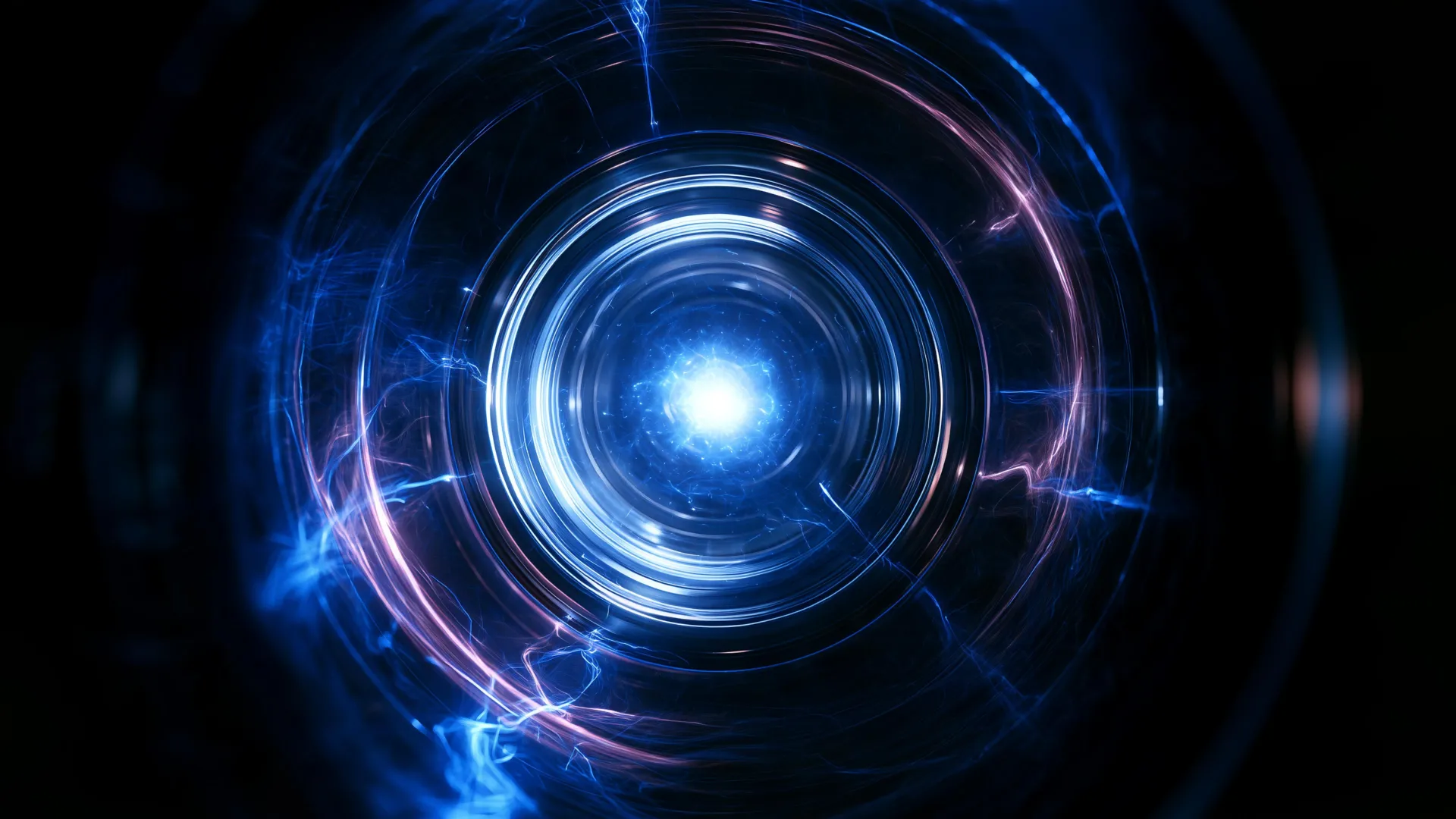
The primary obstacle in working with positrons is their inherent instability when in proximity to matter. Because positrons are the mirror image of electrons, any collision with the electrons present in the walls of a conventional container results in mutual destruction. To overcome this, the Northwestern team utilized a specialized vacuum chamber where the positron is suspended in a "nothingness" defined by carefully tuned electromagnetic fields.
The process begins with the radioactive decay of sodium-22, an isotope that emits high-energy positrons. These particles move at velocities far too high for precision measurement. The team developed a cooling apparatus to decelerate the positrons, guiding them into the center of the trap where the temperature is maintained at 300 millikelvins—a mere fraction of a degree above absolute zero. At this extreme chill, the positron loses its kinetic energy, allowing the researchers to confine it for months at a time, effectively "taming" a particle that is otherwise destined for a fleeting existence.
Testing the Standard Model
The Standard Model is arguably the most successful theory in the history of science, having predicted the existence of the Higgs boson and explaining the behavior of electromagnetism and the strong and weak nuclear forces. However, it is fundamentally incomplete because it fails to account for gravity and, crucially, the imbalance of matter and antimatter.
By measuring the magnetic properties of the trapped positron with the same extreme precision used for electrons, the researchers are looking for the smallest possible deviation. If the magnetic properties of the electron and the positron are not perfect mirror images, it would signal a violation of CPT symmetry (Charge, Parity, and Time). Such a finding would be revolutionary, providing the first concrete evidence of "new physics" that could explain why matter dominates the cosmos.
"We are very precisely examining the most fundamental and simple systems to find where the theory breaks down," said Gabrielse. "We hope to find an unambiguous answer."
Scientific Significance and Future Implications
The implications of this work extend beyond particle physics. The ability to control a single antimatter particle suggests that future experiments could involve complex quantum logic operations using antimatter, potentially leading to new types of quantum sensors.
Furthermore, the academic community has noted the rigor of the methodology. By comparing the "one-positron quantum cyclotron" with the "one-electron quantum cyclotron," the team is creating an internal control mechanism. If a difference is detected, it cannot be attributed to experimental error, as the techniques used to trap and measure both particles are essentially identical.
The scientific community, including independent physicists who review such high-stakes research, views this as a vital step in "stress-testing" the Standard Model. If the results confirm the predictions of the Standard Model—meaning the electron and positron are identical in their properties—it narrows the search for the cause of matter-antimatter asymmetry to other, even more complex areas of physics, such as unknown interactions in the early universe.
Funding and Support
This research, supported by the National Science Foundation (grant number 2110565), underscores the importance of long-term funding for fundamental physics. Projects that seek to answer "why the universe exists" rarely offer immediate commercial applications, yet they provide the foundational knowledge required for all future technological breakthroughs.
As Thomas Myers and his colleagues continue to refine their measurements, the scientific world remains in a state of anticipatory watch. The prospect of finding a discrepancy is high-stakes; as Gabrielse noted, "If it turns out they are not equal, that would be the biggest discovery in physics in the last century." For now, the single, cold, and trapped positron sits in its quantum ground state in a Northwestern lab, a tiny beacon of antimatter that may yet hold the secret to why we, and everything we see, exist at all.
Analysis of the Current Landscape
The success of the Northwestern team highlights a shift in experimental physics toward extreme isolation. By minimizing the environment to a single particle, researchers are bypassing the chaotic noise of macroscopic systems. This "minimalist" approach to experimentation is likely to be the standard for future attempts to probe the limitations of current physical laws.
While the Standard Model has survived every test thrown at it for over 50 years, the "loophole" regarding the absence of antimatter remains a glaring vulnerability. By isolating the positron, Northwestern University has effectively placed a spotlight on this loophole. Whether this leads to a confirmation of existing theories or a paradigm-shifting discovery, the ability to control antimatter at the quantum level is, in itself, a historic triumph of human ingenuity. The experiment serves as a reminder that the most profound questions about our existence are often hidden within the smallest, most elusive particles, waiting for the right tools—and the right patience—to be revealed.