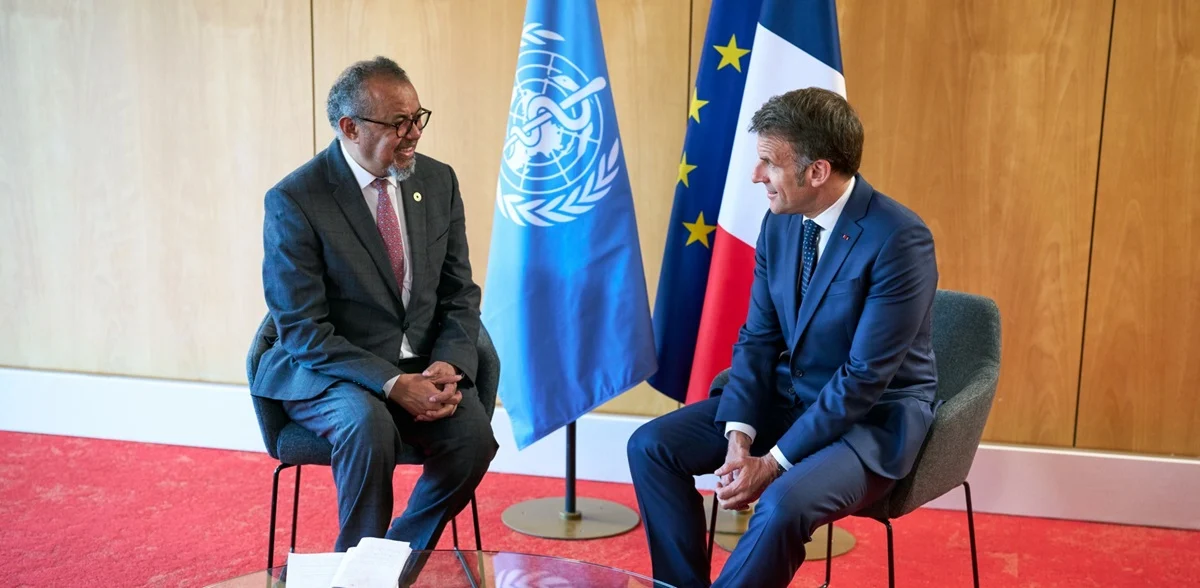
On World Health Day, a pivotal moment unfolded in France as global leaders convened for the inaugural One Health Summit. Hosted by the French Republic, this landmark event saw the World Health Organization (WHO) and its partners unveil a comprehensive suite of concrete actions designed to bolster defenses against emerging health crises by safeguarding people, animals, and the planet in unison. The summit represents a significant stride in translating the "One Health" approach – a holistic understanding that human health, animal health, and environmental well-being are inextricably linked – into tangible, global action. The theme for this year’s World Health Day, "Together for health. Stand with science," resonated throughout the proceedings, underscoring the collaborative spirit and evidence-based approach driving these initiatives.
The urgency for such a unified strategy could not be more pronounced. The world currently grapples with a confluence of unprecedented challenges, including escalating climate change, pervasive environmental degradation, compromised food and water safety, and a critical loss of biodiversity. These factors, coupled with inequitable access to healthcare, create a fertile ground for the emergence and spread of infectious diseases. Scientific evidence underscores this interconnectedness, with approximately 60% of known human infectious diseases originating in animals, and a staggering 75% of emerging infectious diseases being zoonotic in nature. The devastating impact of the COVID-19 pandemic serves as a stark reminder of the global vulnerability, having caused an estimated 15 million deaths and trillions of dollars in economic losses globally during 2020-2021 alone.
In a proactive effort to prevent future pandemics, the WHO and its international collaborators are reinforcing the One Health framework. This involves fostering unprecedented interdisciplinary collaboration among experts from the health, agriculture, environment, and scientific sectors. The objective is to enhance early detection of potential risks and expedite rapid, coordinated responses.
Dr. Tedros Adhanom Ghebreyesus, Director-General of the WHO, emphasized the fundamental interconnectedness of global health: "The health of people, animals, and the environment we share are inextricably interwoven, and we cannot protect one without protecting all three. The One Health approach brings together expertise to work across silos and sectors to prevent and respond to threats more effectively. WHO thanks France for hosting this Summit, and we remain committed to working with partners and countries to turn commitment into action and accelerate global progress for humans, animals, and our planet."
France, as the host nation, reaffirmed its steadfast commitment to advancing the One Health agenda, championing international cooperation, fostering robust global scientific partnerships, and catalyzing the development of practical, implementable solutions. President Emmanuel Macron of the Republic of France articulated this vision, stating, "One Health is not just about protecting health, it is about recognizing that we live as one system, where the well-being of humans, animals, and the environment is inseparable. France is determined to move One Health from ambition to implementation, working with the World Health Organization and our global partners to prevent the next crisis before it begins. Science must guide our action, and cooperation must be our strength."
The Summit brought together a distinguished assembly of Heads of State, ministers, leading experts, and policymakers, underscoring the critical need for coordinated efforts. The discussions highlighted how unified action strengthens international dialogue and effectively mobilizes both public and private sector partners towards a shared objective. The outcomes of the Summit are poised to inform ongoing international deliberations, including those within the G7 framework, on preparedness strategies and coordinated responses to health threats at the crucial human-animal-ecosystem interface.
WHO Announces Four Pillars of Enhanced One Health Action
In a significant development, the WHO, in conjunction with its global partners, has outlined four major initiatives designed to operationalize and amplify the One Health approach. These actions represent a strategic shift towards more integrated and impactful interventions.
1. Establishment of a New Global Network of One Health Institutions
A cornerstone of the announced actions is the planned launch of a new Global Network of One Health Institutions. This network will be instrumental in achieving the objectives of the One Health Joint Plan of Action and will actively seek the participation of the Quadripartite partners – the Food and Agriculture Organization of the United Nations (FAO), the World Organisation for Animal Health (WOAH), the United Nations Environment Programme (UNEP), and the WHO.
This innovative initiative is designed to harness multidisciplinary expertise from around the globe, providing enhanced and more cohesive support to countries implementing One Health strategies. By bridging the gap between global guidance and practical, on-the-ground application, the network aims to strengthen training programs and foster peer learning through the WHO Academy and other relevant institutions. This will ultimately create a more focused and country-centric delivery model for One Health implementation, ensuring that global strategies translate into tangible improvements in health security. The network’s establishment signifies a commitment to building robust national capacities for disease surveillance, risk assessment, and response, particularly in regions most vulnerable to emerging zoonotic threats.
2. Strengthening Scientific Foundations for Global Action
Recognizing the indispensable role of science in guiding effective health policy, the WHO and its Quadripartite partners have announced the extension and expansion of the One Health High-Level Expert Panel (OHHLEP). OHHLEP, already recognized as the world’s leading scientific advisory body on One Health, will have its mandate extended through 2027, with a subsequent phase planned for 2027-2029. This extended tenure reinforces its critical role in three priority areas: shaping the global research agenda to address emerging threats, providing scientific support for the One Health Joint Plan of Action, and driving high-level advocacy grounded in robust scientific evidence.
The expanded mandate will allow OHHLEP to delve deeper into complex issues such as the impact of climate change on disease emergence, the role of antimicrobial resistance in a One Health context, and the development of novel diagnostic and surveillance tools. The panel’s work is crucial for ensuring that global policies and interventions are informed by the latest scientific understanding, thereby maximizing their effectiveness and efficiency. The continuation of OHHLEP signals a long-term commitment to evidence-based decision-making in the face of evolving health challenges.
3. Renewed Push to Eliminate Rabies by 2030
In a concrete demonstration of the One Health approach’s ability to target specific diseases, the WHO, WOAH, and the Institut Pasteur have launched a revitalized global initiative to eradicate human deaths from dog-mediated rabies by 2030. This disease, tragically, claims the lives of nearly 60,000 people annually, with a disproportionate number of victims being children.
This renewed initiative, led by countries most affected by rabies, aims to strengthen political commitment at national and international levels and enhance community-based surveillance and research efforts. By using rabies elimination as a model, the program intends to build more resilient and comprehensive One Health surveillance and preparedness systems that can be applied to other zoonotic diseases. The success of this initiative will not only save countless lives but also serve as a powerful testament to the effectiveness of cross-sectoral collaboration in tackling shared health threats. The focus on community engagement and local leadership is a critical component, recognizing that sustainable solutions must be rooted in the contexts where they are implemented.
4. A Unified Strategy to Address Avian Influenza Threats
The persistent threat of avian influenza, with its potential for widespread human and animal impact, has prompted the WHO and Quadripartite partners to present a new Strategic Framework for Collaboration on avian influenza. This framework is designed to consolidate and strengthen coordination across surveillance, risk assessment, preparedness, and response efforts. The goal is to move countries away from fragmented, reactive measures towards a cohesive One Health strategy that comprehensively addresses the multifaceted impacts of avian influenza. These impacts extend beyond public health to encompass food security, livelihoods, and biodiversity conservation.
The strategic framework emphasizes a proactive approach, focusing on early warning systems, coordinated vaccination strategies for both poultry and, where necessary, human populations, and enhanced communication protocols between animal and human health sectors. By fostering a unified approach, this initiative seeks to mitigate the economic and social disruptions caused by avian influenza outbreaks and to build greater resilience within affected communities and ecosystems. The framework acknowledges that addressing avian influenza effectively requires a deep understanding of its dynamics across different species and environments.
WHO Assumes Chairmanship of Quadripartite Collaboration, Enhancing Global Coordination
In a significant move to bolster global coordination, the WHO will assume the Chairmanship of the Quadripartite collaboration. This enhanced leadership role alongside the FAO, WOAH, and UNEP signifies a commitment to driving coordinated global action with greater impact. Under WHO’s stewardship, the Quadripartite partnership will prioritize delivering measurable results at the country level, streamlining governance structures, and aligning efforts around a focused set of high-impact priorities. This includes strengthening advocacy, norm-setting, and the generation of robust evidence to inform policy and practice.
The Chairmanship will aim to foster a more agile and responsive partnership, capable of rapidly addressing emerging health threats. By leveraging the collective expertise and mandates of each organization, the Quadripartite aims to create a more seamless and effective response mechanism for global health security. The focus on country-level impact underscores a commitment to ensuring that global initiatives translate into tangible benefits for communities worldwide.
Global Forum of WHO Collaborating Centres Opens, Catalyzing Scientific Innovation
Concurrent with the One Health Summit, the WHO is launching its first Global Forum of WHO Collaborating Centres (CCs), running from April 7th to 9th. This forum brings together high-level representatives, including the Minister of Health of France, alongside ministers from Germany, Indonesia, and South Africa, as well as over 800 WHO CCs from more than 80 countries.
The Global Forum serves as a forward-looking platform designed to deepen collaboration among leading academic and research institutions worldwide. Its primary objectives are to accelerate scientific innovation, promote data sharing, foster coordinated research efforts, and enhance capacity-building initiatives. By convening these vital centers of expertise, the forum aims to strengthen the scientific underpinnings of global health strategies and to translate cutting-edge research into practical solutions. The emphasis on collaboration among CCs highlights the importance of a robust and interconnected global scientific community in addressing complex health challenges.
Implications and Future Outlook
The One Health Summit and the concurrent Global Forum of WHO Collaborating Centres send an unequivocal message: tackling the intricate health challenges of the 21st century demands a fundamental shift towards stronger multilateral cooperation, increased investment in scientific research and innovation, and sustained, dedicated efforts to translate the One Health approach into concrete actions at both global and local levels. The initiatives announced represent a significant step forward, but their ultimate success will hinge on sustained political will, robust financial commitments, and the active engagement of all stakeholders – from governments and international organizations to local communities and individual citizens. The interconnectedness of our planet’s health systems necessitates a unified and scientifically grounded approach, and this summit has clearly charted a course towards a more resilient and secure future for all. The commitment to integrating human, animal, and environmental health is not merely a public health strategy; it is a paradigm shift essential for the long-term sustainability of life on Earth.