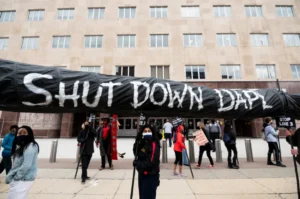
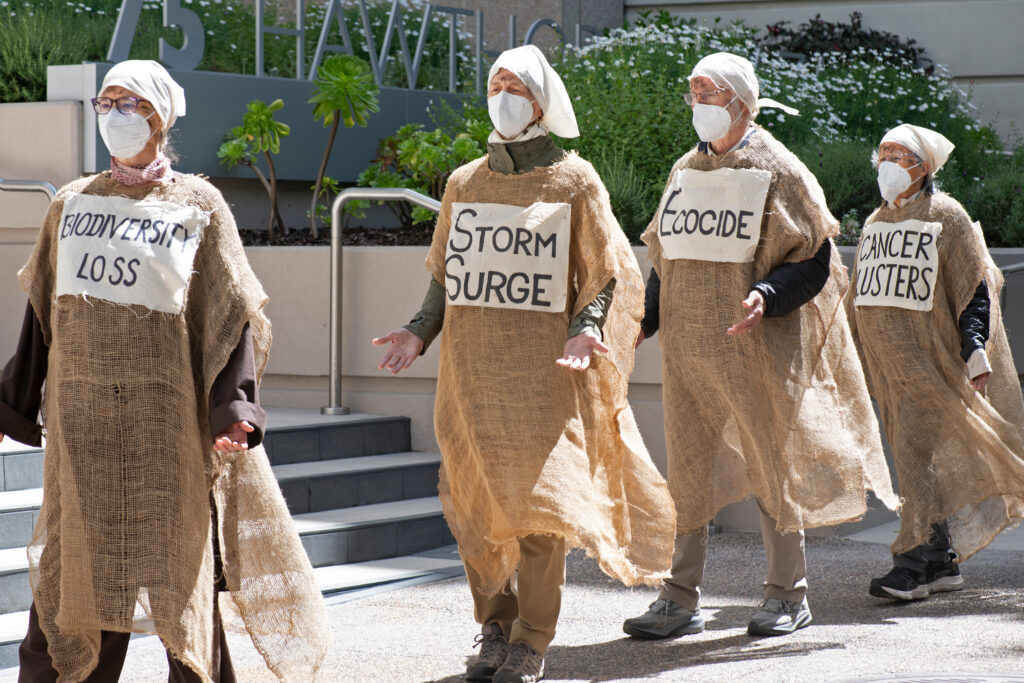
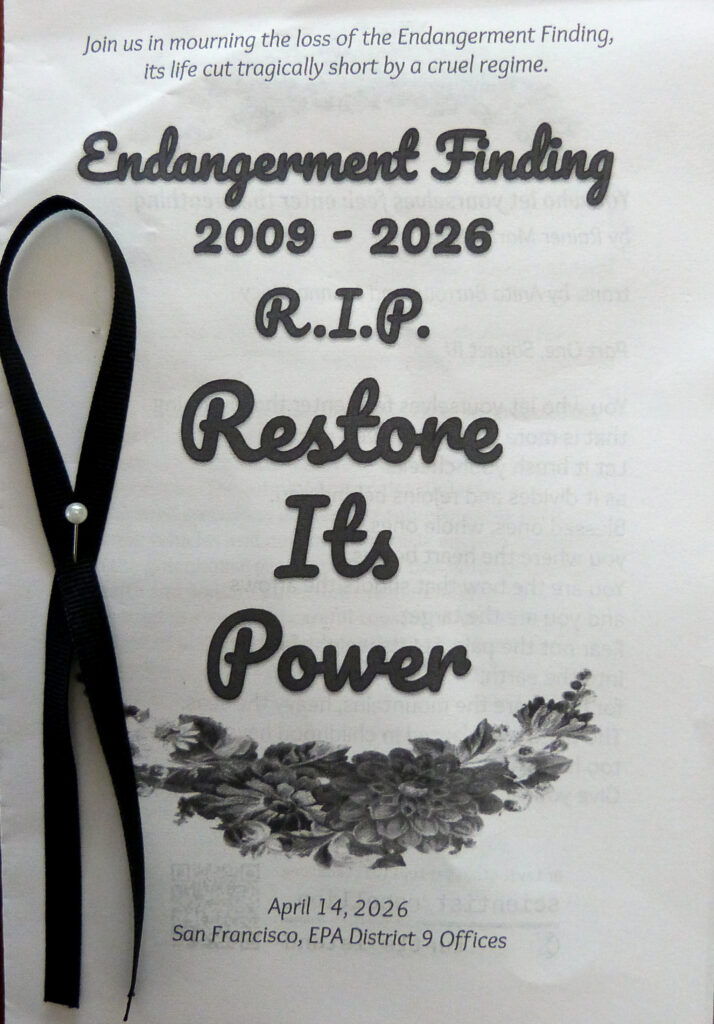
A procession of mourners, representing the tangible consequences of a warming world—from rising sea levels to the silent thawing of Arctic permafrost—gathered outside the Environmental Protection Agency’s Region 9 headquarters in downtown San Francisco on Tuesday. Dressed in sackcloth and ash, ancient symbols of grief and repentance, the group held a mock funeral to mark the formal rescission of the 2009 "endangerment finding," a cornerstone of American environmental law that for 15 years provided the legal bedrock for regulating greenhouse gas emissions.
The demonstrators, who referred to themselves as "lamentors," sought to provide a visual and emotional representation of what they describe as a catastrophic blow to federal climate policy. The event was organized by a coalition of climate activists alongside Scientist Rebellion Turtle Island, an international, multi-disciplinary collective of scientists who have pivoted from traditional research to direct action in response to the accelerating climate crisis.
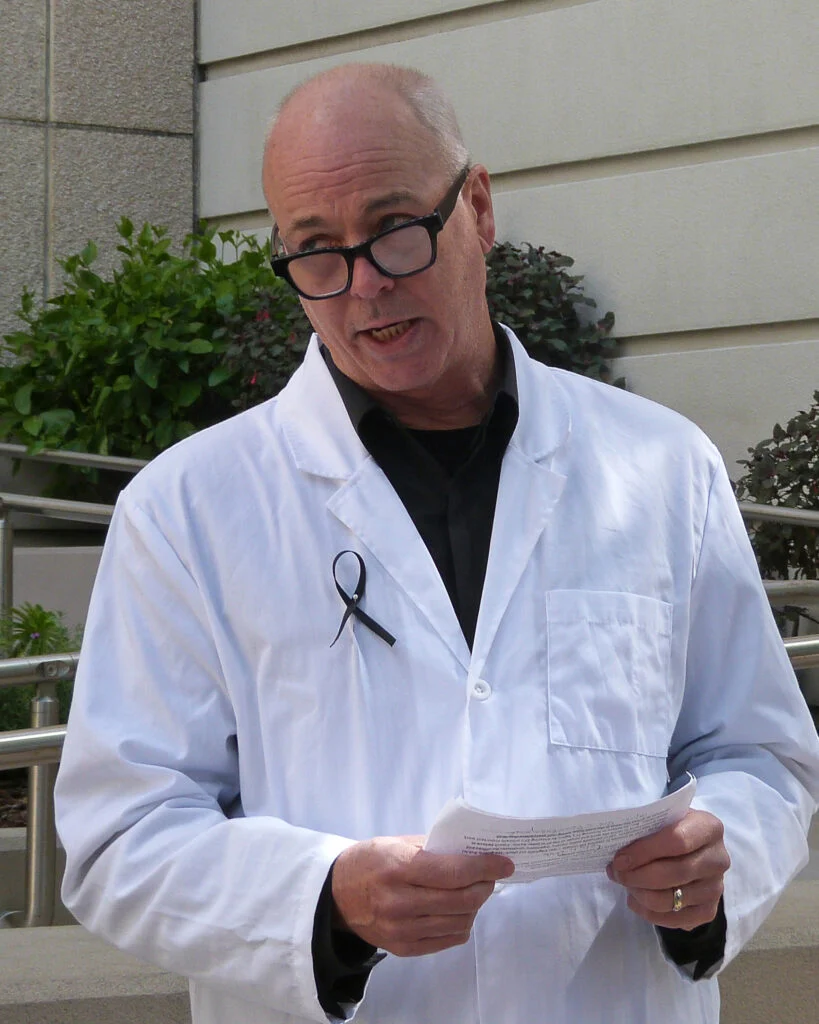
Michelle Merrill, an evolutionary anthropologist and lead organizer of the service, addressed the crowd with a eulogy for the regulation. She noted that the gathering was intended to pay respects to a rule that recognized the existential threat of carbon dioxide and other greenhouse gases to human health and welfare. The atmosphere was one of solemnity, punctuated by the reading of poems, the singing of dirges, and a moment of silence for the legislative tool they believe was "taken too soon."
The Legal and Regulatory Framework of the Endangerment Finding
The endangerment finding, originally issued in December 2009 during the Obama administration, was not merely a policy statement but a mandatory legal determination. It was the direct result of the 2007 Supreme Court case Massachusetts v. EPA, which ruled that greenhouse gases fit the definition of "air pollutants" under the Clean Air Act. The Court held that the EPA must determine whether these emissions endangered public health or welfare, or provide a valid reason why it could not do so.
Following an exhaustive review of scientific literature, the EPA concluded that six greenhouse gases—carbon dioxide, methane, nitrous oxide, hydrofluorocarbons, perfluorocarbons, and sulfur hexafluoride—threatened the well-being of current and future generations. This finding acted as a "trigger," legally obligating the agency to set emission standards for new motor vehicles and, by extension, providing the authority to regulate stationary sources like power plants and industrial facilities.
On February 12, the EPA announced it would rescind this finding, a move that effectively strips the agency of its primary mandate to curb fossil-fuel emissions. The repeal is scheduled to take official effect on April 20, marking a radical departure from nearly two decades of federal environmental jurisprudence.
A Shift in Administrative Philosophy
The decision to overturn the finding follows an executive order issued by President Donald Trump on his first day back in office, which directed EPA Administrator Lee Zeldin to reconsider the "legality and continuing applicability" of the 2009 rule. President Trump has characterized the rollback as the "single largest deregulatory action in American history," labeling the original finding a "disastrous Obama-era policy" that hindered industrial growth and national energy independence.
Administrator Zeldin has defended the rescission, stating that the agency is returning to its "statutory obligations" of protecting human health through what he describes as "gold standard science." In official statements, the EPA has dismissed previous climate projections as "doomsday models" designed to coerce public compliance rather than inform objective policy. An EPA spokesperson further argued that Congress never explicitly granted the agency the authority to impose sweeping greenhouse gas regulations on the transportation sector, suggesting that even a total elimination of U.S. vehicle emissions would have no "material impact" on global climate indicators.
However, the scientific community has largely condemned this pivot. Paul English, an environmental epidemiologist and member of Scientist Rebellion, argued during the San Francisco protest that the administration has provided no new peer-reviewed science to justify the reversal. He warned that the absence of federal oversight would lead to an increase in heatwaves, wildfires, and extreme weather events, ultimately compromising public health on a global scale.
Chronology of Federal Climate Regulation
The path to the current rescission has been marked by decades of legal and political volatility:
- 1999: A group of 19 organizations petitions the EPA to regulate greenhouse gas emissions from new motor vehicles.
- 2003: The George W. Bush administration’s EPA denies the petition, claiming the Clean Air Act does not authorize the regulation of GHGs for climate change purposes.
- 2007: The Supreme Court rules in Massachusetts v. EPA that greenhouse gases are pollutants and that the EPA must decide if they cause endangerment.
- 2009: The EPA issues the Endangerment Finding, concluding that GHG concentrations in the atmosphere threaten public health and welfare.
- 2015: The finding serves as the legal basis for the Clean Power Plan and the U.S. commitment to the Paris Agreement.
- 2017-2021: The first Trump administration attempts several rollbacks of climate rules but does not successfully rescind the underlying 2009 finding.
- 2021-2024: The Biden administration reinstates and strengthens various climate regulations based on the finding.
- February 2026: The EPA announces the formal rescission of the endangerment finding.
- April 20, 2026: The repeal is set to go into full legal effect.
Scientific Consensus and Data in Question
The original 2009 finding was built upon a massive repository of data. The EPA reviewed more than 380,000 public comments and synthesized findings from the Intergovernmental Panel on Climate Change (IPCC), the U.S. Global Change Research Program (USGCRP), and the National Research Council. These bodies provided evidence that human-induced climate change was contributing to more frequent and intense heatwaves, increased atmospheric water vapor leading to severe storms, and sea-level rise.
Current data from the National Oceanic and Atmospheric Administration (NOAA) indicates that atmospheric carbon dioxide levels have reached an average of 420 parts per million (ppm), a 50% increase over pre-industrial levels. Despite the EPA’s current stance that domestic vehicle regulations have a negligible impact, climate scientists point out that the U.S. transportation sector is one of the largest single sources of carbon emissions globally.
Greg Spooner, a physicist who offered a eulogy at the San Francisco event, expressed concern that the rescission represents a broader "destruction of science" within the federal government. "The United States is such an important country in terms of the future of the climate," Spooner said. "Dismantling our ability to regulate the emission of fossil fuel gases is catastrophic for the world."
Legal Challenges and Broader Implications
The rescission of the endangerment finding has already triggered a wave of litigation. A coalition of two dozen Democrat-led states, along with 12 major cities and counties, filed a lawsuit in the U.S. Court of Appeals for the D.C. Circuit in March. They argue that the EPA’s move is "arbitrary and capricious" and lacks the scientific justification required by the Administrative Procedure Act.
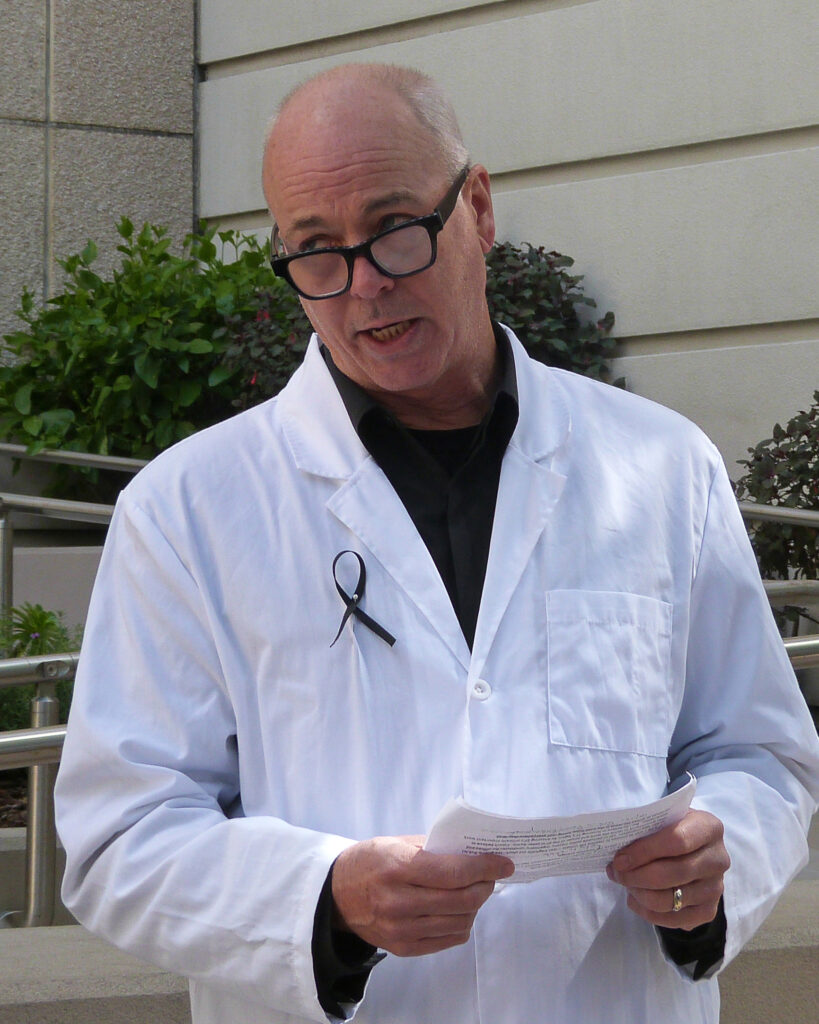
Joseph Goffman, who served as a top EPA air official during the Biden administration, described the repeal as "legally indefensible" and "morally bankrupt." Legal experts suggest that the case may eventually return to the Supreme Court, where the conservative majority’s "Major Questions Doctrine"—which limits the power of federal agencies to act on issues of "vast economic and political significance" without explicit Congressional authorization—could play a decisive role.
The implications of this policy shift extend beyond the legal realm. Economists have noted that the "social cost of carbon"—a measure of the economic damage caused by each ton of CO2 emitted—will likely be ignored in future federal cost-benefit analyses. This could lead to the approval of massive new fossil-fuel infrastructure projects that were previously deemed too environmentally costly.
A Community in Mourning and Resistance
Back in San Francisco, the "funeral" concluded with a call to action. Organizers distributed condolence cards to EPA staff members, many of whom are career scientists and civil servants. Michelle Merrill noted that many employees expressed quiet gratitude for the public support, reflecting an internal tension within an agency whose leadership is now at odds with much of its scientific staff.
"I know, as a scientist, what it feels like to lose the ability to do the work that you’re doing when it feels important," Merrill said. While the current administration moves toward a future of deregulation, the activists in San Francisco insisted that the spirit of the endangerment finding would be revived by the next generation of policymakers and citizens.
As the April 20 deadline approaches, the environmental movement appears to be transitioning from a strategy of regulatory cooperation to one of litigation and grassroots resistance. The "funeral" served as both a goodbye to a landmark rule and a rallying cry for the legal battles ahead, as the nation grapples with the fundamental question of the government’s role in mitigating a changing climate.