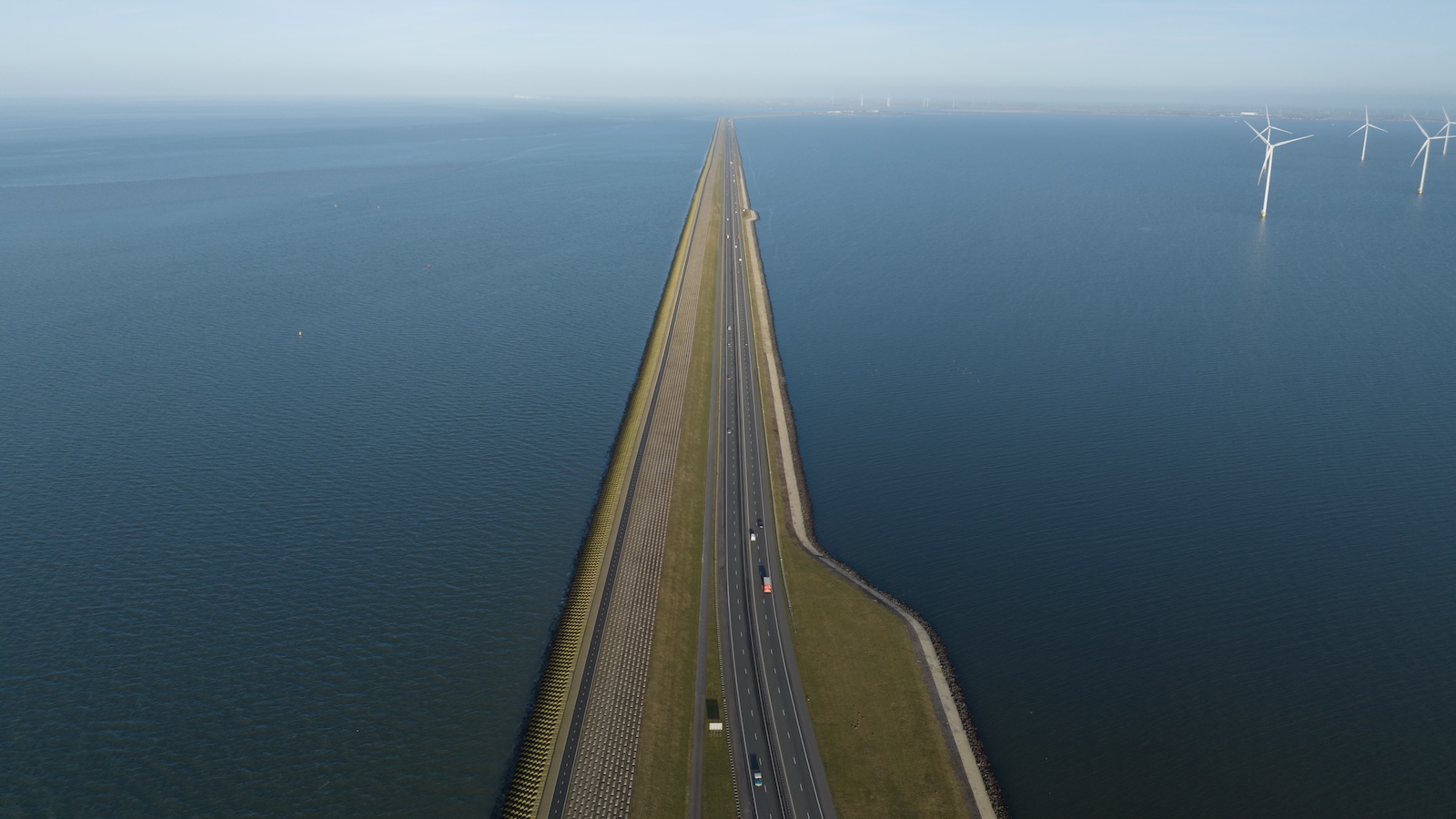
The Afsluitdijk, a monumental 32-kilometer causeway that has shielded the Netherlands from the North Sea since 1932, serves as a testament to human engineering and a stark reminder of the escalating battle against rising tides. For nearly a century, this primary barrier has protected the Dutch lowlands, but the passage of time and the quickening pace of climate change necessitated a massive overhaul costing hundreds of millions of dollars. Facing a significant fiscal challenge, the Dutch government opted for an unconventional financial route roughly a decade ago. Rather than funding the entire renovation through immediate public expenditure, the lead agency entered into a 25-year contract with a consortium of private contractors. This arrangement allowed the government to distribute payments over a quarter-century, effectively leveraging private capital to secure public safety.
As climate-induced risks like sea-level rise and extreme weather events intensify, cities across the globe find themselves at a similar financial crossroads. The cost of fortifying urban environments is projected to reach hundreds of billions of dollars—sums that far exceed the current capacity of municipal and national budgets. A landmark report recently released by C40, a global network of nearly 100 mayors committed to climate action, argues that the only viable path forward involves a paradigm shift in how adaptation is funded. Released on the sidelines of the World Bank’s spring meetings, the report advocates for a concerted effort to bring private investors into the fold to bridge the widening "adaptation gap."
The Financial Reality of a Warming World
The scale of the challenge is documented in the C40 report through a series of sobering statistics. Research highlighted in the document suggests that low- and middle-income countries alone will require between $256 billion and $821 billion by 2050 to defend against climate impacts. Despite this immense need, the current global financial architecture is heavily skewed toward climate mitigation—efforts to reduce greenhouse gas emissions—rather than adaptation. Currently, no more than 1 percent of all climate-related funding is directed toward urban adaptation projects.
The disparity exists largely because mitigation projects, such as renewable energy installations or energy-efficiency upgrades, often come with clear, predictable revenue streams. In contrast, adaptation is a "harder sell" for traditional financiers. "Avoiding future damages is not a financing stream you can take to the bank in the way that you can energy efficiency and decarbonization," noted Dan Zarrilli, the former chief resilience officer for New York City and current chief climate and sustainability officer at Columbia University. For private capital to flow, projects must be made "bankable," meaning they must offer a return on investment or a structured repayment mechanism that fits the risk profile of private lenders.
A Chronology of Evolving Climate Finance
The evolution of climate finance has moved from purely philanthropic or public-grant models toward more sophisticated public-private partnerships (PPPs). The history of the Afsluitdijk project serves as a chronological anchor for this shift. Completed in the early 1930s as a purely state-funded public work, its 21st-century rejuvenation required a hybrid model. This transition reflects a broader global trend over the last decade where municipalities have begun experimenting with "proof of concept" initiatives.
- 1932: Completion of the original Afsluitdijk, funded entirely by the Dutch state.
- 2014-2018: Early conceptualization of the C40 adaptation finance framework as urban leaders realized the limits of tax-based funding.
- 2019-2023: Implementation of diverse pilot projects, ranging from green bonds in Washington D.C. to reef insurance in Mexico.
- 2024: Release of the C40 report at the World Bank spring meeting, marking a formal push to normalize private sector involvement in global adaptation strategy.
Barbara Barros, the global head of adaptation finance for C40 and a primary author of the report, emphasizes that the goal is to "change the narrative." By showcasing ten successful case studies, the report provides a blueprint for cities that lack high credit ratings or the ability to raise taxes.
Case Studies in Creative Capital
The C40 report identifies a variety of models that demonstrate how private interests can align with public resilience goals. These examples span continents and vary in their financial structure:
- Kuala Lumpur, Malaysia: Designers integrated a stormwater management system with a revenue-generating toll road. During dry periods, the tunnel serves as a highway; during extreme rainfall, it is closed to traffic and used to divert floodwaters. The toll revenue provides the "bankable" stream necessary to attract private investment for a vital public safety asset.
- Washington D.C., USA: The city utilized Environmental Impact Bonds (EIBs). This "pay-for-success" model involves private investors providing upfront capital for green infrastructure. If the project meets specific performance targets in managing stormwater runoff, the investors receive a higher return; if it underperforms, the city pays less.
- Sao Paulo, Brazil: A wastewater recovery project focused on industrial reuse. By treating and selling recycled water to industrial clients, the city created a circular economy model that generates revenue while preserving freshwater resources for the population.
- Mexico: The implementation of parametric insurance for the Mesoamerican Reef. If a hurricane of a certain intensity hits the coast, an insurance payout is automatically triggered to fund the immediate restoration of the reef, which acts as a natural buffer against storm surges.
These models suggest that bundling smaller projects—which might otherwise be too niche for major banks—into larger investment packages can make them more attractive to multilateral development banks and institutional investors.
Regional Challenges and Political Shifts
The urgency of finding new funding sources is particularly acute in the United States, where the political landscape is shifting. Dakota Fisher, an adaptation specialist with the Natural Resources Defense Council (NRDC), points out that the federal government has traditionally been the primary benefactor for climate adaptation. However, as federal support fluctuates under different administrations, smaller municipalities are left vulnerable.
"Small towns often lack the tax base to fund large projects," Fisher explained. He noted that while the C40 report focuses on major global hubs, the principles of public-private collaboration must eventually scale down to rural communities. A small town in the Midwest facing chronic river flooding may not have the same access to green bond markets as Washington D.C., but the need for creative procurement and risk-sharing remains the same.
The retreat of centralized federal funding in some regions has forced a collective rethinking of the "dollar-for-dollar" approach to climate defense. For many local officials, the challenge is not just finding the money, but maintaining public trust. The perception that private firms might inappropriately profit from public funds or that essential services are being privatized is a significant political risk.
Risks, Ethics, and the Equity Gap
While the C40 report is optimistic, it does not ignore the inherent risks of involving the private sector. A separate report from the Zurich Climate Resilience Alliance cautions that profit motives can sometimes conflict with long-term public interests. Private investors naturally gravitate toward short-term gains, which may lead to under-investment in "slow-burn" adaptation needs that don’t yield immediate dividends.
Furthermore, there is the critical issue of equity. If adaptation projects are selected based on their "bankability" and revenue potential, there is a danger that the most vulnerable populations—those living in low-income areas with little economic activity—will be bypassed. Debbie Hillier, head of the Zurich Climate Resilience Alliance, warns that the private sector cannot be a panacea. "They cannot and they will not do everything," she said.
To mitigate these risks, the C40 report stresses the importance of strong social and environmental safeguards. Successful projects require clear rules around procurement, transparent revenue-sharing agreements, and a "shared vocabulary" between city planners and bankers. "It seems very capitalist, but the goal is to protect our citizens," Barros noted, emphasizing that the private sector should be involved specifically in projects where revenue streams are possible, leaving scarce public funds for the most critical, non-revenue-generating social protections.
Implications for the Future of Urban Governance
The shift toward private-sector involvement in climate adaptation represents a fundamental change in urban governance. For decades, infrastructure was seen as a public utility to be managed and funded by the state. In the era of the climate crisis, infrastructure is increasingly being viewed as an "asset class" that must be managed with the sophistication of a financial portfolio.
The long-term implications are twofold. First, cities will need to develop internal expertise in finance and contract law that rivals their engineering capabilities. Second, the global financial market will likely see an increase in "green bonds" and "resilience funds" as institutional investors seek to de-risk their portfolios against climate shocks.
As the World Bank and other international bodies look to the 2030 and 2050 climate milestones, the "Dutch model" of long-term private financing for public bulwarks is no longer an outlier—it is becoming the template. Without this infusion of capital, many cities may find themselves unable to act until a disaster has already struck, at which point the cost of recovery far exceeds the cost of prevention.
"It will take some years for cities to think differently," Barros concluded. However, with the "adaptation gap" currently sitting at hundreds of billions of dollars, the luxury of time is one resource that global cities can no longer afford. The integration of private capital into public resilience is not merely a financial strategy; it is increasingly a prerequisite for survival in a warming world.