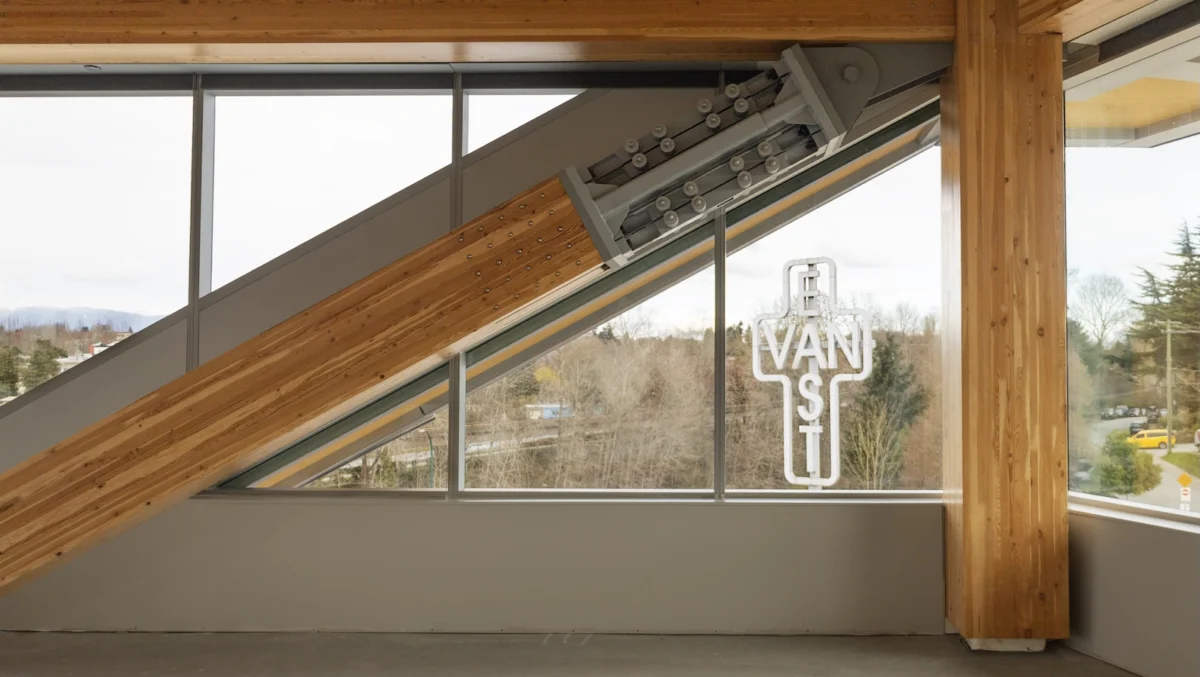
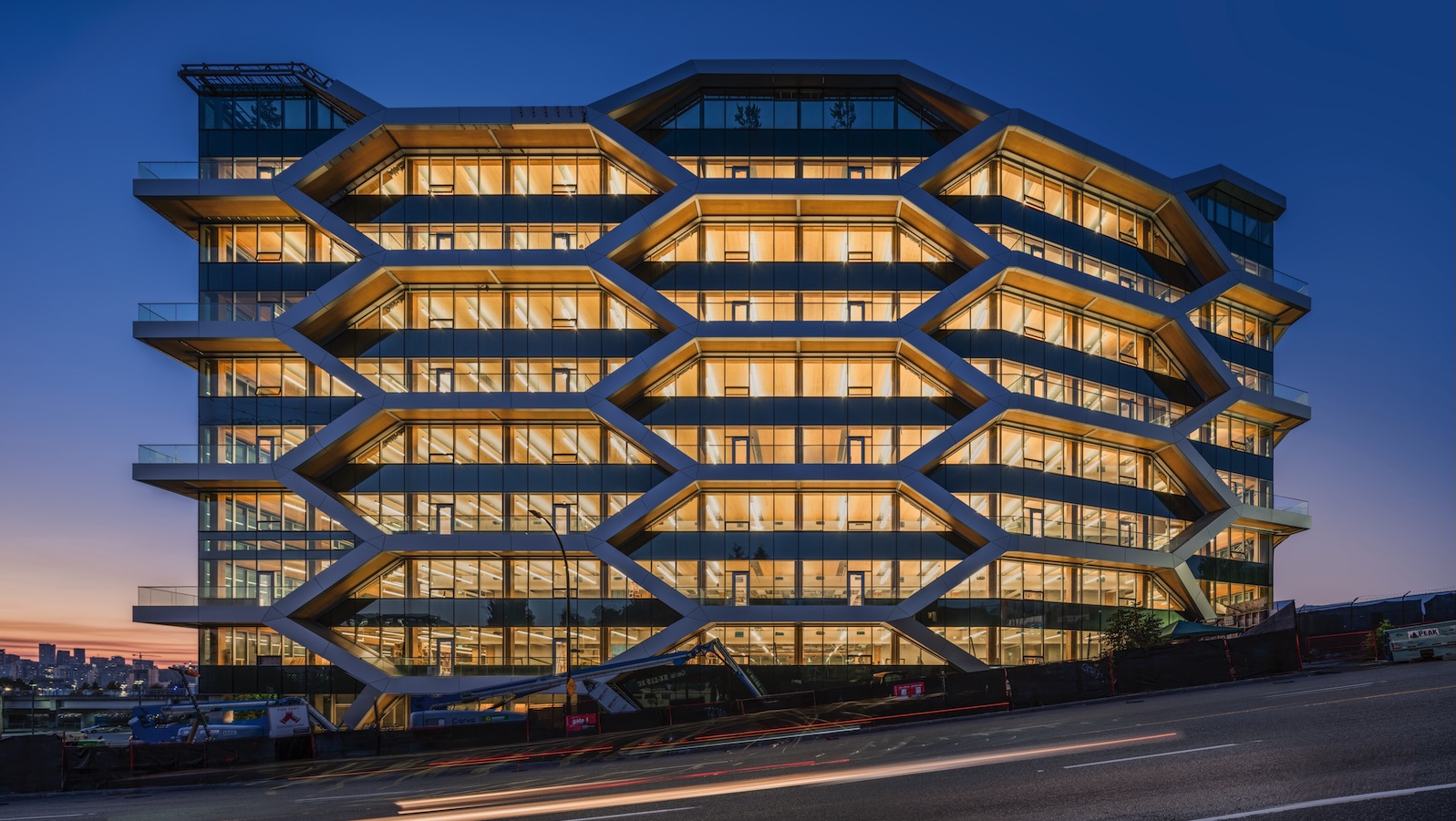
The architectural world is currently undergoing a profound transformation, pivoting away from the carbon-intensive steel and concrete frameworks that defined the 20th century and returning to a material used by humanity for millennia: wood. However, this is not the timber of traditional residential housing. The emergence of "mass timber"—engineered wood products such as cross-laminated timber (CLT) and glue-laminated timber (glulam)—is allowing architects to reach unprecedented heights. Last month, the completion of a 10-story building in Vancouver known as the Hive marked a significant milestone in this movement. As North America’s tallest brace-framed, seismic-force-resisting timber structure, the Hive represents a convergence of ancient biological adaptation and cutting-edge structural engineering, offering a potential solution to the construction industry’s massive carbon footprint.
A Paradigm Shift in Urban Construction
For over a century, the recipe for a skyscraper remained largely unchanged. As cities grew denser and towers taller, steel and concrete became the indispensable ingredients of the modern metropolis. These materials provided the necessary rigidity and strength to withstand the lateral forces of wind and the vertical loads of dozens of floors. However, the environmental cost of this "Grey Age" of construction has become increasingly untenable. The production of cement alone is responsible for approximately 8 percent of global carbon dioxide emissions, while the steel industry accounts for another 7 to 9 percent.
The shift toward mass timber is driven by a dual necessity: the need for resilient, high-density housing and the urgent requirement to decarbonize the built environment. Mass timber buildings act as "carbon sinks." While a tree grows, it absorbs carbon dioxide from the atmosphere through photosynthesis. When that tree is harvested and processed into engineered timber for a building, that carbon is sequestered within the structure for the duration of its lifespan—often a century or more. By contrast, traditional construction materials release carbon during their manufacture.
The Engineering of Mass Timber: CLT and Glulam
The secret to the strength of modern wooden skyscrapers lies in the engineering of the wood itself. Cross-laminated timber (CLT) consists of several layers of kiln-dried lumber boards stacked in alternating directions at 90-degree angles, which are then glued together under high pressure. This cross-lamination provides the material with exceptional structural rigidity in two directions, similar to the properties of a reinforced concrete slab but at a fraction of the weight.
Glue-laminated timber, or glulam, is used primarily for columns and beams. By bonding individual laminations of wood with moisture-resistant adhesives, engineers can create massive structural members that are stronger and more reliable than solid-sawn timber. Because these products are manufactured in a factory to precise specifications, they allow for faster on-site assembly and reduced waste.
Lindsay Duthie, an architect at Dialog—the firm behind Vancouver’s the Hive—notes that this approach represents a sophisticated return to architectural roots. "I think we’re going back to how we used to build, which was with more wood," Duthie said, highlighting that the modern iteration of timber construction is vastly more technically advanced than its predecessors.
A Chronology of the Tall Wood Movement
The journey toward the Hive and other timber "plyscrapers" has been a decades-long evolution of building codes and engineering confidence.
- Early 2000s: Initial experiments with CLT in Europe, particularly in Austria and Germany, demonstrate the material’s viability for multi-story residential buildings.
- 2016: The completion of Brock Commons Tallwood House at the University of British Columbia. At 18 stories, it briefly held the title of the world’s tallest timber-hybrid building, proving that wood could be used safely for student housing at scale.
- 2019: Mjøstårnet in Brumunddal, Norway, is completed, reaching 280 feet (85.4 meters). It is recognized as the world’s tallest all-timber building at the time.
- 2021: The International Building Code (IBC) is updated to include new provisions for mass timber construction, allowing for structures up to 18 stories tall, a move that opens the floodgates for American developers.
- 2022: The 284-foot Ascent MKE building opens in Milwaukee, Wisconsin. Standing 25 stories tall, it currently holds the record for the world’s tallest mass timber building.
- 2024: The Hive is completed in Vancouver. While not the tallest in the world, its specialized "brace-framed" design sets a new benchmark for seismic resilience in timber construction.
Seismic Resilience and the Hive’s Innovation
One of the primary challenges for tall buildings in regions like the Pacific Northwest is the risk of earthquakes. Vancouver sits near the Cascadia Subduction Zone, making seismic performance a non-negotiable requirement for any high-rise. To address this, the Hive utilizes Tectonus dampers—sophisticated mechanical devices that act as giant shock absorbers. During an earthquake, these dampers dissipate the kinetic energy that would otherwise cause structural failure, allowing the building to sway and then "re-center" itself without sustaining permanent damage.
This technology has been validated by rigorous scientific testing. At the University of California, San Diego (UCSD), researchers recently conducted a series of tests on a full-scale, 10-story timber structure using one of the world’s largest "shake tables." The building featured a "rocking wall" system—a mass timber core anchored to the foundation with high-strength steel rods that allow the building to tilt during a quake and snap back into place.
Shiling Pei, a professor of civil and environmental engineering at the Colorado School of Mines, participated in the study, which simulated 88 different seismic events. "It performed phenomenally," Pei reported, noting that the building survived the equivalent of several major earthquakes with no structural damage. This resilience is a key component of sustainability; a building that does not need to be demolished or extensively repaired after a disaster avoids the massive carbon expenditure associated with reconstruction.
Forest Management and Ecological Benefits
A common concern regarding the rise of mass timber is its impact on forest health. However, experts argue that a robust market for mass timber can actually improve forest management. Because CLT and glulam are engineered from smaller pieces of wood, they can be manufactured using small- and medium-diameter trees that are often removed during "thinning" operations.
The U.S. Forest Service and other agencies frequently thin forests to reduce the fuel load that contributes to catastrophic wildfires. Historically, this low-value wood had few commercial uses. Mass timber provides an economic incentive for these thinning projects, which help restore ecosystems to their natural, less-crowded state. Properly managed forests, where timber is harvested sustainably and replaced with new growth, create a continuous cycle of carbon sequestration that is far superior to the extractive processes required for iron ore and limestone.
Overcoming the Safety Myth: Fire Resistance
The most frequent question regarding wooden skyscrapers is: "What about fire?" To the layperson, a wooden building seems like a tinderbox. However, mass timber behaves very differently from the light-frame wood used in residential homes.
When exposed to fire, thick mass timber beams do not ignite and burn through like a matchstick. Instead, they form a "char layer" on the outside. This carbonized layer acts as an insulator, protecting the structural integrity of the wood’s core from the heat. It is a phenomenon similar to how a large log in a campfire takes hours to burn through, even as the outside turns black. Building regulators in jurisdictions like British Columbia have approved these structures only after extensive fire-testing proved they could meet or exceed the safety ratings of steel and concrete buildings.
Biophilia and the Human Element
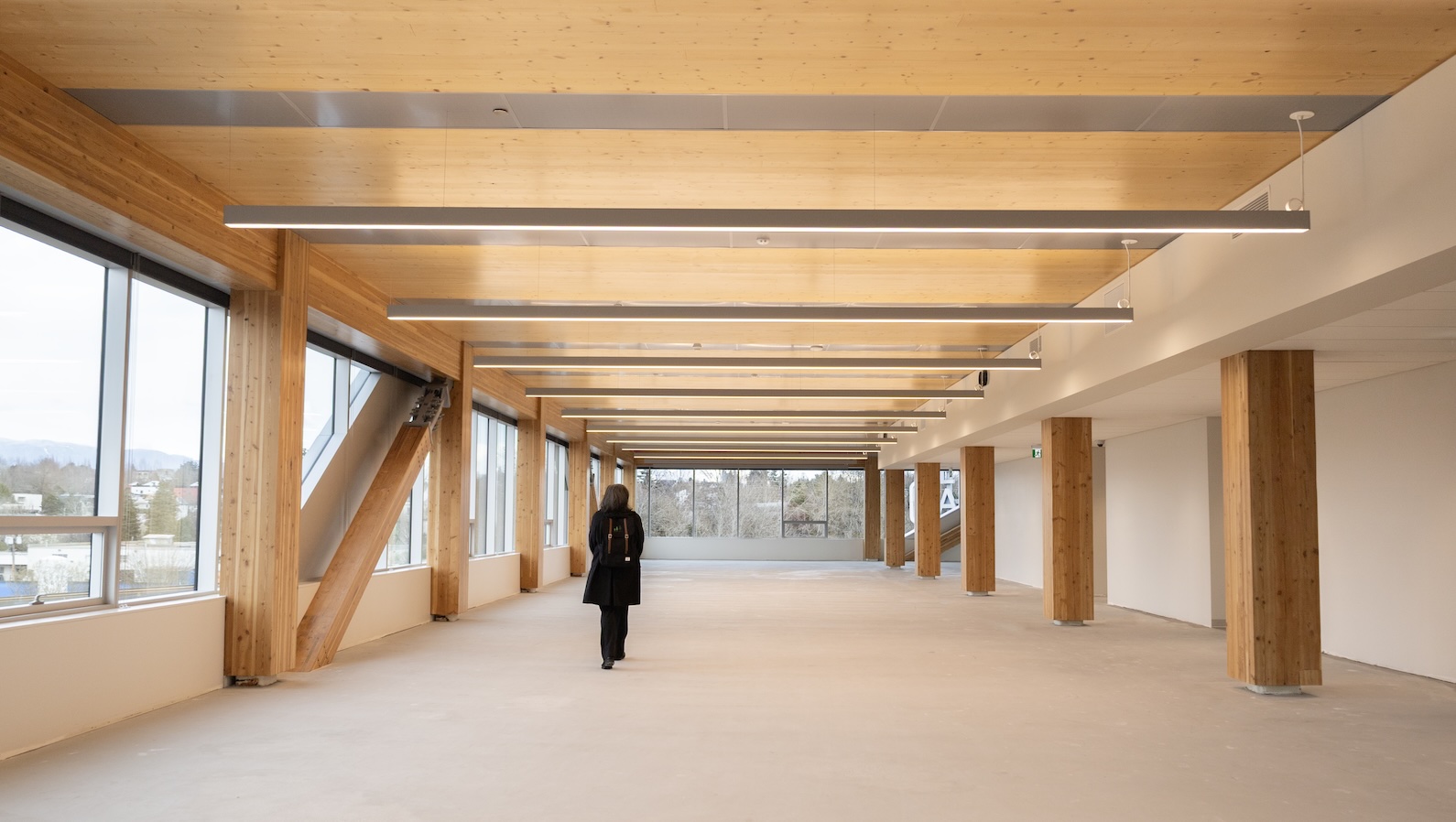
Beyond the technical and environmental advantages, mass timber offers a psychological benefit known as biophilia—the innate human tendency to seek connections with nature. Modern office and residential design often lean toward "sterile" materials like exposed concrete and glass. In contrast, mass timber interiors provide a warmth and tactile quality that has been shown to reduce stress levels and improve productivity.
Katie Mesia, firmwide design resilience co-leader at the architecture firm Gensler, notes that occupants have a visceral reaction to wood. "It has a tactile quality about it that people sort of want to interact with," Mesia said. "That desire to be close to nature has always been there."
The Path Forward
The completion of the Hive in Vancouver is more than just a local architectural achievement; it is a proof of concept for the global construction industry. As urban populations continue to grow, the demand for tall buildings will only increase. If the world is to meet its climate targets, the methods by which these buildings are constructed must change.
The transition to mass timber still faces hurdles, including higher initial material costs in some markets and the need for more specialized labor. However, as the supply chain matures and more projects like the Hive and Ascent MKE demonstrate the material’s viability, the economies of scale are expected to shift. The integration of the forest’s evolutionary wisdom with modern structural engineering suggests that the future of the city may not be grey, but grain—a skyline built from the very trees that help the planet breathe.