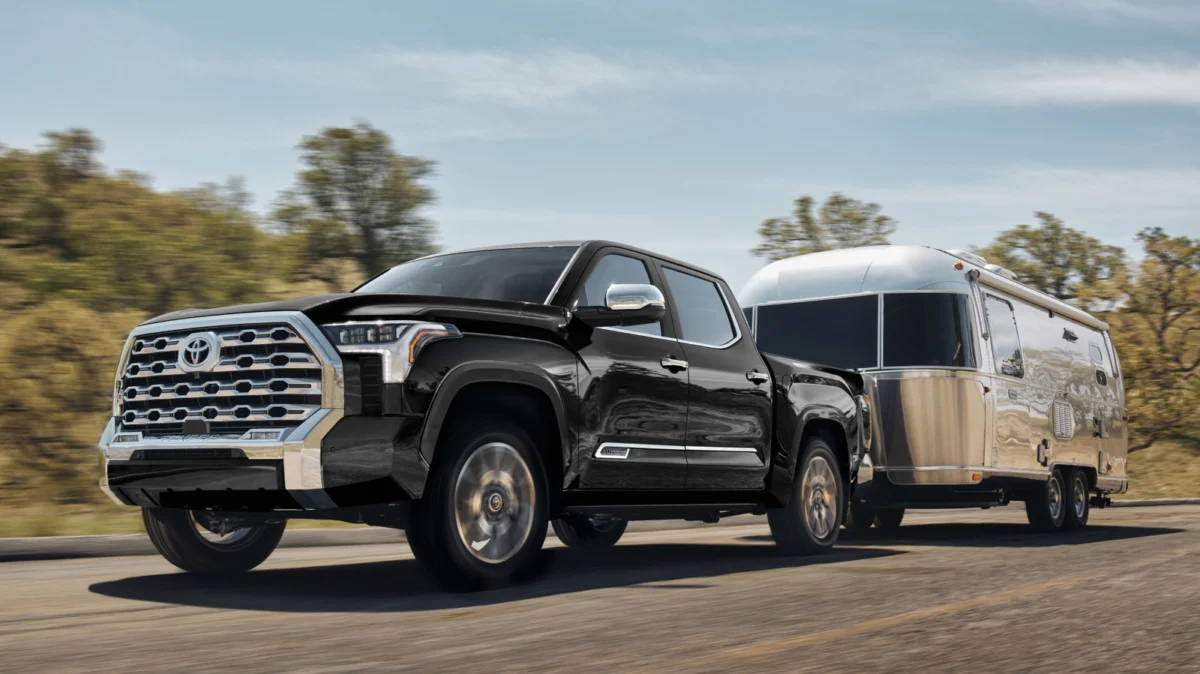
The decision to bring the Tundra and Highlander to Japan is particularly striking because Toyota has openly admitted that it expects negligible sales volume for these models. According to official press releases from Toyota Global, the company projects sales of only 80 Tundra units per month across the entire Japanese archipelago. The Highlander, an aging three-row crossover by current market standards, is expected to fare even worse, with a sales target of just 40 units per month. To put these figures into perspective, Toyota sold 12,949 Tundras in the United States in a single month recently. The Japanese targets represent less than 1% of the American demand, suggesting that this move is motivated by factors other than traditional retail profit.
The Logistics of an American Giant on Japanese Roads
The introduction of the Tundra to Japan presents immediate and obvious logistical challenges. The Tundra is a "full-size" pickup, a category that essentially does not exist in the Japanese automotive landscape. Most Japanese trucks fall into the "Kei" category—tiny, 660cc engine vehicles designed for narrow urban alleys and rural farm paths—or mid-size offerings like the Toyota Hilux. The Tundra, especially in its current iteration, is a behemoth.
Built at Toyota Motor Manufacturing Texas (TMMX) in San Antonio, the Tundra was engineered with wide Texas highways and massive suburban parking lots in mind. In Japan, where road lanes are significantly narrower and parking spaces are often governed by strict height and width restrictions, the Tundra is functionally oversized. Furthermore, Toyota has confirmed that these vehicles will be sold in Left-Hand Drive (LHD) configuration. Japan is a Right-Hand Drive (RHD) country.
The decision not to convert the vehicles to RHD is a clear indicator of the project’s low-volume nature. Engineering a RHD conversion for a modern vehicle involves significant costs, including redesigning the steering rack, dashboard, pedal assembly, and firewall. Given the projected sales of 80 units a month, Toyota cannot justify the capital expenditure required for such a conversion. Consequently, Japanese buyers who opt for the Tundra will be forced to navigate narrow, RHD-oriented streets from the "wrong" side of the cabin. This creates significant safety and convenience hurdles, particularly when navigating toll booths, drive-thrus, or attempting to pass slower vehicles on two-lane roads.
Product Specifications and Premium Pricing
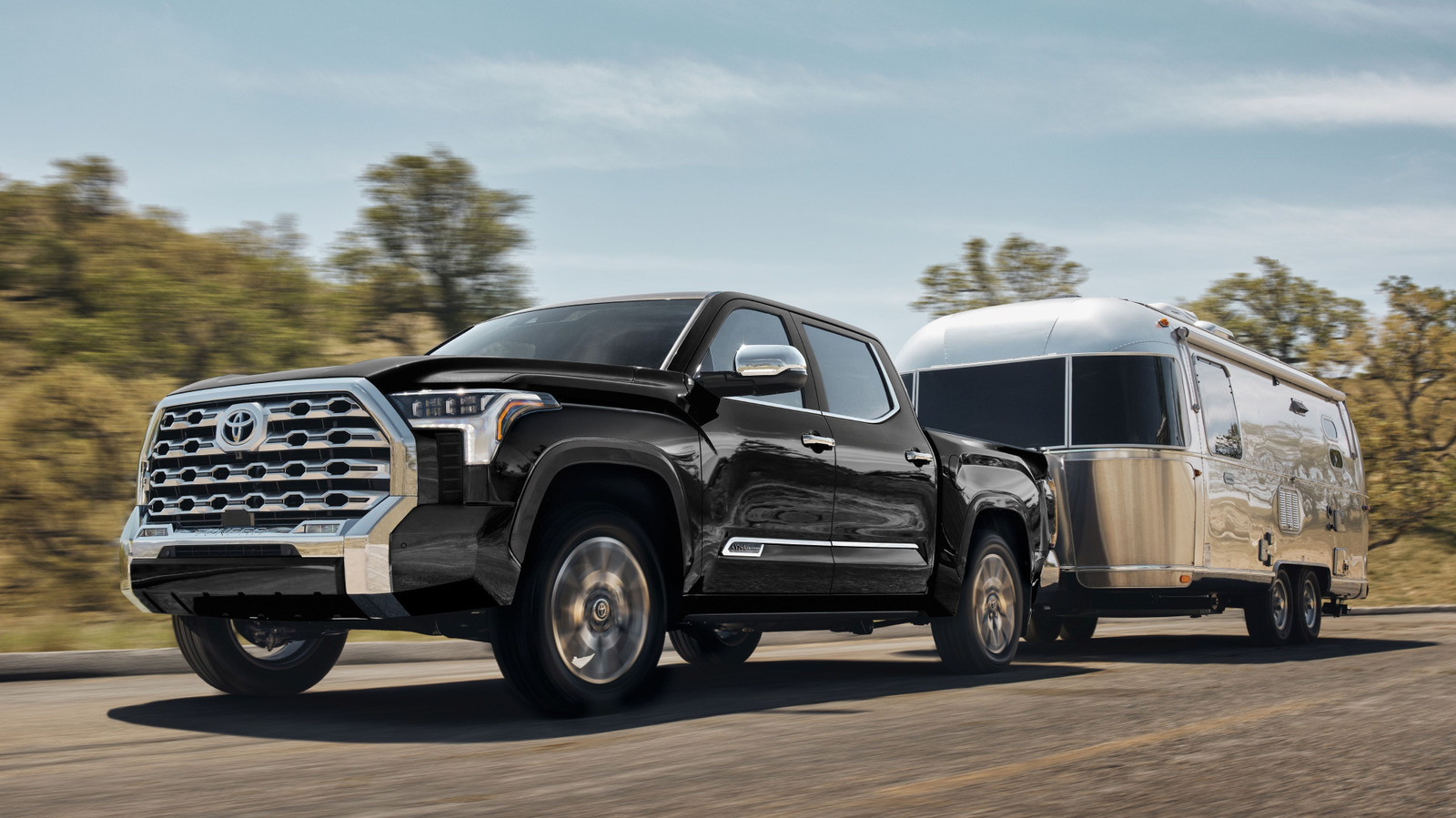
To simplify the logistics of this niche offering, Toyota is limiting the available configurations to a single high-end trim for each model. The Tundra will be offered exclusively as the "1794 Edition," a luxury-oriented trim named after the founding year of the ranch upon which the San Antonio assembly plant was built. This trim features premium leather interiors, wood grain accents, and the high-output i-FORCE MAX hybrid powertrain, which combines a 3.4-liter twin-turbo V6 with an electric motor to produce 437 horsepower and 583 lb-ft of torque.
The Highlander will be sold only in the "Limited ZR Hybrid" trim. By offering only the highest-specification models, Toyota is positioning these vehicles as "lifestyle" or "image" products rather than utilitarian tools.
The pricing reflects this premium positioning. In Japan, the Tundra 1794 Edition is priced at ¥12,000,000, which translates to approximately $75,500 USD at current exchange rates. The Highlander Limited ZR Hybrid is priced at ¥8,600,000 (approximately $54,100 USD). While these prices are high, the true cost is best understood when compared to other vehicles in the Japanese market. For instance, the Toyota Land Cruiser 300—a vehicle widely considered the pinnacle of Toyota’s off-road engineering and one that is not currently sold in the U.S.—can be purchased in Japan for significantly less than the imported Highlander. The Tundra, meanwhile, becomes one of the most expensive vehicles in Toyota’s Japanese lineup, eclipsed only by the ultra-luxury Century.
Political Undercurrents and Trade Relations
Industry analysts suggest that the primary driver behind this move is political rather than economic. Toyota’s leadership has historically been sensitive to trade tensions between the United States and Japan. During the administration of former President Donald Trump, there was significant pressure on Japanese automakers to reduce trade imbalances by importing more American-made goods and increasing domestic U.S. production.
By offering the Texas-built Tundra and the Indiana-built Highlander in Japan, Toyota can point to a "two-way street" in its automotive trade. Even if the sales volume is low, the symbolic gesture of selling American-made vehicles in Toyota’s home market serves as a diplomatic tool. It allows the company to demonstrate a commitment to American labor and manufacturing in a way that resonates with U.S. policymakers.
However, this strategy faces new headwinds due to the current global geopolitical climate. The source material notes that recent tensions in the Middle East have contributed to a global energy crisis, driving fuel prices in Japan to near-record highs. With the Japanese government struggling to keep gasoline prices below ¥200 per liter (approximately $4.80 per gallon), the appetite for a massive, fuel-thirsty American pickup truck is likely at an all-time low.
Market Perception and Cultural Impact
Beyond the political and economic factors, there is a cultural element to the Tundra’s arrival in Japan. In certain Japanese subcultures, American vehicles are seen as symbols of rugged individualism and "Americana." There is a niche market for LHD vehicles in Japan—historically, owning a LHD Mercedes-Benz or BMW was a "flex" or a status symbol, indicating that the car was a genuine import rather than a localized version.
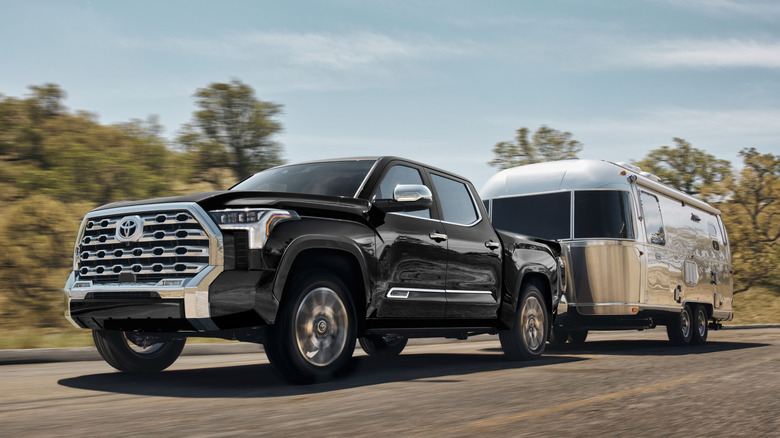
Toyota may be tapping into this "West Coast" aesthetic that has a small but dedicated following in Japan. For these buyers, the inconvenience of LHD and the difficulty of parking are secondary to the statement the vehicle makes. A Tundra 1794 Edition towing an Airstream trailer (as shown in promotional imagery) represents a specific American lifestyle that some wealthy Japanese consumers find aspirational.
However, critics argue that the timing could not be worse. As the world moves toward electrification and smaller footprints, a 6,000-pound hybrid truck feels like a relic of a different era. Furthermore, the association with American industrialism may be a double-edged sword. As global energy markets remain volatile, a vehicle that symbolizes high consumption and American military-industrial influence may face social backlash in a country that is highly sensitive to energy security.
Chronology of the Tundra’s Japanese Debut
The journey of the Tundra to Japan has been a slow progression.
- 2021: Toyota unveils the third-generation Tundra in the U.S., featuring a fully boxed steel frame and a new hybrid powertrain.
- 2022-2023: Trade discussions between the U.S. and Japan emphasize the need for balanced automotive trade. Toyota begins internal feasibility studies for importing the Tundra.
- Early 2024: Toyota Global officially adds the Tundra and Highlander to its Japanese fleet listings, surprising many industry observers.
- Mid-2024: The first shipments of LHD Tundras arrive at Japanese ports, destined for select dealerships in major metropolitan areas like Tokyo and Osaka.
Future Implications for Toyota
The long-term viability of this import program remains in doubt. If Toyota fails to meet even its modest goal of 80 units per month, the program may be quietly discontinued after the current model cycle. However, if the Tundra finds a stable niche among enthusiasts, it could pave the way for other American-market Toyotas, such as the Sequoia or the Tacoma, to make their way across the Pacific.
For now, the Tundra stands as a curious anomaly in the Japanese automotive market: a truck too big for the roads, with the steering wheel on the wrong side, priced as a luxury item, and sold by a company that doesn’t expect anyone to buy it. It is a masterpiece of corporate diplomacy, a nod to American manufacturing, and a fascinating case study in how geopolitics can influence the global automotive trade as much as consumer demand ever could. Whether the Tundra becomes a common sight on the streets of Tokyo or remains a rare "white whale" for collectors, its presence signifies a unique chapter in Toyota’s history.