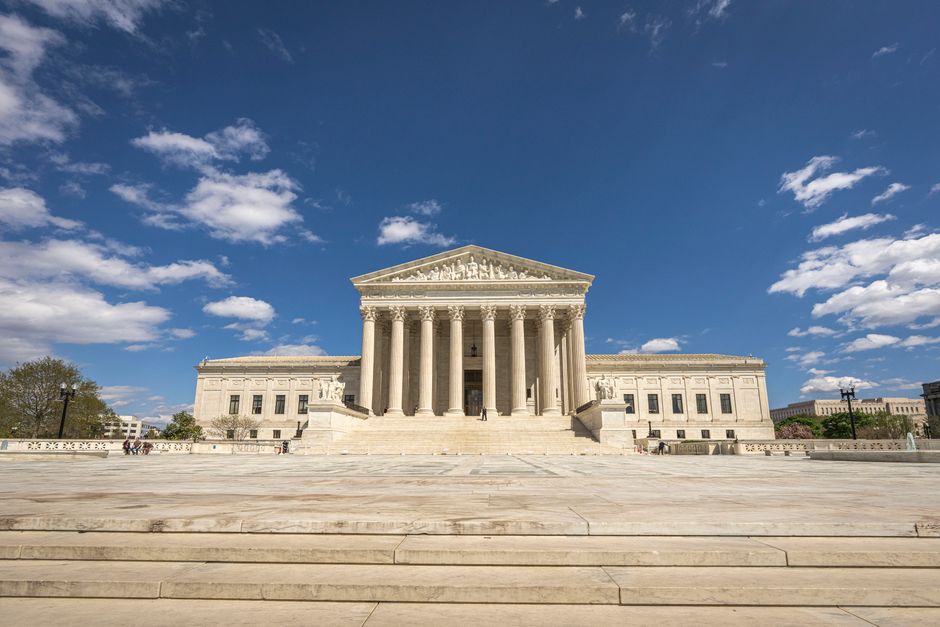
Supreme Court Declines Case on "Only Two Genders" T-Shirt, Upholding Free Speech Principles for Students
The United States Supreme Court has recently declined to hear a pivotal case that challenged the expulsion of a student for wearing a t-shirt asserting there are only two genders. This decision, while not delving into the complex and often contentious debate surrounding gender identity, carries significant implications for student free speech rights within educational institutions. By refusing to grant certiorari, the Court effectively allows existing legal precedents, particularly Tinker v. Des Moines Independent Community School District, to continue shaping how schools balance their educational mission with students’ First Amendment freedoms. The case originated when a student, whose identity has been kept private, wore a t-shirt during school hours that bore the message "There Are Only Two Genders." This attire quickly became a point of contention, leading to disciplinary action from school administrators. The core of the legal dispute centered on whether the student’s t-shirt constituted protected speech under the First Amendment or if it fell into a category of expression that schools could legitimately regulate to maintain an orderly and non-disruptive educational environment. The student and their advocates argued that the t-shirt was a form of political or social commentary protected by free speech principles, and that its message, however controversial to some, did not inherently disrupt the educational process or infringe upon the rights of other students in a way that warranted expulsion. Conversely, the school district contended that the t-shirt’s message created a hostile or uncomfortable environment for other students, particularly those who identify as LGBTQ+, and that their actions were taken to foster inclusivity and prevent potential harassment or disruption. This clash between individual expression and the school’s responsibility to provide a safe and conducive learning atmosphere is a recurring theme in student rights litigation.
The legal framework governing student speech in public schools is largely established by the Supreme Court’s landmark 1969 decision in Tinker v. Des Moines. In Tinker, the Court ruled that students do not "shed their constitutional rights to freedom of speech or expression at the schoolhouse gate." However, the Court also recognized that schools possess the authority to restrict student speech if it "substantially disrupts" the educational environment or "invades the rights of others." The subsequent interpretation and application of Tinker have been the subject of numerous lower court rulings, leading to a nuanced, and sometimes inconsistent, application of these principles. In the case of the "only two genders" t-shirt, the lower courts wrestled with how to apply the Tinker standard. Arguments were made on both sides regarding whether the message, by its very nature, constituted a substantial disruption or an invasion of the rights of other students. Proponents of the student’s right to wear the shirt emphasized that mere disagreement with a message, or the potential for that message to cause discomfort, does not automatically equate to a substantial disruption. They highlighted the importance of protecting even unpopular or offensive viewpoints as a cornerstone of free speech. On the other side, the school district and its supporters focused on the potential for the message to alienate and harm students who do not conform to a binary understanding of gender. They argued that in a diverse educational setting, schools have a duty to protect vulnerable student populations from speech that could be perceived as denigrating or exclusionary. The precise factual circumstances surrounding the student’s attire, including any specific instances of disruption or harassment that may have occurred as a direct result of the t-shirt, would have been crucial in the lower courts’ deliberations.
The Supreme Court’s decision to deny certiorari in this case signifies a lack of consensus among the justices to take up the issue at this time. It does not, however, represent an endorsement of the school’s actions or a definitive ruling on the merits of the case itself. Instead, it means that the legal landscape regarding student speech and gender-related expression in schools remains governed by existing case law, with the lower courts continuing to interpret and apply the Tinker standard to new factual scenarios. This often leaves educators and students in a state of uncertainty as they navigate the boundaries of permissible expression. The absence of a Supreme Court ruling means that there is no new, binding precedent that clarifies how the Tinker standard should be applied to messages that are perceived as controversial or potentially exclusionary in the context of evolving understandings of gender identity. This could lead to continued litigation and differing outcomes across different jurisdictions. The implications of this decision extend beyond the immediate parties involved. It underscores the ongoing tension between the fundamental right to free speech and the need for educational institutions to maintain a safe, inclusive, and orderly learning environment. Schools will continue to grapple with how to balance these competing interests, particularly as societal discussions around gender identity become more prominent. The question of what constitutes a "substantial disruption" or an "invasion of the rights of others" in the context of student expression remains a complex and often debated legal issue.
The Tinker standard, while providing a foundational framework, has been subject to various interpretations. The "substantial disruption" prong requires evidence that the speech caused significant interference with school activities, such as widespread disorder, violence, or a complete cessation of educational functions. The "invasion of the rights of others" prong is more nebulous and has been applied in cases involving harassment, defamation, or threats. In the context of the "only two genders" t-shirt, legal arguments would likely have revolved around whether the mere presence of the message, without specific evidence of its direct impact on other students’ ability to learn or feel safe, rose to the level of a substantial disruption or invasion of rights. Some legal scholars might argue that the t-shirt’s message, by its nature, is inherently exclusionary and contributes to a hostile environment for LGBTQ+ students, thereby invading their rights to an education free from harassment. Others might contend that the First Amendment protects even speech that others find offensive or disagreeable, provided it does not incite violence or cause a material and substantial disruption to the educational mission. The lack of a Supreme Court ruling means that these differing interpretations will continue to be tested in lower courts. The Supreme Court’s role is to resolve significant legal questions that have national implications or that have created a conflict among lower courts. By declining this case, the justices have signaled that, at this juncture, they do not see it as a matter that requires their direct intervention to clarify the law. This could be due to a variety of reasons, including a belief that the issue is not yet ripe for Supreme Court review, that the lower court rulings were consistent with existing precedent, or that the justices are divided on how to approach such a sensitive and evolving issue.
The broader societal context of this case cannot be ignored. Discussions surrounding gender identity, sexual orientation, and inclusivity have become increasingly prominent in public discourse and within educational institutions. Schools are often at the forefront of these conversations, tasked with educating students on a wide range of social and personal issues while also navigating diverse community values and parental concerns. The "only two genders" t-shirt represents a viewpoint that, while held by some, is in direct opposition to the understanding that gender is a spectrum and that individuals can identify outside of the male and female binary. This juxtaposition of beliefs creates a challenging environment for schools striving to foster an inclusive atmosphere where all students feel respected and valued. The decision to wear such a t-shirt, and the subsequent disciplinary action, highlights the difficulty of moderating speech that touches upon deeply held personal beliefs and identities within a school setting. Schools are increasingly expected to implement policies that protect students from discrimination and harassment based on their gender identity, while simultaneously upholding the rights of students to express their beliefs. This delicate balancing act often leads to legal disputes, as seen in this instance. The refusal of the Supreme Court to hear the case leaves the responsibility for navigating these complexities to individual school districts and the lower courts, which will continue to shape the interpretation of student free speech rights in this sensitive area.
Furthermore, the legal standard applied by lower courts in these types of cases can significantly influence the outcomes. When a student is disciplined for speech that is perceived as controversial, the burden of proof often falls on the school to demonstrate that the speech met the Tinker threshold for restriction. This requires more than just showing that the speech caused offense or discomfort. Schools must present evidence of a material and substantial disruption to the educational environment or a clear invasion of the rights of other students. The absence of such evidence can lead to findings that the school overstepped its authority in disciplining the student. Conversely, if a school can demonstrate that the speech led to significant disorder, bullying, or a hostile environment that impeded the learning of other students, then their disciplinary actions are more likely to be upheld. The Supreme Court’s refusal to take up the "only two genders" t-shirt case means that these nuanced factual and legal analyses will continue to play out in the appellate courts. The lack of a definitive Supreme Court pronouncement on this specific type of student expression means that the interpretation of free speech rights in relation to gender identity in schools will continue to evolve through a series of lower court decisions. Each new case that arises will contribute to the ongoing development of legal precedent, albeit without the overarching guidance of a Supreme Court ruling. This can lead to a patchwork of legal interpretations across the country, making it challenging for schools and students to understand their rights and responsibilities definitively. The long-term impact of this decision will be seen in how lower courts continue to interpret and apply the Tinker standard to increasingly diverse and complex forms of student expression in the years to come, particularly as societal conversations around gender identity continue to evolve. The legal battle over student speech and its intersection with evolving social norms around gender will undoubtedly continue in lower courts, shaping the landscape of student rights and school responsibilities without the immediate clarity that a Supreme Court intervention could have provided.
