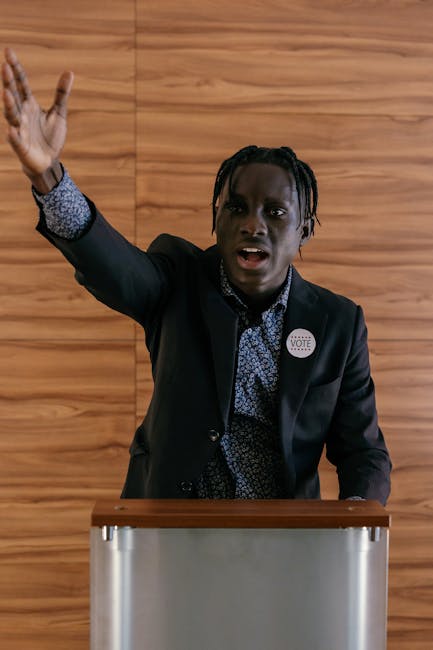
The Art and Impact of Political Speeches: Shaping Public Opinion and Driving Action
Political speeches are far more than mere recitations of policy proposals; they are meticulously crafted instruments designed to persuade, inspire, and mobilize audiences. From the grand pronouncements of national leaders to the passionate pleas of local candidates, these verbal performances serve as the bedrock of democratic discourse. Their effectiveness hinges on a complex interplay of rhetorical skill, strategic messaging, and an understanding of the socio-political landscape. SEO optimization for content surrounding political speeches involves identifying and utilizing keywords that users search for when seeking information about this vital aspect of governance and public life. These keywords often include terms like "political rhetoric," "persuasive speaking," "campaign speeches," "inaugural addresses," "keynote political addresses," "public speaking strategies," "impact of political oratory," "historical political speeches," and "how to write a political speech." Understanding the nuances of these terms and their contextual usage is paramount for creating content that ranks well and resonates with a relevant audience. The impact of a well-delivered political speech can be profound, shaping public opinion, galvanizing support for a candidate or cause, and ultimately influencing the direction of policy and societal change. Conversely, a poorly executed speech can alienate voters, damage a campaign, and undermine a politician’s credibility. The historical record is replete with examples of speeches that have become touchstones of political history, capable of igniting revolutions, uniting nations, or marking the dawn of new eras. Analyzing these speeches, both for their content and their delivery, offers invaluable insights into the mechanics of political persuasion and the enduring power of the spoken word.
The architecture of a compelling political speech is built upon several foundational pillars. Firstly, clarity of message is paramount. A speech riddled with jargon, ambiguity, or convoluted arguments will inevitably fail to connect with the intended audience. Effective political oratory distills complex issues into understandable narratives, employing accessible language and relatable examples. This does not imply oversimplification, but rather a skillful translation of intricate policy into a digestible and memorable format. Secondly, emotional resonance is crucial. While policy is important, voters are often moved by appeals to their values, aspirations, and fears. Skilled orators tap into these emotions, weaving them into their speeches through vivid imagery, evocative language, and authentic storytelling. This emotional connection fosters a sense of shared identity and purpose, a critical element in building a political movement. Thirdly, credibility and authenticity are non-negotiable. Audiences are adept at discerning insincerity. A politician’s delivery, tone, and the consistency of their message with their past actions all contribute to their perceived authenticity. Gaffes or perceived dishonesty can severely damage credibility, undoing even the most carefully crafted rhetoric. Fourthly, strategic framing is essential. Politicians must frame issues in a way that aligns with their agenda and resonates with their target demographics. This involves highlighting certain aspects of a problem while downplaying others, using specific language to evoke desired associations, and presenting their solutions as the most logical and beneficial. Finally, a clear call to action provides direction. A speech that inspires without offering a tangible next step risks losing its momentum. Whether it’s a plea to vote, to donate, to volunteer, or to believe in a particular vision, a clear and compelling call to action empowers the audience and solidifies the speech’s purpose. The SEO strategy for content on this topic would involve incorporating phrases like "elements of effective political speeches," "how to deliver a persuasive speech," "emotional appeals in politics," "building trust with voters," "framing political issues," and "motivating audiences."
The historical significance of political speeches cannot be overstated. From ancient Greece and Rome, where oratory was a revered art form, to the modern era, powerful speeches have shaped the course of human events. Consider Abraham Lincoln’s Gettysburg Address, a concise yet profound masterpiece that redefined the purpose of the American Civil War. Its enduring power lies in its brevity, its evocative language, and its re-framing of the conflict as a struggle for liberty and equality. Similarly, Winston Churchill’s wartime speeches, such as "We Shall Fight on the Beaches," rallied a nation against overwhelming odds, instilling a spirit of defiance and resilience. Martin Luther King Jr.’s "I Have a Dream" speech remains a cornerstone of the Civil Rights Movement, a testament to the power of visionary rhetoric to inspire social justice. These speeches, and countless others, demonstrate how masterful oratory can transcend mere political discourse and become cultural touchstones. Analyzing these historical examples, their rhetorical devices, their historical context, and their immediate and long-term impact, provides a rich dataset for understanding the enduring power of political communication. Content creators targeting keywords like "famous political speeches," "historical oratory impact," "speeches that changed history," "rhetorical analysis of political speeches," and "legacy of political speakers" can draw heavily from these examples.
The digital age has introduced new dimensions to the delivery and consumption of political speeches. Social media platforms, live streaming services, and online news outlets have democratized access to political discourse, but also fragmented audiences and intensified the competition for attention. A speech that might have once captivated a national audience through a single television broadcast now competes with a deluge of information and opinion online. This necessitates a multi-faceted approach to political communication. Politicians must not only craft impactful speeches for traditional formats but also adapt their messaging for shorter, more digestible online content – soundbites, infographics, and video clips. The rise of the internet has also amplified the reach of both effective and ineffective speeches. Viral dissemination can propel a powerful message to millions, but it can also amplify gaffes and missteps with unprecedented speed. Understanding SEO in this context means recognizing how content is searched and shared online, tailoring keywords to capture both broad interest and specific inquiries related to political communication strategies in the digital sphere. Keywords such as "political speeches online," "social media political communication," "digital campaign strategies," "viral political content," and "impact of technology on political speeches" become highly relevant.
The art of delivering a political speech involves more than just memorizing lines. Vocal delivery, including tone, pace, volume, and intonation, plays a critical role in conveying emotion and emphasis. A monotone delivery can bore an audience, while an overly aggressive tone can alienate them. Body language, including posture, gestures, and eye contact, further enhances or detracts from the message. Confident posture and deliberate gestures can project authority and sincerity, while fidgeting or avoiding eye contact can suggest nervousness or dishonesty. Audience engagement is a dynamic process. A skilled orator reads the room, adapting their delivery and content in response to audience reactions. This can involve pauses for emphasis, direct questions, or acknowledging applause. The use of visual aids, when appropriate, can enhance comprehension and memorability. Charts, graphs, or compelling imagery can powerfully illustrate key points and reinforce the speaker’s message. Finally, rehearsal and preparation are paramount. While spontaneity can be effective, a well-prepared speaker is more likely to remain composed, articulate, and on message, even in the face of unexpected challenges. The SEO implications for this section point to keywords like "public speaking techniques," "vocal projection for politicians," "body language in political speeches," "audience interaction strategies," "using visual aids in speeches," and "speech preparation tips."
The ethical considerations surrounding political speeches are significant. The power of persuasion can be wielded for both constructive and destructive purposes. The temptation to employ misinformation and disinformation is a constant challenge, particularly in the digital age where false narratives can spread rapidly. Political speeches that rely on exaggeration, outright falsehoods, or divisive rhetoric undermine public trust and can have serious societal consequences. The manipulation of emotions for political gain, while a common rhetorical tactic, can also cross ethical boundaries when it exploits fear or prejudice without regard for factual accuracy or reasoned debate. Furthermore, the concept of authenticity versus performance raises questions about genuine conviction versus carefully constructed personas. Audiences often grapple with discerning a politician’s true beliefs from their strategically crafted public image. The SEO strategy here would involve terms like "ethical political communication," "combating political misinformation," "rhetoric and propaganda," "manipulative language in politics," "political authenticity and trust," and "deceptive political tactics."
The future of political speeches will undoubtedly be shaped by evolving technologies and changing societal dynamics. The increasing reliance on personalized digital content and the fragmentation of media consumption suggest that mass rallies and televised addresses may become less dominant. Instead, political communication might gravitate towards micro-targeting, tailored messages delivered through social media, virtual reality experiences, and interactive online platforms. The ability to craft engaging, concise, and visually appealing content for these new mediums will be crucial. Furthermore, the growing demand for transparency and authenticity from political leaders may lead to a greater emphasis on unscripted, direct communication, perhaps through live Q&A sessions or behind-the-scenes glimpses into the political process. As AI-generated content becomes more sophisticated, the challenge of distinguishing genuine human expression from artificial communication will also become a pressing concern. The SEO considerations for this forward-looking perspective would include keywords such as "future of political oratory," "AI in political communication," "virtual reality political campaigns," "personalized political messaging," "transparent political discourse," and "digital political engagement."
The careful analysis of political speeches, both historically and in contemporary contexts, offers invaluable insights into the mechanisms of power, persuasion, and public opinion formation. Understanding the rhetorical strategies, the ethical considerations, and the evolving landscape of political communication is essential for informed citizenship and effective democratic participation. The ability to critically evaluate political discourse, to discern fact from fiction, and to recognize the persuasive intent behind a speaker’s words empowers individuals to make informed decisions and contribute meaningfully to the public sphere. The pursuit of knowledge in this area, facilitated by well-optimized SEO content, allows for a deeper understanding of the forces that shape our societies and the critical role that compelling political oratory plays within them.
