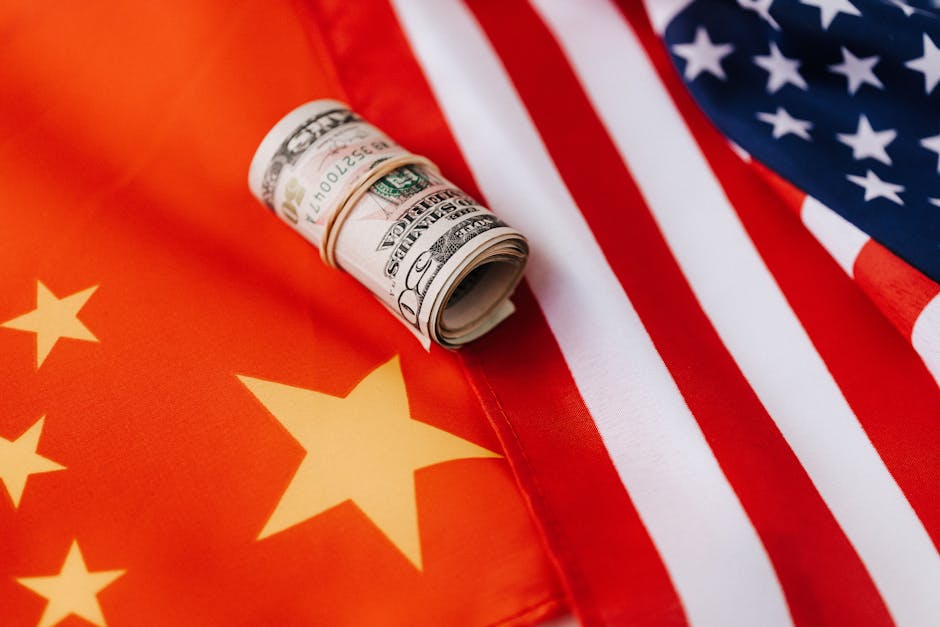
Wall Street Futures Subdued as US-China Trade Talks Loom
Futures on major US stock indices experienced a period of subdued trading as investors braced for the highly anticipated, yet cautiously approached, US-China trade talks. The cautious sentiment stemmed from a confluence of factors, primarily the persistent uncertainty surrounding the trajectory of the trade dispute between the world’s two largest economies. Analysts widely interpreted the muted market reaction as a reflection of the delicate balance between the potential for positive breakthroughs and the ever-present risk of renewed escalation. This article delves into the underlying reasons for this subdued outlook, examining the key economic indicators, geopolitical considerations, and market sentiment that are collectively shaping investor behavior as these crucial negotiations commence.
The global economic landscape, a primary driver of market sentiment, remained a significant consideration. While pockets of resilience have emerged in certain sectors and regions, broader macroeconomic headwinds continue to cast a shadow. Inflationary pressures, though showing signs of moderation in some developed economies, persist as a concern, potentially influencing central bank policy decisions. Similarly, the specter of a global economic slowdown, fueled by factors such as geopolitical instability and supply chain disruptions, contributed to an underlying caution among market participants. In this context, the outcome of the US-China trade talks was viewed not merely as a bilateral issue but as a potential catalyst capable of either alleviating or exacerbating these existing global economic vulnerabilities. A successful de-escalation could unlock pent-up investment and boost consumer confidence, thereby providing a much-needed tailwind for global growth. Conversely, a breakdown in negotiations or a deepening of trade hostilities would undoubtedly amplify existing risks, potentially leading to a sharper economic contraction and increased market volatility.
On the corporate front, the ongoing trade tensions continued to exert pressure on multinational corporations. Supply chain diversification efforts, while strategically sound in the long term, represent an immediate cost and operational challenge. Companies with significant exposure to both the US and Chinese markets found themselves navigating a complex web of tariffs, import/export restrictions, and shifting consumer demand. The uncertainty surrounding future trade policies made long-term strategic planning and capital allocation more difficult, leading many businesses to adopt a more conservative approach to investment and expansion. This, in turn, translated into a cautious outlook for corporate earnings, a key determinant of stock market performance. The potential for a resolution, even a partial one, could offer much-needed clarity, allowing businesses to recalibrate their strategies and potentially unlock new avenues for growth. However, the absence of such clarity maintained a lid on aggressive bullish sentiment, contributing to the subdued trading environment in Wall Street futures.
Geopolitical considerations extended beyond the immediate trade dispute, encompassing a broader spectrum of US-China relations. Issues such as technological competition, intellectual property rights, and national security concerns have become inextricably linked to the trade dialogue. The US administration’s focus on safeguarding critical technologies and preventing the dominance of Chinese companies in strategic sectors added another layer of complexity to the negotiations. Similarly, China’s pursuit of technological self-sufficiency and its assertiveness on the international stage contributed to an environment of strategic rivalry. Investors closely monitored these broader geopolitical dynamics, understanding that a breakthrough on trade alone might not fully resolve underlying tensions, and that future friction points could easily emerge. The market’s subdued reaction reflected a recognition that sustainable stability would likely require addressing these multifaceted geopolitical challenges in conjunction with trade-related issues.
Market sentiment, a powerful, albeit often intangible, force, played a crucial role in shaping the subdued trading environment. A discernible risk-off bias had taken hold among many investors, prompting a shift away from more speculative assets towards safer havens. This cautious posture was fueled by a history of volatile price swings associated with previous trade negotiations, where optimism was often followed by disappointment. The cyclical nature of these trade discussions, characterized by periods of intense negotiation followed by plateaus or even regressions, had conditioned market participants to expect the unexpected. Consequently, rather than betting heavily on a positive outcome, many investors adopted a wait-and-see approach, preferring to preserve capital and avoid significant exposure until a clearer picture emerged. This collective caution translated into lower trading volumes and narrower price movements, a hallmark of subdued market activity.
The specific details of the upcoming trade talks were also a source of conjecture. Reports indicated that discussions would focus on a range of contentious issues, including agricultural purchases, intellectual property protection, forced technology transfer, and market access for American companies in China. The sheer breadth of these topics underscored the difficulty of achieving comprehensive agreement in a single round of talks. For market participants, the key question was not just whether an agreement would be reached, but what the scope and durability of that agreement would be. A superficial deal that failed to address fundamental structural issues was unlikely to provide sustained market relief. Conversely, a substantive agreement that tackled key grievances could signal a genuine shift in the bilateral relationship and provide a robust foundation for future economic cooperation. This nuanced perspective contributed to the tempered expectations evident in the subdued futures market.
The performance of key economic indicators in both the US and China served as a backdrop to these trade discussions. In the United States, inflation data, employment figures, and manufacturing indices provided insights into the health of the American economy. While some indicators pointed to resilience, others suggested a potential cooling. Similarly, in China, economic growth figures, consumer spending data, and industrial production numbers offered a glimpse into the performance of the world’s second-largest economy. The interconnectedness of these economies meant that any significant divergence in their respective economic trajectories would have ripple effects across global markets. Investors were keenly observing these indicators to gauge the broader economic context in which the trade talks were taking place, and how potential outcomes might impact overall economic stability.
The role of central banks also remained a significant factor. In the face of persistent inflation, the US Federal Reserve and other major central banks had embarked on monetary policy tightening cycles. The pace and magnitude of these rate hikes, and their potential impact on economic growth and corporate borrowing costs, were closely scrutinized. The outcome of the trade talks could influence central bank decisions, with a resolution potentially providing more room for accommodative policy, while an escalation might necessitate further tightening to combat inflationary pressures. This intricate interplay between trade policy and monetary policy added another layer of complexity for investors trying to decipher the market’s direction.
The impact on specific sectors was also a point of consideration. Industries heavily reliant on global trade, such as manufacturing, technology, and agriculture, were particularly sensitive to the developments in US-China relations. Companies involved in the production of goods subject to tariffs, or those with extensive supply chains spanning both nations, faced heightened uncertainty. Conversely, sectors less exposed to international trade, or those that could potentially benefit from a shift in trade patterns, might exhibit different responses. The subdued futures market reflected a broad-based caution, suggesting that investors were not making sector-specific bets with high conviction until the trade outlook became clearer.
The historical precedent of US-China trade negotiations offered valuable, albeit sometimes cautionary, lessons. Past rounds of talks had often been characterized by periods of intense diplomatic activity, followed by announcements of partial agreements or, at times, a return to escalating rhetoric. This cyclical pattern had instilled a degree of skepticism among market participants, leading them to temper their enthusiasm until concrete and lasting agreements were solidified. The subdued reaction in Wall Street futures could be interpreted as a manifestation of this learned caution, a recognition that past experiences demanded a measured and dispassionate assessment of the current situation.
Furthermore, the evolving nature of the global trade landscape, with increasing protectionist tendencies in various regions, added a broader context to the US-China trade dispute. The US-China trade war was not occurring in a vacuum; it was part of a larger trend towards a more fragmented and protectionist global economy. This broader trend amplified concerns about the long-term stability of international trade agreements and the potential for further disruptions. Investors were therefore assessing the US-China trade talks not only in isolation but also as a significant determinant of the future direction of global trade policy.
The sheer volume of capital deployed by both nations in their respective economies meant that any significant disruption to their trade relationship had far-reaching implications. The interconnectedness of global financial markets ensured that developments in the US-China trade arena could quickly transmit to other regions and asset classes. This global contagion risk contributed to a sense of caution among investors worldwide, reinforcing the subdued trading sentiment observed in Wall Street futures. The potential for spillover effects, either positive or negative, meant that even investors not directly involved in US-China trade were keenly observing the proceedings.
In conclusion, the subdued trading in Wall Street futures ahead of the US-China trade talks was a multifaceted phenomenon driven by a complex interplay of economic, geopolitical, and market sentiment factors. The persistent uncertainty surrounding the trade dispute, coupled with broader macroeconomic headwinds and geopolitical rivalries, fostered a cautious environment. Investors, having learned from past experiences, adopted a wait-and-see approach, prioritizing capital preservation over aggressive bullish bets. The outcome of these crucial negotiations, while holding the potential for significant market impact, was viewed through a lens of tempered expectations, reflecting the inherent complexities and the delicate balance of power between the two global economic giants. The subdued market sentiment served as a clear signal of the trepidation that pervaded financial markets as they awaited clarity on the future of US-China economic relations.
