Category: Energy Resources
Energy resources represent the fundamental building blocks powering human civilization and the natural world. Their diverse origins, extraction methods, and environmental impacts define global economies, geopolitical landscapes, and the trajectory of technological advancement. Understanding the classification, characteristics, and implications of various energy resources is paramount for informed decision-making regarding sustainable development, climate change mitigation, and energy security. These resources are broadly categorized into two main groups: renewable and non-renewable, each possessing distinct attributes influencing their availability, cost, and long-term viability. The transition between these categories is a defining characteristic of modern energy policy and technological innovation.
Non-renewable energy resources are finite in supply, meaning they are consumed at a rate far exceeding their natural replenishment. The most prominent examples are fossil fuels: coal, oil, and natural gas. These hydrocarbons were formed over millions of years from the remains of ancient organic matter subjected to immense heat and pressure deep within the Earth’s crust. Their energy density is high, making them historically efficient and cost-effective for widespread application in transportation, industry, and electricity generation. Coal, the oldest and most abundant fossil fuel, is primarily used for electricity production. Its extraction often involves surface mining or underground mining, with significant environmental consequences including habitat destruction, water pollution, and methane emissions. The combustion of coal releases large quantities of carbon dioxide (CO2), a potent greenhouse gas contributing to global warming, as well as sulfur dioxide (SO2) and nitrogen oxides (NOx), which cause acid rain and respiratory problems. Oil, or petroleum, is a liquid fossil fuel extracted through drilling and refined into various products such as gasoline, diesel fuel, jet fuel, and heating oil. Its primary application is in the transportation sector, powering vehicles and aircraft. Oil extraction can lead to oil spills, damaging marine ecosystems and coastlines. Natural gas, primarily composed of methane, is often found alongside oil deposits or in its own reservoirs. It is typically extracted through conventional drilling or hydraulic fracturing (fracking). Natural gas burns cleaner than coal and oil, releasing less CO2 per unit of energy produced, making it a favored transitional fuel by some in the move away from more polluting fossil fuels. However, methane leakage during extraction and transportation is a significant concern, as methane is a far more potent greenhouse gas than CO2 in the short term.
Nuclear energy, derived from the fission of radioactive isotopes, primarily uranium, represents another non-renewable energy source. Nuclear power plants generate electricity through controlled nuclear chain reactions that produce heat, which then boils water to create steam, driving turbines. While nuclear power plants do not emit greenhouse gases during operation, their primary challenges lie in the safe disposal of radioactive waste, which remains hazardous for thousands of years, and the potential for catastrophic accidents, as demonstrated by Chernobyl and Fukushima. The upfront cost of building nuclear power plants is substantial, and concerns about proliferation of nuclear materials also add to the complexity of this energy source.
Renewable energy resources, in contrast, are naturally replenished on a human timescale, offering a sustainable alternative to finite non-renewable sources. Solar energy harnesses the radiant light and heat from the sun. Photovoltaic (PV) panels convert sunlight directly into electricity, while concentrated solar power (CSP) systems use mirrors to focus sunlight, generating heat to produce steam and drive turbines. Solar energy is abundant and widely available, but its intermittent nature – dependent on sunlight availability – necessitates energy storage solutions like batteries or integration into smart grids for consistent supply. The manufacturing of solar panels has an environmental footprint, but it is significantly lower than that of fossil fuel extraction and combustion.
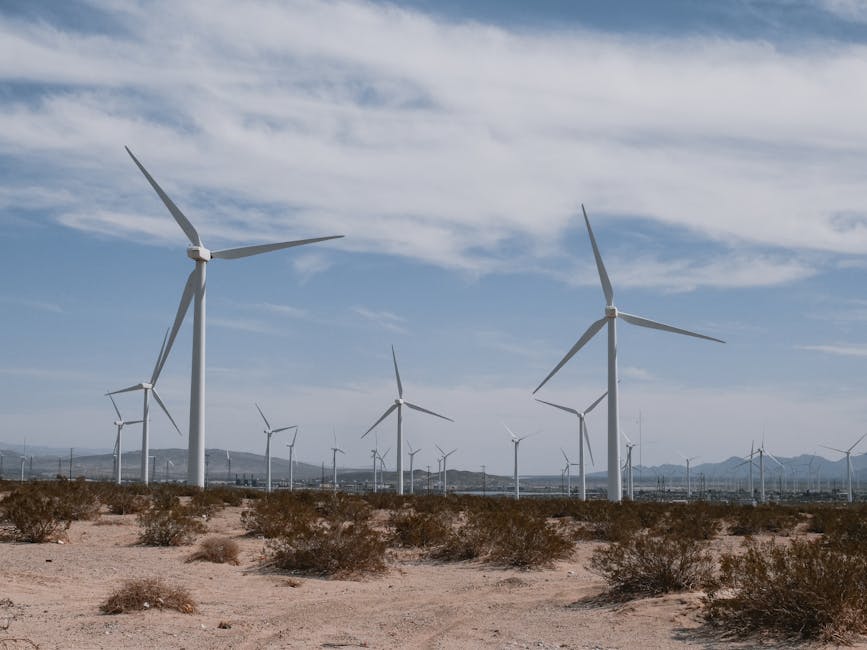
Wind energy captures the kinetic energy of moving air using wind turbines. Wind farms, comprising multiple turbines, can be located on land (onshore) or at sea (offshore). Offshore wind farms often benefit from stronger and more consistent winds, leading to higher energy yields. Like solar, wind power is intermittent, requiring backup power sources or storage. The visual impact of wind turbines and potential impacts on bird and bat populations are considerations in siting and development.
Hydropower utilizes the gravitational potential energy of falling or flowing water. Dams create reservoirs, releasing water through turbines to generate electricity. Hydropower is a mature and reliable renewable energy source, providing a significant portion of global electricity. However, the construction of large dams can have substantial environmental and social impacts, including habitat disruption, altered river flows, and displacement of communities. Run-of-river hydropower systems, which divert a portion of a river’s flow without creating large reservoirs, offer a less impactful alternative.
Geothermal energy taps into the Earth’s internal heat. Geothermal power plants extract hot water or steam from underground reservoirs to drive turbines. Geothermal energy is a consistent and reliable source, but its availability is geographically constrained to regions with significant subsurface heat. The extraction process can release trace amounts of greenhouse gases and other substances, but these are generally far lower than those from fossil fuels.
Biomass energy is derived from organic matter, such as wood, crops, and waste products. This biomass can be burned directly to produce heat or electricity, or it can be converted into biofuels like ethanol and biodiesel. Biomass is considered renewable if it is harvested sustainably, meaning that the rate of consumption does not exceed the rate of regrowth. However, large-scale biomass harvesting can lead to deforestation, land-use changes, and competition with food production. The combustion of biomass also releases CO2, but if the regrowth rate is balanced with consumption, it can be considered carbon-neutral.
The concept of the energy transition refers to the global shift from reliance on fossil fuels to a system dominated by renewable energy sources. This transition is driven by multiple factors, including the need to mitigate climate change, improve air quality, enhance energy security, and capitalize on the declining costs of renewable technologies. Policy incentives, technological innovation, and public awareness are crucial enablers of this transition. The development of advanced battery technologies, smart grid infrastructure, and hydrogen as an energy carrier are key areas of research and development supporting the transition to a decarbonized energy system.
Energy efficiency and conservation are critical complements to the development of new energy resources. Reducing energy demand through improved insulation, more efficient appliances, and behavioral changes can significantly decrease the overall energy footprint, thereby easing the burden on energy supply and accelerating the transition to sustainable sources. Investing in energy efficiency measures often yields significant cost savings and environmental benefits.
The geopolitical implications of energy resources are profound. Historically, control over oil reserves has shaped international relations and fueled conflicts. The diversification of energy sources, particularly the rise of distributed renewable energy generation, has the potential to alter these dynamics, empowering nations with abundant renewable resources and reducing dependence on traditional fossil fuel exporters. However, the supply chains for renewable energy technologies, such as critical minerals for batteries and solar panels, are also becoming areas of geopolitical focus.
The future of energy resources is likely to be a complex interplay of technological advancements, policy frameworks, and evolving societal demands. Continued investment in research and development will be essential to improve the efficiency, cost-effectiveness, and storage capabilities of renewable energy technologies. The successful management of energy resources will require a holistic approach that balances economic development, environmental sustainability, and social equity. The ongoing evolution of energy resources represents one of the most significant challenges and opportunities facing humanity in the 21st century. The ability to harness and manage these resources sustainably will determine the long-term health of the planet and the prosperity of future generations. The ongoing debate surrounding energy resource allocation and development highlights the inherent trade-offs between immediate energy needs and long-term environmental stewardship. The ongoing quest for new and improved energy resource utilization methods underscores the dynamic and evolving nature of this critical sector.