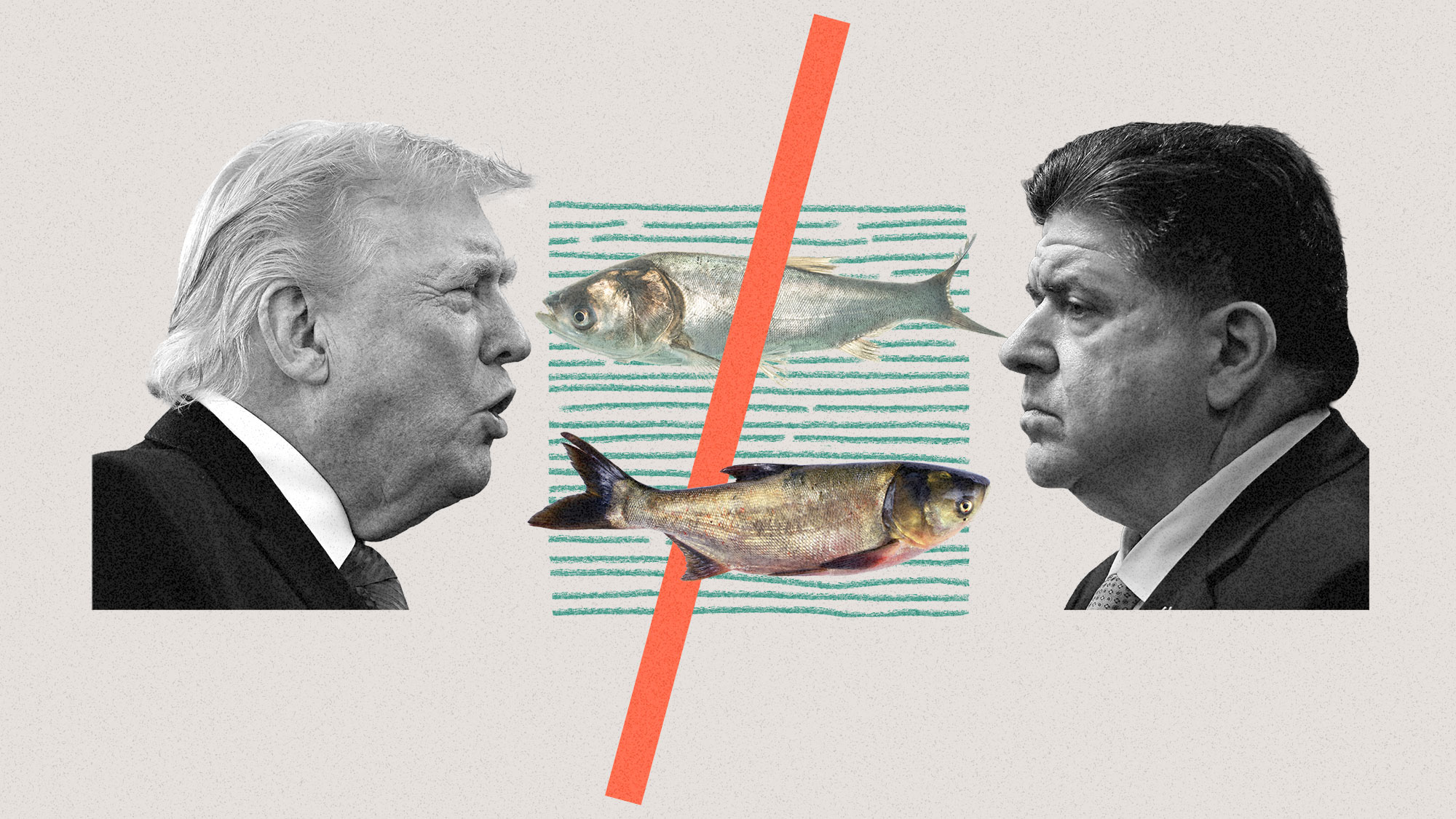
The battle to prevent invasive Asian carp from devastating the Great Lakes has transitioned from an ecological emergency into a high-stakes political confrontation between President Donald Trump and Illinois Governor JB Pritzker. In a move that has sent shockwaves through the Great Lakes region, the Trump administration recently announced its decision to strip Illinois of its management role over the $1.15 billion Brandon Road Interbasin Project, transferring oversight to the state of Michigan. This administrative pivot marks the latest escalation in a long-standing rivalry between the federal executive branch and the Illinois statehouse, raising urgent questions about the timeline for a project vital to the health of a multibillion-dollar regional economy.
The Ecological Threat: A Half-Century in the Making
The Asian carp crisis is not a new phenomenon, but rather the culmination of five decades of environmental mismanagement and unforeseen consequences. Originally imported to the United States in the 1970s, species such as the silver carp and bighead carp were intended to serve as a natural solution for controlling algae growth in southern aquaculture ponds and wastewater treatment facilities. However, during periods of heavy flooding in the Mississippi River basin, the fish escaped their confined environments and began a steady, aggressive migration northward.
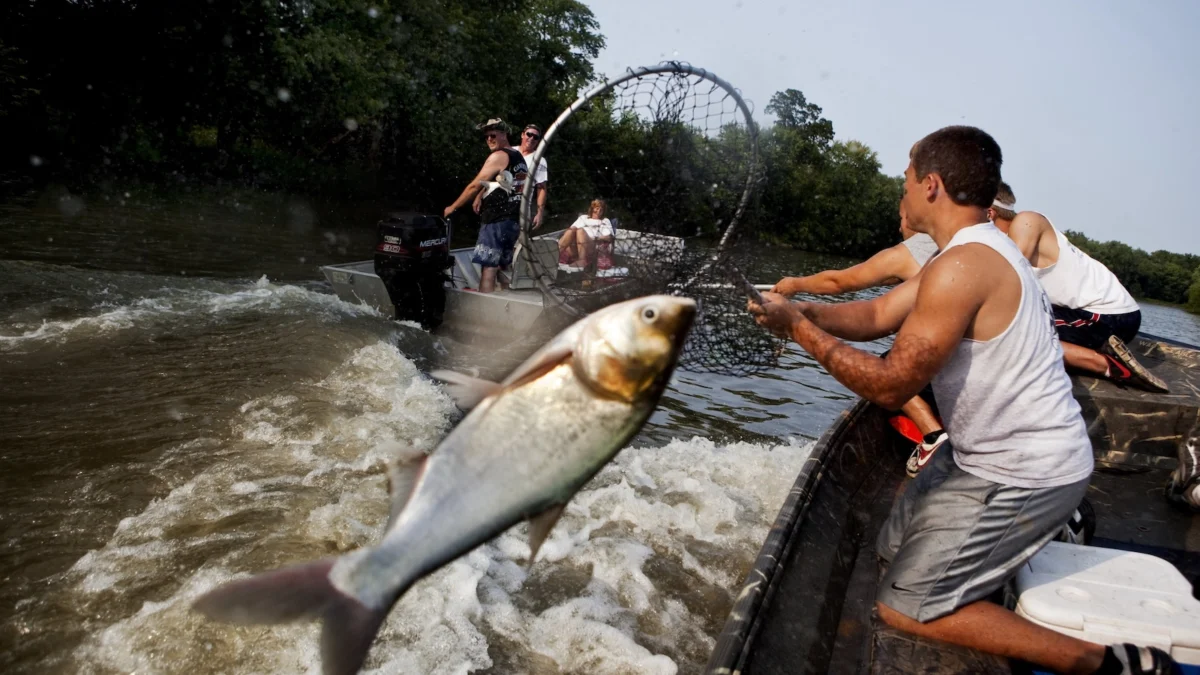
Characterized by their voracious appetites, Asian carp are capable of consuming up to 40 percent of their body weight in plankton daily. By stripping the foundational layers of the aquatic food web, they outcompete native species, leading to a collapse of local biodiversity. Beyond the ecological damage, silver carp are notorious for their tendency to leap several feet out of the water when startled by boat engines, posing a physical danger to recreational boaters and anglers.
The fish have already fundamentally altered the ecosystems of the Illinois and Mississippi Rivers, where they often represent more than 90 percent of the biomass in certain stretches. The Brandon Road Lock and Dam, located on the Des Plaines River in Joliet, Illinois, has long been identified as the "chokepoint" where the species could be stopped before entering the Chicago Sanitary and Ship Canal, which provides a direct pathway into Lake Michigan.
The Brandon Road Interbasin Project: A Technological Fortress
To address this threat, the U.S. Army Corps of Engineers designed the Brandon Road Interbasin Project, an ambitious $1.15 billion engineering feat. The project is intended to create a "gauntlet" of deterrents that would prevent fish from moving upstream while still allowing for the passage of commercial barge traffic, which is essential for the region’s industrial economy.
The proposed barrier includes a sophisticated multi-layered defense system:
- Electric Barriers: High-voltage underwater fields designed to repel fish or stun those that attempt to swim through.
- Acoustic Deterrents: Underwater speakers that emit specific sound frequencies known to be distressing to Asian carp, steering them away from the lock entrance.
- Air Bubble Curtains: A wall of rising bubbles that creates a physical and sensory disturbance, discouraging fish from crossing.
- Automated Flushing Locks: A specialized lock system designed to flush out floating eggs or small fish before the lock chamber is fully opened to the upstream side.
Despite the technical consensus on the project’s necessity, its implementation has been plagued by funding delays, bureaucratic hurdles, and now, intense political maneuvering.
A Timeline of the Political Standoff
The current crisis follows a turbulent few years of negotiations and shifting priorities. On July 1, 2024, a landmark agreement was signed between Illinois, Michigan, and the Army Corps of Engineers to move forward with construction. Under this deal, Illinois agreed to act as the non-federal sponsor, committing approximately $50 million for initial design and construction phases.
However, the relationship between the state and the federal government soured quickly. In February 2024, Governor Pritzker paused the state’s participation, expressing concern that the federal government was withholding funds previously earmarked under the Bipartisan Infrastructure Law. This pause was viewed by the White House as an act of political obstruction.
By the spring of 2024, President Trump signaled his personal interest in the project, signing a memorandum that prioritized the exclusion of Asian carp from the Great Lakes. Shortly thereafter, the Army Corps announced it had secured $100 million for the first phase of construction. The temporary thaw in relations was short-lived; by December, the administration placed the project under a comprehensive review, effectively freezing activity once again.
The situation reached a breaking point last week when Adam Telle, the Assistant Secretary of the Army for Civil Works, announced via social media that the project’s management was being moved from the Army Corps’ Rock Island District (which covers Illinois) to its Detroit office. Telle’s statement was pointed, accusing Illinois of being an "unreliable partner" and "delinquent" on its financial and real estate obligations.
Illinois Responds: Allegations of a "Political Stunt"
Governor JB Pritzker has vehemently denied the administration’s claims of delinquency. In a public rebuttal, Pritzker asserted that Illinois has fulfilled every requirement of the 2024 agreement, including the acquisition of critical real estate. The state recently purchased a 50-acre tract of riverbed and nearly three acres of adjacent land specifically for the project.
A significant point of contention involves the condition of this land. Parts of the acquired property are contaminated with legacy coal ash—a byproduct of historical industrial activity. Under the terms of the project, Illinois is responsible for the remediation of this toxic material. Pritzker’s administration argues that they are moving through the necessary environmental protocols to address the pollution, but that the federal government is using these procedural steps as an excuse to seize control.
"Illinois owns the land the Brandon Road Project will be built on," Pritzker stated, warning that the state is prepared to initiate legal action to prevent the federal government from bypassing state authority. Legal experts suggest that such a move by the federal government could spark a constitutional battle over state sovereignty and property rights, potentially delaying the project by years in the court system.
Michigan’s Role and the Regional Dynamic
While Illinois and the White House trade barbs, Michigan Governor Gretchen Whitmer has adopted a more diplomatic, though firm, stance. Michigan has a profound stake in the project; its $7 billion commercial and recreational fishing industry and its $15 billion tourism industry are directly threatened by the potential arrival of Asian carp.
Michigan has already committed $64 million toward the project, and Governor Whitmer’s office indicated a willingness to take on a larger leadership role if it means breaking the current deadlock. A spokesperson for Whitmer emphasized that the governor’s priority is "moving forward with urgency" to protect the lakes.
The pivot to Michigan is seen by some analysts as a strategic political move by the Trump administration. By aligning with Michigan, a critical swing state, the administration can frame itself as the "savior" of the Great Lakes while simultaneously painting the Democratic leadership in Illinois as incompetent or obstructive.
Economic and Ecological Stakes: What is at Risk?
The implications of the Brandon Road project extend far beyond the borders of Illinois and Michigan. The Great Lakes constitute the largest system of fresh surface water on Earth, containing 21 percent of the world’s supply. An invasion of Asian carp would not only devastate the fishing industry but also threaten the ecological stability that supports millions of residents across eight U.S. states and two Canadian provinces.
Data from the Great Lakes Fishery Commission suggests that if bighead and silver carp establish self-sustaining populations in Lake Michigan, they could reduce the populations of popular sport fish like walleye and yellow perch by more than 50 percent within decades. Furthermore, the presence of these fish would require expensive, permanent management strategies that would dwarf the $1.15 billion cost of the Brandon Road barrier.
The shipping industry also watches the standoff with trepidation. The Chicago area waterway system is a vital link for the transport of commodities like coal, salt, and grain. Any construction or operational delays at Brandon Road could disrupt supply chains, leading to increased costs for consumers across the Midwest.
Analysis of Implications and the Path Forward
The decision to move project management to Michigan creates a complex administrative hurdle. The Army Corps of Engineers’ Detroit District would now have to manage a construction site located hundreds of miles away in another state’s jurisdiction. This creates logistical inefficiencies and potential conflicts regarding permits, labor unions, and state-level environmental regulations.
Furthermore, the threat of litigation from Illinois looms large. If the state refuses to grant access to the land it owns, the federal government might be forced to exercise eminent domain—a process that is notoriously slow and politically sensitive.
As of this week, the Army Corps of Engineers has not clarified whether the funds for the project have been unfrozen or when construction crews are expected to return to the site. For now, the Brandon Road Interbasin Project remains in a state of suspended animation, caught between the urgent need for environmental protection and the volatile realities of modern American politics. The "unlikely flashpoint" of an invasive fish has successfully exposed the deep fractures in federal-state cooperation, leaving the future of the Great Lakes hanging in the balance.