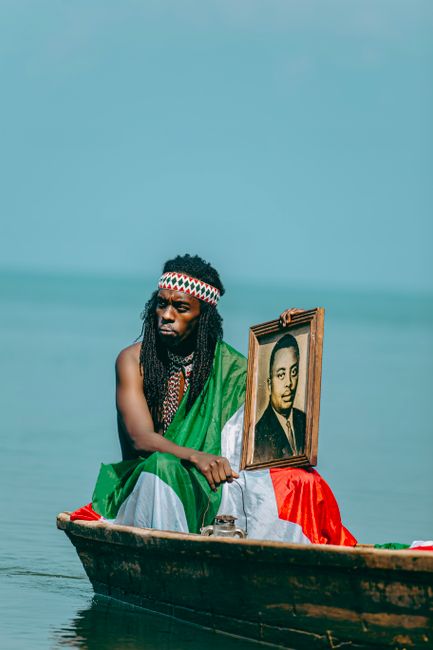
African History: A Comprehensive Exploration of the Continent’s Rich and Diverse Past
African history is not a monolithic entity but a tapestry woven from countless threads, representing an astonishing diversity of cultures, societies, and achievements across a vast continent. Its study reveals a civilization with origins predating all others, marked by innovation, complex political structures, vibrant trade networks, and profound intellectual and artistic contributions that have shaped global history. From the earliest hominid ancestors and the dawn of civilization in Egypt, through the rise and fall of powerful empires in West, East, and Southern Africa, to the profound impact of the transatlantic slave trade and the subsequent struggles for decolonization and modern nation-building, African history offers an unparalleled lens through which to understand the human experience. This exploration will delve into key periods and themes, highlighting the resilience, ingenuity, and enduring legacy of African peoples.
The story of Africa begins with its role as the cradle of humanity. Fossil evidence overwhelmingly points to East Africa as the birthplace of the earliest hominids, our direct ancestors. Discoveries like "Lucy" (Australopithecus afarensis) in Ethiopia, dating back over three million years, and the even older Homo habilis and Homo erectus fossils, demonstrate the continent’s foundational importance in human evolution. These early hominids developed rudimentary tools, mastered fire, and began the long journey of migration and adaptation that would eventually populate the globe. This deep evolutionary past established a foundation of adaptability and resilience that would characterize African societies for millennia. The development of agriculture, likely independently in various parts of the continent, further revolutionized human societies, leading to settled communities, population growth, and the emergence of complex social structures. North Africa, particularly the Nile Valley, witnessed the rise of one of the world’s earliest and most influential civilizations: Ancient Egypt. From around 3100 BCE, the unification of Upper and Lower Egypt marked the beginning of a civilization renowned for its monumental architecture, sophisticated hieroglyphic writing system, advanced mathematics and astronomy, complex religious beliefs, and influential political organization. The pharaonic dynasties, the construction of the pyramids, the development of irrigation systems, and the rich artistic and literary traditions of ancient Egypt left an indelible mark on the course of human civilization, influencing cultures across the Mediterranean and beyond.
Beyond Egypt, the African continent teemed with diverse cultures and burgeoning states long before widespread European contact. In the savanna regions of West Africa, the Ghana Empire (circa 4th to 13th centuries CE) emerged as a dominant force, controlling lucrative trans-Saharan trade routes, particularly in gold and salt. Its wealth and influence facilitated the growth of urban centers and a sophisticated administrative system. Following Ghana’s decline, the Mali Empire (circa 13th to 16th centuries CE) rose to prominence, famously led by Mansa Musa, whose pilgrimage to Mecca in the 14th century, laden with gold, became legendary, showcasing the immense wealth of West Africa to the wider world. Timbuktu, a center of Islamic scholarship and trade, flourished under Mali’s patronage. The Songhai Empire (circa 15th to 16th centuries CE) succeeded Mali, further expanding its territory and consolidating its control over vital trade networks. These empires were not merely military powers but sophisticated societies with complex legal systems, vibrant economies, and rich intellectual traditions, often adopting and adapting Islam as a unifying force.
In East Africa, the Swahili city-states, such as Kilwa, Mombasa, and Zanzibar, rose to prominence from the 8th century onwards, forming a sophisticated maritime trading civilization along the Indian Ocean coast. These city-states were centers of cosmopolitan culture, blending African, Arab, Persian, and Indian influences, evident in their architecture, language (Swahili), and artistic expressions. They facilitated a vast network of trade, exporting goods like ivory, gold, and slaves, and importing textiles, spices, and pottery. Inland, the Kingdom of Aksum (circa 1st to 7th centuries CE) in modern-day Ethiopia and Eritrea was a major trading power, connecting the Roman Empire with India and Arabia. Aksum adopted Christianity in the 4th century and developed its own unique script, Ge’ez. Later, the Great Zimbabwe civilization (circa 11th to 15th centuries CE) in Southern Africa built impressive stone structures, the ruins of which still stand as a testament to its architectural ingenuity and sophisticated social organization, likely serving as the capital of a large kingdom involved in regional trade.
The advent of the transatlantic slave trade, beginning in the 15th century, marked a catastrophic turning point in African history. Driven by European demand for labor on plantations in the Americas, millions of Africans were forcibly removed from their homes, subjected to unimaginable brutality, and transported across the Atlantic. This brutal system had devastating demographic, social, economic, and political consequences for West and Central Africa, disrupting established societies, fueling internal conflicts, and hindering the development of indigenous economies and polities. The depopulation caused by the trade, coupled with the constant threat of raiding, led to widespread insecurity and displacement, shaping the contours of power and societal organization for centuries. The legacy of this dehumanizing enterprise continues to reverberate, leaving deep scars on both African societies and the global diaspora.
The period of European colonization, intensifying from the late 19th century onwards, represented another profound and often violent chapter. Following the Berlin Conference of 1884-1885, European powers carved up the continent into colonial territories with little regard for existing ethnic, linguistic, or political boundaries. This arbitrary division, driven by the scramble for resources and strategic advantage, had lasting negative impacts, fostering ethnic tensions and undermining indigenous governance structures. Colonial rule was characterized by economic exploitation, the imposition of European languages and administrative systems, and often brutal suppression of resistance. Despite the oppressive nature of colonial regimes, African societies continued to resist in various forms, from armed uprisings to cultural preservation and the formation of nationalist movements.
The mid-20th century witnessed the powerful tide of decolonization, as African nations fought for and achieved independence. This process, often arduous and sometimes violent, saw the rise of charismatic leaders and mass movements advocating for self-determination. The ideals of Pan-Africanism, a movement promoting solidarity and unity among people of African descent, played a crucial role in galvanizing these efforts. The euphoria of independence was tempered by the immense challenges of nation-building, including establishing stable political institutions, developing economies recovering from colonial exploitation, and addressing the lingering effects of artificial colonial borders. The post-independence era has been marked by a complex interplay of progress and setbacks, with many nations grappling with political instability, economic development, and the ongoing process of forging national identities.
Throughout these transformative periods, African intellectual and artistic traditions have been remarkably vibrant and enduring. From the philosophical and theological debates within Islamic learning centers like Timbuktu to the oral traditions that preserved histories, genealogies, and cultural knowledge, African peoples have consistently engaged in intellectual inquiry and creative expression. The continent’s artistic heritage is vast and diverse, encompassing intricate sculptures, vibrant textiles, powerful masks, and rich musical traditions that have influenced global art forms. The oral tradition, in particular, was a vital mechanism for transmitting knowledge, values, and historical narratives across generations, ensuring cultural continuity in the absence of widespread literacy in many pre-colonial societies.
Contemporary African history continues to unfold, marked by ongoing efforts to address development challenges, strengthen democratic institutions, and foster regional cooperation. The continent is home to a dynamic and rapidly growing population, a burgeoning youth demographic, and increasingly diverse economies. While challenges such as poverty, inequality, and conflict persist in some regions, there are also significant signs of progress, including technological innovation, a growing middle class, and increased engagement in global affairs. The study of African history is essential not only for understanding the continent’s past but also for comprehending its present and anticipating its future, offering crucial insights into the resilience, adaptability, and enduring spirit of its peoples and the profound impact of Africa on the global human story. Its complexities and richness demand ongoing scholarly attention and a commitment to understanding its multifaceted narratives.