Category: Energy Resources
Energy resources form the bedrock of modern civilization, powering everything from individual homes to global industries. They are broadly categorized into renewable and non-renewable sources, each with distinct characteristics, impacts, and future potential. Understanding these categories is crucial for informed decision-making regarding energy policy, technological development, and environmental sustainability. The classification hinges primarily on the rate at which the resource can be replenished relative to human consumption. Non-renewable resources, once depleted, cannot be regenerated within a timescale relevant to human existence, leading to eventual scarcity. Renewable resources, conversely, are naturally replenished at a rate equal to or exceeding their rate of consumption, offering a sustainable pathway for energy provision. This fundamental distinction drives the global energy landscape, influencing economic development, geopolitical relations, and the ongoing effort to mitigate climate change. The transition towards a predominantly renewable energy future is a paramount global objective, necessitating significant investment in research, infrastructure, and policy frameworks that incentivize sustainable energy practices.
Non-renewable energy resources are finite and are consumed much faster than they are naturally produced. The primary categories of non-renewable energy resources include fossil fuels – coal, oil, and natural gas – and nuclear fuels, predominantly uranium. These resources were formed over millions of years from ancient organic matter subjected to intense heat and pressure deep within the Earth’s crust. Their extraction and combustion have been the driving force behind industrialization and economic growth for centuries, providing a high energy density and relative ease of transport and storage. However, their widespread use has led to significant environmental consequences, most notably greenhouse gas emissions that contribute to climate change, air pollution, and the depletion of finite reserves. The economic and political implications of reliance on non-renewable resources are also substantial, often leading to geopolitical instability and price volatility. As global energy demand continues to rise, the long-term viability of exclusively relying on these diminishing resources becomes increasingly problematic.
Coal is a combustible black or brownish-black sedimentary rock, formed from the accumulation and consolidation of plant matter over geological time. It is the most abundant fossil fuel and has historically been the primary source of electricity generation worldwide. Coal’s energy content varies depending on its rank, with anthracite being the highest rank and lignite the lowest. The extraction of coal occurs through mining, which can be either surface mining (strip mining) or underground mining. Surface mining is generally more cost-effective but can cause significant land disruption and habitat destruction. Underground mining is more dangerous for miners and can lead to subsidence and groundwater contamination. The combustion of coal releases substantial amounts of carbon dioxide (CO2), a major greenhouse gas, as well as sulfur dioxide (SO2), nitrogen oxides (NOx), particulate matter, and heavy metals like mercury. These pollutants contribute to acid rain, respiratory illnesses, and smog. While advanced combustion technologies like Integrated Gasification Combined Cycle (IGCC) can reduce some emissions, they do not eliminate CO2 output. The continued reliance on coal, particularly in developing nations, poses a significant challenge to global climate goals.
Petroleum, commonly known as oil, is a complex mixture of hydrocarbons formed from the remains of ancient marine organisms. It is extracted through drilling into oil reservoirs beneath the Earth’s surface or seabed. Crude oil is refined into a wide range of valuable products, including gasoline, diesel fuel, jet fuel, heating oil, lubricants, and petrochemicals used in plastics, fertilizers, and pharmaceuticals. The transport and storage of oil are relatively straightforward, contributing to its widespread use in the transportation sector and for industrial processes. The combustion of oil-based fuels releases CO2, NOx, and particulate matter. Oil spills during extraction, transport, or refining can cause severe environmental damage, contaminating marine ecosystems and coastlines. The geopolitical landscape has been heavily shaped by oil reserves, with many nations heavily dependent on imports, leading to strategic alliances and conflicts. The increasing demand for transportation fuels, coupled with the environmental impact of oil combustion, is driving a push towards alternative fuels and electric vehicles.
Natural gas is a combustible gas, primarily composed of methane, found in underground deposits. It is often found alongside oil deposits or in its own reservoirs. Natural gas is extracted through drilling and is typically transported via pipelines or liquefied into Liquefied Natural Gas (LNG) for overseas transport. It is widely used for heating homes and businesses, cooking, and electricity generation. Compared to coal and oil, natural gas combustion produces significantly less CO2 per unit of energy, as well as lower levels of SO2 and particulate matter. This has led to its promotion as a "bridge fuel" in the transition away from more polluting fossil fuels. However, methane itself is a potent greenhouse gas, and leaks during extraction and transport can offset its climate benefits. The extraction of natural gas, particularly through hydraulic fracturing (fracking), has raised concerns about water contamination, seismic activity, and land disturbance. Despite these concerns, natural gas remains a crucial component of the global energy mix due to its relative cleanliness compared to other fossil fuels and its versatility.
Nuclear energy is derived from the fission of heavy atomic nuclei, typically uranium-235. Nuclear power plants utilize controlled nuclear chain reactions to generate heat, which then produces steam to drive turbines and generate electricity. Nuclear energy offers a low-carbon electricity generation pathway, producing no direct greenhouse gas emissions during operation. It is characterized by a very high energy density, meaning a small amount of nuclear fuel can produce a large amount of energy. However, nuclear power faces significant challenges. The mining and milling of uranium can have environmental impacts. The operation of nuclear power plants generates radioactive waste, which must be safely stored and disposed of for thousands of years, posing a long-term environmental and security concern. Accidents at nuclear facilities, though rare, can have catastrophic consequences, as demonstrated by Chernobyl and Fukushima. Public perception of nuclear safety, coupled with the high upfront costs of building nuclear power plants, has limited its widespread adoption in some regions. Research into advanced reactor designs and waste reprocessing technologies aims to address some of these concerns.
Renewable energy resources are naturally replenished on a human timescale, making them a sustainable alternative to finite non-renewable resources. These resources are derived from ongoing natural processes and have a significantly lower environmental impact, particularly in terms of greenhouse gas emissions. The primary categories of renewable energy resources include solar, wind, hydropower, geothermal, and biomass. Investing in and developing these technologies is critical for achieving energy security, mitigating climate change, and fostering economic growth in a sustainable manner. The intermittent nature of some renewable sources, such as solar and wind, presents a challenge for grid stability, necessitating advancements in energy storage and grid management technologies. However, the falling costs and increasing efficiency of renewable technologies are rapidly making them competitive with, and often cheaper than, fossil fuels in many applications.
Solar energy harnesses the radiant light and heat from the sun. It can be converted into electricity through photovoltaic (PV) panels or concentrated solar power (CSP) systems. Photovoltaic panels directly convert sunlight into electricity using semiconductor materials. They are scalable, from small rooftop installations to large-scale solar farms, and their cost has decreased dramatically in recent years. Concentrated solar power systems use mirrors to focus sunlight onto a receiver, generating heat that drives turbines to produce electricity. Solar energy is abundant and widely distributed, making it a highly accessible renewable resource. Its primary limitation is its intermittency; electricity generation is dependent on sunlight availability, requiring energy storage solutions or integration with other energy sources to ensure a consistent supply. The manufacturing of solar panels also involves energy-intensive processes and the use of certain rare earth elements, though research is ongoing to improve sustainability in production.
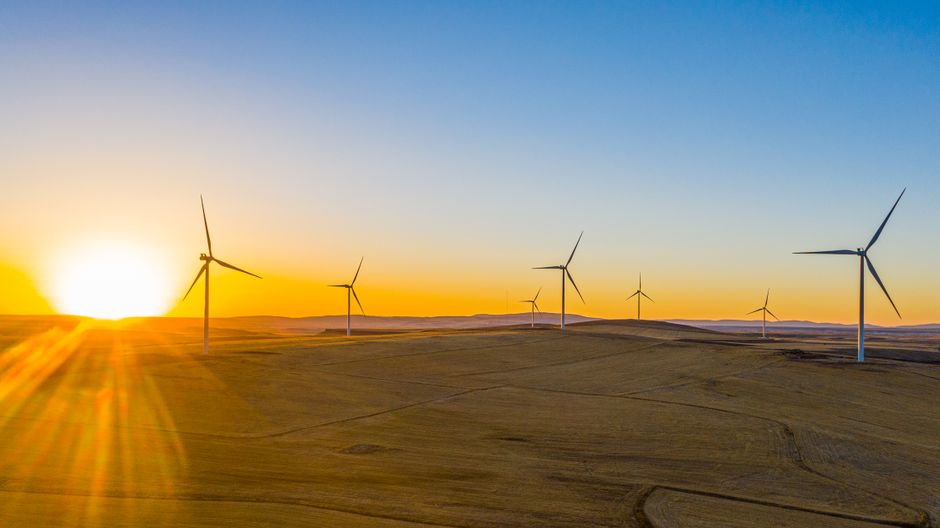
Wind energy captures the kinetic energy of moving air using wind turbines. Wind turbines convert rotational mechanical energy into electrical energy. Wind farms can be located on land (onshore) or in the sea (offshore). Offshore wind farms can access stronger and more consistent winds but are generally more expensive to build and maintain. Wind energy is a mature and cost-effective renewable technology, with significant potential for growth. Like solar, wind energy is intermittent, dependent on wind speed and availability. Turbine placement is crucial to maximize energy capture while minimizing visual and noise pollution, and potential impacts on bird and bat populations. Technological advancements continue to improve turbine efficiency and reduce their environmental footprint.
Hydropower generates electricity from the force of moving water, typically by damming rivers to create reservoirs. Water is released from the reservoir, flowing through turbines to generate electricity. Hydropower is a reliable and dispatchable source of renewable energy, meaning its output can be controlled to meet demand. Large-scale hydropower projects can provide significant amounts of electricity and also offer benefits such as flood control and water supply. However, the construction of large dams can have substantial environmental and social impacts, including habitat alteration, displacement of communities, and changes to river ecosystems. Smaller-scale hydropower projects, such as run-of-river systems, generally have less environmental impact.
Geothermal energy utilizes the heat from within the Earth’s core. Geothermal power plants tap into underground reservoirs of hot water or steam to drive turbines and generate electricity. In areas with less intense geothermal activity, geothermal heat pumps can be used for heating and cooling buildings. Geothermal energy is a consistent and reliable source of power, not subject to the same intermittency as solar or wind. However, its availability is geographically constrained to regions with accessible geothermal resources. The drilling process for geothermal energy can release some greenhouse gases trapped underground, and the management of geothermal fluids is important to prevent water contamination.
Biomass energy is derived from organic matter, such as agricultural waste, forest residues, crops grown specifically for energy, and animal waste. Biomass can be burned directly to produce heat or electricity, or it can be converted into biofuels like ethanol and biodiesel. Biomass is considered renewable if it is harvested sustainably, meaning the rate of harvest does not exceed the rate of regrowth. Burning biomass releases CO2, but it is often considered carbon-neutral because the CO2 released during combustion is absorbed by the plants during their growth. However, the sustainability of biomass depends heavily on land-use practices and the potential for competition with food production. Inefficient harvesting or land-use changes can lead to deforestation and habitat loss, negating the environmental benefits.
The energy landscape is in a state of dynamic transformation, driven by the urgent need to address climate change and ensure long-term energy security. The transition from a reliance on non-renewable fossil fuels to a predominantly renewable energy system is a complex but essential undertaking. This transition involves not only the development and deployment of renewable energy technologies but also significant investments in energy efficiency, grid modernization, and energy storage solutions. Policy frameworks, international cooperation, and public awareness play vital roles in accelerating this shift. The future of energy resources will be shaped by continued innovation, evolving economic realities, and a growing global commitment to sustainability.