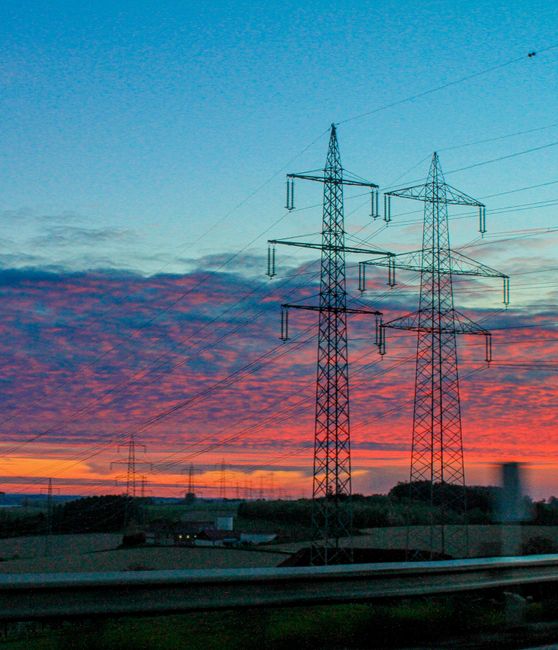
Category Energy and Infrastructure 7: Powering the Future with Advanced Solutions
Category Energy and Infrastructure 7 encompasses a critical and rapidly evolving sector focused on the development, deployment, and management of advanced technologies and systems essential for meeting global energy demands and supporting robust infrastructure. This category is not merely about generating electricity or building roads; it represents a paradigm shift towards sustainable, resilient, and intelligent solutions that underpin modern society. It addresses the complex interplay between energy production, transmission, distribution, and the foundational infrastructure that enables economic growth, social well-being, and environmental protection. The scope of Category Energy and Infrastructure 7 is broad, covering innovations in renewable energy sources, smart grid technologies, energy storage, carbon capture and utilization, advanced materials for infrastructure, digital twin applications in infrastructure management, and the integration of artificial intelligence and the Internet of Things (IoT) into these critical systems. Furthermore, it delves into the policy frameworks, economic models, and investment strategies necessary to drive this transformation, acknowledging the significant capital requirements and long-term planning involved. Understanding this category is paramount for policymakers, investors, engineers, and businesses aiming to navigate the challenges and capitalize on the opportunities presented by the global energy transition and the imperative for modern, sustainable infrastructure. The continuous drive for efficiency, reliability, and environmental responsibility positions Category Energy and Infrastructure 7 at the forefront of technological advancement and societal progress.
The core of Category Energy and Infrastructure 7 lies in the diversification and advancement of energy generation. While traditional fossil fuels remain a significant component, the category heavily emphasizes the scaling and integration of renewable energy sources. Solar power, in its photovoltaic and thermal forms, continues its exponential growth, driven by decreasing costs, improved efficiency, and widespread applicability. Advances in solar panel technology, including perovskite solar cells and bifacial panels, are pushing the boundaries of energy conversion. Wind energy, both onshore and offshore, is another cornerstone, with innovations in turbine design, blade materials, and site optimization leading to higher capacity factors and reduced environmental impact. Offshore wind, in particular, offers vast untapped potential with larger turbines and floating platform technologies enabling deployment in deeper waters. Hydropower, while a mature technology, is seeing advancements in turbine efficiency and pumped-storage systems that enhance grid flexibility. Geothermal energy, harnessing the Earth’s internal heat, is gaining traction with enhanced geothermal systems (EGS) that expand its geographic reach. Bioenergy, derived from organic matter, is evolving with more sustainable feedstock sourcing and advanced conversion technologies to produce biofuels and biomethane. The overarching goal within this domain is to achieve a decarbonized and resilient energy portfolio, reducing reliance on volatile fossil fuel markets and mitigating climate change impacts. This necessitates not only the expansion of these renewable capacities but also the development of robust supply chains, skilled workforces, and supportive regulatory environments. The continuous research and development in materials science and engineering are pivotal in improving the performance, longevity, and cost-effectiveness of these energy generation technologies.
Integral to the successful integration of diverse and distributed energy sources is the concept of the "smart grid." Category Energy and Infrastructure 7 places immense importance on modernizing electricity grids to become more intelligent, responsive, and resilient. This involves the deployment of advanced metering infrastructure (AMI), enabling two-way communication between utilities and consumers, facilitating real-time monitoring of energy consumption and generation. Advanced sensors and communication networks are integrated throughout the grid, allowing for faster detection and isolation of faults, thereby minimizing power outages and improving reliability. Demand-side management (DSM) and demand response programs are key components, empowering consumers to adjust their energy usage in response to price signals or grid conditions, thus balancing supply and demand more effectively. The integration of distributed energy resources (DERs) like rooftop solar and electric vehicles (EVs) presents both challenges and opportunities for grid stability. Smart grid technologies enable utilities to manage these intermittent and often unpredictable sources, ensuring grid stability and preventing overloads. Furthermore, cybersecurity becomes paramount in this interconnected environment, with robust measures required to protect critical grid infrastructure from cyberattacks. The ongoing digital transformation of the grid, leveraging big data analytics and artificial intelligence, is crucial for predictive maintenance, optimized power flow, and enhanced grid security. This evolution is not just about technological upgrades; it requires a fundamental shift in operational paradigms and a collaborative approach between grid operators, technology providers, and consumers.
Energy storage solutions are indispensable for overcoming the intermittency of renewable energy sources and ensuring grid stability. Category Energy and Infrastructure 7 dedicates significant resources to the development and deployment of a wide array of energy storage technologies. Lithium-ion batteries, while currently dominant in grid-scale applications and electric vehicles, are continuously being improved in terms of energy density, lifespan, and safety. Research into next-generation battery chemistries, such as solid-state batteries, sodium-ion batteries, and flow batteries, promises higher performance, reduced costs, and greater sustainability. Beyond electrochemical storage, other technologies are gaining prominence. Pumped-storage hydropower, a mature and proven technology, offers large-scale, long-duration energy storage. Mechanical storage solutions, including flywheels and compressed air energy storage (CAES), are being explored for specific applications. Thermal energy storage, utilizing materials that absorb and release heat, is being integrated into industrial processes and building heating and cooling systems. Hydrogen, produced through electrolysis powered by renewable energy, is emerging as a versatile energy carrier and storage medium, with potential applications in transportation, industry, and grid balancing. The economic viability and scalability of these storage solutions are critical drivers of their adoption. Furthermore, the circular economy principles are being applied to battery manufacturing and recycling, aiming to minimize environmental impact and ensure the sustainable sourcing of critical materials.
The imperative to decarbonize is driving innovation in carbon capture, utilization, and storage (CCUS) technologies within Category Energy and Infrastructure 7. While renewable energy is the primary focus for emissions reduction, CCUS plays a vital role in mitigating emissions from hard-to-abate industrial sectors and in providing a pathway for negative emissions. Carbon capture technologies aim to separate CO2 from industrial flue gases or directly from the atmosphere. Various approaches exist, including post-combustion capture, pre-combustion capture, and oxy-fuel combustion. Once captured, the CO2 can be utilized in a variety of applications, such as enhanced oil recovery, the production of chemicals and fuels, or the creation of building materials. Alternatively, the captured CO2 can be permanently stored in geological formations, such as depleted oil and gas reservoirs or deep saline aquifers. The economic feasibility and environmental integrity of CCUS are subjects of ongoing research and development. Ensuring secure and long-term storage, monitoring for leakage, and developing cost-effective utilization pathways are key challenges. Policy incentives and robust regulatory frameworks are crucial for the widespread deployment of CCUS technologies. This area represents a critical frontier in climate change mitigation, offering a complementary strategy to emissions reduction through renewables.
Infrastructure itself is undergoing a radical transformation, falling under the purview of Category Energy and Infrastructure 7. This encompasses not only traditional infrastructure like roads, bridges, and buildings but also the underlying digital and energy networks. Advanced materials are playing a transformative role. High-performance concrete, self-healing materials, and composite materials are being developed to enhance the durability, lifespan, and sustainability of infrastructure projects, reducing maintenance needs and material consumption. The application of digital technologies is revolutionizing infrastructure management and design. Building Information Modeling (BIM) and digital twins are creating virtual replicas of physical assets, enabling better planning, construction, and ongoing maintenance. Predictive maintenance, powered by sensors and data analytics, allows for proactive identification and resolution of issues before they escalate, minimizing disruptions and costs. The resilience of infrastructure to climate change impacts, such as extreme weather events and rising sea levels, is a growing concern. This drives innovation in adaptive infrastructure design, incorporating features that can withstand changing environmental conditions. The integration of renewable energy into building design, through features like solar facades and geothermal heating, is also a key aspect of this category, leading to more energy-efficient and self-sustaining structures. The development of sustainable transportation infrastructure, including EV charging networks and intelligent traffic management systems, is also a critical focus.
The integration of artificial intelligence (AI) and the Internet of Things (IoT) is a cross-cutting theme that underpins many advancements within Category Energy and Infrastructure 7. AI algorithms are being employed to optimize energy generation from intermittent sources, predict equipment failures in power plants and transmission lines, and manage complex grid operations. Machine learning models can analyze vast datasets from sensors and operational systems to identify patterns, forecast demand, and improve decision-making processes. IoT devices, embedded in everything from smart meters and wind turbines to bridges and pipelines, provide the real-time data that fuels AI-driven insights. This interconnected network allows for remote monitoring, control, and automation of critical infrastructure, enhancing efficiency and responsiveness. For example, smart sensors on pipelines can detect leaks in real-time, triggering immediate alerts and automated shutdown procedures. In the energy sector, AI is used to optimize the dispatch of power from various generation sources to meet fluctuating demand, thereby reducing costs and emissions. The concept of the "autonomous grid" is becoming increasingly attainable through the combined power of AI and IoT, where systems can self-diagnose, self-heal, and adapt to changing conditions with minimal human intervention. The development of robust cybersecurity protocols to protect these interconnected systems from malicious attacks is a critical and ongoing challenge within this domain.
Policy, regulation, and economic models are crucial enablers for the successful implementation of innovations within Category Energy and Infrastructure 7. Governments play a vital role in setting targets for renewable energy deployment, emissions reductions, and infrastructure development. This includes establishing mandates, offering incentives such as tax credits and subsidies, and investing in research and development. Regulatory frameworks need to be adapted to accommodate the complexities of smart grids, distributed energy resources, and the integration of new technologies. Market mechanisms, such as carbon pricing and competitive energy auctions, are essential for driving investment and innovation. Public-private partnerships are increasingly important for mobilizing the significant capital required for large-scale infrastructure projects and energy transitions. Innovative financing models, including green bonds and impact investing, are emerging to attract private capital. The economic benefits of investing in advanced energy and infrastructure extend beyond direct job creation; they include improved energy security, reduced healthcare costs associated with pollution, and enhanced economic competitiveness. Addressing the social equity aspects of the energy transition, ensuring that the benefits are shared broadly and that vulnerable communities are not left behind, is also a critical policy consideration. The long-term planning and stable policy environments are essential for de-risking investments and fostering sustained progress in this vital category.
