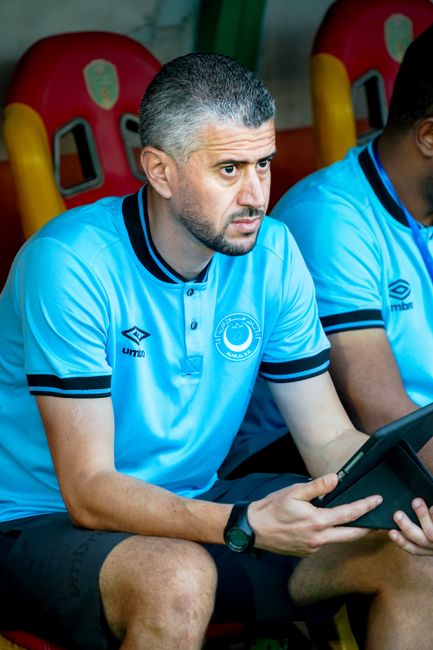
Atalanta Appoints Ivan Jurić: The Heir Apparent to Gian Piero Gasperini’s Reign
The winds of change are blowing through Bergamo, as Atalanta, the club synonymous with thrilling, high-octane football under Gian Piero Gasperini, has officially confirmed the appointment of Ivan Jurić as their new head coach. This move signals a significant transition for a team that has consistently punched above its weight in Serie A and Europe, a testament to Gasperini’s transformative influence. Jurić, himself a product of the Italian footballing system and with a notable stint at Southampton, emerges as the chosen successor, tasked with upholding and potentially evolving the Atalanta identity. The decision to bring in Jurić is not merely a managerial change; it represents a deliberate strategic move by the Atalanta hierarchy to identify a coach who not only understands the club’s philosophy but also possesses the tactical acumen and personal drive to continue its upward trajectory.
Ivan Jurić’s tactical philosophy bears a striking resemblance to the principles that have defined Atalanta under Gasperini. Both coaches are renowned for their commitment to a high-pressing, aggressive defensive structure, a relentless attacking ethos, and a focus on developing players who can seamlessly integrate into a demanding system. Jurić, during his tenures at Hellas Verona and previously at Genoa, consistently demonstrated an ability to extract maximum effort and tactical discipline from his squads, often exceeding pre-season expectations. His preferred 3-4-3 or 3-5-2 formations are inherently adaptable and allow for the kind of fluid attacking movements and defensive compactness that Atalanta supporters have come to expect. This alignment in tactical approaches suggests a smoother transition than might otherwise be anticipated, minimizing the potential for a drastic overhaul of the team’s playing style. The emphasis on defensive solidity, achieved through coordinated pressing and intelligent positioning, will be a cornerstone of Jurić’s strategy, ensuring that Atalanta remains a difficult team to break down, even as they continue to push forward with attacking intent. This dual focus on defensive resilience and attacking verve is a hallmark of successful modern football teams and is something Jurić has proven adept at instilling.
The influence of Gian Piero Gasperini on Atalanta cannot be overstated. For years, he has been the architect of their remarkable rise, transforming a mid-table Serie A side into a perennial contender for European qualification. Gasperini’s innovative tactics, characterized by a dynamic 3-4-3 formation, aggressive pressing, and fluid attacking patterns, have not only yielded impressive results but have also captivated football fans worldwide. His ability to develop raw talent into world-class players, exemplified by the likes of Papu Gómez, Josip Iličić, Dušan Zapata, and Timothy Castagne, has been a defining feature of his tenure. Atalanta’s success under Gasperini has been built on a foundation of intelligent recruitment, player development, and a fiercely competitive spirit. The club’s economic model, which prioritizes scouting and nurturing young talent, has allowed them to compete with clubs possessing significantly larger financial resources. This has fostered a strong sense of identity and belonging within the squad, contributing to their unwavering commitment on the pitch. The challenge for Jurić, therefore, is not simply to manage a team, but to inherit a legacy and find ways to build upon it, a task that requires not only tactical prowess but also a deep understanding of the club’s culture and ethos.
Ivan Jurić’s coaching career, though perhaps not as globally recognized as Gasperini’s at this juncture, has been marked by significant achievements and a distinct tactical fingerprint. His tenure at Hellas Verona, in particular, stands out. He took over a newly promoted side in Serie A and, against all odds, steered them to a comfortable mid-table finish in their first season back, followed by an even more impressive ninth-place finish in the subsequent campaign. This achievement was remarkable considering Verona’s limited financial resources and the highly competitive nature of Serie A. Jurić’s success was largely attributed to his rigorous tactical preparation, his ability to instill a strong team ethic, and his knack for maximizing the potential of his players. He implemented a disciplined and aggressive defensive system, often utilizing a 3-4-3 formation, which allowed Verona to punch above their weight. Furthermore, his teams are known for their high work rate, their ability to transition quickly from defense to attack, and their impressive stamina, all crucial elements for a team like Atalanta that thrives on intensity. His prior experience at Southampton, while perhaps less impactful than his Verona stints, still provided him with valuable insights into the demands of English football and the importance of a structured approach, a learning experience that will undoubtedly inform his approach at Atalanta.
The comparison between Jurić and Gasperini is inevitable and, in many ways, the driving force behind this appointment. Both coaches are known for their tactical rigidity in terms of fundamental principles – high pressing, aggressive defending, and attacking fluidity – but also for their adaptability and ability to tailor their approach to the strengths of their players. Gasperini’s success at Atalanta has been predicated on creating a system that is both demanding and rewarding, fostering an environment where players can thrive and reach new heights. Jurić has demonstrated a similar capacity to achieve this. At Verona, he transformed a team perceived as underdogs into a formidable unit, capable of upsetting established clubs. He achieved this by instilling a strong defensive foundation, a high work rate, and a clear attacking intent, all hallmarks of Gasperini’s Atalanta. The key difference, and where Jurić will need to prove himself, is in consistently matching Atalanta’s European pedigree. While Gasperini has navigated the Europa League and Champions League with considerable success, Jurić’s European experience is more limited. However, his ability to adapt and evolve his tactics, as demonstrated by his success against a variety of opponents in Serie A, suggests he is well-equipped to handle the challenges of continental competition. The trust placed in him by Atalanta’s management indicates a belief that he possesses the necessary qualities to continue the club’s impressive trajectory.
The specific tactical nuances that Jurić is likely to implement at Atalanta warrant closer examination. While the overarching principles will remain similar to the Gasperini era, there will undoubtedly be subtle shifts and emphases. Jurić’s teams often exhibit an even greater intensity in their defensive pressing, seeking to suffocate opponents in their own half and force turnovers in dangerous areas. This can lead to a more direct and incisive attacking style, capitalizing on the chaos created by the press. The wing-backs are crucial in his system, expected to provide both defensive cover and attacking width, a role that Atalanta’s current wing-backs are ideally suited to fulfill. The midfield will operate with a high degree of discipline, acting as a bridge between defense and attack, and possessing the energy to cover vast distances. The forward line will be expected to be mobile, intelligent in their movement, and clinical in their finishing. One area where Jurić might differ is in his approach to player rotation and squad management. While Gasperini has a core group of trusted players, Jurić has shown a willingness to integrate new faces and give opportunities to those who demonstrate the required work ethic and tactical understanding. This could lead to a more dynamic squad selection process, with players constantly needing to prove their worth. The psychological aspect of Jurić’s coaching is also noteworthy. He is known for his passionate sideline demeanor and his ability to motivate his players to perform at their absolute best, often fostering a siege mentality that can be incredibly effective in challenging environments. This fiery temperament, combined with his tactical nous, could prove to be a potent combination for Atalanta.
The challenge of succession in football is a well-trodden path, often fraught with difficulty. Clubs that have enjoyed sustained periods of success under a charismatic and tactically astute manager frequently struggle to replicate that form once the original architect departs. The departure of Gasperini, a figure who has become inextricably linked with Atalanta’s identity, presents a significant hurdle. However, Atalanta’s proactive approach in identifying and appointing Ivan Jurić suggests a well-thought-out strategy. They have not opted for a complete overhaul or a radical departure from their established playing style. Instead, they have chosen a coach whose philosophy aligns with their existing strengths and who has a proven track record of success in Serie A, particularly with teams of similar stature to Atalanta. The experience Jurić gained at Southampton, while brief, would have exposed him to different training methodologies and player management approaches, potentially enriching his coaching toolkit. The club’s management has clearly invested considerable time and effort into scouting and evaluating potential candidates, and Jurić has emerged as their prime choice. This confidence in their selection is a positive indicator for the future.
The long-term implications of this appointment for Atalanta are significant. If Jurić can successfully transition into the role and build upon the foundations laid by Gasperini, the club could continue its ascent. This would involve not only maintaining their position in Serie A but also solidifying their status as a consistent European contender. The ability to attract and retain top talent will be crucial, and Jurić’s track record of developing players will be a major asset in this regard. Furthermore, a successful tenure for Jurić could further enhance Atalanta’s reputation as a club that nurtures coaching talent, potentially creating a pipeline of future managers who understand and can uphold the club’s unique identity. The focus will be on consistency, both in terms of results and in the execution of their playing style. The Atalanta faithful, accustomed to a vibrant and entertaining brand of football, will be eager to see Jurić continue this tradition. The early days of his tenure will be critical in establishing his authority and demonstrating his tactical vision to the squad and the supporters. The club’s commitment to its attacking principles and its ability to develop players will likely remain unchanged, but Jurić’s unique approach will undoubtedly inject a fresh perspective and potentially new tactical wrinkles into their game.
The transition from Gian Piero Gasperini to Ivan Jurić at Atalanta represents a pivotal moment for the club. While the shadow of Gasperini’s immense success looms large, Jurić arrives with a proven ability to implement a demanding, yet effective, tactical system. His previous experiences, particularly his impressive work at Hellas Verona, highlight his capacity to elevate teams and foster a strong collective spirit. The tactical alignment between Jurić and Gasperini provides a solid foundation for continuity, allowing Atalanta to build upon their established identity rather than undergo a radical transformation. The coming seasons will be a true test of Jurić’s mettle as he navigates the pressures of European competition and the expectations of a passionate fanbase. His ability to adapt, to motivate his players, and to continue the development of young talent will be the key determinants of his success and Atalanta’s future trajectory in the competitive landscape of Italian and European football. The appointment signals a strategic decision by Atalanta to entrust their future to a coach who embodies a similar spirit of ambition and tactical innovation, setting the stage for another exciting chapter in the club’s remarkable story.
