In the rolling landscape of Steuben County, New York, the Lent Hill Dairy Farm operates as a traditional industrial dairy with a high-tech twist. While the facility houses approximately 4,000 cows and manages a massive manure footprint, its most striking features are two cavernous, dome-like structures known as anaerobic co-digesters. These machines represent the vanguard of a burgeoning industry that seeks to bridge the gap between heavy agriculture and the insatiable energy demands of the digital age. By breaking down bovine waste and local food scraps, these digesters produce biogas—a renewable natural gas (RNG) that, at this specific location, is not merely heating local homes but powering an on-site cryptomining operation.
Managed by the Pennsylvania-based firm Ag-Grid Energy, the Lent Hill project is the first of its kind in the United States to directly link agricultural waste to the high-intensity computing required for blockchain and artificial intelligence. As the global tech sector grapples with the environmental footprint of data centers—which currently account for nearly 5 percent of total U.S. electricity consumption—this "manure-to-megawatts" model is being touted by proponents as a sustainable solution. However, the convergence of factory farming and high-tech infrastructure has ignited a fierce debate among environmentalists, local communities, and policy experts over the true cost of this "renewable" energy source.
The Mechanics of Waste-to-Energy Infrastructure
Anaerobic digestion is a biological process in which microorganisms break down biodegradable material in the absence of oxygen. At Lent Hill, the system processes more than 45,000 gallons of food waste daily alongside the manure from 4,000 cows. The resulting biogas is primarily composed of methane and carbon dioxide. When refined into RNG, it becomes a "drop-in" fuel, meaning it can be transported via existing natural gas pipelines and used in standard heating and power systems without requiring infrastructure overhauls.

For Ag-Grid Energy, the goal extends beyond cryptomining. CEO Rashi Akki envisions a future where midsize dairies serve as localized power hubs for small-scale data centers and AI computing clusters. By providing fiber-optic connectivity and on-site power generation, these farms could theoretically bring high-tech economic value to rural areas. This model aligns with a broader industry trend where "hyperscalers"—tech giants like Microsoft, Google, and Amazon—are seeking alternative fuel sources to meet aggressive net-zero carbon targets while their energy needs continue to skyrocket.
Current projections from the Department of Energy’s national laboratories suggest that data center electricity use could double by 2030. This surge is driven largely by the shift from traditional CPU-based computing to the more power-hungry GPU (Graphics Processing Unit) architectures required for generative AI. In response, a coalition of agriculture, fossil fuel, and utility interests is positioning RNG as the "fuel of the AI age," promising a reliable, baseload power source that avoids the intermittency issues associated with solar and wind energy.
The Economic Engine: Subsidies and Policy Incentives
The rapid expansion of the biogas industry is not merely a result of technological innovation but of significant financial incentivization from federal and state governments. The technology has become a cornerstone of several climate-focused programs, receiving billions of dollars in taxpayer-supported subsidies.
The 2022 Inflation Reduction Act (IRA) provided over $150 million in funding for biogas projects across the country, while the California Low Carbon Fuel Standard (LCFS) currently funds nearly 200 digesters across 16 different states. Furthermore, state-level initiatives, such as those from the Michigan Strategic Fund, have approved over $100 million in private bonds for digester construction. These credits are vital for the profitability of companies like Ag-Grid Energy. Industry leaders are now advocating for specific tax credits aimed at electricity production for AI, arguing that fiscal support is necessary to de-risk the transition to rural, farm-based data processing.
However, the flow of government capital has recently faced headwinds. In May 2024, the U.S. Department of Agriculture (USDA) extended a 90-day moratorium on loans for anaerobic digesters through the end of the year. This pause came amid rising concerns over delinquent loans—with roughly 11 percent of project lenders considered over 90 days past due—and growing environmental scrutiny regarding the long-term viability of the technology.
Community Resistance and the "Sacrificial Dumping Ground" Narrative
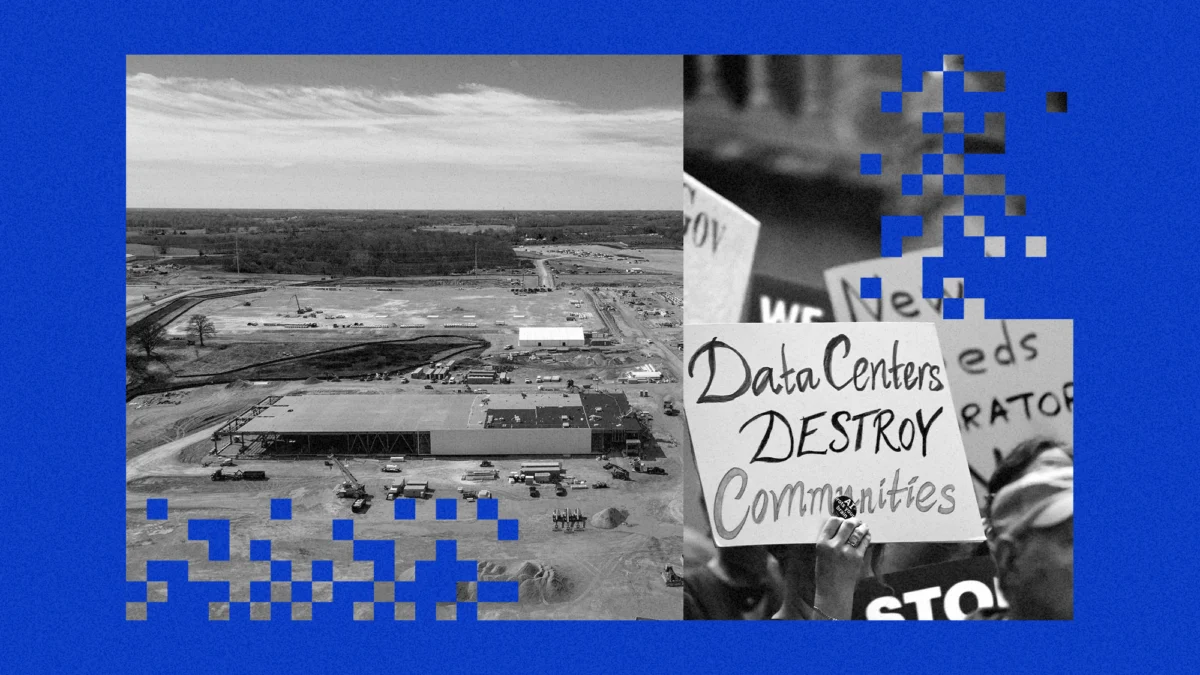
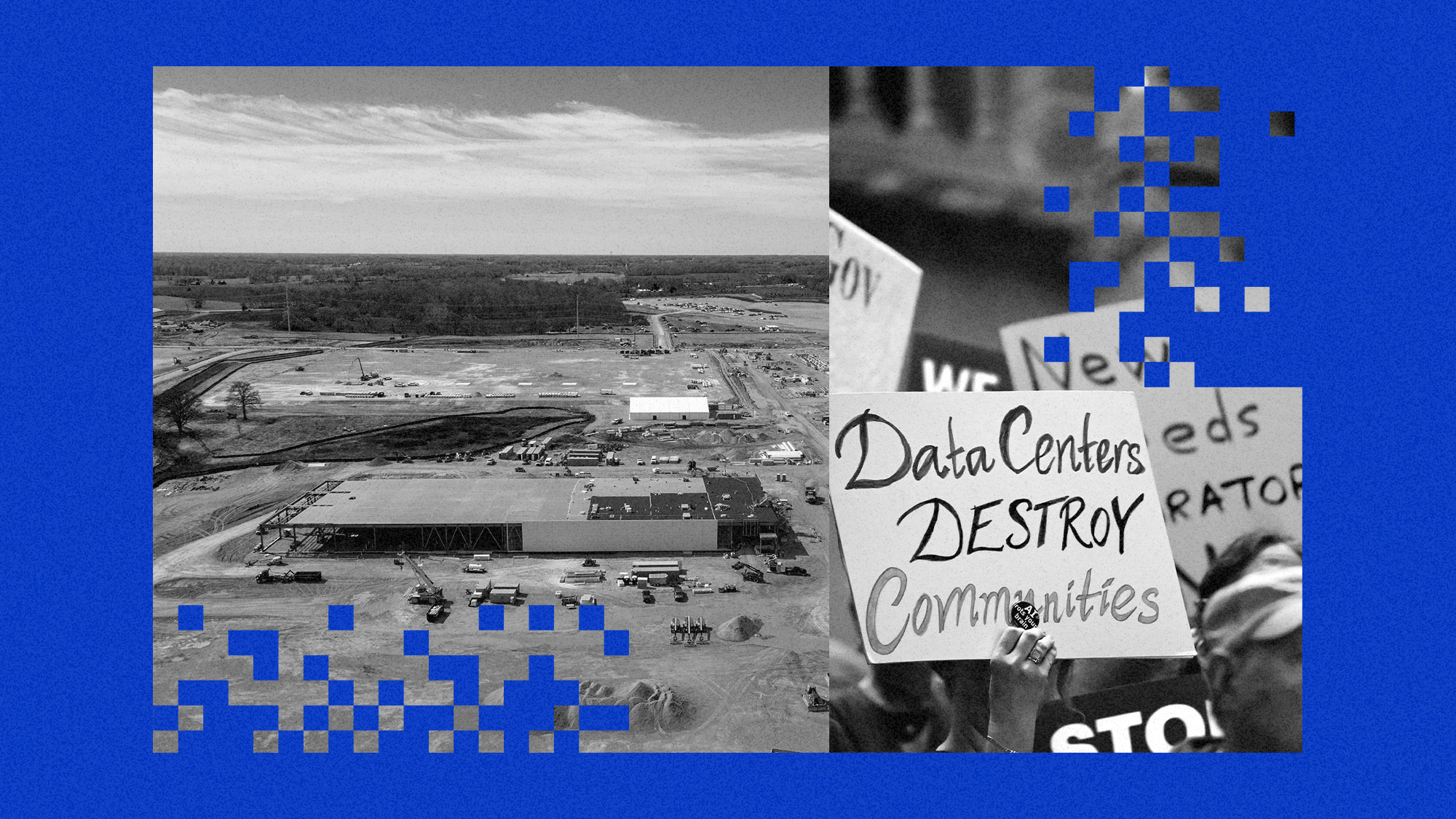
While the industry presents a vision of rural revitalization, many residents in the affected areas see a darker reality. In Lind, Wisconsin, a proposal by Vanguard Renewables to build a large-scale co-digester met with fierce community opposition throughout 2023 and early 2024. Organizers like Victoria Gehrke and Laurie Knutzen successfully argued that these facilities are not "agricultural accessories" but industrial waste-processing plants that do not belong on farmland.
The primary concerns for local communities involve hazardous air emissions, increased heavy-duty truck traffic, and the potential for catastrophic water pollution. In the Lind case, the project intended to discharge approximately 41,000 gallons of waste per day into a tributary leading to Lake Michigan. Residents expressed fear that their small towns were becoming "sacrificial dumping grounds" for industrial food waste from urban centers—waste that cities were unwilling to process within their own borders.
Following a year of relentless advocacy, the town of Lind denied the application in the spring of 2024. Despite this local victory, the trend toward large-scale digesters remains robust. Vanguard Renewables, a portfolio company of BlackRock, continues to develop more than 50 projects nationwide, with a target of 100 completed facilities by 2028.

The Environmental Paradox: Pollution Swapping and Herd Growth
The most significant scientific critique of the manure-to-energy model involves the concept of "pollution swapping." While anaerobic digesters are effective at capturing methane—a greenhouse gas roughly 80 times more potent than carbon dioxide over a 20-year period—researchers argue they may exacerbate other environmental problems.
A scientific review published by the Johns Hopkins Center for a Livable Future suggests that while methane emissions might decrease, the process can lead to an increase in ammonia emissions and other toxic byproducts. Furthermore, the "digestate"—the liquid and solid waste left over after the gas is extracted—remains a significant pollution risk. Research from the USDA indicates that digested manure can sometimes be more polluting than untreated manure when spread on fields as fertilizer, leading to higher rates of nutrient runoff into local waterways.
Perhaps more concerning is the "perverse incentive" created by the high value of biogas credits. When manure becomes more profitable than milk, farmers are incentivized to increase their herd sizes to maximize waste production. A report from Friends of the Earth found that dairies with digesters increased their herd sizes by 3.7 percent annually—24 times the growth rate of dairies without the technology. In Kewaunee County, Wisconsin, herd sizes surged by 58 percent following digester installations.
Critics like Sarah D’Onofrio, an advocate for digester-impacted communities, argue that this trend entrenches the factory farm model. By making the energy system dependent on industrial agriculture, the transition to truly clean energy sources like wind and solar may be delayed. "It attaches these industrial food operations into our energy system and makes us really dependent on them over time," D’Onofrio noted, suggesting that the industry is creating a new market that necessitates the continued concentration of livestock.
Implications for the Future of Energy and Agriculture
The convergence of the biogas industry and the data center sector represents a significant shift in the American energy landscape. For proponents like Patrick Serfass, executive director of the American Biogas Council, the reliability of biogas makes it an "excellent fit" for the high-capacity needs of data centers. He estimates that the U.S. has currently only tapped into 10 to 15 percent of its potential biogas capacity, suggesting that the "power-hungry" nature of data centers could consume nearly all the supply the industry is capable of creating.
The partnership between waste management firms and energy giants is already solidifying. Vanguard Renewables has established relationships with TotalEnergies and Enbridge, both of which have deep ties to hyperscale data center operators. For instance, TotalEnergies recently signed a 15-year deal to provide solar energy to Google’s data centers in Ohio, signaling a multi-pronged approach to powering the tech sector.
As the AI revolution continues to demand unprecedented levels of electricity, the pressure to find "green" solutions will only intensify. The Lent Hill Dairy Farm serves as a pilot for a future where the digital and agricultural worlds are inextricably linked. However, as the debate in rural towns and scientific journals suggests, the path to a sustainable future may require a more critical examination of whether "renewable" natural gas is a genuine solution or a sophisticated method of sustaining industrial systems that are increasingly at odds with environmental preservation. For now, the smell of digestate in rural Michigan and the hum of cryptominers in upstate New York remain the dual symbols of this controversial energy frontier.