The Japan Aerospace Exploration Agency (JAXA) has unveiled breathtaking new images of the near-Earth asteroid Torifune, captured during an exceptionally close flyby on July 5, 2026. These stunning visuals, showcasing Torifune as a contact binary – two distinct rocky bodies gravitationally bound – have sent ripples of excitement through the scientific community. However, the successful acquisition of this data was preceded by a period of intense debate and critical decision-making within the Hayabusa2 mission team, pushing the aging spacecraft to its operational limits.
The mission, which has already achieved remarkable success with its primary objective of sampling the asteroid Ryugu, embarked on this ambitious extended mission to further explore the solar system’s primordial building blocks. The decision to perform such a close flyby of Torifune, a celestial body previously observed but not intimately studied, was a testament to the team’s commitment to scientific discovery, even in the face of considerable technical challenges and inherent risks.
A Tale of Two Asteroids and Unexpected Discoveries
The initial rendezvous with Torifune by the Hayabusa2 probe on July 5, 2026, yielded immediate and surprising results upon the transmission of images to Earth on July 6, Japan time. Makoto Yoshikawa, the former mission manager for Hayabusa2, shared with attendees at the Asteroids, Comets and Meteors conference in Poznan, Poland, on July 10, that Torifune presented itself as a contact binary, a configuration not anticipated by the mission planners. "We did not imagine such a contact binary," Yoshikawa stated, highlighting the element of surprise.
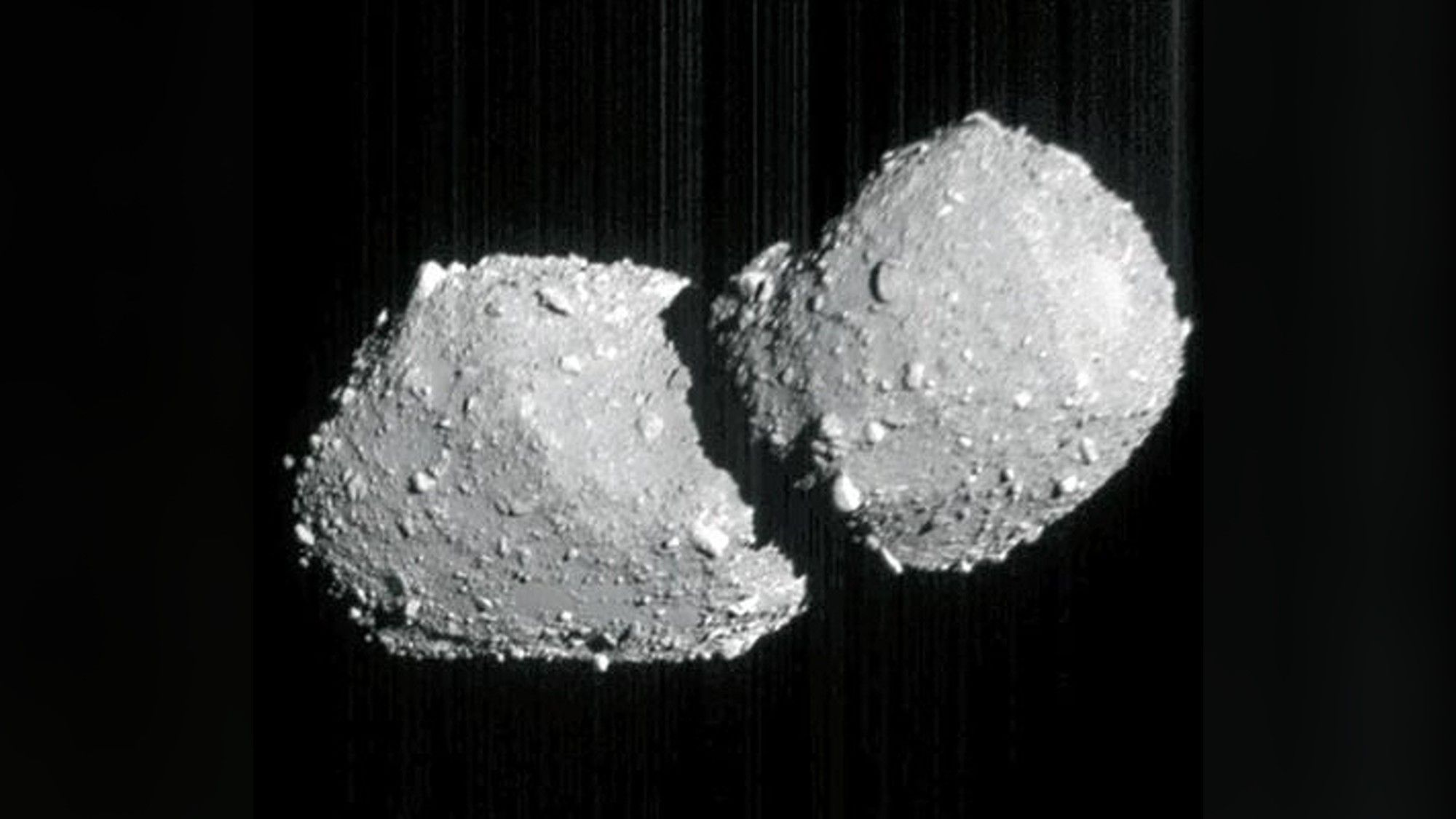
Furthermore, the imaging resolution achieved was far beyond initial expectations. "Originally, we didn’t think we could have such a very big image. Maybe we will take a very small one, but the image was much larger than we expected," he added, underscoring the success of the daring maneuver. This double revelation – the unexpected morphology of Torifune and the superior quality of the imagery – was the culmination of months of rigorous scientific and engineering deliberation.
The Evolution of a Daring Proposal: From Kilometers to Meters
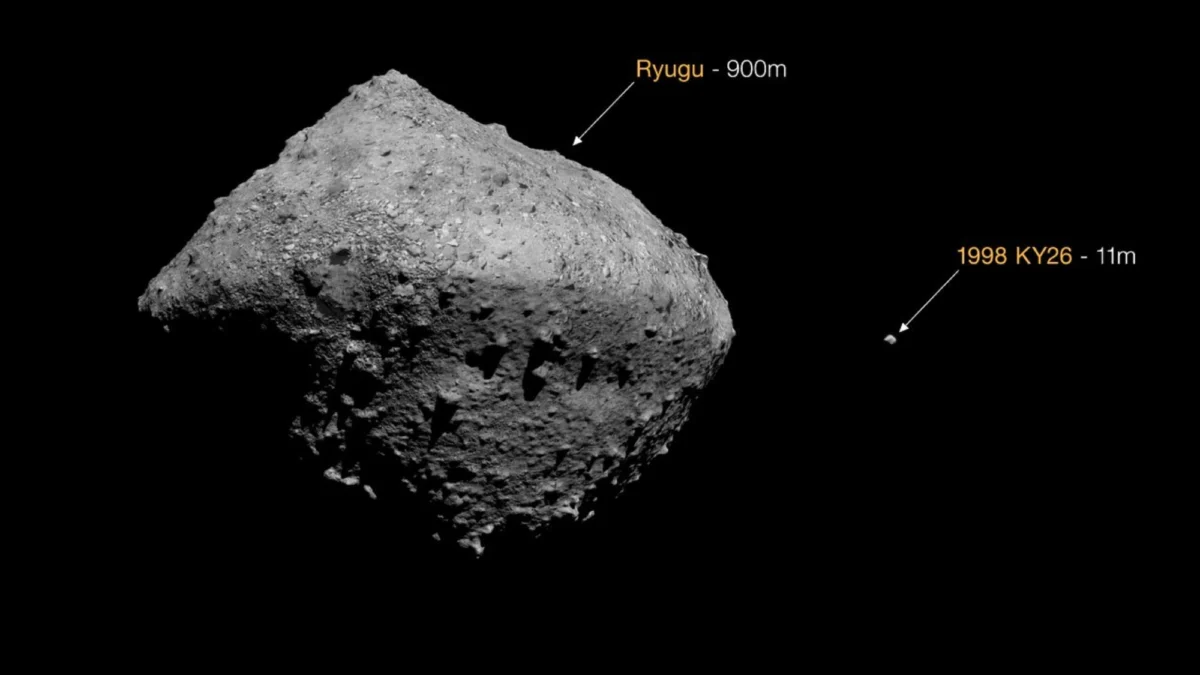
The operational history of the Hayabusa2 spacecraft is a remarkable saga of interplanetary exploration. Launched in December 2014, it successfully reached the asteroid Ryugu in 2018, collected precious samples, and delivered them to Earth in 2020, thereby fulfilling its primary mission objectives. Following this monumental achievement, JAXA began formulating plans for further scientific endeavors, including a future rendezvous with the much smaller asteroid 1998 KY26, targeted for 2031.
Typically, flyby missions maintain a safe distance of approximately 100 kilometers (62 miles) from their targets. However, for Hayabusa2, this distance was deemed insufficient for obtaining high-resolution data that could reveal the finer details of an asteroid’s surface and composition. The spacecraft, originally designed for rendezvous and proximity operations such as hovering, course correction, and landing on Ryugu, was not inherently built for high-speed passes at velocities of around 5.3 kilometers per second (3.3 miles per second). Moreover, its cameras were not optimized for rapid slewing required during such swift encounters.
The science team, eager to maximize the scientific return, voiced concerns that at 100 kilometers, the asteroid’s global shape would be barely resolvable. This prompted the engineering team to propose a significantly closer approach of 10 kilometers (6.2 miles). While this was deemed acceptable by the science contingent, the pursuit of even more detailed data continued. The engineers, through meticulous analysis and simulation, eventually confirmed the feasibility of approaching within 1 kilometer (0.6 miles) of Torifune’s center. This prospect thrilled the science team, promising unprecedented photographic opportunities.
A Last-Minute Push and Heated Discussions
The most intense phase of planning occurred just one month prior to the flyby. Yuya Mimasu, the leader of the extended mission team, put forth a bold proposal to venture even closer, suggesting a minimum distance of 800 meters (approximately 2,625 feet) from Torifune’s center. This suggestion ignited a "very heated discussion" among the science team, with some expressing significant apprehension about the escalating risks.
The primary concerns revolved around the unknown dimensions of Torifune and the potential hazards to the spacecraft. Ground-based observations had provided an estimated worst-case scenario for the asteroid’s size, ranging from 1,400 meters by 400 meters (4,600 by 1,300 feet). An approach of 800 meters from the center would place the spacecraft perilously close to the outer edge of the calculated exclusion zone. Compounding these concerns were the effects of dust particles accumulated on Hayabusa2’s optics from the sampling operations on Ryugu, potentially degrading image quality and navigation accuracy. The final navigation analysis revealed a targeting error ellipse of approximately 200 meters (656 feet), making the fixed distance of 800 meters a substantial challenge. "The distance fixed is 800 meters," Yoshikawa acknowledged, "but this is quite a big challenge for us."
Technological Prowess in Action
Hayabusa2 first detected Torifune on June 19, 2026, initiating the final preparations for the encounter. A critical technological advancement for this flyby was the development of a new onboard guidance software. The spacecraft utilized ground-based guidance for up to three hours before the flyby, after which it seamlessly transitioned to autonomous onboard navigation. "This is quite new," Yoshikawa noted, emphasizing the successful deployment of this novel system.
The culmination of these efforts was the spectacular imagery captured by the probe’s Optical Navigation Camera Telescope (ONC-T). However, the scientific yield extended beyond visual data. All four of Hayabusa2’s science instruments were active during the flyby. The Thermal Infrared Imager (TIR) captured nine seconds of thermal imaging data between 09:29:50 and 09:29:59 GMT on July 5, mere moments before closest approach. This data independently corroborated the contact binary structure of Torifune through its thermal emission patterns.
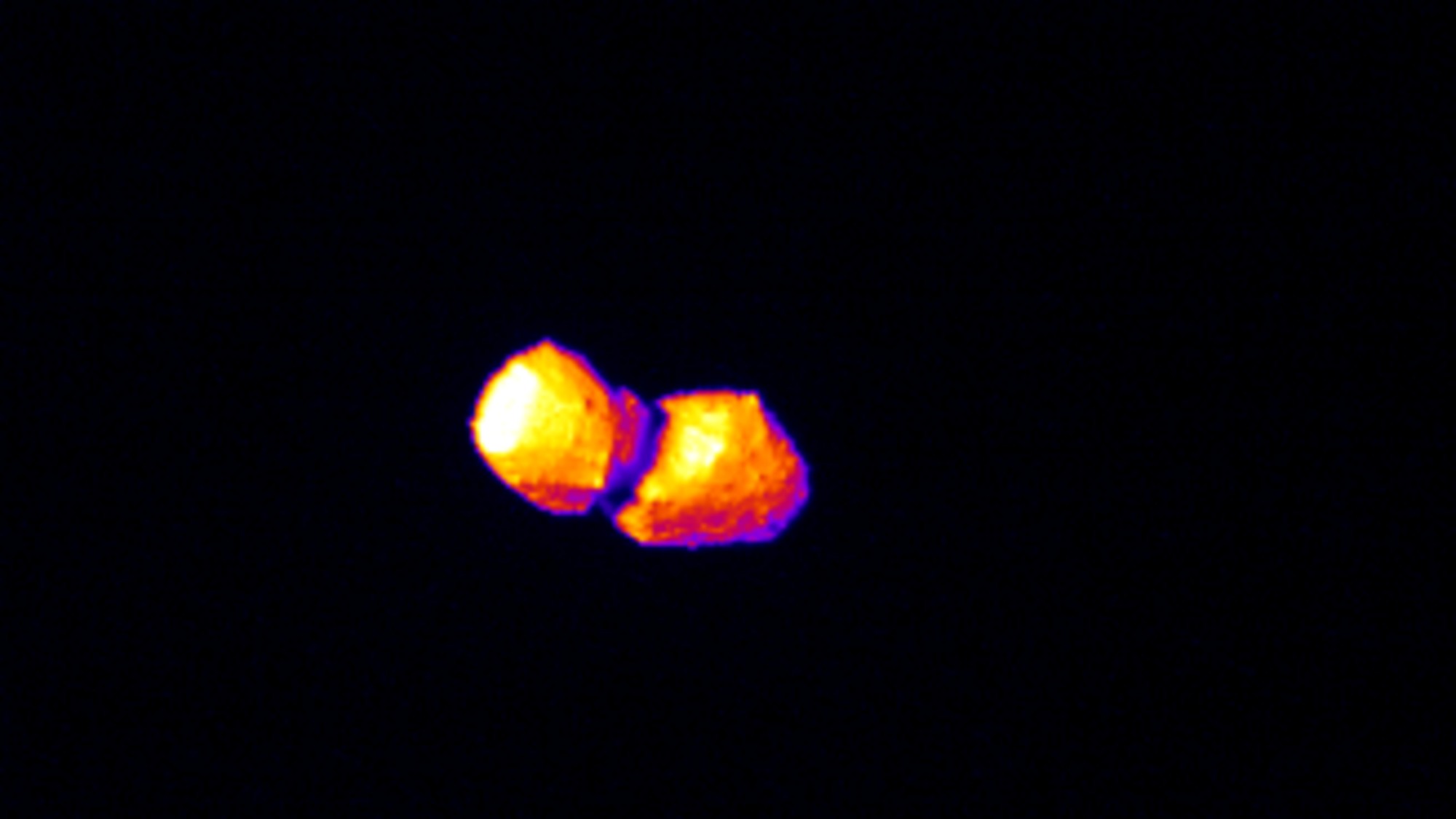
Further valuable data was acquired by the Near Infrared Spectrometer (NIRS3) and the laser altimeter (LIDAR). Yoshikawa highlighted the LIDAR’s achievement as potentially the first successful ranging measurement during an asteroid flyby, a significant technological feat. While the most critical 25 MB of data was transmitted immediately, the complete dataset, totaling approximately 300 MB, will require several months to downlink. Hayabusa2’s ion engine system was reactivated on July 9 to commence its journey towards two Earth flybys scheduled for 2027 and 2028, after which the remaining scientific data will be transmitted to Earth.
Broader Implications for Planetary Defense and Future Exploration
The Torifune flyby represents more than just an opportunistic scientific observation and data collection mission; it marks a significant technological milestone. "JAXA has acquired the technology to collide spacecraft with a small celestial body," Yoshikawa declared in his concluding remarks at the ACM conference. He drew a parallel to NASA’s successful DART (Double Asteroid Redirection Test) mission, suggesting that the Hayabusa2 flyby serves as a crucial demonstration of the "fast reconnaissance concept in planetary defense." This capability to rapidly characterize an unknown asteroid is paramount for assessing potential impact threats and could provide vital information for the planning and execution of future impactor missions aimed at mitigating asteroid hazards.
The extended mission of Hayabusa2 is far from over. Its ultimate objective remains the rendezvous with the exceptionally small asteroid 1998 KY26. This rapidly rotating celestial body, measuring approximately 36 feet (11 meters) in diameter, is slated for encounter in 2031. The successful navigation and data acquisition during the Torifune flyby provide invaluable experience and technological validation for the challenges associated with approaching and studying such diminutive and dynamically active objects.
The images and data from Torifune will contribute significantly to our understanding of asteroid formation and evolution, particularly the processes by which rubble-pile asteroids aggregate and maintain their structures. The detailed examination of this contact binary will offer insights into the gravitational forces at play in the early solar system and the dynamic interactions that shape these primordial remnants. The daring nature of the Torifune flyby, born from a combination of scientific ambition and engineering ingenuity, underscores the ongoing quest to unravel the mysteries of our cosmic neighborhood and to ensure the long-term safety of our planet.