The discovery of a previously unrecognized order of marsupials, tentatively named Keeunamorphia, is fundamentally reshaping our understanding of how these iconic Australian animals evolved and diversified across the continent. This finding, detailed in a recent publication in the Journal of Paleontology, suggests that the evolutionary journey of marsupials in Australia was far more complex and enigmatic than previously hypothesized, potentially rewriting the earliest chapters of their lineage on the continent.
For decades, the prevailing scientific narrative posited that marsupials first arrived in Australia over 55 million years ago, likely originating from South America and traversing Antarctica before the supercontinent Gondwana fully fractured. From this singular entry point, a single ancestral lineage is thought to have radiated outwards, giving rise to the astonishing array of marsupial species that inhabit Australia today. These include everything from the diminutive, hibernating possums of the High Country to the eyeless, mole-like creatures burrowing beneath the arid Red Centre. However, significant lacunae in the fossil record have rendered vast swathes of this early evolutionary history shrouded in mystery, leaving scientists with a fragmented picture of diversification.
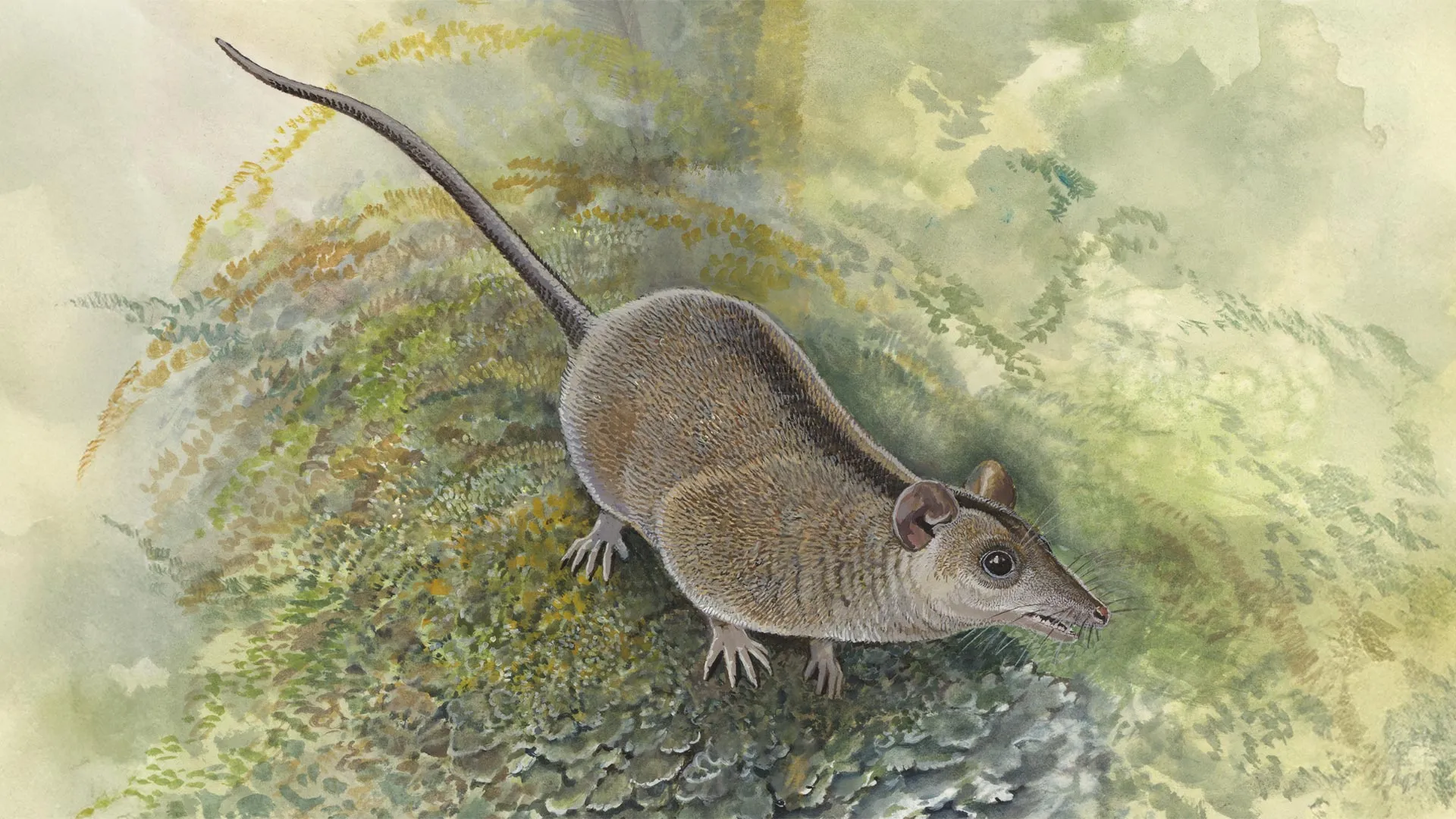
The groundbreaking research from the University of New South Wales (UNSW) introduces three newly identified species that, according to the analysis, may represent a distinct and ancient order of marsupials. This proposed order, Keeunamorphia, could potentially be the most ancient lineage of all Australian marsupials, predating or running parallel to other known major groups. Dr. Tim Churchill, a lead paleontologist on the UNSW team, highlights the profound implications of this discovery, suggesting that Keeunamorphia might even be the ancestral root from which all modern marsupial carnivores ultimately descended.
A Deeper Dive into the Marsupial Pedigree
The standard model of marsupial colonization of Australia, rooted in the breakup of Gondwana, has long been the cornerstone of evolutionary biology for the region. Fossils dating back approximately 55 million years have lent credence to the idea of a single ancestral wave that subsequently diversified into the five established orders within the superorder Australidelphia – the collective classification for all living and extinct Australian marsupials, along with one South American representative.
Dr. Churchill’s proposition of a sixth order, Keeunamorphia, challenges this established paradigm. His meticulous analysis indicates that this newly identified group may have existed for an impressive 35 million years, offering a prolonged glimpse into an early phase of marsupial evolution. The proposed members of Keeunamorphia were likely small, insectivorous creatures, weighing between 25 and 200 grams. Their existence is traced to the lush, verdant forests of what is now northern Queensland, a stark contrast to the region’s present-day arid and open landscapes. These ancient forests, flourishing around 18 million years ago when the Keeunamorphia species thrived, were likely dense rainforests teeming with life, supporting the ancestors of many animals that continue to inhabit Australia.
The environmental shifts in northern Queensland around 14 million years ago marked a significant turning point. Dr. Churchill notes that this period saw a general cooling trend, leading to the decline of dense forests and their replacement by more open woodlands interspersed with lakes and grasslands. This environmental transformation likely played a crucial role in the evolutionary pressures that shaped the marsupial fauna, potentially contributing to the decline or adaptation of groups like Keeunamorphia.
Unearthing Secrets at Riversleigh
The fossil evidence for Keeunamorphia originates from the renowned Riversleigh World Heritage Area in Queensland, a globally significant paleontological site. The three species identified by Dr. Churchill and his team lived approximately 18 million years ago. Their remains were preserved in shallow cave pools, offering a remarkable, albeit fragmented, record of their existence.
Complete marsupial skeletons from this ancient period are exceedingly rare. Consequently, the UNSW researchers relied on more subtle clues: fragments of teeth and jawbones. By painstakingly analyzing these remnants, they sought to accurately position these newly discovered species within the broader marsupial family tree. To achieve this, the team employed a sophisticated approach, integrating both fossil evidence and genetic data from extant marsupial species. This dual approach enabled the construction of a phylogenetic tree – a visual representation of evolutionary relationships that estimates the timing of divergence between different lineages.
"We’re essentially trying to create a tree that shows both the relationships of all the different species in the tree, while also calculating when those branches probably diverged," explained Dr. Churchill. This method allows for a more robust reconstruction of evolutionary history, bridging the gap between ancient life and its modern descendants.
Teeth as Keys to an Evolutionary Puzzle
The phylogenetic analysis revealed that these three newly identified species coexisted with several other marsupials that had already been extensively studied. However, their dental morphology presented a significant anomaly. The teeth were unlike those of their contemporaries, suggesting a distinct evolutionary trajectory that set them apart.
Intriguingly, the teeth of Keeunamorphia bore a striking resemblance to those of Djarthia murgonensis, an extinct marsupial that lived around 35 million years earlier. Djarthia murgonensis is often considered a primitive prototype for Australian marsupials, offering a glimpse into an early stage of their development. Dr. Churchill interprets this dental similarity as strong evidence for a previously unrecognized marsupial lineage that diverged early in evolutionary history. This lineage appears to have persisted for millions of years, evolving independently while other marsupial groups diversified around it.
"Whatever these things were, they seemed to be primitive compared to other marsupials at the time, and they seem to have been doing their own thing and surviving well enough alongside them," Dr. Churchill remarked. This suggests a degree of ecological partitioning or specialization that allowed Keeunamorphia to carve out its niche.
While phylogenetic trees have traditionally depicted a single, pivotal ancestral group giving rise to the full spectrum of modern Australian marsupials, the fossil evidence, particularly with the inclusion of Keeunamorphia, paints a less streamlined picture. The existence of this distinct, ancient lineage challenges the notion of a singular evolutionary explosion from one founding stock.
A More Nuanced Origin Story for Australian Marsupials
The implications of Keeunamorphia’s early divergence are profound. If this ancient order emerged shortly after the initial arrival of marsupials in Australia around 55 million years ago, it suggests that multiple marsupial lineages may have been present on the continent from its earliest stages of occupation. This scenario fundamentally alters the simplified model of marsupial evolution, proposing a more complex origin story with several ancestral branches developing concurrently.
This discovery also prompts a compelling evolutionary question: How did such a seemingly primitive group manage to survive for such an extended period, remaining relatively unchanged while other marsupial lineages underwent significant diversification? The answer may lie in their ecological adaptability or perhaps a lifestyle that did not necessitate rapid evolutionary change.
"Evolutionary history is a lot more complex than just one group leading to all of Australia’s marsupials after being left behind when the continent broke off from Antarctica," Dr. Churchill elaborated. "It’s more likely that when Australia was part of Gondwana it was swarming with all sorts of bizarre, primitive marsupial-like things, and that several of them survived and led to our modern lineages." This revised perspective suggests that Australia’s marsupial fauna may be the product of multiple independent evolutionary streams that arrived and diversified on the continent.
Uncovering Hidden Diversity in the Fossil Record
The challenge of fully reconstructing Australia’s marsupial evolutionary past is compounded by significant gaps in the fossil record. A nearly 20-million-year hiatus in the fossil history of Australian marsupials leaves ample room for numerous undiscovered lineages. These missing pieces of the puzzle could represent ancestral groups that shared common origins or entirely separate evolutionary pathways that became established in Australia as the continents drifted apart.
While scientists may never be able to precisely map every route taken by early marsupials as they spread and evolved, each new fossil discovery, such as the teeth and jaw fragments of Keeunamorphia, adds a crucial piece to the narrative. These discoveries are not merely adding detail; they are fundamentally altering our understanding of marsupial evolution, revealing a history that is far more intricate, diverse, and captivating than previously imagined. The story of Australia’s marsupials is proving to be a testament to the enduring power of adaptation and the profound mysteries still held within the Earth’s ancient strata.