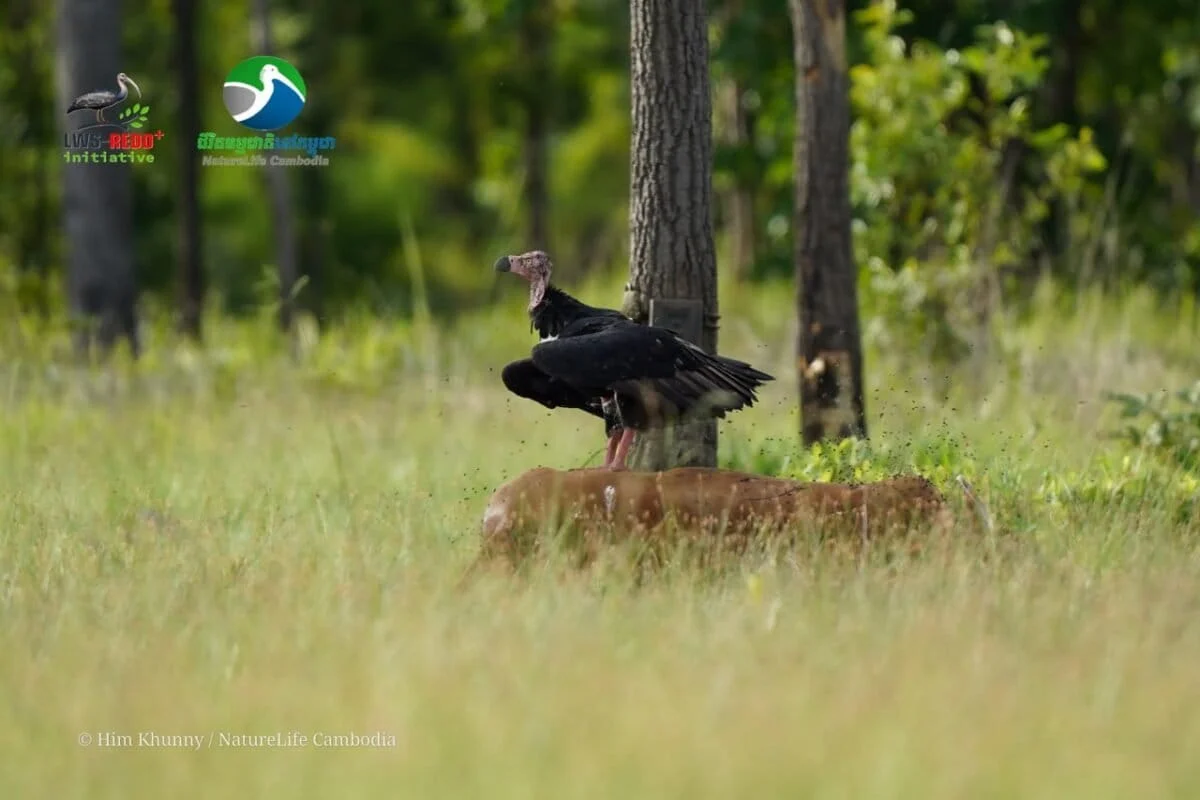
The discovery of a critically endangered white-rumped vulture in Cambodia’s Lomphat Wildlife Sanctuary has provided a rare glimmer of hope for regional conservationists, marking the first sighting of the species in the area in over a decade. During a comprehensive census conducted in June 2026, surveyors identified the white-rumped vulture (Gyps bengalensis) at a specialized supplementary feeding station, a conservation tool colloquially known as a “vulture restaurant.” This facility, managed by the non-governmental organization NatureLife Cambodia, is part of a broader national effort to prevent the total extinction of the species in Southeast Asia.
The census results were further bolstered by the confirmed presence of five red-headed vultures (Sarcogyps calvus), including two juveniles. The presence of young birds is a vital indicator of successful breeding within the sanctuary, suggesting that the local ecosystem still retains the necessary components to support the lifecycle of these rare scavengers. However, this biological success story is currently unfolding against a backdrop of severe industrial encroachment. Even as the vultures return, the sanctuary is being fragmented by mining concessions and the looming shadow of a massive hydropower project that threatens to submerge the very habitat these birds rely upon.
A Decadal Milestone in Avian Conservation
The white-rumped vulture was once one of the most common large birds of prey in the world, with a range spanning across South and Southeast Asia. However, the population underwent a catastrophic collapse starting in the 1990s, primarily due to the use of diclofenac, a veterinary anti-inflammatory drug that is lethal to vultures when they consume the carcasses of treated livestock. While Cambodia has largely avoided the diclofenac crisis through strict regulations, the species has still faced local extinction in many of its former haunts due to habitat loss and a decline in the availability of wild ungulate carcasses.
Bou Vorsak, the CEO of NatureLife Cambodia, emphasized that the return of the white-rumped vulture is not a matter of chance but a direct result of targeted intervention. The "vulture restaurant" program provides a safe, toxin-free food source—usually in the form of slaughtered cattle—at regular intervals. This ensures that the birds do not have to travel into dangerous, unprotected territories in search of food. The June 2026 sighting suggests that the sanctuary’s habitat conditions have stabilized enough to attract individuals from other fragmented populations, potentially establishing a new foothold for the species.
The Geography of Lomphat Wildlife Sanctuary
Spanning approximately 356,087 hectares across the Ratanakiri and Mondulkiri provinces, Lomphat Wildlife Sanctuary is a critical component of the Indo-Burma biodiversity hotspot. It is characterized by a mosaic of deciduous dipterocarp forests, evergreen patches, and seasonal wetlands. This landscape is historically significant as the "home of the giants," once supporting herds of wild elephants, banteng, and Gaur, which provided the natural biomass needed to sustain large scavenger populations.
The sanctuary is also home to the Veal Kambor Community Protected Area (CPA). The CPA model was designed by the Cambodian Ministry of Environment to allow local indigenous communities to manage forest resources sustainably. Under these agreements, residents are typically granted 15-year management rights, allowing them to balance traditional livelihoods—such as resin tapping and small-scale agriculture—with forest preservation. However, recent developments indicate that these community rights are being superseded by national industrial priorities.
Industrial Encroachment and Mining Operations
The ecological integrity of Lomphat is currently under siege from a series of mining concessions that target the sanctuary’s mineral wealth. Reports indicate that since 2020, the Cambodian government has granted at least five mining concessions to private firms within or adjacent to the sanctuary’s protected zones. One of the most prominent actors is CHHC Investment Co., which has been involved in quarrying marble and other minerals within the conservation areas.
The legality and transparency of these operations have come under intense scrutiny. Satellite imagery and field reports suggest that quarrying has continued even in areas where licenses were reportedly set to expire in 2022. This industrial activity has had a direct impact on the Veal Kambor CPA. Local residents have reported the loss of fallow rice fields and the restricted access to forest products that are essential for their economic survival. Compensation for these losses has been described as minimal or non-existent, leading to a breakdown in the trust between local communities and environmental regulators.
The presence of heavy machinery, the construction of access roads, and the noise pollution associated with blasting operations create a significant disturbance for nesting vultures. Vultures are notoriously sensitive to human activity during the breeding season; persistent disturbance can lead to nest abandonment, effectively neutralizing the conservation gains reported in the June census.
The Lower Srepok 3 Hydropower Threat
While mining poses a threat of fragmentation, the proposed Lower Srepok 3 hydropower dam represents a threat of total habitat loss. The 376-megawatt project, situated in northeastern Cambodia, is a cornerstone of the nation’s energy expansion strategy. However, the environmental costs of the project are projected to be astronomical.

If the dam proceeds as planned, the resulting reservoir will flood the core zone of the Lomphat Wildlife Sanctuary. This would lead to the permanent loss of the Veal Kambor CPA and several other key biodiversity areas. The inundation would destroy the lowland deciduous forests that serve as the primary foraging and nesting grounds for the white-rumped and red-headed vultures.
Furthermore, the flooding would jeopardize a major carbon credit project. Lomphat is part of a REDD+ (Reducing Emissions from Deforestation and forest Degradation) initiative, which generates credits by proving that the forest is being protected from destruction. If the forest is intentionally submerged for a hydropower reservoir, the carbon sequestration value of the land is lost, potentially exposing the government and its partners to legal and financial liabilities regarding their international climate commitments.
A History of Habitat Degradation
The current crisis is not the first time Lomphat has faced industrial pressure. The sanctuary’s relatively flat topography and accessible lowland forests made it a prime target for the Economic Land Concession (ELC) boom of the 2010s. During this period, the Cambodian government awarded at least six major land concessions within the sanctuary’s borders, totaling more than 47,500 hectares.
These concessions were primarily used for large-scale rubber and palm oil plantations. The conversion of primary forest into monoculture plantations resulted in a massive loss of biodiversity and the displacement of numerous wildlife species. While the government eventually placed a moratorium on new ELCs in 2012, the damage to Lomphat’s western and southern sectors was already extensive. The recent return of the white-rumped vulture is therefore seen as a testament to the resilience of the ecosystem, which has managed to sustain rare species despite a decade of intense land-use change.
Chronology of Events and Conservation Status
To understand the gravity of the current situation, it is necessary to look at the timeline of Lomphat’s conservation history:
- 1993: Lomphat is officially designated as a Wildlife Sanctuary.
- 2010–2012: Rapid expansion of Economic Land Concessions (ELCs) for rubber and palm oil, resulting in the loss of over 47,000 hectares of forest.
- 2016: The last recorded sighting of a white-rumped vulture in the sanctuary before its decade-long absence.
- 2020: The government begins granting mining concessions within Community Protected Areas (CPAs) of the sanctuary.
- 2022: Reported expiration of several mining licenses, though industrial activity reportedly continues on the ground.
- 2024–2025: Acceleration of plans for the Lower Srepok 3 hydropower dam and the expansion of the REDD+ carbon credit program.
- June 2026: The milestone census confirms the return of the white-rumped vulture and the successful breeding of red-headed vultures.
Analysis of Implications
The return of the white-rumped vulture presents a paradox for Cambodian policy-makers. On one hand, the presence of such a high-profile, critically endangered species enhances Cambodia’s international standing in the realm of conservation and ecotourism. It validates the hard work of local rangers and NGOs like NatureLife Cambodia. On the other hand, the sanctuary’s mineral and energy potential represents significant short-term economic gain.
The conflict between the Lower Srepok 3 dam and the REDD+ project is particularly illustrative of the "green vs. green" dilemma. Hydropower is often marketed as a source of renewable, low-carbon energy. However, when such projects require the destruction of old-growth forests and the displacement of endangered species, their net environmental benefit becomes questionable. The destruction of a REDD+ site for a dam would send a confusing signal to the international carbon market, potentially devaluing other Cambodian carbon credits.
From a biological perspective, the return of the white-rumped vulture suggests that the "vulture restaurant" model is working. By providing a consistent food source, conservationists have created a "safe haven" that can act as a source population for the rest of the country. However, a sanctuary that is "protected" on paper but exploited by mining and dams in practice is a sanctuary in name only.
Conclusion and Future Outlook
The sighting of the white-rumped vulture in June 2026 is a victory for biodiversity, but it is a fragile one. The future of Lomphat Wildlife Sanctuary depends on whether the Cambodian government can successfully integrate its development goals with its environmental commitments.
Conservationists are calling for a suspension of mining activities within the core zones and a comprehensive environmental impact assessment (EIA) for the Lower Srepok 3 dam that accounts for the loss of critically endangered species and carbon sequestration potential. Without such measures, the white-rumped vulture may find that its long-awaited return to Lomphat is merely a brief stopover on the path to extinction. The coming years will determine if the sanctuary remains a refuge for the "giants" of the avian world or if it will be swallowed by the relentless march of industrial expansion.