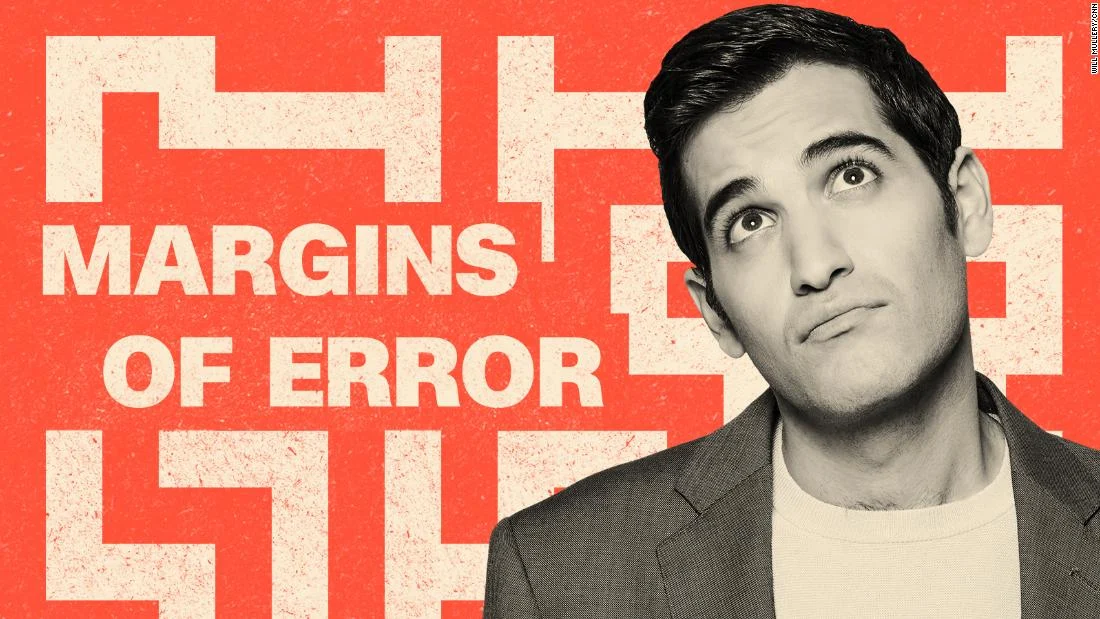
CNN’s "Margins of Error," hosted by the network’s astute political and data analyst Harry Enten, delves into the fascinating world where raw statistics intersect with the nuanced tapestry of human behavior and societal beliefs. This distinctive podcast embarks on a mission to push past mere calculations, seeking to uncover what the vast oceans of data truly reveal about who we are, what we value, and how we interact with the world around us. Enten, known for his ability to translate complex numerical patterns into accessible narratives, explores a diverse array of topics, from the subtle implications of regional accents to the intricate relationship between wealth and well-being, and even the enduring American debate over the metric system. The series distinguishes itself by blending rigorous data analysis with engaging storytelling and personal investigative forays, offering listeners a fresh perspective on everyday phenomena and profound cultural shifts.
Unpacking the Data-Driven World: The Core Premise
At its heart, "Margins of Error" positions itself as an essential guide for navigating an increasingly data-saturated world. Every aspect of modern life, from consumer habits to political leanings, is now quantifiable, generating immense datasets that often overwhelm more than they inform. Enten’s expertise lies in sifting through this numerical noise to identify significant trends, challenge common assumptions, and illuminate the underlying human stories. The podcast’s premise is built on the understanding that numbers alone rarely tell the full story; context, cultural influences, and psychological factors are equally crucial for a comprehensive understanding. By dissecting seemingly disparate subjects, Enten demonstrates the pervasive influence of data in shaping perceptions and realities, encouraging listeners to adopt a more critical and informed approach to the information they encounter daily. The series aims to democratize data analysis, making it relevant and compelling for a broad audience beyond statistical professionals.
A Chronology of Insight: Key Episodes and Their Revelations
Since its inception, "Margins of Error" has tackled a wide spectrum of subjects, each episode serving as a deep dive into a particular data-driven enigma. The podcast consistently demonstrates Enten’s commitment to exploring the often-overlooked implications of statistics in our daily lives.
Pains, Trains and Automobiles (July 5, 2022)
This episode plunges into the universal frustrations associated with modern travel. Enten scrutinizes the data behind travel annoyances, from the perennial discomfort of cramped airline legroom and the fluctuating burden of high gas prices to the exasperating proliferation of mysterious service fees. The episode posits that while vacations promise relaxation, the journey itself often elevates stress levels significantly. According to a 2018 study published in the Journal of Travel Research, travel planning and execution consistently rank among the top stressors for vacationers, with 68% reporting anxiety related to logistics. Enten seeks out "very smart people"—experts in logistics, engineering, and artificial intelligence—to explore more efficient ways to traverse distances. Discussions range from how AI algorithms can optimize road trip routes, potentially reducing fuel consumption by up to 15% and travel time by 20% on complex journeys, to the scientific principles behind faster airplane boarding processes, such as the reverse pyramid or Steffen method, which have been shown to cut boarding times by 30% in simulations. The episode also ventures into speculative territory, questioning whether innovative solutions like kelp-derived biofuels could power the transportation of the future, highlighting ongoing research into sustainable energy sources that could significantly reduce the carbon footprint of global travel. This segment underscores the constant human quest for efficiency and comfort in motion, driven by both economic and environmental imperatives.
Why are Losers the Favorites? (June 28, 2022)
Enten investigates the intriguing psychological phenomenon of why people often gravitate towards underdogs, not just in sports and politics, but across various facets of the human experience. Studies in social psychology, such as those by Nadav Goldschmied (a guest on the show), indicate that people derive greater satisfaction from an underdog’s victory due to a perception of fairness and a challenge to established power structures. This preference is deeply ingrained, manifesting in cultural narratives and public sentiment. The episode features insights from Enten’s friend Neil Paine of FiveThirtyEight, who specializes in sports analytics, and Nadav Goldschmied, an expert on the underdog effect. Former Buffalo Bills player Coy Wire, also a CNN personality, provides a unique perspective on being underestimated in competitive environments. The discussion extends to a data-driven analysis of which sports team genuinely deserves the title "America’s Team," challenging popular assumptions that often default to franchises like the Dallas Cowboys or New York Yankees. The analysis often reveals that broad national appeal, rather than just championship success, dictates this unofficial title, pointing to teams with wider geographic fan bases or compelling narratives. This episode unpacks the emotional and cognitive biases that influence our allegiances, demonstrating how deeply empathy and a desire for narrative triumph shape our collective consciousness.
Forecasting the Future of Weather (June 21, 2022)
This episode addresses our collective dependence on weather forecasts and the frustration that arises when they prove inaccurate. Despite these frustrations, Enten reveals that weather forecasting has achieved unprecedented levels of accuracy. The National Weather Service reports that the accuracy of 5-day forecasts today is comparable to 3-day forecasts from 20 years ago, a testament to advancements in meteorological science and technology. Enten explores the "secrets" behind this improved precision, from sophisticated satellite imagery and Doppler radar to powerful supercomputers capable of running complex atmospheric models. However, the narrative takes a crucial turn as it investigates how accelerating climate change threatens to introduce new variables and make future predictions "a little cloudier." The increasing frequency and intensity of extreme weather events—hurricanes, heatwaves, unprecedented rainfall—challenge existing models and introduce higher degrees of uncertainty. This segment underscores the critical role of accurate forecasting in disaster preparedness, agriculture, and daily life, while also highlighting the urgent need for climate action to stabilize atmospheric conditions. The episode serves as a powerful reminder of humanity’s ongoing struggle to understand and adapt to an increasingly dynamic natural world.
The Mysterious Disappearance of Love, Sex and Romance (June 14, 2022)
In a provocative exploration, Enten investigates statistical trends suggesting a potential decline in love, sex, and romance in contemporary society. Data points to various shifts: fewer people reporting sexual activity, a rise in single households, and a perceived decrease in traditional romantic gestures. For instance, a 2021 study by the General Social Survey found that Americans are having less sex than at any point since the 1990s, particularly among younger generations. The marriage rate has also steadily declined, reaching its lowest point in over a century at 6.1 marriages per 1,000 people in 2020, down from 10.1 in 1950. Enten, playfully dubbed "Sherlock Harry," embarks on a quest to identify the culprits behind these trends, even attending a "Bridgerton Ball" to immerse himself in the romantic ideals of a bygone era. The discussion considers the impact of dating apps on relationship formation, the increased focus on career and personal development, economic pressures delaying partnership, and evolving societal expectations around intimacy and commitment. The episode delves into sociological and psychological explanations for these shifts, exploring whether modern life’s demands and digital interactions are fundamentally altering the landscape of human connection.
Why Americans Won’t Give an Inch on Metric (June 7, 2022)
Enten takes a deep dive into one of America’s peculiar cultural stubbornnesses: its steadfast refusal to fully adopt the metric system, remaining one of only three countries globally (alongside Liberia and Myanmar) that have not. The podcast explores the multifaceted reasons why Americans seem content to operate in a "hybrid world" of both liters and gallons, miles and kilometers. Historically, several attempts at metrication in the U.S. have failed, notably the Metric Conversion Act of 1975, which aimed for voluntary conversion but lacked the political will and public enthusiasm for widespread change. Enten reveals that national pride and a deep-seated historical attachment to imperial units play a significant role. Furthermore, the economic cost of a full conversion, estimated in the trillions of dollars for industry, infrastructure, and education, presents a formidable barrier. The episode highlights the political dimensions, where past efforts faced resistance from both businesses and the public, often framed as a challenge to American identity. The implications extend to international trade, where the lack of metric standardization can create inefficiencies, and to scientific and educational fields, where American students and researchers must often navigate both systems.

When Did ‘Diet’ Become a Dirty Word? (May 31, 2022)
This episode explores a seemingly trivial but culturally significant shift in the beverage industry: the gradual disappearance of the word "diet" from product labels, replaced by "zero sugar." For Harry Enten, a self-proclaimed fan of diet soda, this trend prompts an investigation into its origins and implications. Market research consistently shows that younger consumers perceive the word "diet" negatively, associating it with restrictive eating, unhealthy weight loss practices, and an outdated aesthetic. The "zero sugar" label, by contrast, is seen as more modern, health-conscious, and appealing to a broader audience focused on overall wellness rather than just calorie restriction. The episode delves into the strategic marketing decisions behind this rebranding, examining whether there’s a substantive difference between the two labels (often, the formulations are identical or very similar, using artificial sweeteners like aspartame or sucralose). This "war of words" reflects a broader cultural shift away from "diet culture" towards concepts like "body positivity" and "mindful eating," forcing food and beverage companies to adapt their messaging to resonate with evolving consumer values.
Cashing in on Happiness (May 24, 2022)
Enten tackles the age-old question of money’s relationship to happiness. How much wealth is truly necessary for contentment? The episode delves into research by Matt Killingsworth, a happiness researcher who developed an app to track happiness in real-time, providing granular data on daily emotional states. His research, published in 2021, suggests that well-being continues to increase with income beyond previous estimates, although the relationship becomes less steep at higher income levels. However, the episode also emphasizes that beyond a certain threshold (often cited around $75,000-$100,000 for individual income in many studies, though Killingsworth’s work suggests it could be higher), the marginal gains in happiness from additional income diminish significantly. Enten explores the psychological principle that paying for experiences rather than material possessions often yields greater and more lasting joy. To test this theory, Harry himself engages in a high-flying trapeze experience with the Trapeze School New York, demonstrating the immediate and memorable positive impact of novel, challenging, and shared experiences. The episode concludes that while financial security is a prerequisite for happiness, true joy is often found in connection, personal growth, and enriching experiences.
Harry Makes a Spectacle of Himself (May 17, 2022)
This episode examines the evolving perception of people who wear glasses. Once associated with negative stereotypes like "nerd" or "four eyes," eyewear has undergone a significant cultural transformation. Data shows an increasing prevalence of vision correction, with studies indicating that nearly two-thirds of adults in Western countries use glasses or contact lenses. Enten explores the historical origins of negative stereotypes and investigates whether there’s any truth to the notion that people who wear glasses are inherently smarter. While no direct causal link exists, studies have shown a correlation, often attributed to factors like individuals with higher education spending more time on activities that strain eyesight, or the "halo effect" where glasses contribute to a perception of intelligence and trustworthiness. The podcast also uncovers an intriguing application of this perception in legal strategy: defense attorneys increasingly advise clients to wear glasses in court, believing it makes them appear more intelligent, honest, and less threatening to juries. Enten visits Dr. Craig Moskowitz of Moskowitz Eye Care to gain professional insights into vision health and the cultural impact of corrective eyewear.
Bursting the Bath Time Bubble (May 10, 2022)
Enten dives into the surprisingly contentious debate surrounding bathing frequency, challenging conventional wisdom about how often we truly need to wash. Recent discussions, often amplified by celebrity statements, have brought this topic to the forefront, with dermatologists weighing in on optimal hygiene practices. The episode reveals that for many, daily showering might be more about societal norms and personal preference than genuine hygienic necessity, as over-washing can strip the skin of natural oils and disrupt the microbiome. Enten traces the complicated history of human hygiene, from the elaborate communal baths of Ancient Rome, which served as social hubs, to the more private and medically driven practices that emerged with the understanding of germ theory. To truly understand the implications, Harry embarks on a personal experiment, living without deodorant, to experience firsthand the distinction between hygienic necessity and deeply ingrained societal expectations regarding body odor. The episode explores the cultural, scientific, and even environmental aspects of personal cleanliness, noting the significant water consumption associated with daily bathing and the growing interest in more sustainable hygiene practices.
Do I Sound Funny to You? (May 3, 2022)
The inaugural episode of "Margins of Error" tackles the fascinating subject of regional accents. While most people believe they speak without an accent, Enten asserts that everyone possesses one. The central question of the episode is whether distinct American accents are disappearing and, if so, what cultural and linguistic heritage is being lost in the process. Linguistic studies suggest a phenomenon known as "dialect leveling," where increased mobility, media exposure, and interconnectedness lead to the homogenization of regional speech patterns, particularly among younger generations. However, other research indicates that while some distinctions might blur, new micro-dialects can also emerge, reflecting evolving social identities. Harry Enten embarks on a journey to explore the forces of conformity versus the persistence of linguistic diversity. To cap off the episode, Harry himself attempts to adopt an entirely new accent, illustrating the plasticity of speech and the profound connection between language, identity, and geographic origin. This exploration highlights how our accents are not merely ways of speaking but powerful markers of our roots, communities, and personal histories.
Supporting Data and Broader Implications
The thematic breadth of "Margins of Error" is consistently underpinned by a commitment to data and empirical evidence, even when exploring seemingly whimsical topics. Enten regularly references sociological studies, economic reports, psychological experiments, and historical data to substantiate his inquiries. For example, in the "Happiness" episode, the discussion on the income-happiness correlation draws from extensive research in behavioral economics and positive psychology, illustrating how academic insights can be applied to personal well-being. Similarly, the "Metric System" episode leverages historical documents and economic analyses of past conversion attempts to explain present-day resistance.
The implications of the topics explored on "Margins of Error" extend far beyond individual curiosities. The podcast’s investigations touch upon:
- Societal Trends: From the evolution of relationships to shifts in consumer preferences, Enten’s analysis provides a pulse on macro-level changes shaping contemporary society. Understanding why people prefer underdogs or how hygiene norms shift offers insights into collective psychology.
- Economic Impact: Discussions on travel efficiency, gas prices, or the cost of metric conversion directly address significant economic factors that influence individual budgets and national policies.
- Cultural Identity: Examining regional accents or the debate over measurement systems delves into the very fabric of national and local identities, highlighting how seemingly small details contribute to a larger cultural narrative.
- Technological Influence: The role of AI in travel optimization and the impact of digital media on language or romance underscore how technology is rapidly reshaping human experience and interaction.
- Public Health and Policy: Episodes on weather forecasting in the age of climate change, the semantics of "diet" labels, or bathing frequency directly relate to public health messaging, environmental policy, and individual well-being.
A Unique Journalistic Approach
Harry Enten’s approach in "Margins of Error" is a refreshing blend of traditional journalism’s fact-finding rigor and the engaging, often personal, style of modern podcasting. He doesn’t just present data; he interrogates it, contextualizes it, and often experiences it firsthand, as seen in his trapeze adventure or his "no deodorant" experiment. This hands-on, curious approach makes complex data accessible and relatable, transforming abstract numbers into tangible insights.
The podcast serves as an excellent example of how data journalism can be leveraged to explore the human condition in a multifaceted and compelling way. By consistently challenging assumptions and digging deeper than surface-level statistics, "Margins of Error" equips its listeners with a more nuanced understanding of the forces that shape their lives. It reinforces the idea that true understanding often lies not just in the numbers themselves, but in the "margins of error"—the subtle, often overlooked, contexts and human elements that give data its ultimate meaning. In an era of information overload, Enten’s work provides a valuable compass, guiding audiences through the complexities of our data-driven world one intriguing question at a time.