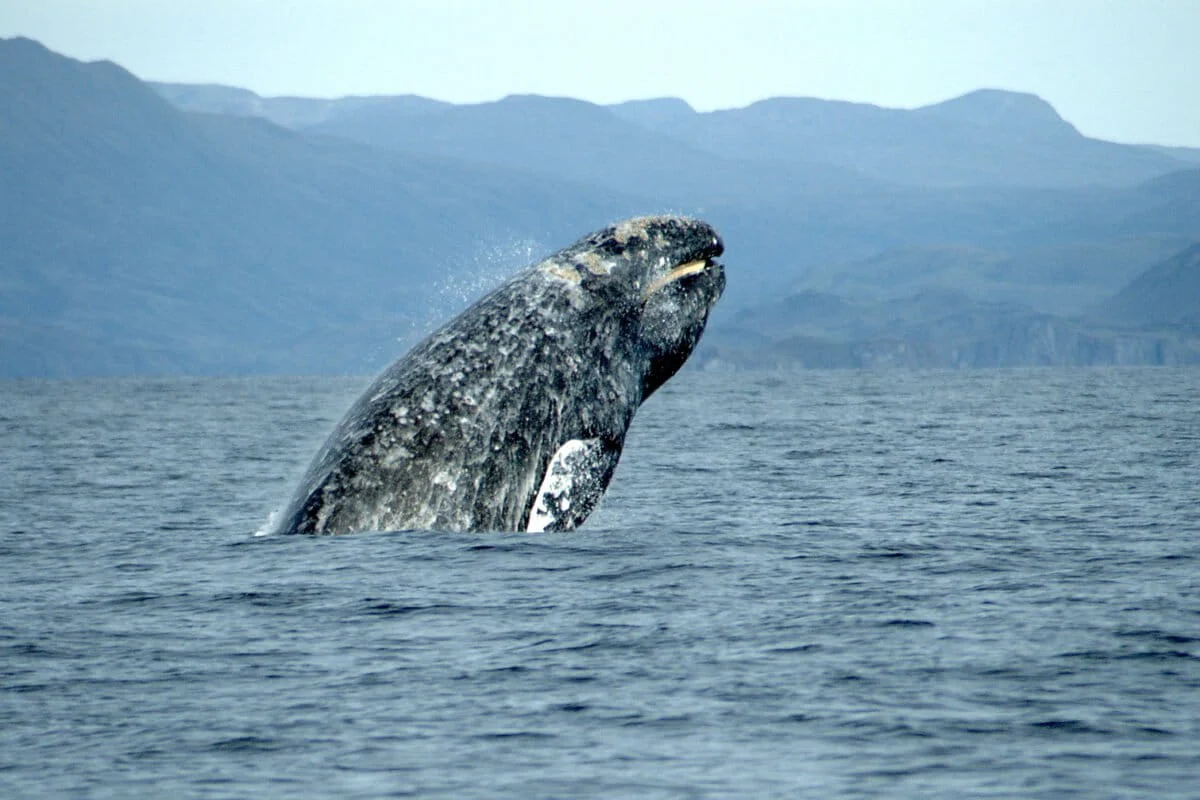
The gray whale, a species renowned for undertaking one of the longest migrations of any mammal on Earth, is facing an unprecedented survival crisis as it navigates a rapidly changing Pacific Ocean. Historically, the 19,000-kilometer (12,000-mile) journey from the nutrient-rich feeding grounds of the Arctic to the warm calving lagoons of Baja California, Mexico, followed a predictable coastal route. However, a new study led by researchers at Sonoma State University reveals a troubling shift: gray whales are increasingly entering the highly congested waters of San Francisco Bay, often with fatal consequences. Since 2016, the eastern North Pacific gray whale population has plummeted by more than 50%, a decline that scientists link to a combination of climate-induced starvation and the hazards of urbanized maritime environments.
An Unprecedented Shift in Migratory Behavior
For decades, San Francisco Bay was rarely considered a primary stopover for migrating gray whales (Eschrichtius robustus). While occasional sightings were recorded, the bay’s shallow, high-traffic environment was generally bypassed in favor of the open ocean coastline. This began to change significantly over the last decade. Between 2018 and 2025, researchers utilizing intensive photo-identification surveys documented 114 individual gray whales within the bay’s confines.
This influx into an urban estuary is not a sign of population expansion, but rather a symptom of desperation. Experts suggest that the whales are entering the bay as an "emergency pit stop" because they lack the energy reserves required to complete their migration. The presence of these 15-meter (50-foot) giants in one of the world’s busiest maritime hubs has created a lethal intersection between wildlife and human commerce.
Mortality Rates and the San Francisco "Death Trap"
The data collected by researchers presents a grim picture of the risks associated with this range expansion. Of the 114 individuals identified in the bay, at least 21 were later confirmed dead through carcass examinations. When including all gray whale carcasses found in the area during the study period—totaling 70—the minimum mortality rate for the identified group stands at 18%.
Josephine Slaathaug, a gray whale researcher at Sonoma State University and the study’s lead author, emphasized that this 18% figure is likely a conservative estimate. "The minimum mortality rate observed in San Francisco seems to be unique in terms of its intensity," Slaathaug noted. While gray whales face various threats along their entire 12,000-mile route, the concentration of deaths in the San Francisco Bay area indicates a localized crisis. Many carcasses may sink or be swept out to sea before they can be recorded, suggesting the actual death toll could be significantly higher.
The Arctic Connection: A Food Web in Collapse
To understand why whales are dying in California, scientists point toward the North—specifically the Arctic. Gray whales are specialized "bottom feeders" or benthic foragers. They dive to the seafloor and use their baleen plates to filter tiny crustaceans, primarily amphipods, from the sediment. This feeding strategy relies on a delicate seasonal balance of ice and sunlight.
As climate change accelerates Arctic warming, the sea ice is melting earlier in the season. This shift disrupts the "phytoplankton bloom," the explosion of microscopic plant life that forms the base of the marine food web. Historically, when ice melted later, the resulting phytoplankton bloom would eventually sink to the seafloor, providing a nutrient-rich feast for the benthic invertebrates that gray whales eat.
With earlier ice melts, the phytoplankton are often consumed by species in the upper water column before they can reach the bottom. This leads to a collapse in the population of high-calorie benthic invertebrates. Consequently, gray whales are leaving their summer feeding grounds in a state of malnutrition. Without sufficient blubber to sustain them during their long fast through the winter migration, they are forced to seek alternative food sources in unconventional locations like San Francisco Bay.
The Hazard of Maritime Traffic: Ship Strikes
While malnutrition may be the catalyst that drives whales into the bay, physical trauma is often the immediate cause of death. San Francisco Bay is a complex maze of shipping lanes, ferry routes, and recreational boating channels. For a malnourished whale with diminished cognitive and physical energy, navigating this "urban trap" is often impossible.
The study confirmed that ship strikes are a primary driver of mortality, with 30 of the documented dead whales showing clear evidence of vessel collisions. The Port of Oakland, located within the bay, is one of the busiest container ports in the United States, and the constant movement of massive cargo ships creates a high-risk environment.

Rachel Rhodes, a marine biologist, described the bay as a "uniquely complex and busy waterway." She noted that when whales are added to such a high-density industrial environment, "there’s just not a lot of room to coexist." Unlike the open ocean, where whales might have more space to avoid oncoming vessels, the narrow channels and shallow depths of the bay limit their ability to dive or maneuver away from danger.
A Chronology of the Population Decline
The current crisis is part of a larger "Unusual Mortality Event" (UME) declared by the National Oceanic and Atmospheric Administration (NOAA). The timeline of this decline highlights the severity of the situation:
- 2016: The eastern North Pacific gray whale population reaches a peak of approximately 27,000 individuals.
- 2019: A sharp increase in strandings along the West Coast prompts NOAA to declare a UME. Hundreds of whales are found dead from Alaska to Mexico, many showing signs of emaciation.
- 2021-2023: The population continues to drop, falling to an estimated 14,500 individuals—a loss of nearly half the population in less than a decade.
- 2024-2025: Research confirms that San Francisco Bay has become a focal point for mortality, with a significant percentage of the remaining population entering the bay and failing to exit alive.
This is the second major UME for gray whales in recent history; a similar event occurred between 1999 and 2000, though the current decline has lasted longer and seen a more dramatic drop in numbers.
Conservation Strategies and Official Responses
In response to the mounting deaths, conservationists and government agencies are exploring several avenues to mitigate human impact. Education initiatives are currently underway, led by organizations such as the Marine Mammal Center. these programs aim to inform the maritime community—ranging from commercial pilots to weekend sailors—about the presence of whales and how to spot them.
However, many experts argue that voluntary measures may not be enough. Josephine Slaathaug suggested that "stricter conservation strategies such as mandatory slow speed zones may be necessary" if the mortality trend continues. Similar speed restrictions have been implemented on the U.S. East Coast to protect the critically endangered North Atlantic right whale, though such measures often face pushback from the shipping industry due to the economic costs of delayed transit times.
The challenge lies in the fact that San Francisco Bay is not a designated "critical habitat" for gray whales in the traditional sense. Because their presence there is a relatively new phenomenon driven by environmental stress, current maritime regulations have not yet caught up to the reality of the whales’ changing migratory patterns.
Broader Implications for Marine Ecosystems
The plight of the gray whale serves as a "canary in the coal mine" for the health of the Pacific Ocean. As a highly visible and charismatic species, their struggle highlights the profound ways in which climate change is restructuring entire ecosystems. The collapse of the Arctic benthic food web doesn’t just affect whales; it signals a fundamental shift in the productivity of the northern oceans.
Furthermore, the increased mortality in urban areas like San Francisco Bay underscores the growing "coastal squeeze," where wildlife is pushed out of its natural habitat by climate change only to find its alternative refuges occupied by human infrastructure.
The loss of more than 50% of the gray whale population is a staggering blow to marine biodiversity. While gray whales proved resilient after being hunted to the brink of extinction during the whaling era of the 19th and early 20th centuries, the current threats are more insidious. Unlike whaling, which could be stopped through legislation and enforcement, the combination of global warming and global trade requires a much more complex and systemic set of solutions.
Conclusion: A Race Against Time
As researchers continue to study what the whales are attempting to feed on within San Francisco Bay, the clock is ticking for the species. The 18% mortality rate recorded in the study is a stark reminder that for these whales, the bay is less of a sanctuary and more of a terminal stop.
The survival of the eastern North Pacific gray whale will likely depend on two factors: the stabilization of Arctic food sources and the willingness of human societies to modify their maritime activities. Without significant intervention—including potential vessel speed mandates and global efforts to curb carbon emissions—the "12,000-mile journey" may become a story of the past, as one of nature’s greatest migrations succumbs to the pressures of a warming, crowded world.