In a move that has reignited a fierce national debate over federal land management, President Donald Trump has signed two executive orders drastically reducing the size of the Bears Ears and Grand Staircase-Escalante national monuments in southern Utah. The orders slash the protected areas by approximately 90 percent, a decision that Utah’s Republican leadership hails as a victory for "fairness" and "local control," but which recent data suggests is at odds with the will of a majority of Utah residents. While political figures in the state have long argued that these large-scale federal designations are an overreach of executive power, multiple independent polls conducted over the last several years indicate that most Utahns, and residents across the Mountain West, favor maintaining the existing protections.
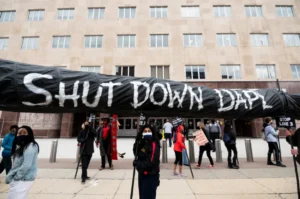
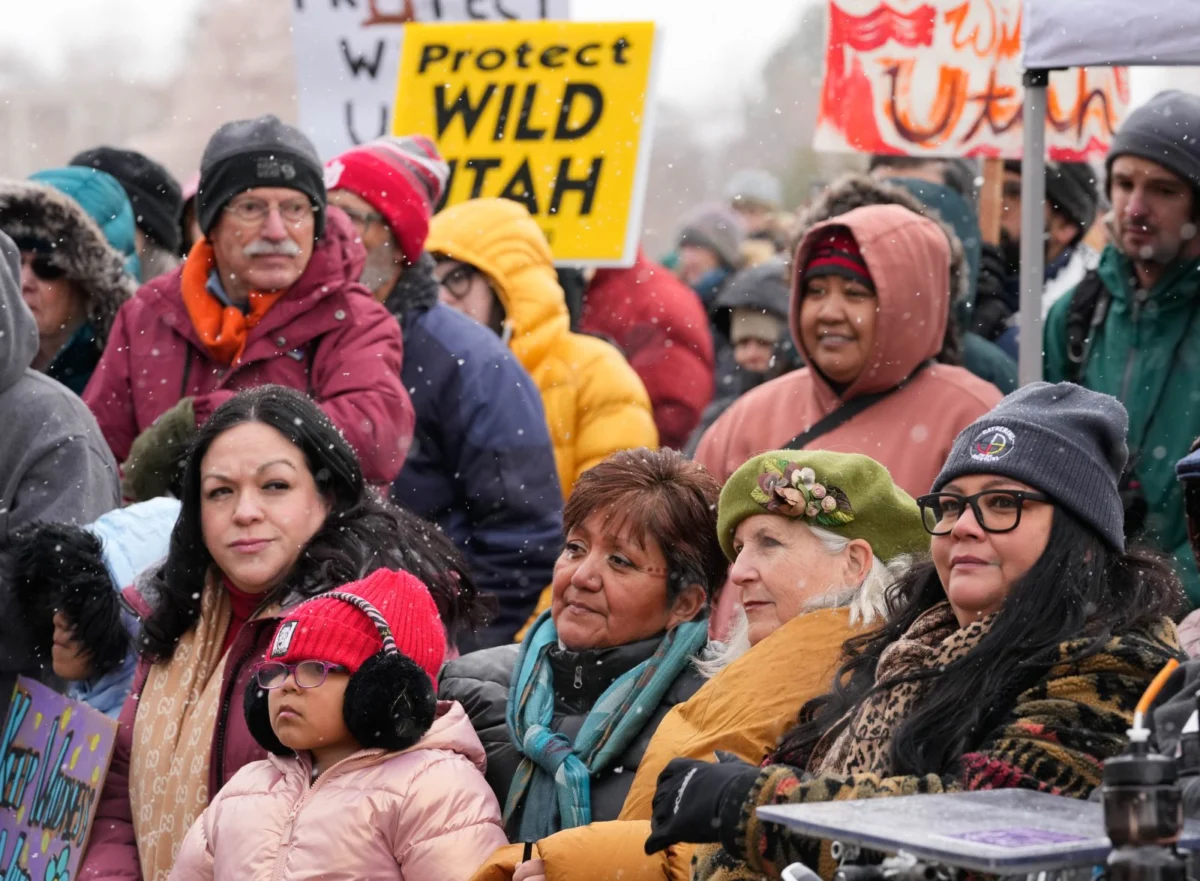
The executive action, signed during a ceremony in the Oval Office, reduces Bears Ears National Monument from its original 1.35 million acres to roughly 121,000 acres. Similarly, Grand Staircase-Escalante, which spanned nearly 1.9 million acres, has been reduced to just over 181,500 acres. Flanked by Utah Governor Spencer Cox and members of the state’s congressional delegation, Trump framed the move as a necessary correction to what he described as federal overreach. However, as hundreds gathered outside the Governor’s Mansion in Salt Lake City to protest the cuts, the disconnect between the state’s elected officials and the public’s environmental priorities has come into sharp focus.
A History of Protection and Contention
The conflict over these lands is rooted in the Antiquities Act of 1906, a law that grants U.S. presidents the authority to protect sites of "historic or scientific interest" as national monuments. The act specifies that such designations should be limited to the "smallest area compatible with the proper care and management" of the objects to be protected. This specific clause has become the focal point of legal and political battles for decades.
Grand Staircase-Escalante was established by President Bill Clinton in 1996, a move that stunned Utah’s Republican leadership at the time and fostered a lingering resentment toward federal land designations. Two decades later, in 2016, President Barack Obama designated Bears Ears National Monument following years of advocacy by a coalition of five Native American tribes—the Hopi, Navajo, Ute Indian Tribe, Ute Mountain Ute, and Zuni. The area is home to more than 100,000 archaeological sites, including ancient cliff dwellings and sacred burial grounds.
The monuments have been a political see-saw for nearly a decade. When President Trump first took office, he significantly reduced the size of both monuments in 2017, citing the need for "multiple-use" land management. President Joe Biden later restored the original boundaries in 2021, only for the current administration to once again pursue a massive reduction. This cycle of expansion and contraction has left land managers, local businesses, and tribal leaders in a state of perpetual uncertainty regarding the future of some of the nation’s most iconic landscapes.
The Polling Disconnect: What Utahns Actually Support
Despite the insistence from Utah’s Republican delegation that they are acting on behalf of their constituents, polling data suggests a different narrative. Research conducted by Utah State University (USU) in 2024 and 2025 reveals a strong pro-monument sentiment within the state. According to the study, 61 percent of Utahns support or strongly support the preservation of Bears Ears as a national monument, while only 19 percent expressed opposition.
The USU survey, led by professors Michaelann Nelson and Jessica Schad, was designed to be representative of the state’s diverse geography. By tapping into sociologists in rural areas, the researchers ensured that the results were not skewed by the more urban and liberal-leaning Wasatch Front. The findings were clear: 53 percent of respondents opposed shrinking Bears Ears, compared to only 26 percent who supported the reduction.
"It is very contradictive of our findings," said Nelson, a professor of environmental rhetoric. "They’re kind of picking and choosing which Utahns they’re paying attention to and listening to."
This trend is not limited to Utah. The annual Conservation in the West Poll, conducted by Colorado College, found that 91 percent of voters across eight Mountain West states—Arizona, Colorado, Idaho, Montana, Nevada, New Mexico, Utah, and Wyoming—supported keeping existing national monuments in place. This support has grown steadily from 80 percent in 2017. Notably, the poll showed that 87 percent of Republicans and 87 percent of "MAGA" supporters in the region favor maintaining monument designations, suggesting that public land conservation is a rare point of bipartisan agreement among the electorate, even if it remains a point of contention among politicians.
The Economic and Industrial Motivations
The justification for the reductions, as outlined in the President’s proclamation, leans heavily on the potential for resource extraction. The region is known to contain significant deposits of critical minerals, including copper, nickel, and uranium. Trump’s administration argued that freeing these lands from monument status is vital for domestic mineral security and energy independence.
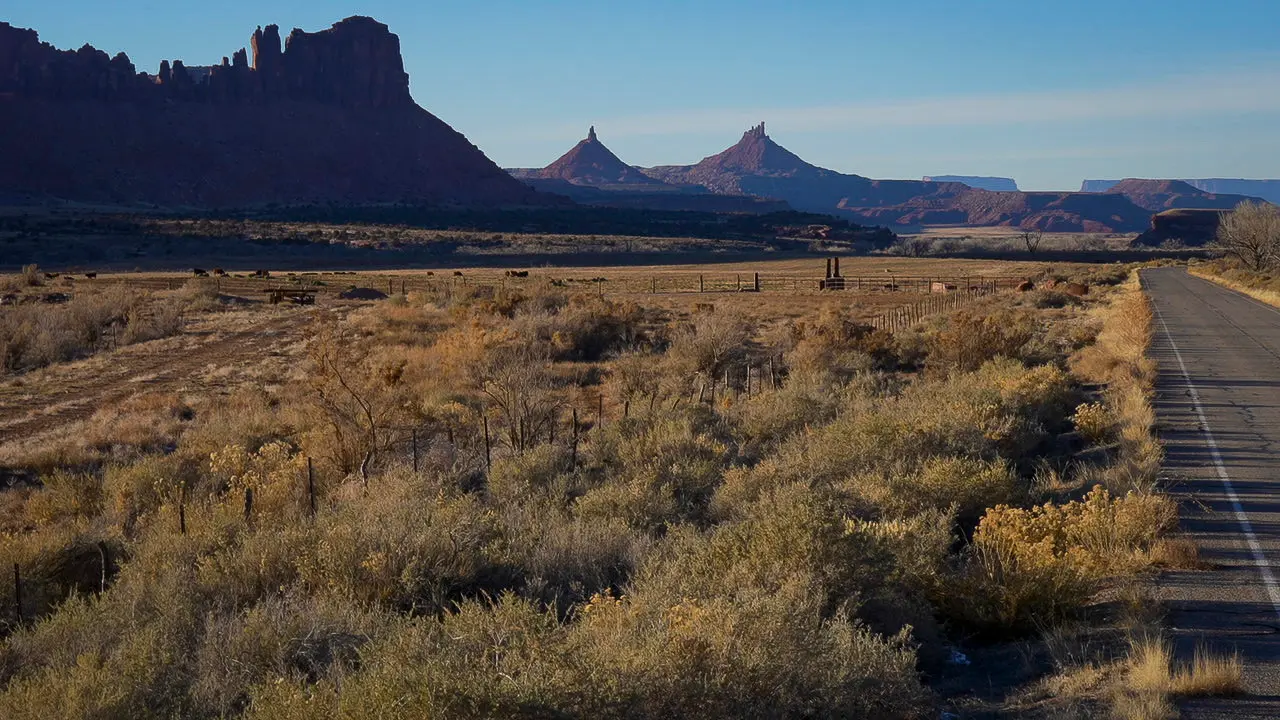
Records from the previous reduction in 2017 showed that mining companies had actively lobbied the administration to shrink the boundaries of Bears Ears to allow for easier access to uranium mills and deposits. Critics argue that the current cuts prioritize short-term industrial gains over the long-term economic benefits of the "New West" economy, which is driven by outdoor recreation, tourism, and the attraction of high-tech workers to areas with a high quality of life and access to nature.
Governor Spencer Cox and Senator Mike Lee have argued that the massive scale of the monuments has led to "degradation" by attracting too many visitors without providing the necessary infrastructure or law enforcement funding to manage them. They contend that by reducing the monuments to "the smallest area compatible" with protection, the state can better manage the lands for "multiple uses," including grazing, mining, and motorized recreation.
Tribal Sovereignty and Cultural Heritage
Perhaps the most significant impact of the reduction is the dissolution of the Bears Ears Intertribal Commission. When the monument was created, it established a first-of-its-kind collaborative management model between federal agencies and tribal nations. The commission was designed to ensure that traditional Indigenous knowledge was integrated into the protection of the land’s cultural and natural resources.
Trump’s latest order disbands this body, a move that has been met with condemnation from tribal leaders. The 2024 New Bridge Strategies survey found that nearly 90 percent of Utahns support Native American tribes having a strong role in managing their ancestral lands. Furthermore, 81 percent of residents believed that the administration should honor existing agreements with tribes regarding Bears Ears.
The reduction of the monument boundaries leaves thousands of sacred sites outside of federal protection, making them vulnerable to looting, vandalism, and the impacts of industrial development. For the five tribes of the Bears Ears Commission, the land is not merely a "multiple-use" federal asset but a living landscape tied to their history, spirituality, and survival.
Misconceptions Regarding Land Use
During the signing ceremony, President Trump claimed that monument status prohibited basic activities such as hunting and fishing. "You can’t do anything. You can’t go hunting. You can’t go fishing. You can virtually not even walk on it," he stated.
However, fact-based analysis of the monument management plans shows these claims to be largely inaccurate. Both Bears Ears and Grand Staircase-Escalante allow for hunting and fishing under state regulations. They also permit traditional wood gathering, livestock grazing, and the use of off-road vehicles on designated trails. While certain industrial activities like new mining claims and large-scale energy development are restricted, the "lock-out" described by political leaders does not align with the actual regulations governing these specific monuments.
Implications and the Legal Road Ahead
The decision to shrink the monuments is expected to trigger an immediate wave of litigation. Environmental groups, such as the Southern Utah Wilderness Alliance (SUWA), and the coalition of tribal nations have historically challenged such reductions, arguing that while the Antiquities Act gives a president the power to create a monument, it does not explicitly grant the power to diminish or abolish one.
The legal battle will likely center on the definition of "smallest area compatible." If the courts side with the administration, it could set a precedent that allows future presidents to dismantle decades of conservation work with a single signature. Conversely, if the courts rule that only Congress has the power to significantly alter monument boundaries, it would cement the protections and limit the executive branch’s ability to reverse environmental legacies.
As the legal process unfolds, the tension in Utah remains high. The discrepancy between public opinion and political action highlights a growing rift in the American West: a population that increasingly values conservation, recreation, and cultural heritage versus a political establishment that remains focused on the traditional extractive industries of the past. For now, the future of 3 million acres of Utah’s red-rock wilderness hangs in the balance, caught between the strokes of a pen and the evolving values of the people who live there.