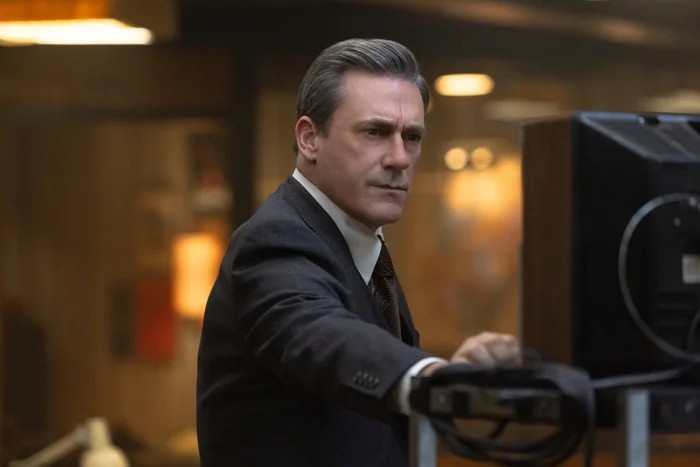
The 1977 kidnapping of a mortgage broker by a disgruntled borrower in Indianapolis remains a chilling case study in the intersection of criminal desperation and the nascent power of live media. This harrowing true-crime narrative, adapted for the screen in the new series American Hostage starring Jon Hamm, serves as more than just a historical reenactment. It acts as a mirror for the contemporary era, illustrating how the boundary between objective reporting and the amplification of volatile, real-time crisis has eroded over the past half-century.
The Anatomy of the 1977 Crisis
On February 8, 1977, the city of Indianapolis was thrust into a state of paralysis when Tony Kiritsis, a man facing severe financial hardship, abducted Richard Hall, a mortgage broker. What began as a private dispute over a loan quickly devolved into a high-stakes standoff. Kiritsis, believing he had been wronged by the financial system, did not merely want to negotiate for his demands; he sought an audience. He demanded that his grievance be broadcast to the public, effectively weaponizing the reach of local radio to ensure his plight was heard by the masses.
At the center of this storm was Fred Heckman, a revered local radio broadcaster. As the hostage-taker’s primary point of contact, Heckman was forced to abandon the traditional role of a detached observer to become an impromptu hostage negotiator. The case was unique for its time, as it was one of the first instances where a local crime was elevated to national attention through the medium of live, unedited radio coverage.
Jon Hamm and the Complexity of the Modern Adaptation
Jon Hamm, who previously voiced the character in the narrative podcast of the same name, continues his portrayal of Heckman in the television adaptation created by Shawn Ryan and Eileen Myers. Speaking at The Hollywood Reporter’s Studio at the Toronto International Film Festival (TIFF), Hamm emphasized the profound, albeit unsettling, parallels between the 1977 event and the current American socio-political climate.
"I think there are thematic devices that resonate in the culture politically now," Hamm observed. "The idea of a certain segment of the population feeling overlooked, or feeling under-addressed in their wants and needs and desires, is palpable. We fought very hard for the title American Hostage because we thought it really spoke to the story on several occasions. The man takes a hostage, but is he in fact a hostage to his own vision of the American Dream?"
For Hamm, the show functions as a psychological thriller that examines the fragility of the social contract. By revisiting this mid-century event, the production team invites viewers to consider whether the desperation felt by individuals like Kiritsis has evolved into a systemic issue that defines the current political landscape.
A Turning Point in Media Consumption
The Kiritsis case represents a tectonic shift in how the public consumes news. Before the advent of the 24-hour news cycle and the subsequent proliferation of social media, news was often a curated, delayed experience. The 1977 standoff was an early indicator of a transition toward the "salacious" nature of live, unpredictable broadcasting.
Hamm compared this historical moment to other defining instances of media saturation, most notably the 1994 O.J. Simpson police chase. "If you go back in time, the Kiritsis case is one of the first times we see a local story explode nationally," Hamm said. "It was the beginning of where we are now. Everything is maximized for the salaciousness of its content."
This shift, from reporting on an event to participating in the event’s trajectory, changed the journalist’s role from a narrator to a protagonist. In the 1970s, this was a novelty; today, it is the standard, with live-streaming and citizen journalism often placing creators directly into the line of fire.
The Erosion of Journalistic Trust
The series serves as a sharp contrast to the contemporary media landscape. According to recent data from Gallup, trust in the American mass media—newspapers, television, and radio—has plummeted to record lows. A significant portion of the population now views news organizations with skepticism, often opting for partisan outlets that confirm pre-existing biases rather than providing objective facts.
Shawn Ryan, co-creator of the series, believes that the "journalistic aspect" of the show is more pertinent now than ever. "We live in a very fractured journalistic world," Ryan noted. "You can choose your news more than the news informs you these days. I’m old enough to remember what it was like for journalists to be trusted and for the news to be something that was sacred."
This "sacred" status of news is precisely what is put to the test in American Hostage. Hamm’s character, Heckman, is portrayed as a man who has spent his entire career building a reputation based on truth and integrity. When he is thrust into the position of a negotiator, his professional ethics clash with the immediate, visceral need to save human lives. The resulting tension highlights the precarious position of a journalist who must maintain distance while being inextricably linked to the outcome of a crisis.
Implications for the Future of Crisis Reporting
The implications of the Kiritsis case extend far beyond the courtroom or the broadcast booth. It marked a point where the media became a necessary tool for the perpetrator. By demanding a platform, Kiritsis forced the media to validate his grievance in exchange for the safety of his hostage.
This model—using the spotlight as leverage—has become increasingly common in the digital age. From hostage situations to mass casualty events, the demand for "airtime" or viral notoriety has become a primary objective for those seeking to disrupt society. The series prompts a critical look at how the media can, and should, respond to these demands without inadvertently rewarding the perpetrators or escalating the danger.
Conclusion: A Legacy of Tension
As American Hostage prepares for its premiere on MGM+ on September 20, the production stands as both a historical account and a cautionary tale. By anchoring the narrative in a 50-year-old event, the creators have managed to bypass the immediate political noise of the present while addressing the underlying anxieties that drive it.
The story of Fred Heckman and Tony Kiritsis is not merely a relic of 1977; it is a preview of the modern era. As the line between the observer and the observed continues to blur, and as trust in the institutions that once held the truth as "sacred" continues to decline, the questions posed by this series remain critical. Can a free press maintain its objectivity when it is forced to act as a participant? And in an age where every citizen is a potential broadcaster, what does it mean to be an "American hostage" to one’s own perception of reality? These questions are likely to linger long after the final credits roll, cementing the relevance of a story that, while decades old, feels as though it could have broken this morning.