The global water crisis remains one of the most pressing humanitarian and economic challenges of the 21st century. According to the United Nations, approximately 2.2 billion people currently lack access to safely managed drinking water, a figure that continues to climb as climate change accelerates desertification and groundwater depletion. In response, governments from the coastal regions of California to the arid landscapes of the Middle East have increasingly turned to desalination—the process of extracting salt and minerals from seawater—to secure potable water supplies. However, conventional methods such as reverse osmosis and thermal distillation are energy-intensive, expensive, and ecologically damaging, often discharging toxic, high-salinity brine back into fragile marine ecosystems.
A team of researchers at the University of Rochester’s Institute of Optics, led by Professor Chunlei Guo, may have found a solution that circumvents these traditional limitations. By utilizing advanced laser-surface processing, the team has developed a solar thermal desalination system that operates without liquid brine, requires no chemical pre-treatment, and potentially transforms waste products into valuable industrial resources like lithium. The findings, published in the journal Light: Science & Applications, represent a significant shift in how engineers approach the nexus of water security and resource recovery.
The Technological Evolution of Desalination
For decades, the desalination industry has been dominated by two primary technologies. Reverse osmosis (RO) involves forcing seawater through semi-permeable membranes at high pressure to block salt ions. While efficient, RO plants require massive electrical inputs and produce a brine byproduct that, when returned to the ocean, can create "dead zones" by increasing local salinity and stripping oxygen from the water column. Thermal distillation, which relies on heating water to create steam, is even more energy-demanding, typically requiring fossil fuels or large-scale waste-heat integration.
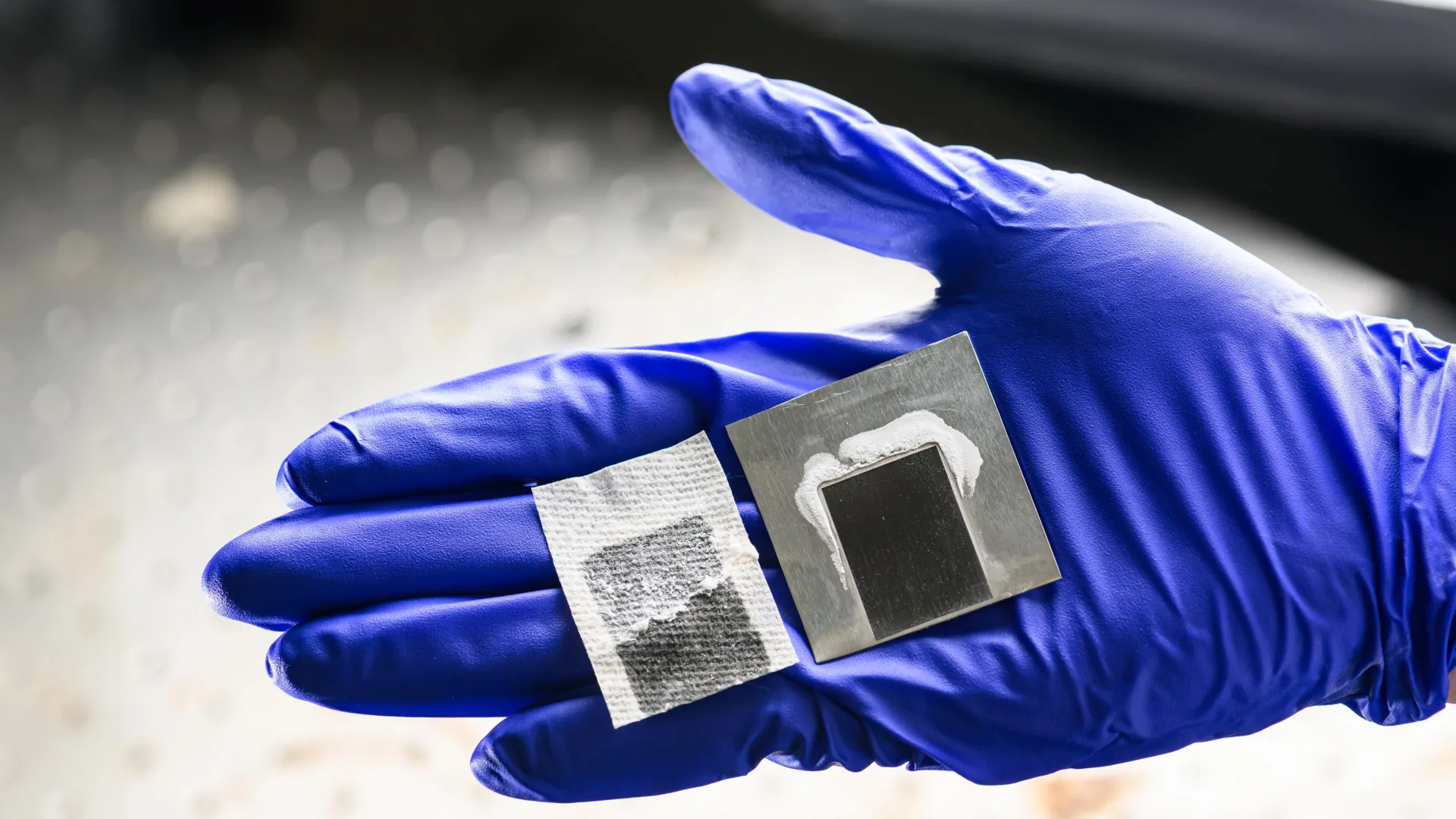
The University of Rochester team’s approach is fundamentally different. At the heart of their system are solar panels constructed from black metal that has been treated with femtosecond lasers—pulses of light lasting only one quadrillionth of a second. This laser treatment, a hallmark of Professor Guo’s previous research, alters the material’s surface at a microscopic level. It creates a dual-functional surface that is highly efficient at absorbing the full spectrum of sunlight while simultaneously exhibiting "superwicking" properties. When seawater hits this surface, it does not bead up; instead, it spreads into an ultra-thin layer, maximizing the surface area exposed to heat and promoting rapid evaporation.
Engineering the Self-Cleaning Mechanism
A perennial obstacle for solar-based water purification is salt accumulation. In traditional solar stills, salt crystallization on the evaporating surface acts as an insulating barrier, eventually clogging the device and halting the desalination process. Laboratory experiments often mask this issue by using simplified saline solutions, but real-world seawater is a complex chemical soup containing magnesium, calcium, and a variety of sulfates. These compounds form dense, hard scales—similar to the mineral buildup found in domestic kettles—that are notoriously difficult to remove.
The Rochester team addressed this by incorporating the "coffee ring effect," a common physical phenomenon where particles suspended in a droplet move toward the edge as the liquid evaporates, forming a concentrated ring. By etching precise microscopic grooves into their black metal panels, the researchers engineered a system that directs salt and mineral deposits away from the active heating zone toward a "passive region" on the perimeter of the panel. This self-cleaning geometry ensures that the active surface remains clear, maintaining high efficiency over extended periods of operation.
From Waste Stream to Resource Recovery
Perhaps the most revolutionary aspect of the new system is the transition from liquid brine discharge to solid mineral collection. Because the system extracts nearly 100 percent of the dissolved solids in a dry, crystalline form, it eliminates the need for brine disposal pipes, which are often the most environmentally contentious components of coastal desalination plants.
This shift creates an opportunity for a circular economy. The solid residue collected at the edges of the panels is not merely trash; it is a concentrated source of minerals. Of particular interest is the potential to recover lithium. As the global transition to electric vehicles (EVs) drives an unprecedented demand for lithium-ion batteries, the mining of lithium from terrestrial sources—such as salt flats or hard-rock mines—has faced increasing scrutiny for its heavy water usage and chemical pollution.
In a concurrent study published in the Journal of Materials Chemistry A, the research team demonstrated that by embedding hydrogen titanate nanoparticles into the microscopic grooves of their panels, the desalination system can selectively isolate lithium from the complex mixture of seawater minerals. Preliminary trials using water samples from the Great Salt Lake successfully recovered approximately 50 percent of the lithium present in the brine. This suggests a future where desalination facilities function as "water-mineral refineries," producing clean water while simultaneously harvesting materials essential for the global energy transition.
Timeline and Developmental Context
The development of this technology follows years of iterative research into laser-matter interactions. The path to this breakthrough can be traced through several key stages:
- 2010–2015: Professor Guo’s laboratory establishes foundational techniques for using femtosecond lasers to create "black metals," which can absorb almost 100 percent of incident light.
- 2018–2020: The team begins investigating the wetting properties of laser-treated surfaces, realizing that the same microscopic structures that change light absorption can be tuned to manipulate fluid flow (superwicking).
- 2021–2023: Researchers transition from simple water-sodium chloride solutions to testing with raw seawater from the Pacific, Atlantic, and Indian Oceans to address the challenge of complex mineral scaling.
- 2024: Publication of the findings in Light: Science & Applications and the Journal of Materials Chemistry A, signaling a transition from theoretical proof-of-concept to a viable, multi-functional technology.
Broader Implications and Future Scaling
While the technology remains in the proof-of-concept phase, the potential implications for global infrastructure are profound. The inherently scalable nature of the solar panels means that these systems could be deployed in remote, off-grid locations—such as island nations or disaster-stricken regions—where electricity is unavailable. Furthermore, because the system relies on solar thermal energy, it operates carbon-neutrally, providing a stark contrast to the massive carbon footprints of current industrial desalination plants.
Industry experts note that scaling such technology from a laboratory prototype to a municipal-level facility will present significant engineering challenges. Factors such as panel longevity in highly corrosive saltwater environments, the cost of laser-surface treatment at scale, and the integration of lithium-extraction modules will require further pilot-scale validation. Nevertheless, the ability to generate fresh water while simultaneously preventing marine environmental degradation is an attractive proposition for environmental regulators and urban planners alike.
Support for this research has been provided by a consortium of major organizations, including the National Science Foundation, the Bill & Melinda Gates Foundation, and the Worldwide Universities Network. This multi-sector support underscores the urgency of finding sustainable water solutions that do not trade one environmental crisis—water scarcity—for another—the ecological devastation of marine life by brine.
As the global population approaches 10 billion by mid-century, the demand for both clean water and energy-storage materials will continue to outpace existing supply chains. The work of Professor Guo and his team at the University of Rochester provides a glimpse into a potential future where the oceans serve not just as a final, depleted resource, but as a regenerative fountainhead of life-sustaining water and the critical minerals needed to power a sustainable, electrified world. While the transition from the laboratory to the oceanfront is still in its infancy, the integration of laser physics and material science offers a promising path forward for one of humanity’s most enduring challenges.