The landscape of the global automotive market has undergone a fundamental transformation over the past decade, shifting from a period of experimental curiosity to one of practical dominance for electric vehicles (EVs). In 2026, the decision to purchase an electric car is no longer viewed as a political statement or a pursuit of bleeding-edge gadgetry. Instead, the transition to electrification is being driven by traditional consumer metrics: cost, performance, and day-to-day usability. This evolution marks the end of the "early adopter" era and the beginning of a period where internal combustion engines (ICE) must fight to prove their relevance against increasingly superior electric counterparts.
The Evolution of the EV Consumer Profile
To understand the current state of the market in 2026, one must look back at the demographics that defined the previous decade. Around 2016, the sight of an electric car on a suburban street typically indicated one of two things about the owner. They were either "eco-warriors," motivated by a deep-seated desire to reduce their personal carbon footprint regardless of the logistical hurdles, or they were "tech-fanatics," the type of consumers who queued overnight for the latest smartphone and viewed the EV as the ultimate mobile device.
During this formative period, manufacturers leaned into these stereotypes. Design languages were often intentionally "quirky" or futuristic to ensure that the vehicle stood out as something different. Volkswagen’s initial launch of the ID.3 was a prime example of this strategy, marketed as a radical departure from the conservative, dependable Golf. However, as the market has matured, the need for such distinctions has evaporated. The 2026 consumer is looking for a car that performs its primary function—transportation—with the highest level of efficiency and the lowest level of friction.
The Achievement of Price Parity
For years, the primary barrier to mass EV adoption was the "green premium"—the significant additional cost required to opt for an electric powertrain over a petrol or diesel equivalent. By mid-2026, this barrier has largely been dismantled. Across various market segments, from luxury SUVs to entry-level city cars, electric vehicles have reached, and in some cases surpassed, price parity with traditional combustion vehicles.
In the premium sector, the BMW iX3 serves as a definitive case study. When comparing a high-specification petrol or plug-in hybrid BMW X3 to the all-electric iX3, the price difference has effectively vanished. More tellingly, when performance metrics are factored in, the EV often represents the better value proposition. For instance, a BMW X5 M50, producing approximately 392bhp, currently carries a price tag roughly £15,000 higher than the iX3 50xDrive, which boasts a superior 462bhp. This shift demonstrates that the electric powertrain is no longer an expensive luxury, but rather a more cost-effective way to achieve high performance.
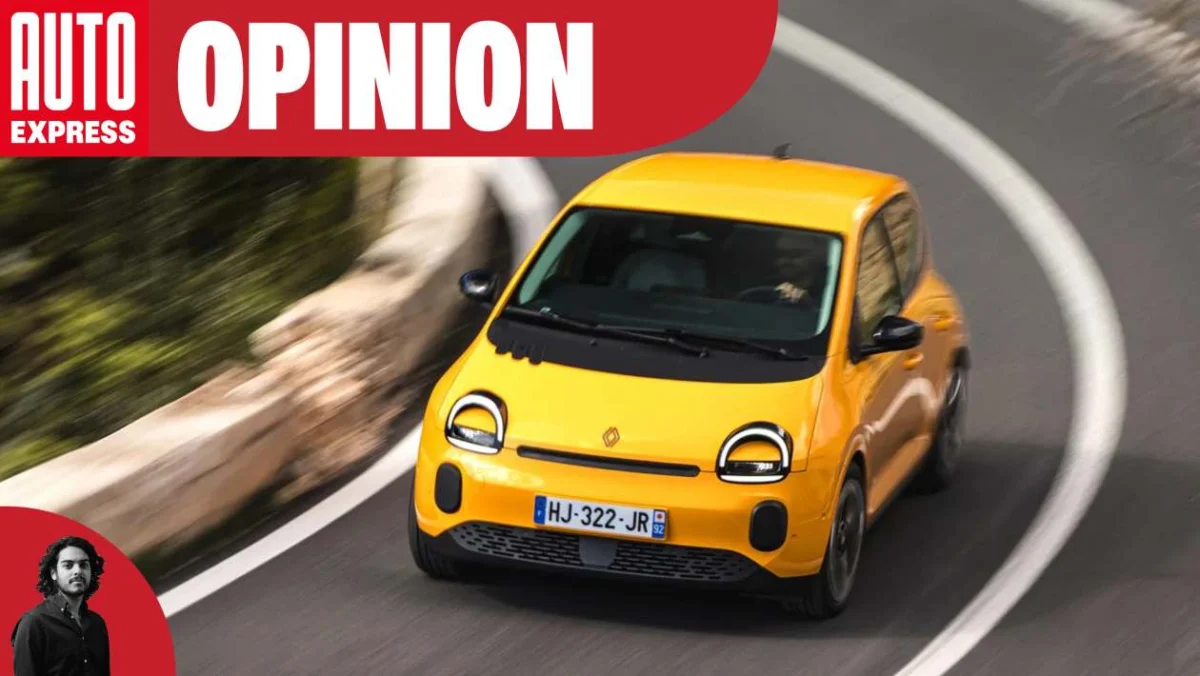
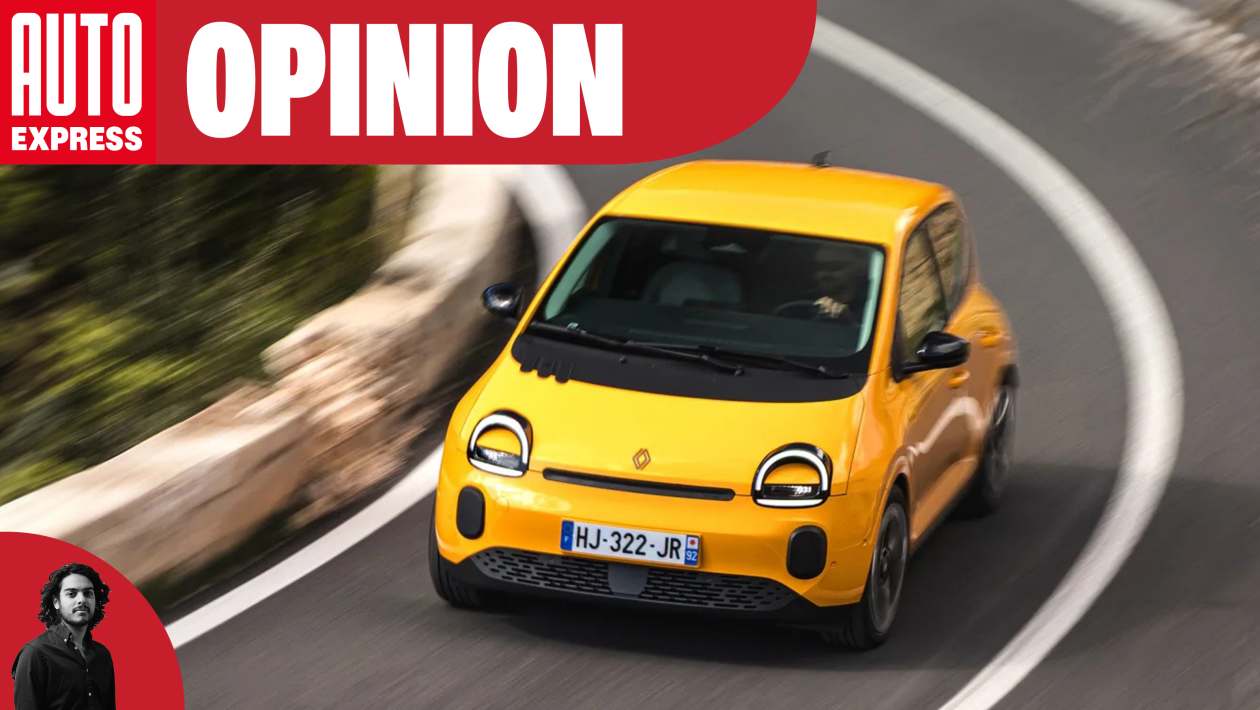
This trend is equally visible at the affordable end of the spectrum. The upcoming Renault Twingo is projected to enter the market at a price point well under £20,000. In contrast, established hybrid competitors in the same segment, such as the Toyota Aygo X, start at £21,645. This reversal of the traditional pricing structure is a result of scaled battery production, streamlined manufacturing processes, and increased competition among global automakers.
Technological Refinement and Engineering Superiority
Beyond the financial considerations, the engineering behind EVs has reached a level of refinement that often surpasses that of internal combustion engines. The inherent characteristics of electric motors—instant torque, silent operation, and a lack of vibration—provide a driving experience that was previously reserved for high-end luxury vehicles.

In 2026, models like the updated Volkswagen ID.3 Neo demonstrate a move toward "sensible" engineering. Following feedback from earlier iterations, manufacturers have returned to user-friendly interfaces, including the reinstatement of physical buttons and more intuitive software. The ID.3 Neo effectively "un-quirks" the electric hatchback, offering a package that feels as familiar and dependable as a traditional Golf, but with the mechanical advantages of an electric drivetrain.
Furthermore, the integration of EV platforms has allowed for better interior packaging. Vehicles like the new Nissan Juke EV utilize the lack of a traditional transmission tunnel and engine bay to provide cabin space that significantly exceeds that of the outgoing combustion-engined models. This "no compromise" approach to design ensures that the EV is not just a cleaner alternative, but a more spacious and practical one.
The Infrastructure Transition: 2018 vs. 2026
One of the most significant shifts in the EV narrative involves the charging infrastructure. In 2018, owning an electric car like the e-Golf in a major urban center like North London was often a logistical challenge. Public charging points were sparse, frequently out of order, and required a myriad of different apps and memberships to access.
By 2026, the landscape has been transformed. The public charging network has expanded exponentially, with a focus on reliability and ease of use. High-speed charging hubs are now common along major transit corridors, and legislative changes have mandated simplified payment systems across all providers. While challenges remain for those without off-street parking, the proliferation of low-speed, low-cost lamppost chargers and urban hubs has significantly reduced "range anxiety" for city dwellers.

For the majority of owners who possess a driveway or dedicated parking space, the economic argument for EVs is even stronger. Utilizing smart home chargers on cheap overnight tariffs remains the most inexpensive way to travel on a per-mile basis. In an era of fluctuating global energy prices, the ability to "fuel" a vehicle at home for a fraction of the cost of petrol provides a level of financial predictability that combustion engine owners cannot match.
Market Analysis: The Shift in Manufacturer Strategy
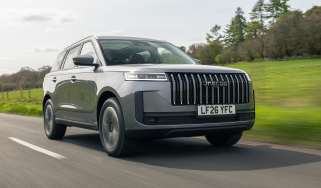
The shift in consumer sentiment is reflected in the aggressive pivot by major automotive groups. Companies that were once hesitant to fully commit to electrification are now leading the charge. Chery’s latest offerings, such as the Jaecoo 5 SHS-S, demonstrate how manufacturers are integrating hybrid and full-electric powertrains into compact SUVs to stay relevant in a market that demands efficiency.
The industry has moved past the phase of producing "compliance cars"—vehicles built solely to meet emissions regulations. Today, the focus is on creating the "best product." If a manufacturer can produce a car that is faster, quieter, more spacious, and cheaper to run than its predecessor, the powertrain becomes secondary to the overall quality of the vehicle. In 2026, that superior product is almost invariably electric.
Chronology of the EV Transformation
The path to 2026 can be categorized into four distinct phases:
- The Proof of Concept (2010–2016): Characterized by the launch of the Nissan Leaf and the Tesla Model S. EVs were niche products with limited range and high entry costs, primarily appealing to early adopters and environmental advocates.
- The Mainstream Push (2017–2021): The arrival of the Tesla Model 3 and the VW ID.3. Manufacturers began to invest heavily in dedicated EV platforms, though infrastructure struggled to keep pace with vehicle sales.
- The Correction Phase (2022–2024): A period where manufacturers addressed early criticisms regarding software, interior quality, and charging speeds. Battery technology improved, and the used EV market began to stabilize.
- The Parity Era (2025–Present): Price parity is achieved across most segments. The focus shifts from "electric vs. petrol" to "which car is the better product." EVs become the default choice for pragmatic buyers.
Broader Implications and Future Outlook
The normalization of electric vehicles carries profound implications for the broader automotive ecosystem. The used car market is currently adjusting to a new reality where battery health certifications are as vital as service histories. Furthermore, the reduced maintenance requirements of EVs—owing to fewer moving parts—are reshaping the business models of dealerships and independent garages, who must now pivot toward software updates and specialized electrical work.
As we look toward the end of the decade, the narrative of the "eco-warrior" or "tech-junkie" will likely fade into automotive history. In 2026, the switch to an EV is no longer about saving the planet or being the first to own a new gadget; it is about making a sensible financial and lifestyle choice. The electric car has finally achieved the status of being, quite simply, a better car.
The transition is not yet absolute, and there remains a need for continued investment in public infrastructure, particularly for those in high-density housing. However, the momentum is undeniable. With price parity achieved and the driving experience refined, the burden of proof has shifted. In the modern market, the question is no longer "Why should I buy an EV?" but rather, "Why would I still buy anything else?"