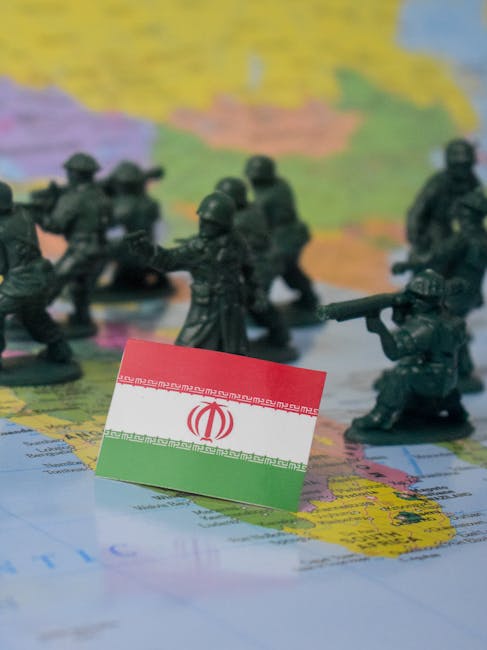
Iran Threatens US Bases Region if Military Conflict Arises
The Islamic Republic of Iran has repeatedly issued explicit warnings and veiled threats regarding the potential targeting of United States military bases and assets in the Middle East should a direct military confrontation escalate. These pronouncements, often articulated by high-ranking military officials and political leaders, are not mere rhetorical flourishes but are deeply rooted in Iran’s strategic doctrine and its perception of regional power dynamics. The intent behind these declarations is multifaceted, aiming to deter potential aggression by highlighting the severe consequences of a conflict, to rally domestic support by portraying Iran as a bulwark against foreign intervention, and to signal to regional adversaries and global powers that any military action will precipitate a broader, more destabilizing regional conflict. Analyzing these threats requires understanding the specific bases and regions Iran has indicated it would target, the capabilities Iran possesses to execute such threats, and the broader geopolitical context that shapes these pronouncements.
The geographical scope of Iran’s threatened retaliation is significant and has been consistently delineated. Key targets are understood to encompass not only direct US installations within neighboring countries but also the extensive network of allied military facilities that host American forces. This includes, but is not limited to, bases in Iraq, such as Al Asad Airbase and Erbil International Airport, which have been repeatedly targeted by Iran-aligned militias. In addition to Iraq, the Gulf Cooperation Council (GCC) states, particularly those with close security ties to the US like Saudi Arabia, the United Arab Emirates (UAE), and Qatar, are considered highly vulnerable. These nations host significant US military presence, including naval facilities and airbases, which are critical for US power projection in the Persian Gulf. Furthermore, bases in Bahrain, home to the US Fifth Fleet, and Kuwait, which serves as a logistical hub, are implicitly or explicitly within Iran’s stated operational parameters. The notion of the "region" also extends beyond immediate neighbors to include potential threats to naval assets in the Arabian Sea and the Strait of Hormuz, a vital chokepoint for global oil transit, which Iran has explicitly stated it could disrupt. The strategic significance of these locations for US military operations, intelligence gathering, and logistical support makes them prime targets in any retaliatory scenario.
The capabilities Iran claims to possess and has demonstrated in limited skirmishes are crucial to assessing the credibility of its threats. Iran’s military doctrine emphasizes asymmetric warfare, relying on a combination of missile capabilities, drone technology, and proxy forces to project power and inflict damage without engaging in direct, conventional warfare that it would likely lose against a technologically superior adversary. The Islamic Revolutionary Guard Corps (IRGC) and its Quds Force, in particular, are central to this strategy. Their development and deployment of ballistic and cruise missiles, with ranges capable of reaching targets across the Middle East, represent a significant deterrent. These missiles have been extensively tested and have been used, albeit with varying degrees of success, against targets in Iraq and Saudi Arabia. Furthermore, Iran has a substantial and sophisticated drone program, capable of launching swarming attacks that can overwhelm air defenses. These drones, often adapted from or inspired by foreign designs, have been employed in attacks on oil infrastructure and military installations. The extensive network of Iran-aligned militias and proxy groups throughout the region, including Hezbollah in Lebanon, Houthi rebels in Yemen, and various Shi’a militias in Iraq and Syria, are also a critical component of Iran’s threat matrix. These groups act as Iran’s extended arm, capable of launching attacks on US interests and personnel, thereby allowing Iran to maintain a degree of plausible deniability while still achieving its objectives of inflicting casualties and disrupting operations. The IRGC’s maritime forces, including fast-attack craft and naval mines, also pose a threat to shipping and naval vessels in the Strait of Hormuz and surrounding waters, aiming to disrupt vital economic and military transit.
The geopolitical context surrounding Iran’s threats is characterized by decades of animosity with the United States and its regional allies. The Iranian Revolution in 1979 fundamentally altered the regional order, leading to sustained US efforts to contain Iran’s influence. Key flashpoints include the ongoing nuclear program, Iran’s support for various militant groups deemed terrorist by the US and its allies, and its ballistic missile development. The US withdrawal from the Joint Comprehensive Plan of Action (JCPOA) in 2018 and the subsequent re-imposition of sanctions have intensified tensions, leading to a series of escalating incidents, including the downing of a US drone, attacks on oil tankers, and the assassination of IRGC Quds Force Commander Qasem Soleimani. Each of these events has been met with retaliatory rhetoric and, at times, action from Iran, reinforcing the cycle of escalation. The broader regional instability, fueled by proxy conflicts in Yemen, Syria, and Iraq, further complicates the situation, creating fertile ground for Iran to leverage its regional network to achieve its strategic objectives. The perceived existential threat that Iran poses to its neighbors, particularly Israel and Saudi Arabia, further exacerbates regional anxieties and prompts these nations to seek closer security cooperation with the United States, thereby entrenching the US military presence that Iran subsequently threatens.
The psychological and strategic dimensions of Iran’s threats are as important as its military capabilities. By consistently reiterating its willingness to retaliate against US bases, Iran seeks to inject an element of risk and uncertainty into any decision by the US to engage in direct military action. This "escalation dominance" strategy aims to make the cost of conflict prohibitively high for the United States, thereby deterring aggression. The threats are also designed to project an image of strength and resilience to domestic audiences, portraying the Iranian leadership as unafraid to confront foreign powers. This can be crucial for maintaining internal stability and rallying nationalistic sentiment, particularly in the face of economic hardship exacerbated by sanctions. Furthermore, these pronouncements serve to signal to regional actors that any conflict will not be contained and will inevitably draw in other parties, potentially leading to a wider regional conflagration that could disrupt global energy markets and destabilize the entire Middle East. This attempt to "internationalize" the conflict and raise the stakes for all involved is a key element of Iran’s defensive and deterrent posture. The threat is not necessarily to achieve a decisive military victory, which is unlikely, but to inflict enough damage and create enough disruption to achieve its political objectives of forcing a cessation of hostilities on terms that are less disadvantageous to Iran.
The specific nature of the threats often varies depending on the immediate political climate and specific incidents. Following the assassination of Soleimani, for instance, Iran’s Supreme Leader Ali Khamenei vowed "harsh revenge," and IRGC leaders explicitly mentioned striking US military bases in the region. This demonstrated a willingness to engage in direct retaliatory strikes. In other instances, the threats have been more generalized, focusing on the disruption of maritime traffic or the targeting of US allies. The evolution of Iran’s rhetoric reflects a strategic calculation of how best to maximize its deterrent effect without unnecessarily provoking an overwhelming response. The development of increasingly sophisticated missile and drone technology, coupled with the expansion of its proxy network, has allowed Iran to imbue its threats with a greater degree of perceived credibility over time. The international community, therefore, must carefully assess these threats not only as rhetorical statements but as indicators of a willingness and a capability to act, informed by a deep-seated sense of grievance and a strategic imperative to defend its interests and project its influence in a volatile region. The interconnectedness of the region’s security architecture means that any direct military conflict involving Iran and the United States would likely have far-reaching and unpredictable consequences, extending well beyond the immediate battlefield.
