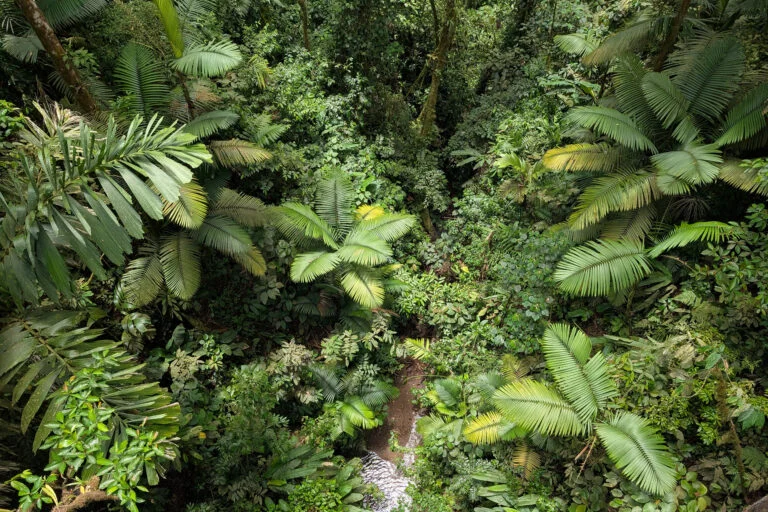
The health of an ecosystem can be measured not just by the height of its trees or the density of its canopy, but by the complex symphony of sounds resonating from within its depths. Giacomo Delgado, a doctoral researcher at the Department of Environmental Systems Science at ETH Zürich, suggests that assessing a forest’s vitality is remarkably similar to a medical professional conducting a physical examination. Just as a doctor uses a stethoscope to listen to a patient’s heart, comparing its rhythm and tone against a known baseline of health to diagnose internal conditions, researchers are now using bioacoustics to diagnose the ecological "health" of recovering tropical landscapes.
In a landmark study published in the journal Global Change Biology, a team of international researchers led by Delgado has demonstrated that forests in Costa Rica, allowed to regenerate naturally under the country’s pioneering Payment for Ecosystem Services (PES) program, have achieved biodiversity levels nearly identical to those of old-growth, protected forests. By analyzing more than 16,000 hours of audio recordings, the study provides some of the first concrete evidence that financial incentive programs for landholders can lead to the successful return of complex, multi-species animal communities.
The Evolution of Costa Rica’s Conservation Model
To understand the significance of Delgado’s findings, one must look at the dramatic environmental trajectory of Costa Rica over the last 75 years. In the mid-20th century, the nation faced one of the highest deforestation rates in the world. In 1950, approximately half of the country was covered in primary forest. However, by 1995, that figure had plummeted to just 25%. This rapid decline was largely fueled by government policies in the 1970s and 1980s that encouraged cattle ranching and large-scale agricultural expansion, often viewing "unimproved" forest land as economically unproductive.
The turning point came with the passage of the Forestry Law No. 7575 in 1996, which prohibited the further conversion of forests to other land uses and established the legal framework for the Payment for Environmental Services (Pagos por Servicios Ambientales or PSA) program. Launched officially in 1997 and managed by the National Forestry Financing Fund (FONAFIFO), this program was a global first. It recognized that standing forests provide four essential "ecosystem services": carbon sequestration, water protection, biodiversity conservation, and scenic beauty for tourism.
Under the PES system, the Costa Rican government provides direct financial compensation to landowners who protect existing forests or allow degraded pastures to return to a natural state. Funding for these payments is largely derived from a mandatory 3.5% tax on fossil fuels, as well as contributions from water utility companies and international grants. Since its inception, the program has encompassed more than 1.3 million hectares (3.2 million acres), playing a central role in helping Costa Rica double its forest cover back to over 50% of its landmass.

The Limitation of Satellite Surveillance
While Costa Rica’s success in increasing "green cover" is well-documented through satellite imagery, remote sensing has inherent limitations. Satellites can confirm the presence of trees, but they cannot easily discern whether those trees support a thriving community of birds, insects, amphibians, and mammals. This distinction is critical; a phenomenon known as "empty forest syndrome" occurs when a forest appears structurally intact from above but lacks the fauna necessary for a functioning ecosystem due to hunting, fragmentation, or slow colonization.
"Biodiversity restoration is still measured predominantly through changes in forest cover, often used as a proxy for biodiversity outcomes," explains Laura Villalobos, an assistant professor of economics and environmental studies at Salisbury University. Villalobos, who was not involved in the ETH Zürich study, notes that simple forest cover metrics fail to capture "the quality of biodiversity, species diversity, and ecosystem functioning."
This gap in monitoring is where bioacoustics—the study of sound production, dispersion, and reception in animals—offers a transformative solution. By deploying non-invasive microphones across vast areas, researchers can capture the "biophony"—the collective sound produced by living organisms in a given habitat.
Methodology: 16,000 Hours of Ecological Data
Delgado’s research team focused their efforts on the Nicoya Peninsula in northwestern Costa Rica, a region characterized by a mosaic of land uses, including protected areas, regenerating forests, monoculture timber plantations, and active cattle pastures. The team deployed acoustic recorders across 119 distinct sites.
The sampling strategy was rigorous, covering:
- Protected Primary Forests: Serving as the "healthy heart" baseline.
- Naturally Regenerated Forests: Areas previously used for agriculture or ranching that had been abandoned for 25 to 42 years and were enrolled in the PES program.
- Monoculture Plantations: Sites where a single species of timber was planted.
- Active Pastures: Land still used for cattle, representing the pre-restoration state.
After retrieving the devices, the researchers were left with 16,658 hours of audio data. Analyzing this volume of information required sophisticated algorithms to identify acoustic patterns, frequency distributions, and "chorus" timings. They looked for specific indicators: the intensity of the "dawn chorus" (when birds and primates are most active), the "dusk chorus" (often dominated by insects and amphibians), and the distribution of sounds across different pitches, which indicates a diverse range of species occupying different "acoustic niches."

Findings: The Symphony of Recovery
The results of the analysis were definitive. The sound profiles of the naturally regenerated forests were "1.4 times more acoustically similar" to those of protected, old-growth forests than they were to the pastures they replaced. This suggests that over the course of 25 to 40 years, the complex web of life—from the low-frequency calls of howler monkeys to the high-frequency chirps of insects—has successfully migrated back into these former agricultural lands.
"Healthy forests have strong peaks of acoustic activity right when the sun is coming up and going down," Delgado noted. These peaks represent a highly organized community of species communicating at specific times to avoid "masking" each other’s calls. In contrast, the audio data from active pastures showed much lower acoustic diversity, with the loudest noises often occurring in the middle of the day, frequently linked to human activity or livestock.
Interestingly, the study also highlighted the limitations of monoculture plantations. While these sites had more sound than open pastures, they were significantly quieter and less acoustically diverse than naturally regenerated forests. Delgado described the atmosphere in some monocultures as "eerily quiet," reinforcing the idea that natural regeneration—allowing the local seed bank and wildlife to rebuild the forest structure—is superior to human-led plantation efforts for restoring biodiversity.
Expert Reactions and Economic Implications
The success of the PES program in restoring not just trees but actual life has significant implications for global environmental policy. As nations strive to meet the goals of the Kunming-Montreal Global Biodiversity Framework—which aims to protect 30% of the planet’s land and sea by 2030—the Costa Rican model provides a proven blueprint for "redistributive" conservation.
However, some experts urge caution in interpreting the direct causality. Laura Villalobos points out that while the study confirms regenerated PES areas sound like healthy forests, it is difficult to isolate the payment itself as the sole driver. "What would have happened to the PES areas had they not received the incentive? Would PES areas sound different in the absence of the payments?" she asks. These questions of "additionality"—whether the conservation would have happened anyway due to market forces or changing land values—remain a central debate in environmental economics.
Despite these nuances, Villalobos acknowledges that Delgado’s methodology is a major step forward. By moving beyond forest cover as a proxy, the research begins to measure the actual ecological "return on investment" of conservation funding.

The Road Ahead: Nationwide Acoustic Mapping
Delgado and his colleagues at ETH Zürich are not stopping at the Nicoya Peninsula. They are currently expanding their research to create a comprehensive acoustic map of the entire country. The team has already amassed 16 years’ worth of audio data from 600 different forest sites across Costa Rica’s diverse microclimates.
The next phase of the project aims to identify the specific drivers that make some forests recover faster than others. The researchers will cross-reference audio data with socioeconomic factors, climate variables, and proximity to existing forest corridors. "We want to find out which variables… are the biggest drivers of this recovery and what’s causing the biodiversity to return," Delgado said.
This data-driven approach could allow the Costa Rican government to fine-tune its PES payments, perhaps offering higher incentives for lands that are identified as "high-potential" for rapid biodiversity recovery or those that serve as critical acoustic corridors for migrating species.
Conclusion and Broader Impact
The study by Delgado’s team proves that nature is resilient, provided it is given the space and the structural support to return. It validates the "quiet" work of the thousands of Costa Rican landowners who have opted to trade cattle for canopies over the last three decades.
As the world faces an accelerating biodiversity crisis, the ability to "listen" to the forest offers a scalable, cost-effective way to monitor the success of restoration projects globally. From the carbon markets of the Amazon to the reforestation efforts in sub-Saharan Africa, bioacoustics could become the standard "stethoscope" for the planet, ensuring that the forests we plant and protect are not just green on a map, but vibrant, noisy, and full of life. For Giacomo Delgado and his team, the goal remains clear: "bringing back these natural communities of living beings that can thrive together." In Costa Rica, at least, the forest is finally finding its voice again.