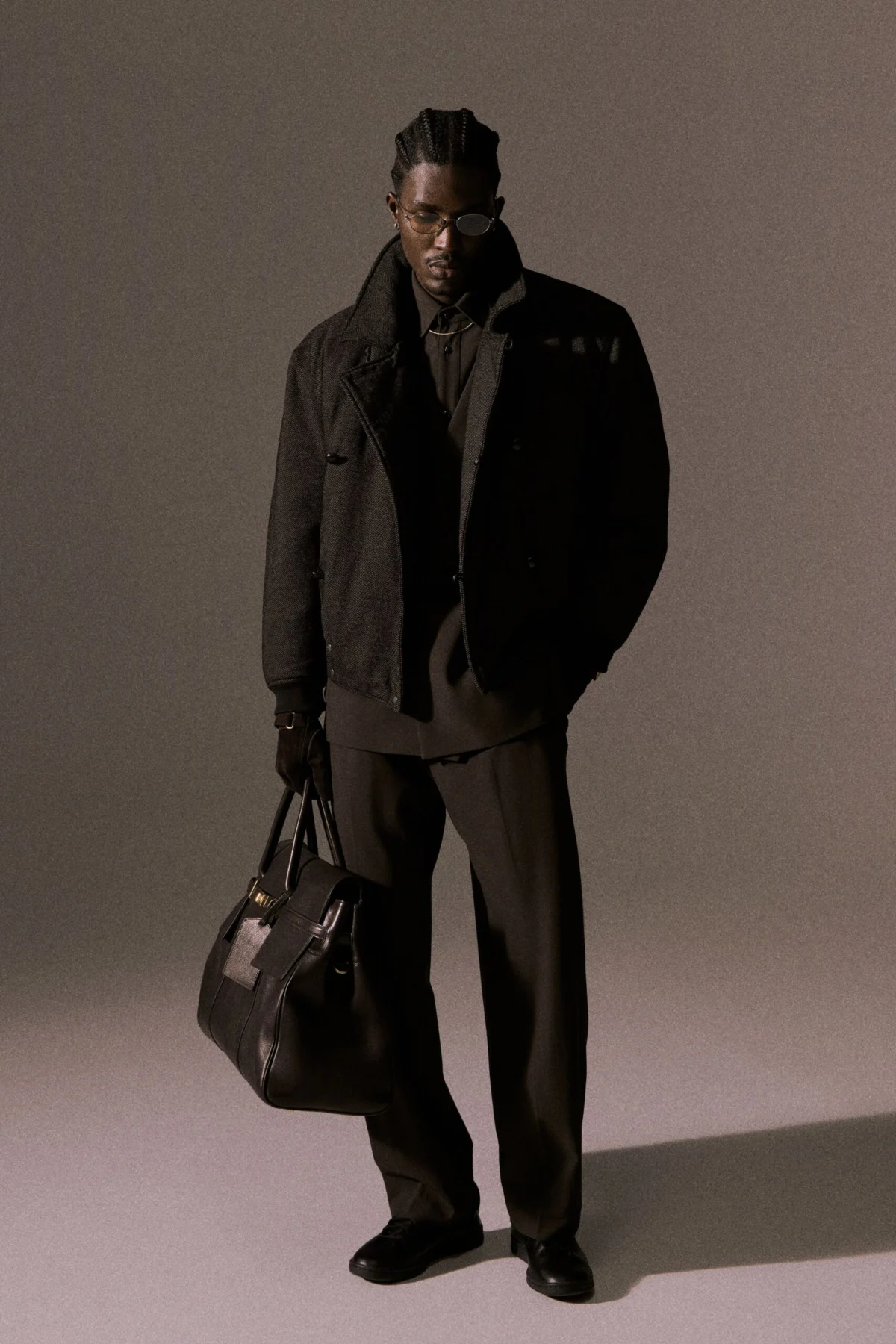
The intersection of classic Americana and the traditional English countryside has long served as a fertile ground for menswear designers seeking to balance rugged utility with refined elegance. In its latest seasonal presentation, lifestyle and streetwear powerhouse Kith has chosen to bypass the traditional dichotomy between these two distinct sartorial traditions, arguing instead for their fundamental synergy. Under the creative direction of founder Ronnie Fieg, the brand’s newest menswear lineup explores the shared silhouettes, textiles, and functional histories that unite rural North America with the British shires. This thematic synthesis anchors a multifaceted collection that also includes the continuation of Kith’s high-profile collaborative partnership with Italian luxury house Giorgio Armani, alongside a series of avant-garde statement pieces designed to cater to the increasingly diverse tastes of contemporary consumers.
The unveiling of this expansive collection arrives at a pivotal juncture for Kith, which has evolved from a Manhattan-born sneaker boutique into a global tastemaker with an international brick-and-mortar footprint. The timing of the collection coincides with the brand’s ongoing retail expansion, most notably marked by the recent inauguration of a flagship storefront in Vancouver, Canada. By positioning garments designed for disparate geographies—ranging from the rural landscapes of Vermont and the rolling hills of Surrey to the Pacific Northwest—within a unified aesthetic framework, Kith continues to refine its narrative of cross-cultural curation. Industry analysts note that this strategy allows the brand to speak simultaneously to traditional menswear purists and younger, trend-driven consumers who favor genre-defying wardrobes.
The Convergence of Transatlantic Workwear
At the heart of the new seasonal drop is an exhaustive examination of shared outerwear heritage. Fieg and his design team have meticulously dissected historical workwear canons, identifying the uncanny parallels between American utility garments and British country attire. Rather than treating these styles as mutually exclusive, the collection leverages common denominators such as heavy-duty cotton canvases, quilted linings, and weather-resistant wools.
A prime manifestation of this cross-pollination is the reimagined barn jacket. Outfitted with a classic flannel lining, the garment serves as a sartorial chameleon equally at home on a pastoral estate in Surrey or amidst the rugged topography of the American Northeast. This universality of design is further amplified by Kith’s strategic retail expansion into Canada, cementing the garment’s practical and aesthetic relevance in cold-weather urban and rural environments alike.
Pushing the boundaries of sustainable and archival design, Kith partnered with Japanese avant-garde label Seven by Seven to create a standout outerwear piece: a washed green puffer jacket constructed entirely from repurposed vintage military tents. This collaboration underscores a growing industry-wide movement toward upcycling and material heritage. By taking a universally recognizable silhouette and filtering it through a lens of military surplus and Japanese artisanal craftsmanship, the garment challenges conventional notions of luxury and durability. According to industry observers, such partnerships allow Kith to maintain its streetwear credibility while offering the elevated craftsmanship expected by high-end consumers.
Evolving the Armani Partnership
While the utilitarian and workwear-inspired offerings cater to a casual aesthetic, the opposite end of the Kith spectrum is defined by tailored sophistication. The brand’s ongoing partnership with Giorgio Armani—now entering its third iteration—represents one of the most significant cross-brand collaborations in modern menswear. This season, Fieg and the design team directed their focus toward a formidable challenge: disrupting the rigid conventions of the classic winter suit.
The resulting garments eschew stiff tailoring in favor of an approach that honors the legendary Italian designer’s historical contributions to menswear. Thick, weighty fabrics are rendered in monochrome colorways or complex patchwork patterns across double-breasted silhouettes. To counteract the inherent heaviness of these winter textiles, the designers introduced subtle tailoring details, such as scalloped shirt hems, which inject a sense of ease into the ensemble.
This design choice deliberately channels the loose, louche silhouette that Giorgio Armani pioneered in the late 20th century, a tailoring philosophy that liberated men from the constrictions of traditional Savile Row suiting. By translating these principles into contemporary streetwear and luxury crossover pieces, Kith bridges the gap between heritage Italian tailoring and modern American casualness. Retail insiders have pointed to the Armani collaboration as a masterclass in brand elevation, allowing Kith to capture an older, more affluent demographic while retaining its core audience of fashion enthusiasts.
Avant-Garde Statements and Textural Contrast
Complementing the foundational workwear and sophisticated tailoring are pieces engineered for the style-conscious eccentric. Recognizing that contemporary menswear is increasingly driven by bold, statement-making garments, Kith integrated high-impact textures and unconventional color palettes into the collection.
Among the most talked-about pieces is a deer-printed pony hair jacket, an unapologetically bold outerwear option that showcases the brand’s willingness to experiment with exotic textures and animal motifs. For those seeking vibrant color injection, a tangerine cropped coat offers a sharp visual contrast to the muted earth tones of the Americana and English country-inspired pieces.
Balancing these maximalist tendencies is a more restrained yet texturally complex offering: a woven and fringed leather jacket. This piece acts as a stylistic bridge within the collection, incorporating elements of rugged craftsmanship, artisanal weaving, and modern silhouette shaping. By offering a spectrum that ranges from understated utility to high-fashion maximalism, Kith ensures that the collection addresses multiple facets of the modern wardrobe.
Chronology and Strategic Brand Development
To fully understand the trajectory of Kith’s latest offering, it is necessary to examine the brand’s rapid evolution over the past decade. Founded in 2011 by Ronnie Fieg, Kith initially established its reputation through limited-edition footwear collaborations and a tightly curated selection of athletic apparel. Over the subsequent years, the enterprise systematically expanded its scope, launching its in-house apparel label, opening sprawling flagship stores in major global capitals, and executing high-profile partnerships with heritage luxury houses.
The launch of the dual-inspiration Americana and English countryside collection, alongside the third chapter of the Giorgio Armani collaboration, represents the culmination of this strategic maturation. The timeline of these developments reflects a deliberate move away from traditional streetwear exclusivity toward a comprehensive lifestyle model.
| Year / Phase | Key Milestone | Strategic Implication |
|---|---|---|
| 2011 – 2015 | Foundation of flagship retail stores; early footwear collaborations. | Established baseline market authority in sneaker and streetwear culture. |
| 2016 – 2020 | Introduction of in-house apparel lines; global retail expansion to Europe. | Shifted brand identity from multi-brand retailer to primary design house. |
| 2021 – 2023 | Launch of high-tier luxury partnerships (including the inaugural Armani collaboration). | Penetrated the luxury menswear market, attracting affluent and mature consumers. |
| 2024 – Present | Expansion into Canadian retail (Vancouver flagship) and multi-genre seasonal drops. | Solidified global footprint while diversifying product offerings across casual, workwear, and tailored categories. |
This chronological progression demonstrates that Kith’s success is not merely the result of transient hype, but rather of calculated brand architecture. By opening a flagship in Vancouver, Canada, concurrent with the rollout of the new collection, the brand has demonstrated an acute awareness of geographic expansion as a driver of cultural relevance.
Market Analysis and Economic Implications
The business model underpinning Kith’s latest collection reflects broader economic shifts within the global retail and fashion sectors. In an era where consumers face economic uncertainty and inflationary pressures, discretionary spending on apparel has become increasingly polarized. On one end, consumers gravitate toward hyper-practical, durable goods—such as heritage workwear, flannel-lined barn jackets, and upcycled military garments—that promise longevity and utility. On the other end, demand remains robust for exclusive, high-status luxury collaborations, exemplified by the Kith-Armani winter suiting.
Financial analysts tracking the luxury and streetwear sectors note that Kith’s ability to straddle these two market segments provides a distinct competitive advantage. By offering items that appeal to practical utility alongside high-end statement pieces, the brand effectively hedges against fluctuations in consumer preferences. Furthermore, collaborations with specialized artisans, such as the Seven by Seven partnership for the recycled military tent puffer, cater to the rising demand for sustainable and traceable fashion practices.
Industry reactions to the collection have been largely positive, with fashion critics praising the cohesion found within such disparate aesthetic touchpoints. While merging the rustic traditions of the English countryside with American workwear and Italian tailoring could easily result in a disjointed presentation, Kith’s rigorous attention to fabric weight, color harmonization, and silhouette proportion ensures a unified vision.
Broader Cultural Impact and Future Outlook
Beyond its commercial and economic implications, Kith’s latest menswear presentation speaks to a broader cultural shift in how modern consumers construct their identities through clothing. The strict boundaries that once separated formalwear from streetwear, and domestic regional styles from international traditions, have dissolved. Consumers today are increasingly hybrid in their tastes, willing to pair archival workwear with relaxed-fit Italian tailoring.
Ronnie Fieg’s curation taps directly into this zeitgeist. By challenging the consumer to look past geographic and stylistic labels, the collection encourages a more playful, experimental approach to dressing. Whether an individual is navigating the damp climate of the Pacific Northwest, strolling through a Vermont town, or attending a formal evening event in an urban center, the collection provides garments tailored to both functional needs and expressive desires.
As Kith looks toward the future, the success of this multifaceted collection will likely serve as a blueprint for subsequent seasonal rollouts. With a strengthened global retail network, a loyal consumer base, and an established pipeline of high-level luxury collaborations, the brand has cemented its status as a defining force in contemporary menswear. The synthesis of Americana, British countryside utility, and Italian tailoring is not merely a stylistic exercise; it is a reflection of a borderless global fashion landscape where heritage and innovation continually intersect.