The Amazon basin, long regarded as the world’s most vital ecological bulwark against climate change, is undergoing a profound and dangerous transformation as criminal syndicates and armed groups entrench themselves across the region. New, comprehensive mapping data released by the investigative consortium Amazon Underworld reveals that illicit actors now hold a presence in nearly 60 percent of all municipalities across six South American nations. The findings paint a harrowing portrait of a biome being carved up by transnational criminal networks, with gold mining now eclipsing the narcotics trade as the primary driver of regional instability and environmental devastation.
According to the report, researchers analyzed 1,310 municipalities across Bolivia, Brazil, Colombia, Ecuador, Peru, and Venezuela. The data confirms that 768 of these jurisdictions—approximately 59 percent—are currently under the influence of organized crime. This territorial encroachment has moved beyond localized smuggling, evolving into a sophisticated, interconnected web of transnational operations that threaten both the rule of law and the survival of Indigenous populations.
A Geography of Illicit Control
The distribution of this criminal presence is uneven but pervasive. Colombia stands as the most severely affected nation, with a staggering 98 percent of its Amazonian municipalities hosting some form of non-state armed presence. Venezuela follows closely at 82 percent, while Brazil and Ecuador report 59 percent each. Even in Peru and Bolivia, where the penetration is lower at 34 percent and 31 percent respectively, the trend line suggests a rapid expansion into previously stable territories.
The report highlights the rise of powerhouse criminal syndicates that operate across borders with impunity. Brazil’s Comando Vermelho (Red Command), once a localized urban gang, has expanded its reach into nearly 500 municipalities, establishing significant operational hubs in neighboring Bolivia and Peru. This fluidity allows these groups to exploit the porous borders of the Amazon, moving illicit goods—from gold to cocaine and timber—with minimal state interference.
The Shift from Cocaine to Gold
Perhaps the most significant finding in the Amazon Underworld analysis is the strategic pivot by criminal actors from narcotics to precious metal extraction. While the cocaine trade remains a pillar of regional criminality, the profitability and relative ease of laundering gold have made it the "king" of illegal industries in the basin.
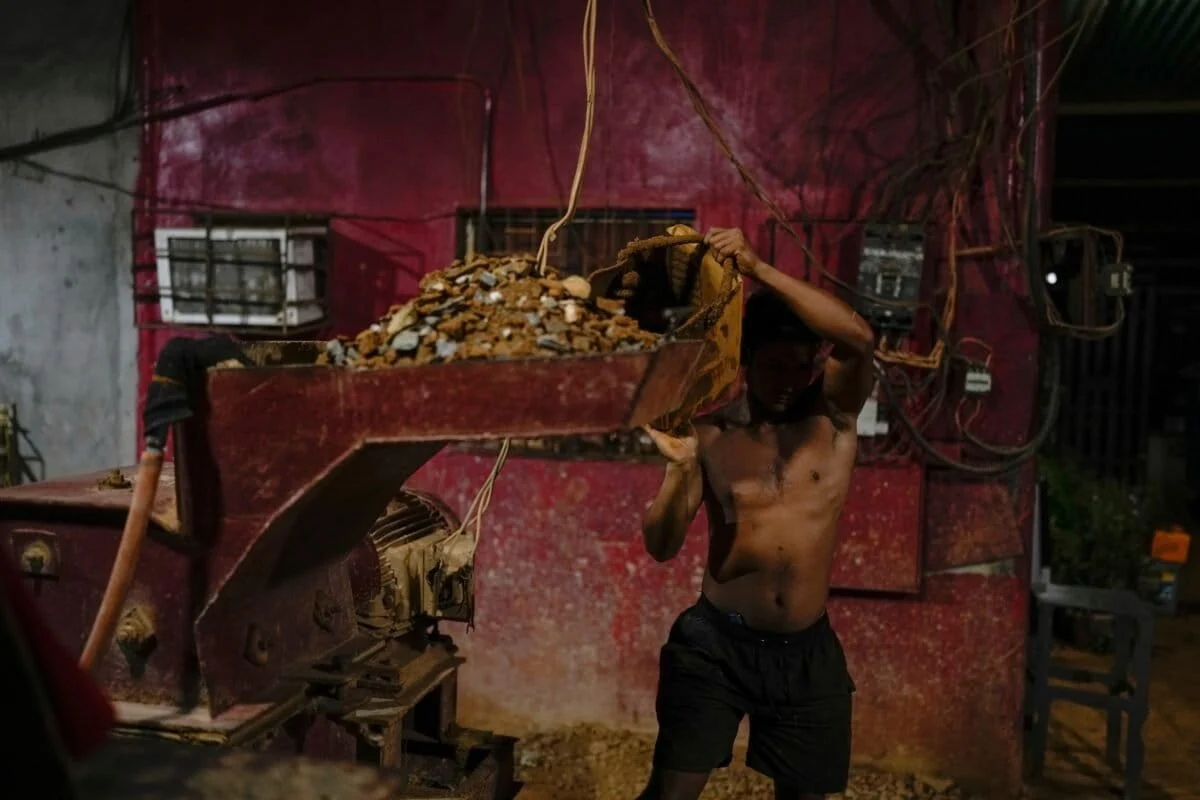
This shift has catalyzed a secondary crisis: environmental collapse. The extraction of gold in these regions is rarely performed with oversight; instead, it relies on hydraulic mining techniques that strip topsoil, cause massive deforestation, and introduce high concentrations of mercury into river systems. The toxic runoff poisons the water supplies of downstream communities, leaving a lasting ecological scar that will take decades, if not centuries, to remediate.
"This shift has accelerated environmental destruction through deforestation and mercury contamination," noted Bram Ebus, founder of Amazon Underworld and a consultant for the International Crisis Group. For these groups, the forest is not a treasure to be protected but a resource to be liquidated, often using coerced local labor to facilitate the process.
The Human Toll: Indigenous Communities as Human Shields
The escalation of territorial competition has placed Indigenous populations and rural residents in the crosshairs of violence. In Colombia alone, Humanitarian Action reports that roughly 78 percent of the rural population—nearly 10 million people—now reside under the influence of at least one non-state armed group.

Ebus emphasizes that the primary concern is the instrumentalization of these vulnerable communities. "Groups extort them," Ebus explained. "They also use them, often under coercion, as human shields to protect illicit economies and obstruct state interventions. This leaves communities exposed to violent repression by state forces as well."
The conflict is not merely about resources; it is about the erasure of dissent. As criminal groups battle for control over mining sites and transit routes, those who oppose them—most notably Indigenous community defenders—are frequently targeted for assassination. The competition is fierce, as the prospect of higher wages in illegal mining, coca cultivation, or recruitment into armed ranks often proves more lucrative for marginalized populations than the meager returns from traditional, legal agricultural practices.
Expanding the Portfolio: Critical Minerals
While gold and cocaine remain the headline commodities, the report indicates that criminal groups are diversifying their portfolios to include critical minerals. Tin, tungsten, and coltan are increasingly becoming targets for extraction in Brazil, Colombia, and Venezuela. This development signals a dangerous evolution: organized crime is now positioning itself to profit from the global transition to renewable energy, which relies heavily on these specific mineral resources. By infiltrating the supply chains of these critical materials, criminal syndicates are embedding themselves into the global economy in ways that make them significantly harder to dismantle.
The Failure of Militarized Responses
In response to the growing violence, several South American governments have adopted a "heavy-hand" approach, characterized by a wave of militarized crackdowns on cartels and illegal mines. However, experts argue that this strategy is fundamentally flawed. By prioritizing kinetic military action over systemic reform, these governments are failing to address the socio-economic drivers that make crime a viable career path for the impoverished.
"Unless the social drivers of crime are addressed, that approach offers no guarantee of success," Ebus remarked. "People already feel abandoned by the state, and bombing the criminal groups that provide their livelihoods will only deepen that sense."
A fact-based analysis suggests that these militarized interventions often produce a "balloon effect": when law enforcement clears a criminal group from one territory, the actors simply migrate to a neighboring municipality, effectively spreading the instability. Furthermore, such raids often destroy community infrastructure and fuel distrust between locals and the central government, leaving the underlying financial networks and corrupt officials—the true beneficiaries of the illicit trade—untouched.
A Call for Smarter Governance
The path forward, according to the researchers, requires a paradigm shift in how states engage with the Amazon. Instead of focusing solely on the "war on drugs" or localized enforcement, the report advocates for a multifaceted approach:
- Targeting Financial Flows: Law enforcement must prioritize the tracing and disruption of the money laundering operations that sustain these criminal enterprises. Without the ability to move and clean their profits, the incentives for these groups to operate vanish.
- Permanent State Presence: Rather than sporadic, high-profile military raids, the state must establish a consistent, civilian-led presence that provides essential services, such as healthcare, education, and legal justice, to remote areas.
- Economic Development: Investment in sustainable, legal economies—such as agroforestry or certified non-timber forest product harvesting—is essential to provide a competitive alternative to the illicit mining and drug trade.
- Regional Cooperation: Given that these networks operate across international boundaries, fragmented national efforts will continue to fail. A synchronized regional intelligence-sharing framework is required to combat transnational criminal syndicates that view borders as mere suggestions.
Conclusion: A Looming Crisis
The findings from Amazon Underworld serve as a sobering indictment of the current state of regional security. The Amazon is no longer just a biological reserve; it is an active theater of conflict where the rule of law is rapidly receding. As the global demand for gold and critical minerals grows, the pressure on this ecosystem will only intensify. Without a robust, coordinated, and socially conscious response from the six nations involved, the criminalization of the Amazon will continue to expand, threatening not only the local communities trapped in the middle but the very future of the planet’s largest rainforest. The time for reactive, militarized solutions has passed; the era of addressing the systemic rot of criminal governance must begin.