The National Oceanic and Atmospheric Administration, widely regarded as the global standard-bearer for climate science and meteorological forecasting, has been severely compromised by a wave of sweeping federal cutbacks, according to former government officials, independent scientists, and internal agency data. As the United States prepares for a potentially historic El Nino winter bringing a volatile cascade of coast-to-coast hazards, critics warn that the agency’s capacity to research, forecast, and respond to extreme weather has been heavily degraded.
Since the beginning of the second term of Donald Trump’s presidency, the administration has systematically targeted the agency. Sweeping staff reductions, canceled research contracts, terminated academic grants, and the shuttering of key databases and laboratories have reduced the workforce by roughly 20% since January 2025. With more than 3,000 personnel departures recorded across the organization, the systematic downsizing has left critical operational gaps within the National Weather Service, the National Centers for Environmental Information, and various climate research divisions.
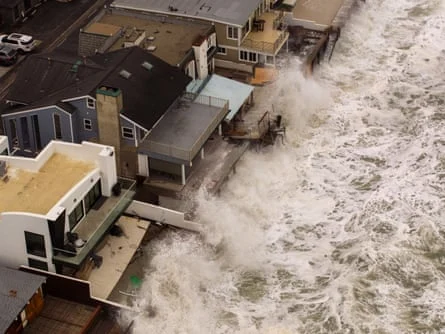
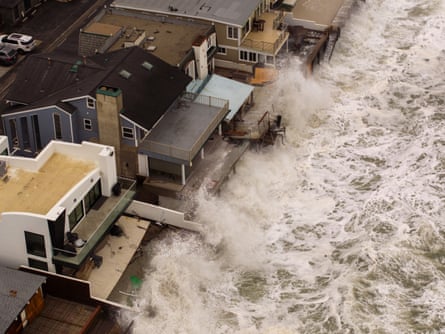
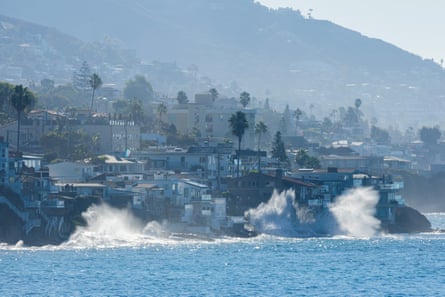
The resulting institutional strain arrives at a perilous juncture. Meteorologists and oceanographers warn that the unfolding super El Nino—a climate pattern driven by significantly warmer-than-average equatorial sea surface temperatures—is rapidly strengthening. The phenomenon is projected to supercharge atmospheric rivers along the American West Coast, elevate sea levels in California by up to a foot, and trigger widespread risks of flash floods, landslides, and severe coastal erosion.
A Chronology of Retrenchment and Workforce Decimation
The dismantling of institutional capacity at the National Oceanic and Atmospheric Administration (NOAA) unfolded swiftly following the administration’s return to power in early 2025. Federal workforce figures compiled by the Office of Personnel Management illustrate a historic contraction. While staffing fluctuations historically hovered within a margin of 500 positions annually, the agency shed more than 2,000 jobs in 2025 alone, continuing a downward trajectory through late 2026.

The reductions targeted specific operational divisions unevenly, creating severe bottlenecks across critical infrastructure:
- Public affairs and communications teams, responsible for disseminating life-saving weather alerts to the public and media, were reduced by approximately 50%.
- Information technology management, which maintains the heavy computational and data infrastructure required for complex numerical weather prediction models, saw a 27% reduction in personnel.
- Scientific research divisions lost more than 500 experienced professionals, offset by a meager 46 new hires during the same period.
- Meteorology and technical support positions across the 122 National Weather Service forecast offices experienced persistent vacancy rates, resulting in staff working double shifts to keep facilities operational.
Despite a brief, reactive push by the National Weather Service to recruit meteorological staff in the immediate aftermath of early 2025 layoffs, net hiring has lagged drastically. Between January and August of the following year, only 40 meteorologists were added nationwide, leaving hundreds of vital positions vacant as the winter weather season approached.
Quantitative Impact on Research, Grants, and Infrastructure
Beyond direct staffing losses, the administration’s fiscal policies have severely restricted the external research ecosystem that supports NOAA’s mission. According to data tracked by Grant Witness, an organization monitoring federal science funding, the administration terminated dozens of competitive grants, stripping more than $28 million from state agencies, municipal governments, non-profit organizations, and academic institutions.
Climate research funding has borne the brunt of these fiscal contractions. An analysis of fiscal year 2026 funding allocations revealed that the number of grant awards issued was 37% lower than the historical baseline average recorded between 2021 and 2024. Furthermore, the administration proposed an additional $1.6 billion reduction—representing a 26% budget cut—for the upcoming fiscal cycle, signaling a sustained effort to downscale federal climate monitoring capabilities.
The budgetary and personnel shortfalls have directly compromised physical observation networks:
- Weather Balloons and Upper-Air Observations: Reductions in operating hours and staffing at launch sites have led to delayed or canceled weather balloon releases, leaving forecasting gaps that have previously impaired tornado tracking in the Great Plains and flood warnings in rural Alaska.
- Multilingual Alerts: A Government Accountability Office (GAO) review found that staffing and funding constraints impaired the National Weather Service’s ability to provide adequate weather alerts in languages other than English, leaving roughly 26 million non-English-speaking residents at elevated risk during severe weather events.
- Satellite Infrastructure: Proposed budget reductions have shaved approximately $6 billion from investments earmarked for next-generation weather satellites. The GAO warned that these delays will create future gaps in satellite coverage, jeopardizing the long-term accuracy of severe storm tracking.
- Oceanographic Monitoring: Funding for critical long-term projects, including the deployment of Biogeochemical-Argo floats designed to track ocean health and climate change indicators off the coast of Southern California, faced imminent expiration, threatening decades of continuous oceanic data collection.
The Impending Test of a Super El Nino
The convergence of institutional contraction and heightened meteorological risk has alarmed the scientific community. Tom Di Liberto, a former NOAA climate scientist who currently serves as media director for Climate Central, noted that the restructured agency has yet to face a major multi-region disaster under the current staffing constraints.
"The system has not really been tested since all the cuts happened," Di Liberto said. "Whether we as a country can handle the kind of coast-to-coast extremes that could potentially happen this winter is a big question."
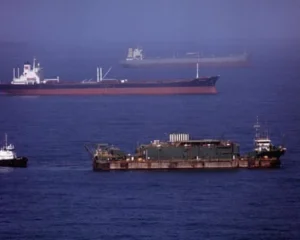
During historical extreme climate events, such as the powerful El Nino winter of a decade ago, NOAA deployed expansive field resources, including research vessels, reconnaissance aircraft, unmanned ocean drones, and extra weather balloons to study the atmospheric dynamics in real-time. For the current winter season, observational scope has been severely curtailed, relying primarily on a limited array of uncrewed watercraft in the Pacific Ocean.
While plans to remove certain core ocean monitoring systems were briefly pursued by the administration, widespread public outcry from commercial fishing industries, academic institutions, and coastal municipalities forced a partial reinstatement of those assets.
Official Responses and Administrative Justification
In defense of the agency’s current posture, NOAA leadership and administration spokespersons maintained that technological advancements have successfully compensated for workforce reductions. In an official email statement, a NOAA representative asserted that the agency is operating with unprecedented efficiency.
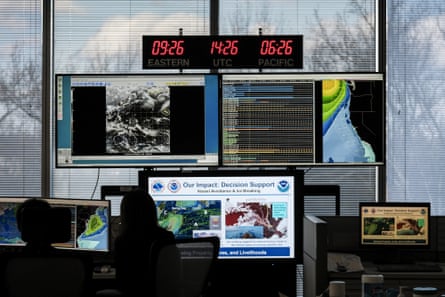
"NOAA has never been more equipped to study, prepare for, and respond to an ENSO event," the spokesperson stated, highlighting the integration of modern numerical modeling software and expanded uncrewed maritime systems. "These advanced capabilities have allowed NOAA to streamline resources and study this year’s El Nino more effectively than ever before."
Independent experts and former administrators acknowledge that technological progress—such as advanced supercomputing and machine learning models—has undeniably elevated baseline forecasting capabilities. However, they argue that technology alone cannot replace human expertise, maintenance crews, field researchers, and localized data verification.
Rick Spinrad, who served as NOAA administrator during the Biden administration following a three-decade career at the agency, emphasized that current technological gains are a byproduct of past long-term investments rather than recent policy choices.
"We are more capable than we have been in the past because of the developments in the technology, the satellites that were flying, the observing systems that we’ve put in place," Spinrad said. "Pero everything that this administration is doing suggests that we cannot and will not sustain those capabilities. So the real question is—are we at a turning point now?"
Broader Implications and Global Consequences
The degradation of NOAA’s operational capacity carries implications that extend far beyond domestic weather reporting. As a foundational node in the World Meteorological Organization, the agency shares vital satellite data, atmospheric research, and predictive intelligence with international partners. Foreign meteorological services depend on NOAA data streams to track severe weather across Europe, coordinate disaster response protocols in the Caribbean, and monitor deforestation trends and climate feedback loops within the Amazon basin.
Domestically, the political climate within the agency has added further strain to remaining personnel. Researchers report an atmosphere of apprehension, with employees expressing fear of professional retaliation should their findings conflict with the administration’s stated skepticism regarding human-driven climate change.
Monica Medina, who served as the principal deputy administrator of NOAA during the Obama administration, voiced profound concern over public safety margins as global temperatures continue to rise.
"I worry about loss of life and about our inability to be protected at a time when we need our government the most," Medina said. Characterizing the upcoming winter as a critical trial for an under-resourced federal science apparatus, she warned that failure to maintain core capabilities during extreme weather events sets a dangerous precedent for future climate resilience. "If this is a real test of a hotter, more precarious future," she added, "we’re going to flunk."