The political landscape of South America’s largest democracy shifted dramatically this week as the fallout from Brazil’s high-stakes presidential runoff election reverberated across international borders. Following his defeat to incumbent President Luiz Inácio Lula da Silva, Brazilian Senator Flávio Bolsonaro and his immediate family have been granted U.S. visas, according to a senior State Department official who spoke on condition of anonymity. The development offers a safe haven for the conservative lawmaker, who quickly departed Brazil for the United States amid mounting legal scrutiny and political turmoil in Brasília.
The departure underscores deep ideological alignments and enduring personal connections between prominent right-wing figures in Brazil and conservative political circles in the United States. Senator Bolsonaro, an outspoken ally of U.S. President Donald Trump, flew out of the South American nation shortly after the official election results were tallied on Sunday, October 27, 2026. Brazilian media outlets were the first to report his swift exit, which coincided with the expiration of a strict judicial deadline ordering him to surrender both his regular and diplomatic passports.
This unfolding scenario echoes familiar historical parallels from recent Brazilian politics, drawing intense global scrutiny. As diplomatic channels navigate the implications of granting entry to a foreign lawmaker fleeing a domestic political defeat, legal experts and international observers are closely monitoring how the situation will impact bilateral relations between Washington and Brasília under a newly secured fourth presidential term for Lula da Silva.
Election Results and Voter Turnout Breakdown
The October runoff concluded a fiercely contested and deeply polarized electoral cycle that exposed ideological fractures within the Brazilian electorate. Incumbent President Luiz Inácio Lula da Silva secured a historic fourth term in office, capitalizing on a broad coalition and enduring support among working-class voters. Lula, who celebrated his 81st birthday on Tuesday, amassed more than 64 million votes by the time the Supreme Electoral Court finalized the count.
In contrast, Flávio Bolsonaro, representing the Liberal Party, garnered fewer than 60 million votes. The final tally resulted in a margin of nearly 4 percentage points—a decisive victory for the incumbent, yet one that failed to pacify the conservative opposition. Rather than accepting the outcome, Bolsonaro and his campaign team immediately questioned the integrity of the voting process. Echoing rhetoric reminiscent of previous electoral challenges in the hemisphere, Bolsonaro refused to concede defeat, alleging irregularities without presenting verifiable evidence.
The refusal to accept the ballot box results mirrors the posture adopted by his father, former President Jair Bolsonaro, following his own electoral defeat to Lula in October 2022. The repetition of these claims has intensified political polarization in Brazil, prompting swift and assertive actions from the country’s judiciary to safeguard institutional stability.
Chronology of Events and Legal Pressures
The sequence of events leading up to Senator Flávio Bolsonaro’s sudden departure highlights a race against time involving judicial mandates and international travel. The timeline of the crisis developed rapidly over a turbulent 48-hour period:
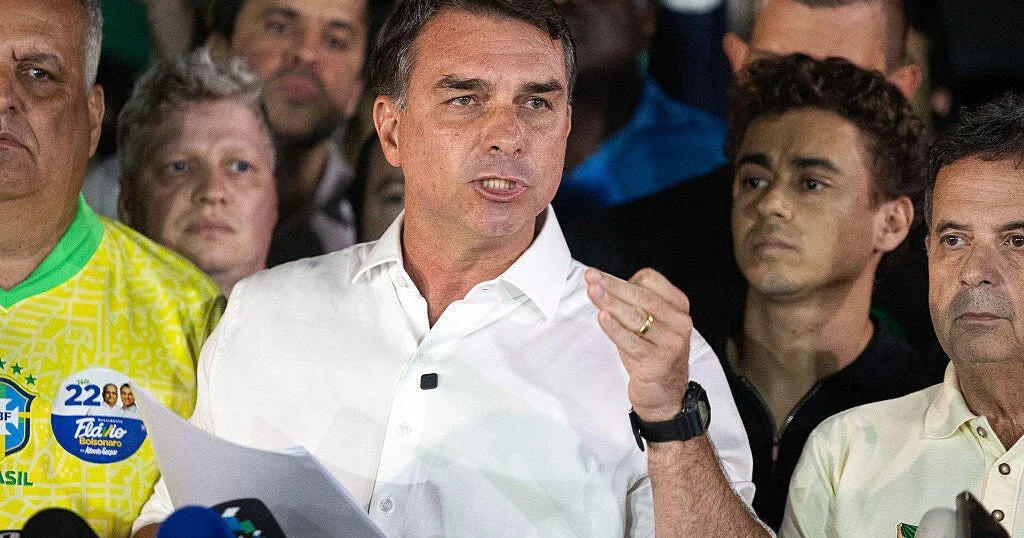
Sunday, October 25, 2026: The second-round presidential runoff concludes. As preliminary results confirm Lula da Silva’s victory, Flávio Bolsonaro addresses supporters and reporters at a Liberal Party camp in Brasília, rejecting the outcome and asserting unsubstantiated claims of election fraud.
Sunday evening, October 27, 2026: A sealed Supreme Court order is issued, mandating that Senator Bolsonaro surrender his regular and diplomatic passports to prevent potential flight risks amidst ongoing judicial inquiries.
Monday, October 28, 2026: Law enforcement officers serve the court order to Bolsonaro. Reports indicate the service took place outside the residential property where his father, former President Jair Bolsonaro, is currently serving a 27-year prison sentence under house arrest. The elder Bolsonaro was convicted for his role in attempting a coup d’état following his 2022 electoral defeat.
Tuesday, October 29, 2026, 12:00 PM: The strict judicial deadline for Bolsonaro to surrender his passports officially expires. Media reports confirm that the senator has already boarded a flight out of Brazil, raising questions about whether he complied with the surrender order prior to his departure.
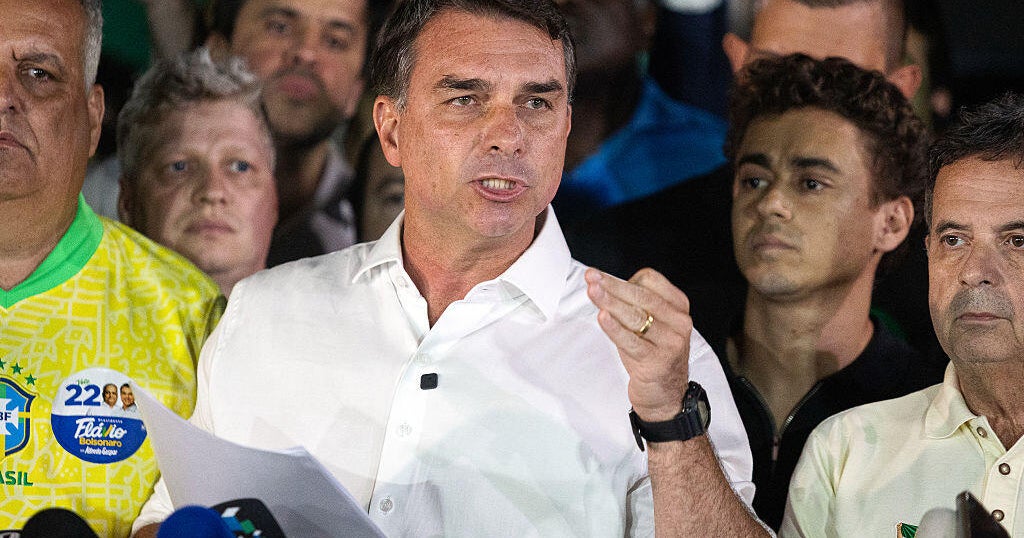
Tuesday afternoon, October 29, 2026: A senior U.S. State Department official confirms to journalists that Flávio Bolsonaro and his family members have been approved for entry into the United States, cementing their relocation.
Family Ties and International Legal Complications
The Bolsonaro family’s history with the United States is extensive, multi-layered, and increasingly fraught with legal complications. Senator Bolsonaro has long championed a close diplomatic and personal relationship with U.S. President Donald Trump, highlighted by a high-profile visit to the White House in May.
However, these transatlantic ties have also drawn intense scrutiny from international legal authorities. The senator’s brother, Eduardo Bolsonaro—who permanently resides in the state of Texas—had publicly urged his brother to flee Brazil immediately if he lost the presidential runoff. Eduardo Bolsonaro’s vocal support for political exile underscores the family’s reliance on American soil as a refuge during domestic legal crises.
Yet, seeking refuge in the United States does not entirely insulate the family from legal accountability. In June, Eduardo Bolsonaro was convicted in absentia by a Brazilian court of illegally lobbying the Trump administration on behalf of domestic political interests. He was subsequently sentenced to four years in prison, and a formal international arrest warrant was recently issued for his apprehension.
The presence of prominent members of the Bolsonaro family on U.S. territory presents a complex diplomatic puzzle for Washington. While executive branch agencies retain broad discretion over visa approvals and immigration enforcement, the outstanding warrants and criminal convictions issued by a key democratic partner in South America test the boundaries of international legal cooperation and extradition frameworks.
Official Responses and Silence from the Campaign
As news of the visa approvals and the senator’s departure circulated globally, official channels within Brazil and the United States remained largely guarded. A designated spokesperson for Flávio Bolsonaro declined multiple requests for comment from international news agencies regarding his exact whereabouts, compliance with the passport surrender order, and long-term plans in the United States.
Similarly, Rogério Marinho, Bolsonaro’s national campaign manager and a prominent figure within the Liberal Party, refused to comment on the candidate’s sudden exit. The silence from the campaign has fueled domestic speculation that the departure was planned well in advance of the election as a contingency measure against adverse judicial rulings.
In Washington, the U.S. State Department maintained a neutral posture, confirming the administrative decision to issue the visas without offering further commentary on the underlying political motivations or the specific legal status of the senator’s pending matters in Brazil. Meanwhile, President Trump—who declined to issue a definitive, full-throated endorsement of Bolsonaro during the runoff campaign, diverging from his typical practice of backing right-of-center candidates in Latin America—remarked on Monday without offering evidence that the Brazilian election process had been "rigged." This statement drew swift criticism from Brazilian officials eager to defend the autonomy and security of their electoral institutions.
Broader Impact and Implications for Bilateral Relations
The granting of U.S. visas to Flávio Bolsonaro and his family carries profound implications for the future of Brazilian domestic politics and its diplomatic partnership with the United States. For Brazil, the departure of a major political figure while under a judicial passport restriction order poses a direct challenge to the authority of the country’s Supreme Court. It highlights an ongoing institutional struggle between the judiciary—which has sought to prosecute individuals implicated in attacks on democratic norms—and a conservative movement that views these prosecutions as politically motivated persecution.
For the international community, the episode underscores the complex interplay between populist political networks across the Americas. The ability of high-profile political actors to transition seamlessly across borders when faced with domestic legal jeopardy raises critical questions about accountability, asylum, and the enforcement of international judicial cooperation.
As President Lula da Silva prepares to assume office for his historic fourth term, his administration faces the delicate task of governing a deeply divided nation while managing a foreign policy landscape complicated by the sanctuary provided to political rivals abroad. Whether Brazilian authorities will pursue formal extradition requests for members of the Bolsonaro family residing in the United States remains an open question—one that will likely test the resilience and adaptability of U.S.-Brazil diplomatic relations in the years ahead.