Columbia University Protests, Butler Library, Police, Arrests, and the Trump Factor: A Comprehensive Explainer
The spring of 2024 witnessed a seismic shift in the landscape of higher education as Columbia University became a focal point for widespread protests, particularly concerning the ongoing conflict in Gaza. These demonstrations, often concentrated around iconic campus landmarks like Butler Library, escalated to a point where police intervention and arrests became a reality, intertwining deeply with the prevailing political climate and drawing comparisons and commentary from figures like former President Donald Trump. Understanding the multifaceted nature of these events requires a deep dive into the core issues, the actions taken, the reactions, and the broader political implications.
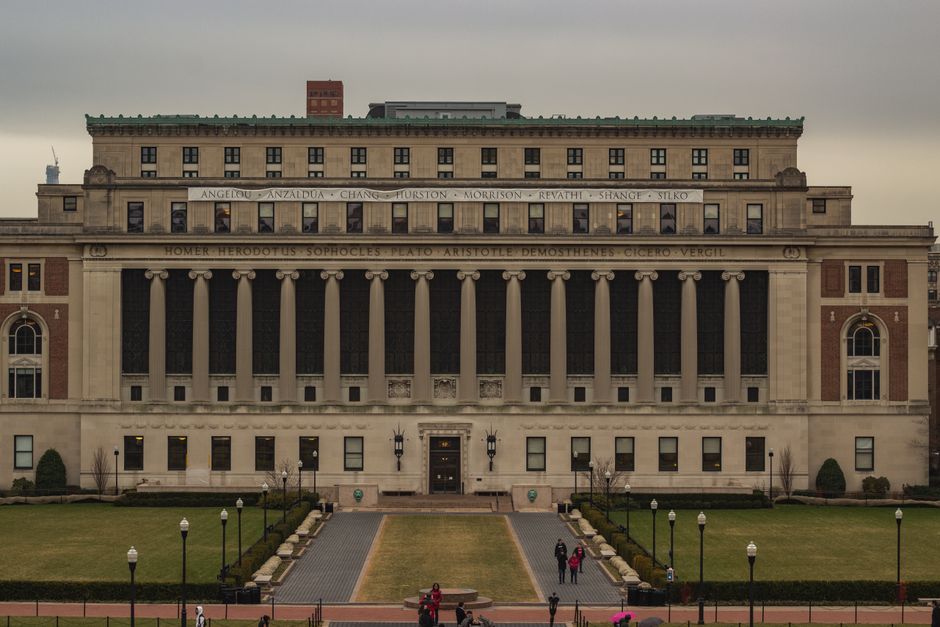
At the heart of the Columbia University protests lay a complex web of grievances and demands. Primarily, student and faculty groups organized to express solidarity with Palestinians and to call for an end to what they perceive as complicity of the university and its financial ties in the ongoing violence and humanitarian crisis in Gaza. Specific demands often included divestment from companies profiting from the Israeli occupation, greater transparency regarding the university’s endowment investments, and condemnation of perceived human rights abuses. These protests were not monolithic; they encompassed a diverse range of opinions and strategies, from peaceful demonstrations and teach-ins to more disruptive actions aimed at drawing wider attention and forcing institutional change. The physical manifestation of this dissent frequently centered on Butler Library, a prominent and symbolically important building on campus, serving as a gathering place and a stage for the expression of student activism. The visual of tents and encampments erected on the Morningside Heights campus, often in close proximity to Butler, became a powerful symbol of the student movement’s presence and persistence.
The escalation from peaceful protest to a situation requiring police involvement was a gradual, and for many, a deeply regrettable process. University administrations, tasked with maintaining order and ensuring the safety of all students, faculty, and staff, faced immense pressure to respond to ongoing disruptions. In the case of Columbia, administrators cited violations of campus policy, including unauthorized encampments and repeated disruptions to academic activities. The decision to bring in law enforcement, a measure often seen as a last resort, was met with mixed reactions. Supporters argued it was necessary to restore normalcy and uphold the university’s operational integrity. Critics, however, viewed the police presence as an overly aggressive response that stifled free speech and escalated tensions, potentially alienating the student body and creating an environment of fear. The images of police in riot gear entering a university campus, and subsequently making arrests, resonated far beyond Columbia, sparking nationwide debate about the role of law enforcement in academic settings.
The arrests themselves became a significant point of contention. Numerous students and faculty members were detained, facing charges ranging from trespassing to disorderly conduct. For those arrested, the experience often involved being removed from campus, processed by authorities, and in some cases, facing legal proceedings. These arrests amplified the narratives of both sides: for protesters, they were seen as martyrs in the fight for their principles; for university administration and law enforcement, they were the necessary consequence of breaking rules. The legal ramifications for those arrested, including potential academic penalties and criminal records, added a tangible and serious dimension to the protest movement, transforming individual experiences into broader symbols of the stakes involved.
The political dimension of the Columbia University protests cannot be overstated, especially in the context of a polarized United States, with a presidential election on the horizon. Former President Donald Trump, a prominent figure in American politics, quickly weighed in on the events at Columbia. His commentary often framed the protests through a partisan lens, aligning himself with those who condemned the demonstrations as antisemitic and disruptive. Trump’s rhetoric frequently emphasized a need for strong law enforcement and a crackdown on what he characterized as "radical" or "anti-American" elements on college campuses. He called for the university to "clean it up" and suggested that the federal government should intervene. This interventionist stance, while appealing to his base, further inflamed the political debate surrounding the protests, turning an internal university matter into a national political talking point.
The "Trump factor" played a dual role in the Columbia University situation. Firstly, his vocal condemnation provided a rallying point for those critical of the protests, solidifying their opposition and amplifying their arguments in the national discourse. Secondly, for many protesters and their supporters, Trump’s intervention served as a confirmation of their fears about the erosion of civil liberties and the weaponization of political rhetoric against dissent. His pronouncements were often cited as evidence of a broader political agenda that sought to suppress free speech and punish activism, particularly when it challenged prevailing political or economic interests. The contrast between Trump’s calls for forceful action and the protesters’ demands for a more nuanced and empathetic response highlighted the deep ideological divides at play.
The specific location of the protests, around Butler Library, held symbolic weight. Butler Library is more than just a repository of books; it’s a hub of intellectual life and academic pursuit. Its occupation or demonstration in its vicinity by students challenging institutional policies and external geopolitical events underscored the belief that the university should not be divorced from the world’s pressing issues. For many, the act of protesting at such a central and visible location was a way of asserting that the pursuit of knowledge and the ethical responsibilities of an institution are intertwined. The visual of tents pitched on the pristine lawns surrounding Butler became an indelible image of student defiance and a challenge to the perceived complacency of the university administration.
The "politics" of the Columbia University protests are intrinsically linked to the broader political discourse surrounding the Israeli-Palestinian conflict, free speech on college campuses, and the role of higher education in society. These protests tapped into existing fault lines within American politics, including debates about antisemitism, Islamophobia, foreign policy, and the responsibilities of universities to their students and to the wider world. The calls for divestment, for instance, are not merely financial requests; they are deeply political statements that aim to pressure institutions to align their investments with their stated values. The response from university administrations, often navigating a tightrope between upholding academic freedom and maintaining order, became a subject of intense political scrutiny.
Explaining the phenomenon requires an understanding of the historical context of student activism in the United States. Universities have long been sites of protest and dissent, from the Civil Rights Movement to the Vietnam War. The Columbia University protests of 2024, while having their own unique triggers, fit into this tradition. However, the contemporary landscape is shaped by new factors: the pervasive influence of social media in organizing and disseminating information, the highly polarized political environment, and the increasing economic pressures on universities themselves. The speed at which events unfolded, amplified by digital communication, contributed to the rapid nationalization of the protests.
The involvement of faculty members alongside students added another layer of complexity. While student voices are often the most visible, faculty participation signals a deeper institutional engagement with the issues at hand. It can also reflect a sense of disillusionment with university leadership or a belief that the administration is not adequately addressing student concerns. The decision by some faculty to participate in protests, including facing arrest, underscored the depth of their convictions and their willingness to challenge the status quo, even at personal cost. This solidarity between students and faculty can create a formidable force for institutional change, but it also raises questions about academic freedom and the boundaries of professional conduct.
The arrests and police presence at Columbia University sparked immediate comparisons to similar events at other universities across the nation, indicating a broader trend of heightened tensions on college campuses. The response of other administrations, and the subsequent national media coverage, created a feedback loop, influencing public perception and political discourse. The notion that universities were becoming hotbeds of radicalism, as articulated by figures like Trump, gained traction in certain political circles, leading to calls for legislative intervention and increased oversight of academic institutions.
The debate over "antisemitism" became a particularly charged aspect of the Columbia University protests. Critics of the protests often alleged that anti-Zionist sentiment had devolved into antisemitism, citing instances of perceived hostility towards Jewish students or the use of rhetoric that conflated criticism of Israeli policy with hatred of Jewish people. Protesters, conversely, often argued that their criticism was directed at the policies of the Israeli government and not at Jewish people, and that claims of antisemitism were being weaponized to silence legitimate criticism. This complex and sensitive issue fueled intense debate and further polarized the situation, with university administrations struggling to create a space for open dialogue that also ensured the safety and well-being of all members of the community. The presence of Jewish students on both sides of the protest—some participating and some expressing concern—added another dimension to this intricate issue.
The notion of "free speech" was also central to the discussions. Universities are generally considered bastions of free expression, but the line between protected speech and actions that disrupt the educational environment or incite hatred remains a subject of constant negotiation. The Columbia University protests brought these questions to the forefront, with debates raging over whether encampments constituted protected protest or disruptive behavior, and whether certain slogans or demands crossed the line into hate speech. The role of external political actors, like Trump, in shaping these debates further complicated the interpretation and application of free speech principles.
The long-term implications of the Columbia University protests, including the events at Butler Library and the subsequent police action, are still unfolding. The protests have undoubtedly left an indelible mark on the university’s history, raising critical questions about its role in social and political issues, its commitment to free speech, and its relationship with law enforcement. The events have also contributed to a broader national conversation about the challenges facing higher education in a polarized political climate, and the ongoing struggle to balance academic freedom with the need for order and safety. The political reverberations, particularly in an election year, are likely to continue, with the events at Columbia serving as a case study in the complex interplay of activism, institutional response, and partisan politics. The legacy of these events will likely be debated for years to come, shaping how universities are perceived and how they navigate future moments of protest and social unrest.
