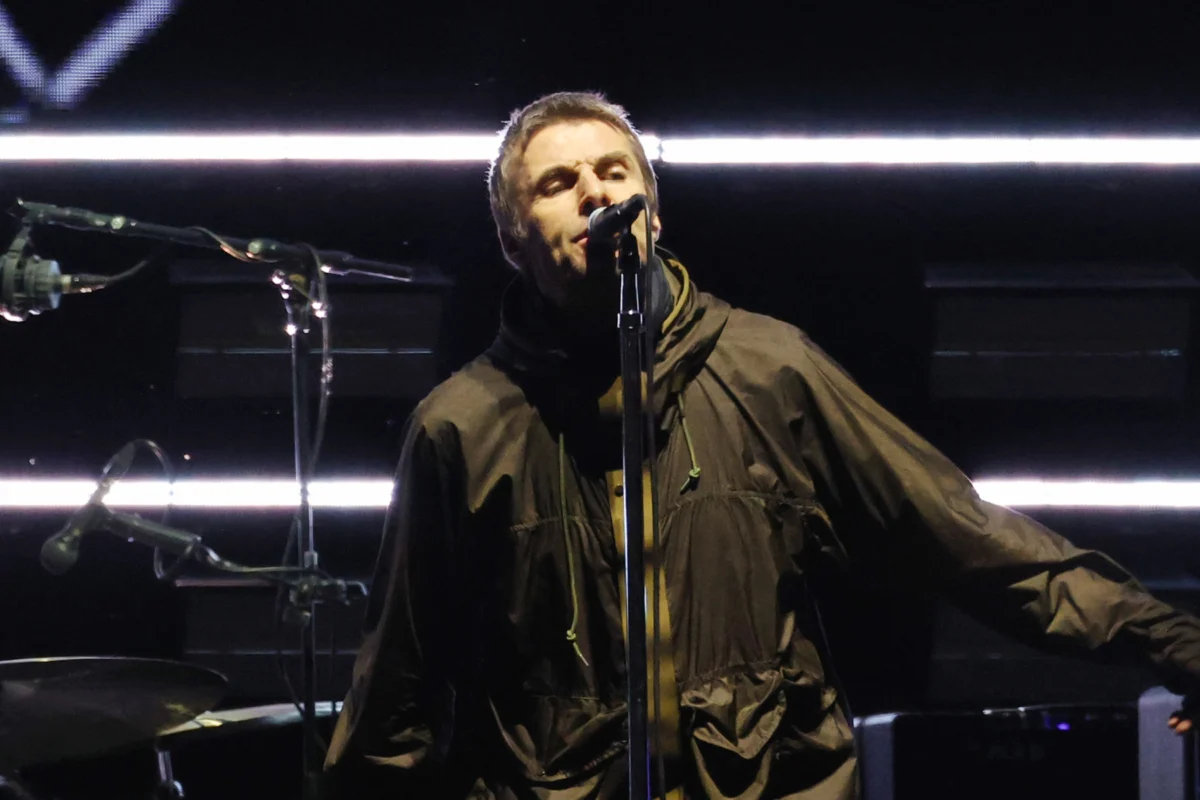
The electric atmosphere of the FIFA World Cup Final, a global spectacle that captivates billions, was punctuated not only by the fierce on-field rivalry between Spain and Argentina but also by a halftime entertainment extravaganza that drew a decidedly mixed reaction. While the stadium pulsed with anticipation for the second half of the decisive match, a constellation of international music and entertainment titans took to the stage, delivering a performance that, for some, proved to be more jarring than celebratory. Among the most vocal critics of the ambitious production was Oasis frontman Liam Gallagher, who, in a candid social media post, unequivocally described the halftime show as akin to a "bad trip."
Gallagher, a figure known for his unvarnished opinions and his deep connection to the emotional rollercoaster of the World Cup, particularly concerning England’s journey, did not mince words. The halftime spectacle, which featured a diverse lineup including pop icon Madonna, K-pop sensation BTS, Latin superstar Shakira, global phenomenon Justin Bieber, Nigerian artist Burna Boy, acclaimed composer Gustavo Dudamel, and even a whimsical appearance by the beloved Muppets, was deemed by the rock legend to be an overwhelming and disorienting experience. His sentiment, shared on the platform X (formerly Twitter), suggested that only his "spiritual socks" – a metaphorical preparedness for the unexpected – prevented him from being entirely overwhelmed by the unconventional programming. This statement, delivered with Gallagher’s characteristic bluntness, quickly resonated with a segment of the audience who may have shared his sentiment or were simply amused by his characteristic disdain for perceived over-the-top entertainment.
A Spectacle of Global Proportions: Unpacking the Halftime Lineup
The FIFA World Cup Final halftime show, held at the New York New Jersey Stadium, was conceived as a grand, cross-cultural celebration, aiming to unite diverse audiences through the universal language of music and entertainment. The ambitious undertaking began with the enduring queen of pop, Madonna. Her segment commenced with a dramatic entrance, traversing the stadium’s subterranean tunnels in a golf cart piloted by Brazilian football legends Ronaldo and Ronaldinho. This unconventional mode of transport set the stage for her performance of a re-imagined version of her 2000 hit "Music" and her latest single, "Danceteria," from her recently released album, Confessions II. The inclusion of football icons alongside a music legend underscored the event’s intent to blend sporting prestige with entertainment royalty.
Following Madonna’s performance, the show segued into a series of rapid-fire appearances. K-pop megastars BTS offered a fleeting, yet impactful, snippet of their global smash hit "Dynamite," a move designed to capitalize on their immense international fanbase and inject a burst of contemporary energy into the proceedings. This was followed by a segment that leaned into the theatrical and comedic, with actor Jason Sudeikis reprising his beloved character, Coach Ted Lasso, from the hit television series. Accompanied by his on-screen deputy, Coach Beard (portrayed by Brendan Hunt), Lasso delivered a motivational pep talk, ostensibly to Justin Bieber, adding a narrative layer to the musical performances. Bieber himself then took center stage to perform a rendition of his song "Everything Hallelujah," further diversifying the musical palette.
The collaborative spirit of the show was further exemplified by the performance of "Dai Dai," a track featuring the distinctive vocal stylings of Shakira and the afrobeats rhythms of Burna Boy. This pairing highlighted the increasing global influence of African music and its fusion with established international genres. Adding a touch of heartwarming innocence to the star-studded lineup was the PS 22 Chorus, a choir composed of fourth and fifth graders from a Staten Island public elementary school. Their performance of "We Dance," a song penned by Coldplay, saw frontman Chris Martin himself join the young singers, creating a poignant intergenerational moment. The inclusion of a children’s choir aimed to inject a sense of community and uplift, a stark contrast to the high-octane performances of global pop stars.
Gallagher’s Grievances: A Backlash Fueled by National Disappointment
Liam Gallagher’s sharp critique of the halftime show cannot be entirely divorced from the context of England’s performance in the tournament. The Oasis singer had been a vocal supporter of the Three Lions, with their anthem "Wonderwall" becoming an unofficial rallying cry for the team and its supporters leading up to the semi-finals. Gallagher himself had actively promoted its association with the team, tweeting "Cmon England cmon Wonderwall" in anticipation of a crucial match. England’s subsequent loss on Wednesday night, which paved the way for Argentina’s eventual triumph against Spain in the final, undoubtedly left Gallagher and a legion of English fans disappointed. It is within this backdrop of national sporting heartbreak that his strong reaction to the halftime entertainment can be understood, perhaps as a cathartic release of frustration, directed at an event that, in his eyes, failed to resonate with the intensity or spirit he associated with the World Cup.
The halftime show’s diverse and eclectic nature, while intended to be universally appealing, may have inadvertently alienated viewers who were seeking a more focused or traditional sporting celebration. The rapid shifts in tone and genre, from pop anthems to K-pop, from comedic skits to children’s choirs, could be perceived as disjointed or lacking a cohesive artistic vision. Gallagher’s "bad trip" analogy suggests that the sheer sensory overload and the unexpected juxtapositions within the performance created a feeling of disorientation, a sentiment that likely echoed among viewers who found the eclectic mix jarring rather than harmonious.
The Broader Landscape of Halftime Entertainment
The FIFA World Cup halftime show has evolved significantly over the years, transforming from a relatively simple display of local culture into a global entertainment spectacle of unparalleled scale. Historically, halftime entertainment at major sporting events, such as the Super Bowl in the United States, has become a significant cultural moment in itself, often eclipsing the game’s performance. The FIFA World Cup, with its truly global reach, has sought to emulate this, aiming to create a halftime show that reflects the diverse cultural tapestry of the participating nations.
The inclusion of artists like Madonna and Shakira speaks to the enduring power of established global superstars to draw audiences. The incorporation of BTS and Burna Boy, however, signals a conscious effort by FIFA to acknowledge and leverage the burgeoning influence of K-pop and Afrobeats on the global music scene, reflecting shifting demographics and emerging cultural trends. The foray into scripted comedy with the Ted Lasso segment, and the heartwarming inclusion of the PS 22 Chorus, further illustrate the multifaceted approach to engaging a wide spectrum of viewers, from sports enthusiasts to casual observers of popular culture.
However, this ambition to cater to such a broad and diverse audience invariably presents a challenge. What resonates with one demographic might fall flat with another. The very eclecticism that defines these modern halftime shows can also be their Achilles’ heel. Critics, like Gallagher, often yearn for a more focused, perhaps even more authentic, representation of either the sport itself or a more cohesive artistic vision. The pressure to deliver a universally acclaimed performance for an audience of billions, with vastly different tastes and expectations, is immense. The success of such an endeavor is therefore a delicate balancing act, and as Gallagher’s reaction suggests, it is not always achieved.
Future Implications and Fan Expectations
Liam Gallagher’s outspoken critique, while a personal opinion, taps into a broader conversation about the role and execution of halftime entertainment at major international sporting events. As these events continue to grow in scale and cultural significance, the expectations placed upon their accompanying entertainment segments will only increase. The challenge for organizers like FIFA lies in finding a formula that is both inclusive and artistically coherent, one that celebrates the spirit of global unity without becoming a muddled or jarring experience.
The continued success of such spectacles will likely depend on FIFA’s ability to navigate the delicate balance between catering to established global tastes and embracing emerging cultural forces. The inclusion of artists like Gallagher’s former band, Oasis, or other British rock luminaries, might have garnered a different, potentially more favorable, reaction from certain segments of the audience, particularly those who associate the World Cup with a particular era of sporting and musical heritage. Conversely, a continued focus on contemporary global pop sensations and diverse genre fusions will undoubtedly appeal to younger and more globally attuned audiences.
The documentary Don’t Look Back in Anger, set to explore the dynamic between the Gallagher brothers and the unlikely comeback of Oasis, is slated for release in September. This project, helmed by Steven Knight of Peaky Blinders fame, is expected to reignite interest in the band’s legacy and their impact on British culture. Whether this renewed focus on Oasis will influence future musical selections at major sporting events remains to be seen, but it highlights the enduring appeal of classic rock anthems and the nostalgic power they hold for many fans. For now, the debate over the FIFA World Cup halftime show’s effectiveness, and Liam Gallagher’s colorful critique, serves as a reminder that even in a world united by sport, artistic tastes remain wonderfully, and sometimes controversially, diverse. The quest for the perfect halftime performance continues, a challenge as formidable as any on the football pitch.