Ford Motor Company is fundamentally recalibrating its global product strategy, moving away from an exclusive focus on battery-electric vehicles (BEVs) to embrace a diversified portfolio dominated by advanced hybrids. This shift is not merely a retreat from electrification but a sophisticated technical pivot. The Dearborn-based automaker plans to integrate cutting-edge innovations derived from its dedicated electric vehicle research—specifically its "Universal EV Platform"—into a new generation of internal combustion engine (ICE) vehicles. By the end of this decade, Ford anticipates that nearly 90% of its global nameplates will offer some form of electrified powertrain, ranging from traditional hybrids to extended-range electric vehicles (EREVs) and full-on BEVs.
This strategic redirection comes at a volatile time for the automotive industry. While the initial surge in EV demand has cooled in the North American market, the pressure from highly efficient and aggressively priced Chinese competitors has intensified. Ford’s response involves leveraging the "skunkworks" engineering breakthroughs intended for low-cost EVs to make its upcoming hybrids more efficient, more affordable, and more competitive on a global scale.
The Evolution of the Universal EV Platform
At the heart of Ford’s technological bridge is the Universal EV (UEV) platform. Developed by a specialized "skunkworks" team based in California—composed of top-tier engineering talent from across the tech and automotive sectors, including former Tesla and Apple engineers—the UEV platform was originally envisioned to underpin a new generation of affordable, high-volume electric cars. The primary target of this project was a mid-size electric pickup with a starting price of approximately $30,000, a figure seen as the "holy grail" for mass-market EV adoption.
While the full-scale deployment of several BEVs based on this platform has been delayed or modified, the intellectual property generated during its development has become an unexpected lifeline for Ford’s hybrid division. Ford executives have confirmed that the drive units developed for the UEV platform are among the most cost-efficient in the world. These in-house designed front and rear drive units represent a significant departure from off-the-shelf components, offering superior power density and lower manufacturing costs.
By integrating these high-efficiency electric motors and power electronics into hybrid configurations, Ford aims to solve the two primary hurdles of hybrid adoption: weight and cost. Traditional hybrids often suffer from the "dual-powertrain penalty," where the vehicle must carry the weight and cost of both a gas engine and an electric system. The breakthroughs from the UEV project allow Ford to minimize this penalty, potentially offering hybrid versions of its most popular trucks and SUVs that provide significantly better fuel economy without the traditional price premium.
A Timeline of Strategic Realignment
Ford’s journey toward this hybrid-centric future has been marked by several high-profile shifts in direction over the last three years.
In 2021 and 2022, following the successful launch of the Mustang Mach-E and the F-150 Lightning, Ford was positioned as a primary challenger to Tesla’s dominance. The company split its operations into "Ford Blue" (gas and hybrid) and "Ford Model e" (electric), signaling a clear intent to eventually phase out internal combustion.
However, by late 2023, market realities began to set in. High interest rates, a lack of public charging infrastructure, and the high MSRP of first-generation EVs led to a buildup of inventory on dealer lots. In early 2024, Ford announced it would delay approximately $12 billion in planned EV spending. This was followed by the landmark decision to cancel a planned three-row electric SUV and postpone the "T3" next-generation electric truck project.
Most recently, the company confirmed the discontinuation of the current-generation F-150 Lightning in its present form, opting instead to focus on the UEV-derived technology. This timeline reflects a broader industry trend where legacy automakers are discovering that the transition to "all-electric" will be a marathon lasting decades rather than a sprint completed in a few years.
The Chinese Influence and the "Fair Fight" Argument
A significant driver of Ford’s urgency is the rapid rise of Chinese automotive giants like BYD, Geely, and Xiaomi. These companies have mastered the art of the "New Energy Vehicle" (NEV), a category that includes both pure EVs and sophisticated plug-in hybrids.
Ford CEO Jim Farley has been remarkably candid about the threat posed by these manufacturers. In 2024, Farley made headlines after revealing he had been driving an imported Xiaomi SU7—a high-tech electric sedan from the Chinese electronics giant—for months and found it difficult to give up. He described the car as "fantastic," noting that it represented a level of integration between software and hardware that Western automakers are currently struggling to match.
Despite his personal admiration for the product, Farley has been a vocal advocate for protecting the domestic U.S. auto industry. He recently argued that Chinese EVs should effectively be barred from the United States to prevent a collapse of domestic manufacturing. "There’s no way this is a fair fight," Farley remarked, pointing to the massive state subsidies and the overcapacity in the Chinese market that allows their manufacturers to export vehicles at prices far below what American companies can achieve while maintaining a profit.
Ford’s pivot to hybrids is, in many ways, a defensive maneuver against this "Chinese wave." By utilizing UEV technology to create ultra-efficient hybrids, Ford hopes to offer consumers the fuel savings and tech-forward features of a Chinese NEV while operating within the existing North American infrastructure and regulatory environment.
Financial Implications and Market Data
The financial pressure to pivot is evidenced by Ford’s quarterly earnings reports. While "Ford Pro" (commercial vehicles) and "Ford Blue" have remained highly profitable, the "Model e" division has reported multi-billion dollar losses as it scales up production. In some quarters, the company lost tens of thousands of dollars on every EV sold, primarily due to high battery costs and the massive R&D investments required for new platforms.
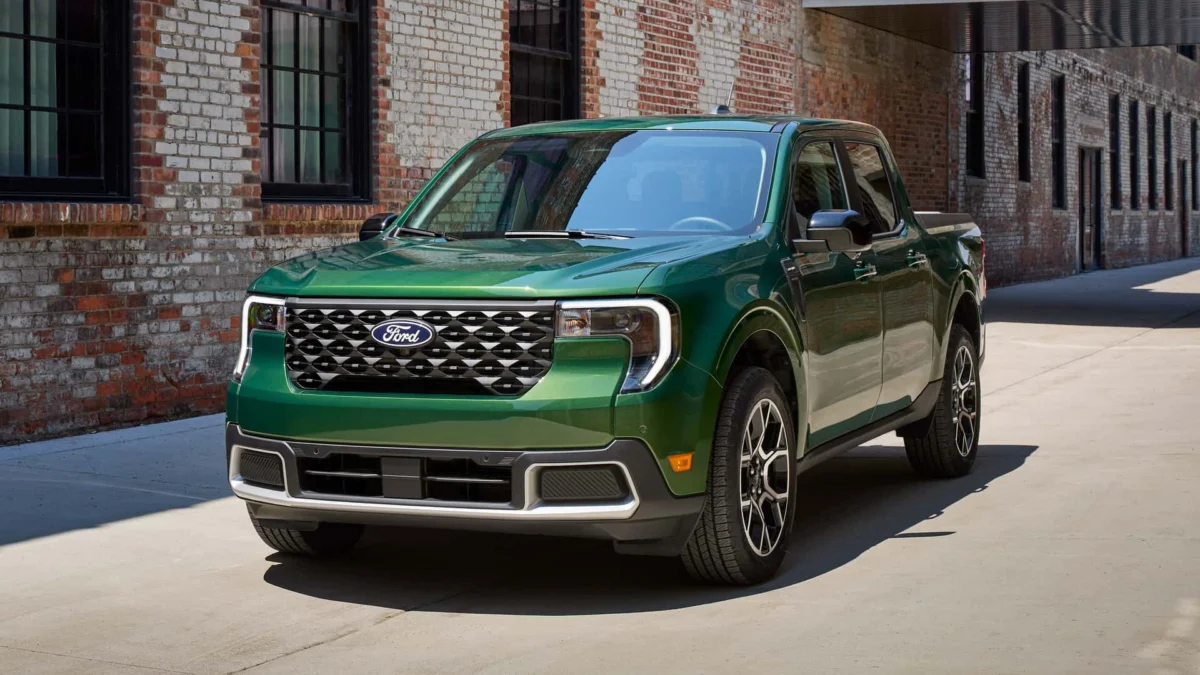
In contrast, hybrids have become a surprise profit center. Demand for the hybrid versions of the Ford Maverick and the F-150 has consistently outpaced supply. Data suggests that consumers are increasingly viewing hybrids as the "best of both worlds"—offering the regenerative braking and low-end torque of an electric motor without the range anxiety or charging hurdles associated with BEVs.
By standardizing UEV components across its hybrid and EV lineups, Ford can achieve massive economies of scale. Using the same motor architecture for a $30,000 electric truck and a high-volume hybrid Explorer allows Ford to drive down the per-unit cost of components, a strategy that is essential for competing with the vertically integrated supply chains of companies like BYD.
Global Product Strategy and Future Outlook
While Ford is doubling down on hybrids in the United States, its global strategy remains regionalized. In Europe, where regulations are more stringent regarding carbon emissions, the company continues to push its EV lineup, including the Explorer EV and the Capri, both built on Volkswagen’s MEB platform as part of a strategic partnership. In other markets, the Puma Gen-E and a suite of electric Transit vans (E-Transit Courier and E-Transit Custom) target the urban delivery sector.
However, the "90% electrified" goal by 2030 underscores that the internal combustion engine’s role at Ford is changing. It is no longer the primary driver, but rather a component in a larger electrified system. The upcoming EREVs (Extended Range Electric Vehicles) will likely be a cornerstone of this strategy. These vehicles use a small gas engine solely as a generator to charge a battery that drives electric motors, providing the smooth driving experience of an EV with the total range of a traditional car.
Conclusion: A Pragmatic Path Forward
Ford’s decision to infuse its gas-powered cars with the "DNA" of its most advanced electric research represents a pragmatic middle ground in an industry divided by ideological extremes. By acknowledging that the path to zero emissions is non-linear, Ford is attempting to future-proof its business model against both fluctuating consumer demand and the existential threat of international competition.
The success of this strategy will depend on whether the "skunkworks" breakthroughs can truly deliver the promised cost savings. If Ford can successfully launch a $30,000-class electrified platform that shares components across its entire fleet, it may not only survive the current market uncertainty but emerge as a more efficient and technologically integrated manufacturer. For the consumer, this shift promises a future where the choice is not between a "old-fashioned" gas car and a "high-tech" EV, but rather a spectrum of electrified options that are increasingly indistinguishable in terms of performance, technology, and price.