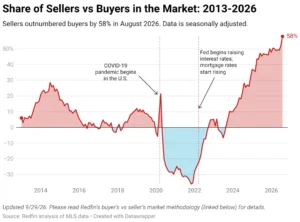
The current landscape of the United States real estate market is undergoing a fundamental shift that seasoned investors describe not as a sudden collapse, but as a "slow unwinding" of values and debt structures. Ken McElroy, a prominent real estate strategist and owner of over 10,000 rental units, suggests that while the current economic environment is not a carbon copy of the 2008 financial crisis, the magnitude of discounts appearing in the multifamily sector is beginning to mirror that era. As interest rate pressures mount and bridge loans reach maturity, the market is witnessing the emergence of distressed opportunities, with some assets being offered at a fraction of their peak 2021 valuations.
The Divergence of Multifamily and Single-Family Markets
A primary characteristic of the 2024 real estate market is the stark decoupling of the multifamily and single-family residential sectors. In previous cycles, particularly the 2008 Great Recession, the downturn was led by a "Main Street" crash where single-family homes faced a massive surplus of inventory and a collapse in subprime lending. Today, the single-family market remains buoyed by a chronic undersupply of housing and a "lock-in effect," where homeowners with 2% or 3% mortgage rates refuse to sell, keeping inventory levels near historic lows.
Conversely, the multifamily sector is facing a "capital markets" crisis. According to McElroy, multifamily properties are currently experiencing a significant repricing. While national averages suggest a 15% to 20% decline in multifamily values, specific distressed assets are seeing much deeper cuts. McElroy recently highlighted a 278-unit property in Texas that was valued at $45 million in 2021 but is now being negotiated for approximately $8 million—a discount of over 80%. This distress is primarily driven by "poor operators" who utilized floating-rate debt and failed to account for the Federal Reserve’s aggressive interest rate hiking cycle.
Chronology of the Slow Unwinding
The current market distress did not happen overnight; it is the result of a multi-year progression that began with the cheap capital era of 2020-2021.
- The Peak (2021): Historically low interest rates led to a surge in syndication and multifamily acquisitions. Many operators purchased properties at 3% to 4% cap rates using short-term, floating-rate bridge loans.
- The Rate Spike (2022-2023): The Federal Reserve raised the federal funds rate 11 times between March 2022 and July 2023. This caused debt service costs for floating-rate borrowers to double or triple.
- The Internal Struggle (Late 2023): General Partners (GPs) began issuing "capital calls" to Limited Partners (LPs) to cover shortfalls in debt service and to fund interest rate cap renewals.
- Lender Intervention (2024): As loans mature and properties fail to appraised at their previous values, lenders are increasingly forced to "rip the band-aid off." This marks the beginning of the "slow unwinding," where banks and debt funds take back properties or sell the notes at significant discounts.
McElroy notes that this process is deliberate. Lenders typically attempt to work with borrowers through loan modifications or extensions before moving toward foreclosure. However, when the loan balance exceeds the current market value of the asset, lenders lose the incentive to keep the original operator in place.
Data-Driven Insights: Supply and Demand Dynamics
The fundamental difference between 2008 and the present lies in the supply-side data. Leading up to 2007, the U.S. was overbuilding, producing approximately 1.5 million homes per year. Following the crash, construction plummeted to between 500,000 and 700,000 units annually, creating a cumulative deficit that various agencies, including Zillow and Fannie Mae, estimate to be between 3 and 5 million units.
In the multifamily space, however, 2023 and 2024 have seen a record number of new completions—the highest in 40 years. This influx of supply, particularly in the "Class A" luxury segment, has put downward pressure on rents and increased vacancy rates. This "supply shock" is a significant contributor to the distress seen by operators who projected aggressive rent growth in their 2021 business plans.
The Single-Family Resilience and the "Airbnb Effect"
While multifamily faces systemic debt issues, the single-family market, managed by investors like Danelle McElroy, shows more localized distress. The primary source of single-family inventory growth is not coming from traditional sellers but from "failed" investment strategies.
Danelle McElroy observes that the "Airbnb bust"—a phenomenon where short-term rental markets have become oversupplied—is forcing some owners to sell. Many investors entered the short-term rental market expecting $12,000 to $15,000 in monthly revenue, only to find that softening demand and increased competition have left them unable to cover $8,000 mortgages. Additionally, "flippers" who are stuck in high-interest hard money loans are becoming more willing to negotiate.
Despite these pockets of distress, Danelle emphasizes that the single-family market remains stable because owners have significant equity. Unlike 2008, when many buyers put 0% down, modern buyers typically have 5% to 20% equity stakes, making them less likely to walk away from their properties.
Strategic Analysis: Return on Equity (ROE) vs. Return on Ego
A critical component of navigating the current market is the optimization of existing portfolios. The McElroys highlight the importance of "Return on Equity" (ROE) as a metric for efficiency. Many investors hold properties that have appreciated significantly but produce low cash flow relative to their current value.
For example, Danelle McElroy recently executed a 1031 exchange, moving equity from condos with high HOA fees into single-family homes. While the condos were "paid off" and providing cash flow, the ROE was inefficient. By leveraging that equity into assets with lower overhead and better growth potential, she was able to increase her monthly cash flow from $700 to $1,600.
This strategy challenges the traditional "buy and hold forever" mentality. In a high-interest-rate environment, investors must look beyond "paper wealth" (net worth) and focus on the liquidity and efficiency of their capital. Ken McElroy refers to the fixation on total net worth during a downturn as "Return on Ego," suggesting that investors should be willing to accept lower valuations on paper if it allows them to pivot into high-yield, distressed opportunities.
Regional Migration and the "Path of Progress"
The McElroys maintain that real estate is an inherently local business driven by migration and employment data. They prioritize markets with "progressive" growth patterns, such as North Dallas (Frisco, Richardson) and parts of the Sunbelt like Phoenix and Scottsdale.
The "canary in the coal mine" for neighborhood growth is often institutional investment. Danelle McElroy points to the redevelopment of aging malls into mixed-use "live-work-play" environments—featuring high-end anchors like Whole Foods or Lifetime Fitness—as a key indicator of a neighborhood’s resurgence. Investing within blocks of these multi-million dollar redevelopments allows smaller investors to ride the "tailwinds" of institutional capital.
Conversely, they warn against the "up and coming" label often used for properties on the extreme fringes of urban areas. When the economy softens, tenants tend to migrate back toward the center of town where amenities and jobs are located, leaving "tertiary" markets with high vacancies and stagnant rent growth.
Broader Implications and Official Outlook
The broader implication of this "slow unwinding" is a professionalization of the real estate industry. The era of the "accidental syndicator" is likely coming to a close. Lenders are no longer just looking for capital; they are looking for "execution certainty."
When banks dispose of distressed multifamily assets, they prioritize buyers with established property management systems, construction teams, and a track record of stabilizing troubled assets. For the average investor, this suggests that "dry powder" (cash reserves) is only half of the equation; the other half is the "team" capable of navigating complex renovations and negative carry periods.
Industry analysts expect transaction volumes to pick up in the latter half of 2024 and into 2025 as the gap between buyer and seller expectations narrows. While the Federal Reserve has signaled potential rate cuts, Ken McElroy advises investors to remain cautious. "I don’t buy anything with an expectation that rates are going down," he stated, reinforcing a philosophy of fixed-rate debt and day-one cash flow.
Conclusion
The 2024 real estate market is a tale of two realities: a resilient, supply-constrained single-family sector and a distressed, debt-burdened multifamily sector. For those positioned with liquidity and operational expertise, the "blood in the streets" represents a generational buying opportunity. However, success in this cycle requires a departure from the speculative tactics of the last decade, favoring instead a rigorous, data-driven approach focused on cash flow, conservative leverage, and the strategic redeployment of equity. As the "slow unwinding" continues, the distinction between those who "timed the market" and those who "understand the numbers" will become increasingly apparent.