The global logistics landscape is currently defined by a stark contrast in material lifecycles: while a corrugated cardboard box can transition from a retail warehouse to a recycling mill and back into a consumer product in approximately 14 days, plastic packaging remains a persistent environmental challenge that can endure for centuries. Current data indicates that despite decades of public service campaigns, only 5 to 6 percent of plastic in the United States is successfully recycled into new products. This disparity underscores the primary tension within the circular packaging economy, a sector that has grown into a $245 billion global market but remains hampered by systemic inefficiencies, regulatory gaps, and a deepening crisis of consumer trust.
The trajectory of modern recycling was fundamentally altered in 2018 when China implemented its "National Sword" policy, banning the import of most plastics and other materials that did not meet stringent new purity standards. Prior to this, the U.S. and many European nations relied on exporting low-grade recyclables to Chinese processors. The sudden loss of this market left the U.S. with nearly one-third of its collected materials and no domestic infrastructure to process them. This crisis served as a catalyst for a shift toward domestic circularity, leading to the 2020 opening of DS Smith’s first North American recycling plant in Reading, Pennsylvania. This facility pioneered a "closed-loop" model, specifically designed to handle corrugated packaging with minimal contamination by sourcing materials directly from distribution centers rather than mixed curbside bins.
By 2024, the circular packaging market reached a valuation of $245 billion, with projections suggesting it will expand to nearly $490 billion by 2034. However, the growth of the market does not necessarily equate to an increase in true circularity. The industry is currently bifurcated between high-performing materials, such as fiber and aluminum, and low-performing materials, primarily synthetic polymers.
The Success of Fiber-Based Systems and Industrial Consolidation
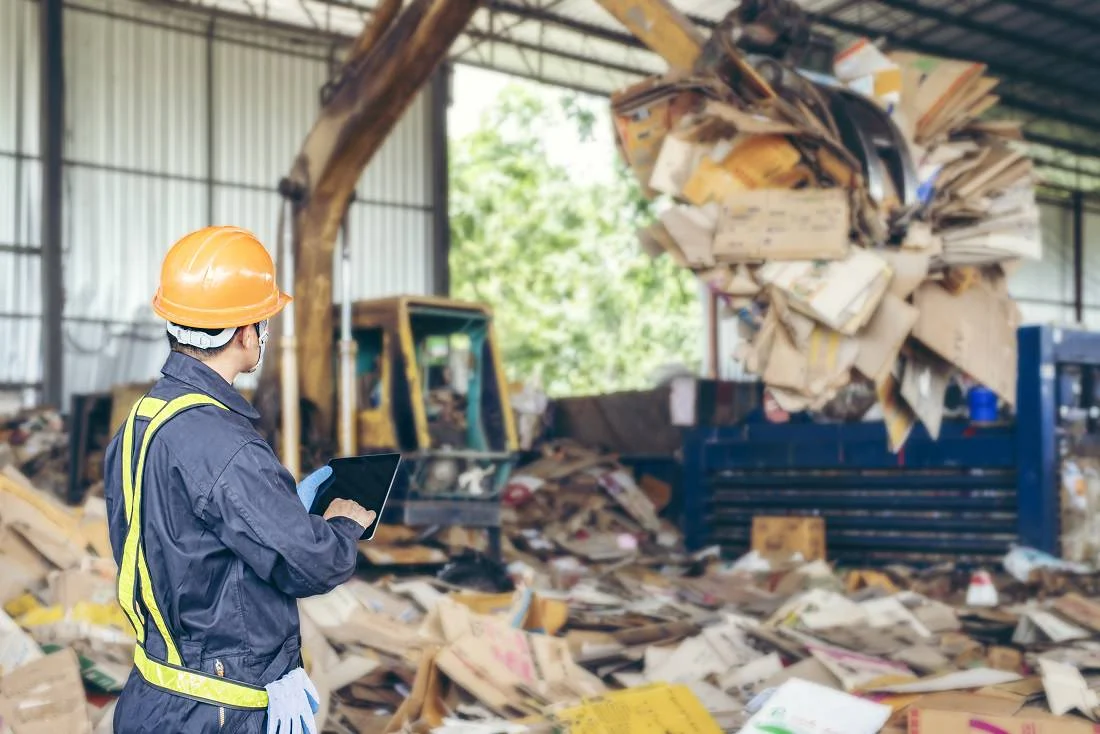
Paper and corrugated cardboard remain the definitive success stories of the circular economy. In 2024, the United States recovered more than 33 million tons of cardboard, averaging 90,000 tons per day. This represents a recovery rate of approximately 69 to 74 percent, according to the American Forest & Paper Association (AF&PA). The integration of recycled content into domestic production is also rising; the percentage of recycled paper used at U.S. mills climbed from 36.6 percent in 2005 to 44.4 percent in 2024.
This stability has triggered a wave of massive industrial consolidation, as global packaging giants bet on the long-term viability of fiber. In July 2024, Smurfit Kappa finalized its acquisition of WestRock, creating Smurfit WestRock, a behemoth with $32 billion in combined revenue and a workforce of 100,000 across 40 countries. Simultaneously, International Paper moved to acquire DS Smith in a deal valued at $9.9 billion. These mergers signal a strategic pivot toward integrated, fiber-based systems where a single entity controls the entire lifecycle of the package—from timberland and mill to the collection and re-pulping of used boxes.
The "DS Smith Model," which co-locates recycling plants with paper mills and packaging facilities, has proven that fiber-based circularity is commercially scalable. By bypassing the high contamination rates of curbside collection—which often see 25 percent of materials discarded due to food waste or non-recyclable mixing—these industrial loops maintain a high quality of raw material, ensuring that the recycled fiber retains the structural integrity required for new packaging.
The Plastic Stalemate and the Failure of 2025 Targets
While paper thrives, the outlook for plastic packaging remains grim. The Ellen MacArthur Foundation (EMF), which leads the "Global Commitment" alongside the UN Environment Programme, released its 2024 progress report revealing that most major corporations will miss their 2025 sustainability targets. In 2018, over 1,000 organizations pledged to ensure 100 percent of their plastic packaging was reusable, recyclable, or compostable by 2025.
The data suggests that while some progress has been made—such as companies like Amcor doubling their recycled plastic content—the overall market has increased its use of plastic packaging by 8 percent since 2018. The foundation reported that since the commitment began, participants have avoided 9.6 million tons of virgin plastic, yet this represents less than 3 percent of total annual plastic production. Furthermore, reuse and refill models, which were initially hailed as the future of circularity, currently account for only 1.3 percent of the packaging market.
The barriers to plastic circularity are both technical and economic. Unlike cardboard, which is relatively uniform, plastic packaging involves hundreds of different polymer types, dyes, and multi-layer laminates that are nearly impossible to separate at scale. Additionally, the U.S. lacks a standardized reverse logistics system, making the collection and cleaning of reusable containers more expensive than producing new, single-use plastic from virgin petroleum.
Regulatory Divergence and the Busan Deadlock
The legislative landscape for circular packaging is currently a tale of two regions. The European Union has taken an aggressive stance with the Packaging and Packaging Waste Regulation (PPWR). This mandate requires 70 percent of all packaging waste to be recycled by 2030 and sets a specific 55 percent target for plastics. To combat "greenwashing," the European Commission now requires that any claims regarding "biobased" or "compostable" materials be verified against strict, standardized criteria.
In contrast, the United States lacks a cohesive federal policy. While states like California have introduced Extended Producer Responsibility (EPR) laws—which shift the financial burden of recycling from taxpayers to the manufacturers—the rest of the country operates under a patchwork of voluntary programs. This lack of national standards was further complicated in November 2024 during the UN Global Plastics Treaty negotiations in Busan, South Korea. The talks collapsed without a binding agreement, as nations remained divided over whether to cap plastic production or focus solely on waste management. This failure to reach a global consensus has left a vacuum in international policy, making it difficult for multinational corporations to align their supply chains with a single set of circularity rules.
The Erosion of Consumer Trust and the Rise of Greenhushing
As the gap between corporate promises and environmental reality widens, consumer skepticism has reached record highs. A 2024 survey indicated that 32 percent of Americans now doubt that the items they place in curbside bins are actually recycled, a significant increase from 14 percent in 2020. This skepticism is fueled by high-profile legal challenges against "greenwashing."
In October 2024, the legal advocacy group ClientEarth released a report detailing how vague claims such as "100-percent recyclable" often violate consumer protection laws in the UK and EU. These claims frequently ignore the fact that while a material may be theoretically recyclable in a lab, the infrastructure to process it does not exist in the consumer’s local municipality.
The fear of litigation and public backlash has given rise to a trend known as "greenhushing," where brands deliberately stop publicizing their sustainability goals or progress. Myles Cohen, founder of Circular Ventures, noted at the 2024 Packaging Recycling Summit that some companies have even defended their misleading environmental claims in court as "classic puffery"—a legal term for exaggerated marketing that no "reasonable person" would take literally. This defense, while legally strategic, has further damaged the credibility of the recycling industry as a whole.
Infrastructure Requirements and Future Outlook
The Environmental Protection Agency (EPA) estimates that the U.S. requires an investment of between $36.5 billion and $43.4 billion to modernize its recycling infrastructure. This funding is needed to upgrade Materials Recovery Facilities (MRFs) with advanced optical sorters and artificial intelligence to reduce contamination, as well as to expand composting capacity for organic waste.
As the industry looks toward 2030, a clear hierarchy of circularity has emerged. Aluminum and fiber-based materials are the current leaders in domestic recovery. Glass remains highly circular but is hindered by its weight and the high energy costs associated with transportation and melting. Plastic remains the outlier, requiring either a total overhaul of chemical recycling technology or a significant shift toward standardized, refillable systems.
For the circular economy to move beyond "puffery," experts argue that voluntary corporate commitments must be replaced by binding policies and massive infrastructure investment. Until the cost of using virgin plastic exceeds the cost of collecting and processing recycled materials, the loop will remain broken for the majority of the world’s packaging. The success of the cardboard industry provides a blueprint, but replicating that success across more complex materials will require a level of global cooperation and domestic investment that has yet to materialize.