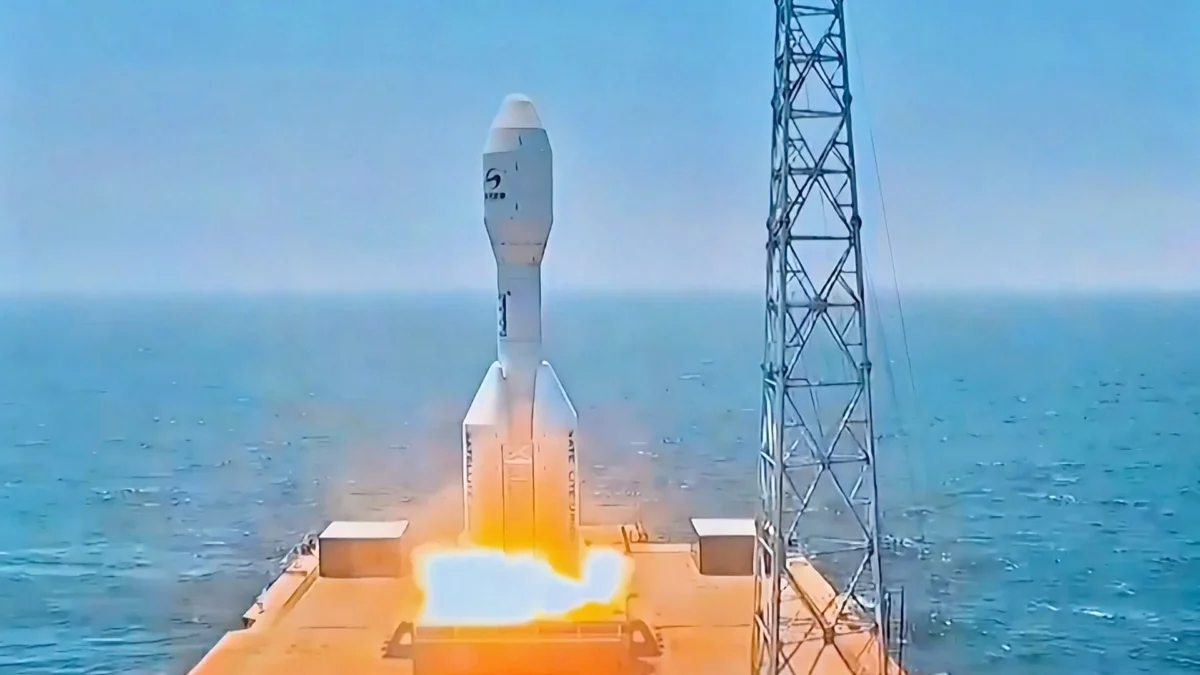
The world’s most powerful solid-fuel rocket just aced its third-ever mission. The Gravity-1, a distinctively squat and stubby rocket operated by the Chinese company Orienspace, successfully launched nine satellites into orbit from a maritime platform off the coast of Shanghai on Tuesday night, July 21, 2026. This latest flight, occurring at 10:54 p.m. EDT (0254 GMT and 10:54 a.m. Beijing time on July 22), marks a significant milestone for Orienspace and underscores the increasing sophistication of China’s private space sector, particularly in its utilization of sea-based launch capabilities.
The successful deployment of all nine satellites into their designated orbits, as reported by the state-run Chinese outlet Xinhua, highlights the reliability and performance of the Gravity-1 system. While specific details regarding the payload satellites were not immediately disclosed, the consistent success of these missions points to a maturing launch vehicle and a growing demand for satellite deployment services. This mission builds upon the rocket’s previous successes, solidifying its reputation as a capable and potent launch platform.
A Compact Powerhouse: Understanding the Gravity-1 Rocket
Despite its relatively compact stature, standing approximately 100 feet (30 meters) tall – less than half the height of SpaceX’s iconic Falcon 9 – the Gravity-1 packs a considerable punch. Its unique design features three core stages and four strap-on boosters, all powered by solid rocket motors. This configuration enables the launcher to deliver an impressive payload of up to 14,300 pounds (6,500 kilograms) to low Earth orbit (LEO). This capacity firmly establishes Gravity-1 as the most powerful solid rocket currently in operation worldwide.
To contextualize its capabilities, the liquid-fueled Falcon 9, a widely recognized workhorse in the global launch industry, can transport a maximum of 50,265 pounds (22,800 kg) to LEO. While the Falcon 9 offers greater payload capacity, the Gravity-1’s strength lies in its solid-fuel propulsion, which can offer advantages in terms of rapid readiness and simpler logistical requirements for certain mission profiles. The development of such a powerful solid-fuel rocket from a private Chinese entity signifies a significant advancement in the country’s space launch architecture.
A Proven Track Record: The Gravity-1 Mission Chronology
The successful July 21st launch represents the third flight for the Gravity-1 rocket, and notably, all three missions have been conducted from ships at sea, achieving full mission success. This consistent operational performance from a maritime launch platform is a testament to Orienspace’s engineering and operational expertise.
The Gravity-1’s maiden voyage took place in January 2024, marking its debut and demonstrating its foundational capabilities. This was followed by its second flight in October 2025, which further validated the rocket’s performance and reliability. The recent third mission, just months after the second, suggests an accelerated launch cadence and Orienspace’s commitment to increasing flight opportunities. The choice of a maritime launch platform is strategically significant, offering flexibility in launch trajectories and avoiding the need for extensive ground infrastructure. This approach is particularly advantageous for accessing various orbital inclinations and for potentially reducing environmental impact compared to land-based launches.
Beyond Gravity-1: Orienspace’s Ambitious Future Roadmap
Orienspace’s vision extends far beyond the Gravity-1. The company is actively developing more advanced and larger rockets, namely Gravity-2 and Gravity-3. These future vehicles are designed to be even more powerful, incorporating a hybrid propulsion system: liquid-fueled core stages complemented by solid rocket boosters. This approach aims to leverage the benefits of both propellant types, potentially offering enhanced performance, payload capacity, and mission flexibility.
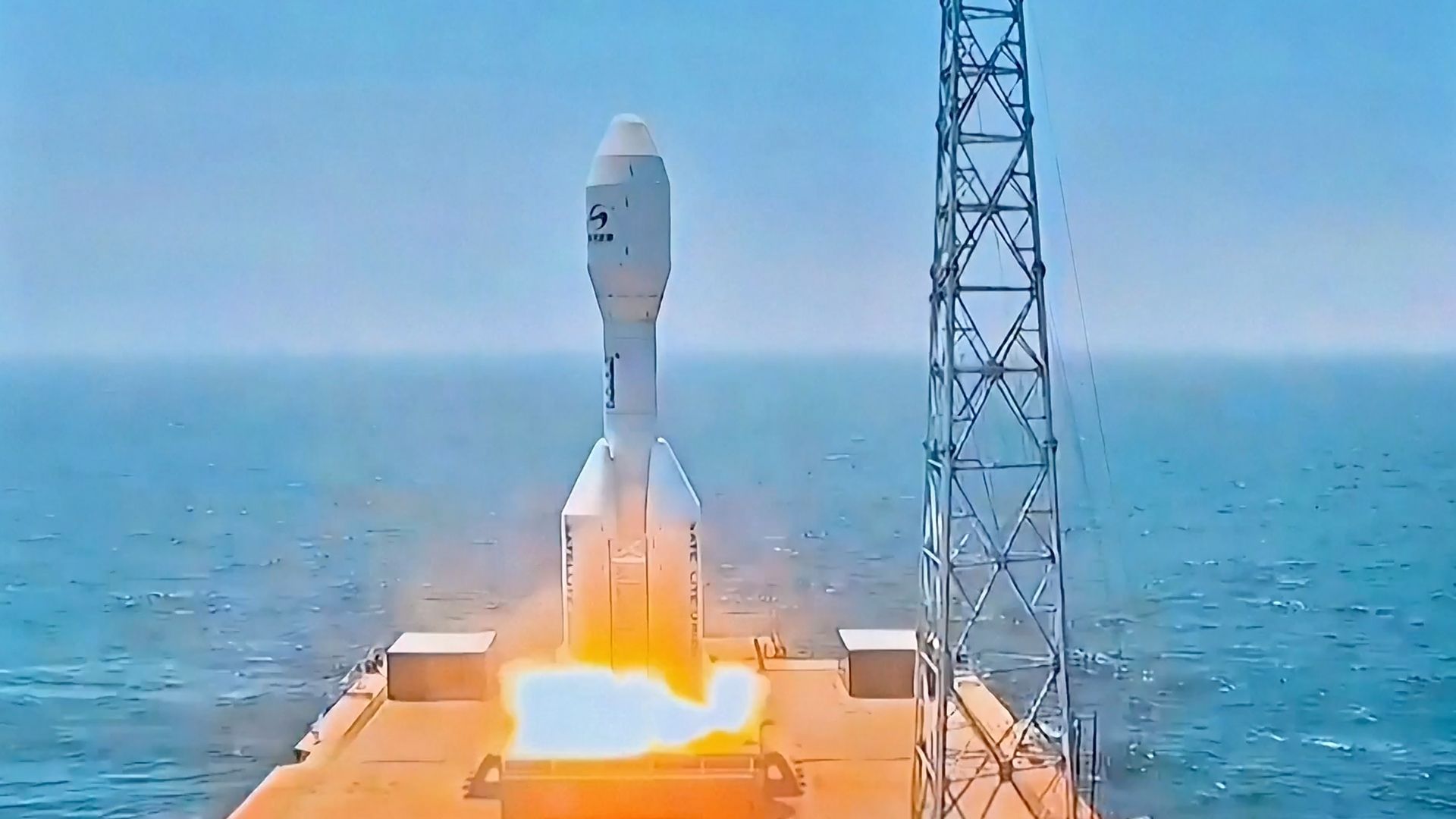
Gravity-2 is slated for a potential flight by the end of the current year, according to reports from CGTN. This rapid development cycle indicates Orienspace’s aggressive expansion plans and its ambition to quickly move up the capability ladder in the competitive launch services market. Similar to Gravity-1, Gravity-2 is also expected to utilize an ocean-based launch pad, reinforcing Orienspace’s specialization in maritime launches.
The Strategic Advantage of Maritime Launches
The emphasis on sea launches by Orienspace is a critical element of its strategy. As Xu Guoguang, chief designer of Gravity-1, stated according to CGTN, "Sea launch of solid-propellant rockets paves the way for future launch of liquid rockets at sea." This sentiment highlights the broader implications of their maritime launch experience. By mastering launches from ships, Orienspace is not only proving the efficacy of its current hardware but also building the foundational knowledge and operational expertise necessary for future, more complex liquid-fueled launches from the ocean. The company is also exploring alternative maritime launch concepts, such as using modified drilling platforms, indicating a forward-thinking approach to expanding launch infrastructure beyond traditional ships.
Maritime launches offer several key advantages:
- Orbital Flexibility: Launching from various points at sea allows for greater flexibility in achieving desired orbital inclinations, catering to a wider range of satellite missions.
- Reduced Geopolitical Constraints: Sea launches can bypass overland flight paths and airspace restrictions, offering more direct and efficient ascent trajectories.
- Safety and Environmental Considerations: Launching over the ocean can mitigate risks to populated areas in the event of an anomaly and offers a vast, open area for discarded stages.
- Logistical Simplicity: For certain mission types, a mobile sea-based launch platform can be more logistically straightforward than establishing permanent land-based launch sites.
Market Implications and the Future of Space Launch
The success of Orienspace’s Gravity-1 and its ambitious development plans have significant implications for the global space launch market. As a private entity, Orienspace represents the growing dynamism and competitiveness within China’s burgeoning commercial space industry. The availability of powerful, reliable, and increasingly cost-effective launch services from companies like Orienspace could stimulate further growth in satellite deployment for various applications, including Earth observation, telecommunications, and scientific research.
The focus on solid-fuel rockets, particularly for smaller to medium-sized payloads, addresses a critical segment of the market. Solid rockets, while generally less efficient than liquid rockets for very large payloads, offer distinct advantages in terms of quick turnaround times and readiness for rapid deployment. This makes them attractive for missions requiring swift access to space or for constellations that need frequent replenishment.
Furthermore, Orienspace’s commitment to developing larger, hybrid rockets like Gravity-2 and Gravity-3 signals an intent to compete in a broader spectrum of the launch market, potentially challenging established players with innovative and versatile solutions. The company’s strategic decision to leverage maritime launch capabilities positions it uniquely, offering a differentiated service that can cater to specific mission requirements and geographical considerations.
The development of China’s private space sector, exemplified by Orienspace, is a trend that space agencies and commercial operators worldwide are closely observing. The increasing number of capable launch providers globally is driving innovation, reducing launch costs, and ultimately, accelerating humanity’s access to and utilization of space. The Gravity-1’s consistent success is not just a singular achievement but a clear indicator of the evolving landscape of space exploration and commercialization, with China playing an increasingly prominent role. The coming years will likely see further advancements from Orienspace and its counterparts, shaping the future of how we reach and operate in orbit.