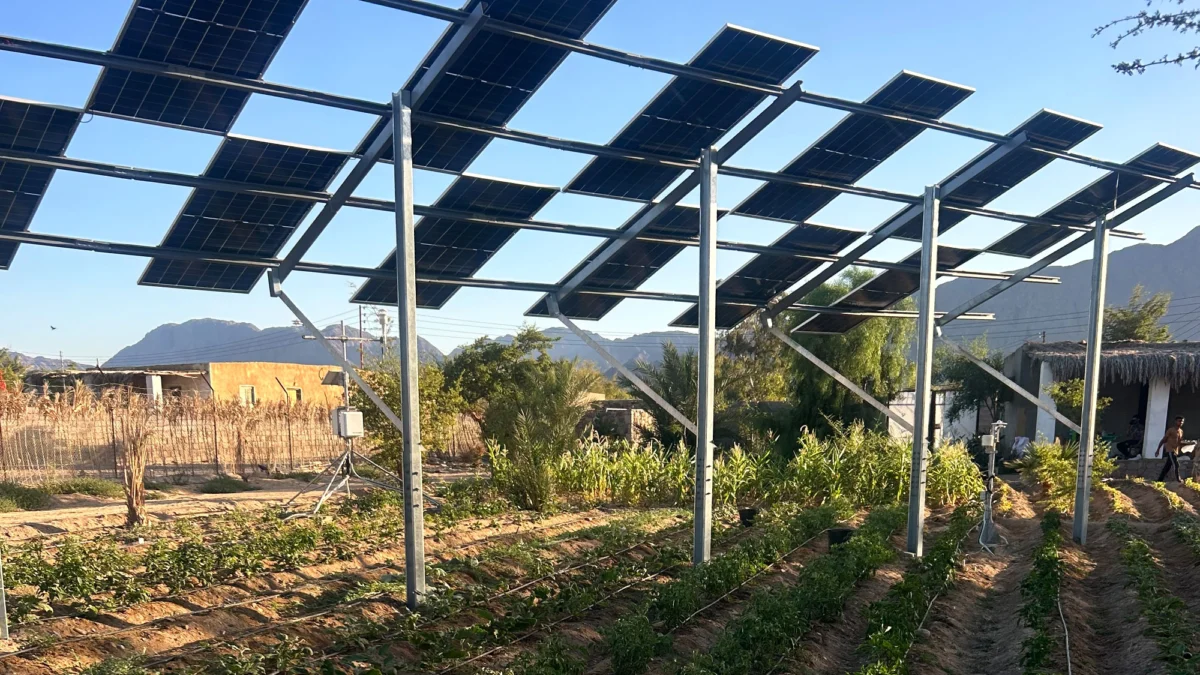
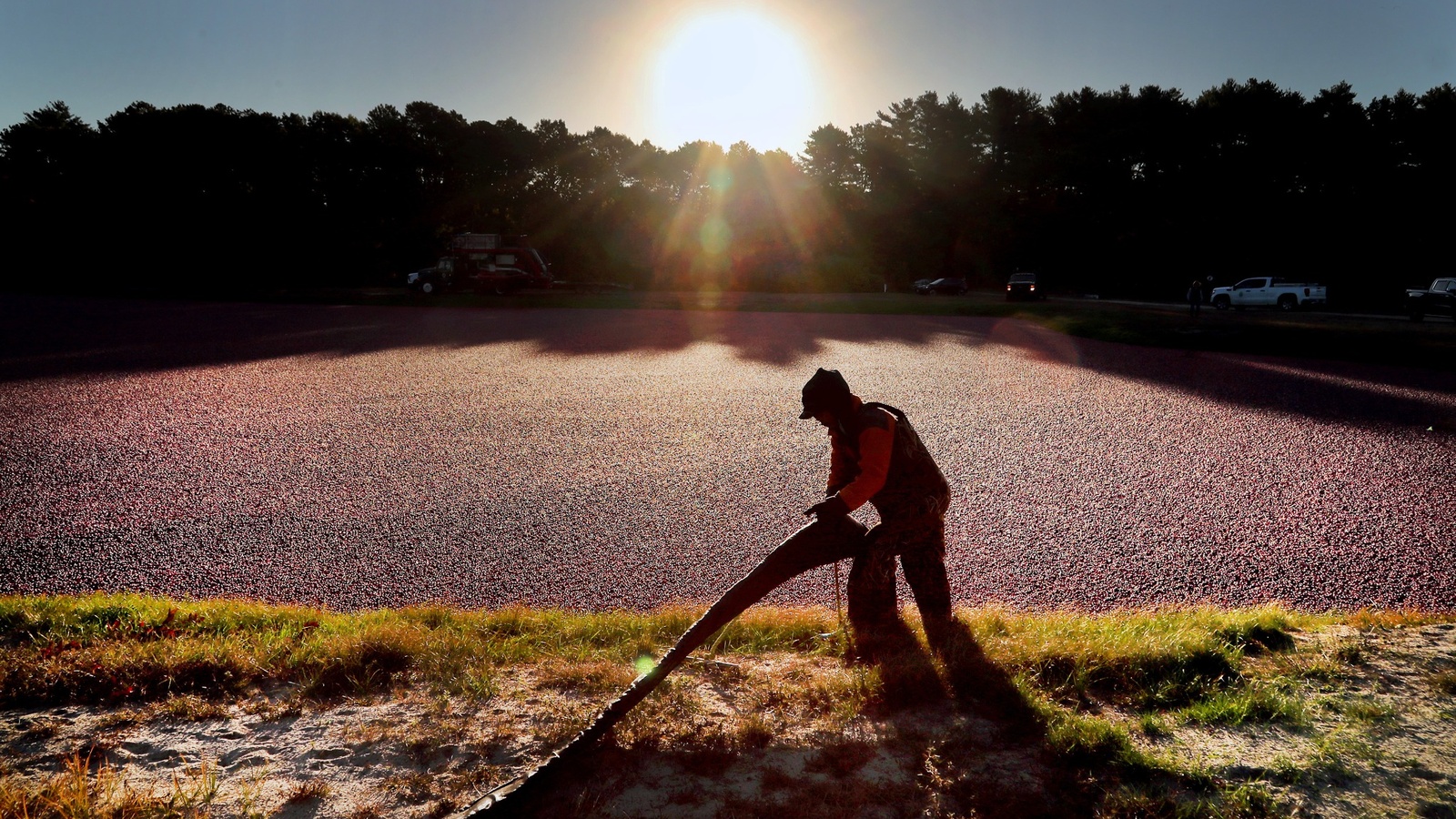
It is cranberry harvest season across southeastern Massachusetts, where bogs are flooded and workers collect the tart, ruby-red berries destined for holiday tables, juice bottles, and canned sauces. Yet, at two distinct farms in the region, the agricultural landscape looks fundamentally different. Harvesters are steering heavy equipment around galvanized metal support poles, operating entirely in the shade cast by rows of elevated photovoltaic solar panels.
These two installations represent a pioneering milestone: they are the first commercial cranberry bogs in the United States—and likely the world—to successfully cultivate crops directly beneath an operating utility-scale solar array. This autumn marks the second consecutive harvest season where farmers have successfully gathered crops thriving in the shadow of clean energy infrastructure, offering a glimpse into the complex intersection of modern agriculture, land-use planning, and the renewable energy transition.
Engineering the Impossible: Marrying Solar and Wetlands
The engineering feat was spearheaded by Distributed Energy Infrastructure, a renewable energy developer that constructed a 4.4-megawatt solar array paired with a 13.5-megawatt-hour battery storage system in Kingston, alongside a separate 1-megawatt solar array in neighboring Plymouth.
According to Prateek Tare, co-founder and executive vice president of Distributed Energy Infrastructure, the projects were designed to answer a fundamental question about land-use compatibility. "We are literally proving it can be done," Tare noted. However, transforming a historic cranberry bog into a dual-use energy farm presented unprecedented technical challenges.
Standard solar installations typically rely on steel pilings driven 8 to 10 feet into dry, stable soil. Cranberry bogs, however, are delicate, waterlogged ecosystems composed of peat, sand, and organic sludge. Engineers had to experiment with specialized machinery capable of driving support pilings much deeper to find stable bedrock capable of holding heavy structural loads. Furthermore, standard underground electrical wiring was impossible to install in the soggy, saturated ground, requiring engineers to design specialized overhead wiring systems.
To ensure farming equipment could still navigate the bogs during harvesting and maintenance, the photovoltaic panels were mounted 10 feet in the air on motorized tracking axes that tilt dynamically throughout the day to follow the sun. The structural pilings were spaced significantly farther apart than standard commercial arrays, allowing traditional harvesting machinery to move freely through the flooded vines without risking structural damage.
The Broader Landscape of Massachusetts Solar Policy
This innovative marriage of agriculture and clean energy does not happen in a vacuum. Massachusetts has committed to an aggressive economy-wide target of achieving net-zero carbon emissions by 2050. To drive the rapid deployment of renewable infrastructure required to meet these climate goals, the state has continuously evolved its financial incentive programs for solar energy since 2001.
However, rapid solar development has triggered fierce local debates across the densely populated and heavily wooded state. Siting large-scale solar arrays on rooftops and parking lots in urban centers often incurs prohibitive construction costs and limits total energy generation capacity. Conversely, clearing undeveloped forests or open fields for ground-mount solar frequently sparks intense opposition from local residents concerned about suburban sprawl, environmental degradation, and the destruction of local ecosystems.
While converting traditional farmland into solar farms avoids deforestation, it raises equally contentious concerns regarding food security and the permanent loss of active agricultural acres. To mitigate these conflicts, Massachusetts has increasingly championed agrivoltaics—also known as dual-use solar—which integrates agricultural production beneath or between elevated solar arrays.
In 2018, Massachusetts became a national trailblazer by introducing specific financial incentives for agrivoltaic projects. Under the state’s current solar incentive structure, standard commercial arrays with capacities between 1 megawatt and 5 megawatt receive a base compensation rate of roughly 23.17 cents per kilowatt-hour generated. Agrivoltaic projects, however, qualify for an additional financial kicker of 9 cents per kilowatt-hour. This extra revenue stream provides a powerful economic incentive for developers to lease agricultural land rather than clear pristine terrain, while also compensating participating farmers for maintaining the grounds surrounding the solar hardware.
Economic Lifeline for a Traditional Industry
In Kingston and Plymouth, the land-use transition followed a pragmatic economic path. Greenbacker Renewables, a prominent clean energy asset manager, acquired the properties from generational cranberry farmers who were ready to exit the agricultural sector. Rather than letting the protected wetlands sit idle, Greenbacker partnered with Distributed Energy Infrastructure to construct the arrays while retaining Iain Ward—a local solar consultant and veteran cranberry grower—to manage the daily agricultural operations.
The resulting facilities operate under a community solar model, allowing local residents and businesses to subscribe to the clean energy generation and receive credits on their utility bills, translating to lower electricity costs and reduced regional carbon emissions.
For the Massachusetts cranberry industry, which ranks second only to Wisconsin in national production, agrivoltaic integration offers a unique financial lifeline. While cornfields, dairy pastures, and orchards in the Northeast are frequently sold to residential or commercial real estate developers, cranberry bogs are classified as protected wetlands under environmental law. Even if a bog ceases commercial production, zoning regulations strictly prohibit developers from building housing developments or shopping centers on the land.
For cash-strapped growers facing fluctuating commodity prices, pest pressures, and rising operational costs, pairing bogs with solar energy provides a vital economic diversification strategy. "This is a farm viability opportunity," Ward emphasized, highlighting how dual-use models can keep working landscapes economically productive.
Overcoming Past Hurdles and Looking Forward
The road to commercial agrivoltaics has not been entirely seamless. Approximately five years ago, another developer attempted to establish the nation’s first cranberry agrivoltaic project on a pair of bogs in the nearby town of Carver. Although the solar arrays were physically constructed and crops began growing underneath them, the parent company suffered financial collapse and entered bankruptcy proceedings before the projects could officially interconnect to the electrical grid.
Rather than viewing the stalled Carver site as a failure, local agricultural experts see it as an unfulfilled opportunity. New owners have recently acquired the property and expressed clear intentions to complete the unfinished infrastructure. "They’re not a failure," Ward noted regarding the Carver bogs. "There is an opportunity for them to be finished."
Buoyed by the operational successes in Kingston and Plymouth, Distributed Energy Infrastructure is expanding its footprint into other agricultural sectors. The company is currently developing and evaluating agrivoltaic arrays tailored for apple orchards, cattle pastures, Christmas tree farms, and additional cranberry bogs across the region.
Industry analysts expect development timelines to accelerate as engineers and agricultural specialists refine best practices. Although shifting long-standing agricultural paradigms requires patience and iterative problem-solving, early adopters believe the model is poised for widespread regional adoption. "It is picking up steam, and the lessons learned have been significant," Ward said. "When you change a paradigm, it takes a little time."
Implications for the Renewable Energy Transition
The successful integration of solar generation with sensitive wetland agriculture carries significant implications for national renewable energy planning. As the United States accelerates its transition toward a decarbonized electrical grid, land-use conflicts surrounding utility-scale solar projects are expected to intensify. Traditional ground-mounted solar installations frequently encounter local zoning moratoriums, environmental lawsuits, and community pushback over scenic views and habitat loss.
By proving that intensive agricultural production—particularly within complex ecosystems like wetlands—can coexist with high-capacity solar arrays, Massachusetts is establishing a replicable blueprint for other states. If agrivoltaics can succeed on flooded cranberry bogs, the engineering and economic models can theoretically be adapted to a broader array of difficult terrain nationwide.
Furthermore, dual-use solar models protect local agricultural economies from external economic pressures, preventing the permanent conversion of rural landscapes into industrial zones. For communities balancing the urgent imperative to deploy clean energy infrastructure with the cultural desire to preserve local agricultural heritage, the cranberry bogs of southeastern Massachusetts offer a compelling, pragmatic path forward.