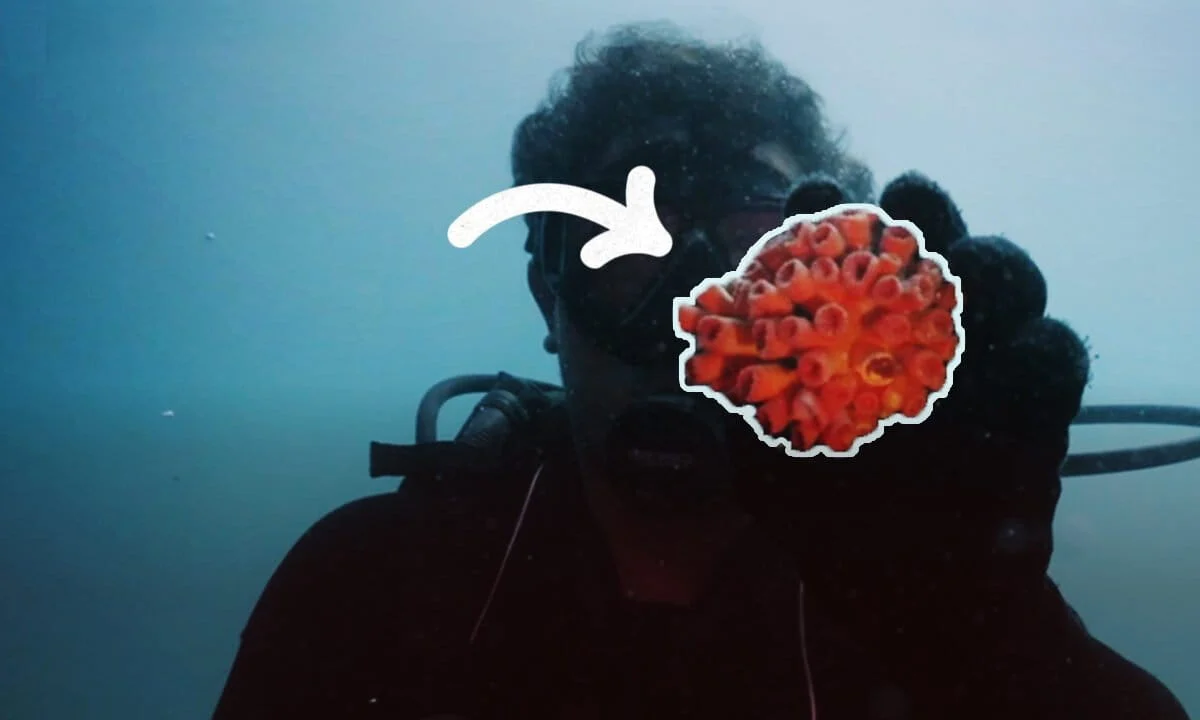
Beneath the azure waves of Brazil’s expansive coastline, a quiet but relentless biological conflict is unfolding, one that threatens to fundamentally reshape the nation’s marine biodiversity. Sun coral, a genus consisting of the species Tubastraea coccinea and Tubastraea tagusensis, has transformed from a localized anomaly into a widespread ecological crisis. Originating in the warm, nutrient-rich waters of the Indo-Pacific, these vibrant, orange-hued colonies have established a formidable foothold across more than 3,500 kilometers of the Brazilian coast. As they expand at an alarming rate, they displace native organisms, compromise delicate reef structures, and pose a long-term threat to the health of the South Atlantic’s marine ecosystems.
A Chronology of Colonization
The history of sun coral in Brazil is inextricably linked to the expansion of human maritime activity. The first recorded sighting of these invasive polyps occurred in the 1980s, when they were discovered clinging to the artificial substrate of an offshore oil platform in the state of Rio de Janeiro. Marine biologists believe the coral was introduced via the ballast water of international cargo ships or attached to the hulls of oil industry vessels traveling between the Indo-Pacific and South American waters.
For several decades, the spread was relatively contained, but the turn of the 21st century marked an acceleration in their dispersal. By the mid-2000s, environmental monitoring agencies began to report sightings far beyond the original platforms, as the coral larvae successfully colonized natural rocky reefs, shipwrecks, and port infrastructure. Today, the invasion spans from the northern reaches of the country down to the southern borders, representing one of the most successful and destructive marine biological invasions in recent history.
The Mechanism of Disruption
Sun coral is uniquely adapted to thrive in environments where it has no natural predators. Unlike native Brazilian corals, which have evolved alongside specific grazing fish and urchins that keep their growth in check, Tubastraea species are essentially ignored by local marine fauna. Their biological resilience is bolstered by their ability to reproduce both sexually and through asexual budding, allowing a single colony to propagate rapidly across a rock face.
The ecological impact is two-fold. First, there is the issue of physical space. Sun coral is a master of resource competition, blanketing rocky substrates and effectively starving native corals of the space they require to settle and grow. Second, the species employs chemical warfare. Research indicates that Tubastraea releases toxic metabolites that can inhibit the growth of neighboring organisms, including the native brain and star corals that are essential to the structural integrity of Brazil’s reefs.
Data from recent marine surveys suggest that once sun coral reaches a coverage threshold of 45% on a rocky reef, the entire ecosystem shifts toward a simplified, degraded state. In these high-density areas, the complex micro-habitats that support small crustaceans, mollusks, and juvenile fish populations begin to disappear. This leads to a decline in biodiversity that ripples up the food chain, eventually impacting larger predatory fish and the artisanal fishing communities that rely on these coastal waters for their livelihoods.
The National Response and Strategic Intervention
Recognizing the magnitude of the threat, the Brazilian government initiated a coordinated response in 2018 by establishing the National Plan for the Prevention, Control, and Monitoring of Invasive Sun Coral. This policy framework represented a pivot from passive observation to active management, bringing together the Chico Mendes Institute for Biodiversity Conservation (ICMBio), academic research institutions, and local environmental authorities.
The plan emphasizes early detection and rapid response (EDRR), acknowledging that once the coral has fully established a massive colony, eradication becomes virtually impossible. Instead, the focus has shifted toward protecting "priority areas"—regions of high ecological value, such as marine protected areas (MPAs) and biodiversity hotspots—where the removal of Tubastraea can provide native species the breathing room they need to recover.

Adriana Gomes, a marine biologist with ICMBio, has been at the center of these mitigation efforts. Leading teams of volunteer divers, Gomes focuses on manual extraction: the physical scraping of colonies from the substrate. While this method is labor-intensive and requires significant logistical coordination, it remains the most effective tool in the conservationist’s arsenal. The work is concentrated in sites like the Cagarras Islands, a vital archipelago located just five kilometers from the bustling shores of Ipanema. Designated as a "Hope Spot" by international conservation groups, the islands serve as a living laboratory for testing how concentrated human intervention can stave off the total collapse of a reef.
Socio-Economic and Ecological Implications
The presence of sun coral is not merely a biological issue; it is an economic one. Brazil’s coastal waters support a massive tourism sector, from scuba diving in the north to recreational boating in the south. The degradation of reefs—which are often the primary draw for eco-tourism—could have lasting financial repercussions for coastal municipalities. Furthermore, as the invasion alters the distribution of fish, the economic stability of small-scale commercial fisheries is increasingly threatened.
The failure to contain the spread has also sparked a broader debate regarding ballast water regulations and the environmental responsibility of the oil and gas sector. Since the primary vectors for initial introduction were maritime vessels, experts are now calling for stricter international standards for the cleaning of ship hulls and the sterilization of ballast tanks. These preventative measures, while costly to implement, are widely viewed by the scientific community as far more economical than the multi-generational effort required to manage an established invasive species.
A Model for Global Action
The Brazilian experience with Tubastraea serves as a critical case study for other nations facing similar marine invasions, such as the spread of lionfish in the Caribbean. The challenges faced by the Brazilian team—limited funding, the vast scale of the coastline, and the reproductive tenacity of the invasive species—are universal hurdles in the field of conservation biology.
However, the collaborative nature of Brazil’s National Plan provides a blueprint for success. By integrating community-based citizen science, government funding, and academic oversight, Brazil has managed to slow the invasion in key zones. The mission of the divers at the Cagarras Islands is a poignant reminder of the necessity of direct, hands-on action in an era of global environmental change.
As research continues, the scientific community is looking toward genetic studies to determine if specific environmental variables—such as water temperature shifts or changes in nutrient levels due to runoff—are creating more favorable conditions for the coral. Understanding these drivers is the next frontier in the battle to reclaim Brazil’s reefs.
Conclusion: The Road Ahead
The silent invasion of sun coral across the Brazilian coast remains an ongoing challenge. There is no simple solution, and the reality of the situation is that the coral will likely remain a permanent feature of the landscape for the foreseeable future. The goal of current efforts is not necessarily total eradication, but rather the preservation of critical habitats and the mitigation of further damage to the country’s natural heritage.
As the work of individuals like Adriana Gomes continues, the focus remains on the long-term monitoring of reefs and the sustained support for the national policy frameworks. By protecting the "Hope Spots" and maintaining constant vigilance, Brazil is demonstrating that even in the face of a resilient and rapidly spreading invader, the resilience of the ecosystem—when bolstered by science and human intervention—can provide a fighting chance for native biodiversity to survive and thrive. The saga of the sun coral is far from over, but the dedication shown by those on the front lines offers a beacon of hope for the future of the South Atlantic.