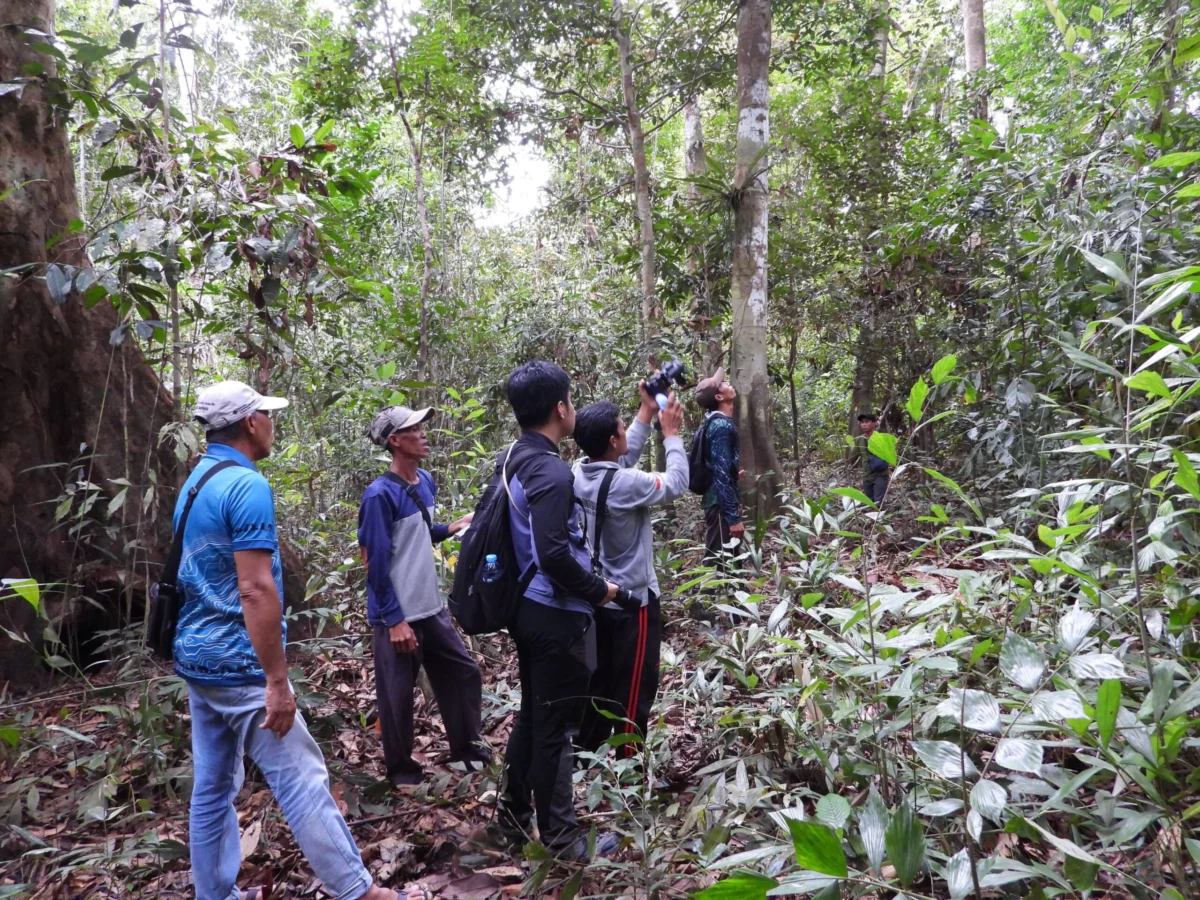
In the dense tropical landscapes of Kapuas Hulu, a district in Indonesia’s West Kalimantan province, a revolutionary approach to biodiversity protection is turning the traditional conservation model on its head. Known as KehatiKu—a linguistic blend of the Indonesian words for "biodiversity" (keanekaragaman hayati) and "my heart" (hatiku)—this pilot program is testing whether direct financial incentives can reshape how indigenous and local communities perceive the wildlife with which they share the Borneo rainforest. Launched by Borneo Futures, a scientific consultancy firm, the program compensates "citizen observers" for documenting animal sightings, creating a real-time database of the region’s most elusive and endangered species.
The genesis of KehatiKu lies in a profound sense of frustration within the scientific community regarding the perceived inefficiency of global conservation spending. Erik Meijaard, the managing director of Borneo Futures and a veteran biologist, notes that the project was born from data suggesting that traditional top-down conservation efforts often fail to deliver results proportional to their investment. A pivotal 2022 study co-authored by Meijaard and published in Current Biology analyzed two decades of efforts to save the Bornean orangutan (Pongo pygmaeus). The findings were staggering: between 2000 and 2019, approximately $1 billion was spent globally on orangutan conservation, yet during that same period, the population plummeted by an estimated 100,000 individuals. This "conservation paradox" suggested that while money was flowing into high-level strategy and international NGOs, it was not effectively reaching the ground level where human-wildlife conflict and habitat loss occur.

A Direct Incentive Model for Biodiversity
KehatiKu operates on a deceptively simple premise: if you pay people to value live animals more than dead ones, conservation becomes an economic opportunity rather than a restriction. The program utilizes a mobile application where registered participants can upload photographs, videos, or audio recordings of wildlife encountered during their daily activities. These observations are then geotagged and time-stamped, providing researchers with a granular look at species distribution across the 200,000 hectares (nearly 500,000 acres) currently under study.
The financial structure is designed to be accessible yet impactful. Payments are tiered based on the rarity and conservation priority of the species. A sighting of a common bird, such as the Greater coucal (Centropus sinensis), might earn an observer 5,000 rupiah (approximately $0.29). However, documenting a critically endangered Bornean orangutan can net the observer 100,000 rupiah (about $5.84). While these amounts may seem small by international standards, they are significant in the context of rural Kalimantan. With the average monthly wage in the region hovering between 2 million and 3 million rupiah ($117–$175), an active KehatiKu observer can earn up to 5 million rupiah ($292) a month—effectively turning wildlife monitoring into a primary or substantial secondary livelihood.
To prevent fraud and ensure data integrity, the program employs a strict verification process. Every submission is reviewed by a team of experts based in Brunei. To avoid "double-dipping," the system only pays for one sighting of a specific animal per day. As the program scales, Meijaard acknowledges that human verification will eventually need to be supplemented or replaced by Artificial Intelligence to handle the sheer volume of data. Currently, the program receives between 300 and 400 observations daily, an unprecedented frequency that provides a "high-definition" view of the ecosystem’s health.

From Pests to Protected Assets
One of the most significant hurdles in Bornean conservation is the local perception of wildlife. For many farmers, orangutans and other primates are often viewed as pests that raid fruit gardens and destroy crops. In many communities, hunting for bushmeat remains a traditional practice. Meijaard points out that the "Western" ideal of intrinsic protection often clashes with the reality of living alongside these animals.
"Half the people we work with, they eat orangutans," Meijaard explains, highlighting the cultural and economic complexities of the region. "Orangutans eat your fruit. They steal from your gardens. There’s nothing really that people get out of orangutans."
KehatiKu changes this dynamic by assigning a tangible value to a living animal in its natural habitat. Instead of reacting with hostility when an orangutan enters a garden, a villager is now incentivized to reach for their phone, capture a photo, and earn a payment. This shift has led to an organic movement toward self-policing within participating villages. In Nanga Embaloh, one of the nine villages currently involved in the program, residents have begun erecting banners and signs prohibiting hunting and trapping.

Susilawati, a resident of Nanga Embaloh, admits that there was initial skepticism regarding whether the payments would actually materialize. However, as the monthly distributions began, community sentiment shifted. "We had a discussion about whether hunting should be prohibited," she said. "Because if animals are hunted frequently, they become more wild. But thankfully, since the program has been running, there are no longer people hunting."
Data-Driven Conservation and Government Integration
Beyond the social impact, KehatiKu is generating a massive repository of scientific data. In its first year of operation, the program collected approximately 175,000 records. This data is not just for academic use; it is being integrated into national conservation planning. Borneo Futures recently provided raw data and occupancy statistics for a national-level workshop on gibbons, assisting the Indonesian government in identifying critical habitats for the Bornean gibbon (Hylobates muelleri).
The program also tracks a wide array of other species, including the rare flat-headed cat (Prionailurus planiceps), the Rhinoceros hornbill (Buceros rhinoceros), and the Sunda pangolin (Manis javanica). By providing real-time occupancy metrics, the project allows conservationists to see the immediate impact of their interventions. Furthermore, the data is intended to be "open source" for the communities that produce it. With community consent, Borneo Futures plans to share this information with international bodies like the Global Biodiversity Information Facility (GBIF), ensuring that local observations contribute to the global understanding of biodiversity.

Sustainability and the Challenge of Long-Term Engagement
While the early results of KehatiKu are promising, experts warn that the long-term success of such "Payment for Ecosystem Services" (PES) models depends on financial consistency and evolving incentives. Paul Ferraro, a professor of human behavior and public policy at Johns Hopkins University, notes that maintaining community motivation over decades is far more difficult than sparking initial interest.
"Historically, it’s been very easy to get people and communities motivated for lots of things short term," Ferraro says. "But keeping them motivated is often what proved to be difficult." He suggests that for a program like KehatiKu to be truly transformative, it must be "additive"—meaning the financial incentives for observations may eventually need to be coupled with other benefits, such as land tenure security, infrastructure development, or health services.
The logistical challenge of the program is also significant. Currently, the distribution of payments involves a staff member literally traveling between villages with a backpack of cash—totaling roughly 100 million rupiah ($5,840) per month—to ensure participants receive their earnings directly. This "last-mile" financial delivery is crucial for building trust, but it presents a scaling challenge if the program expands across the thousands of villages in Indonesia.

Implications for the Future of Global Conservation
The KehatiKu pilot represents a broader shift toward "bottom-up" conservation strategies that prioritize the agency and economic well-being of local residents. By spending less than $1 per hectare per year, the program is achieving a level of community engagement and data collection that traditional, high-budget projects have often struggled to reach.
Meijaard believes the model is inherently scalable. If the pilot continues to demonstrate that financial incentives can reduce hunting and improve species occupancy rates, the framework could be applied across the Indonesian archipelago and perhaps other tropical regions worldwide. However, the future of the program also rests on political will. While the data is shared with the Indonesian government, integrating such a decentralized, payment-based system into national environmental policy remains a complex administrative hurdle.
For the residents of Kapuas Hulu, the program has already achieved something profound: it has turned the forest into a classroom and an office. Tomi, a villager from Nanga Embaloh who has become a full-time observer, says his curiosity about the forest has blossomed into a passion. "I often go into the forest, so I get to see many species living around our village," he says. "It has even become a main source of livelihood."

As the world grapples with a global biodiversity crisis, the lessons from West Kalimantan suggest that the most effective way to protect the "heart" of the planet may be to empower the people who live closest to it. By facilitating the flow of capital directly to forest frontiers, KehatiKu is proving that when conservation pays, the community protects.