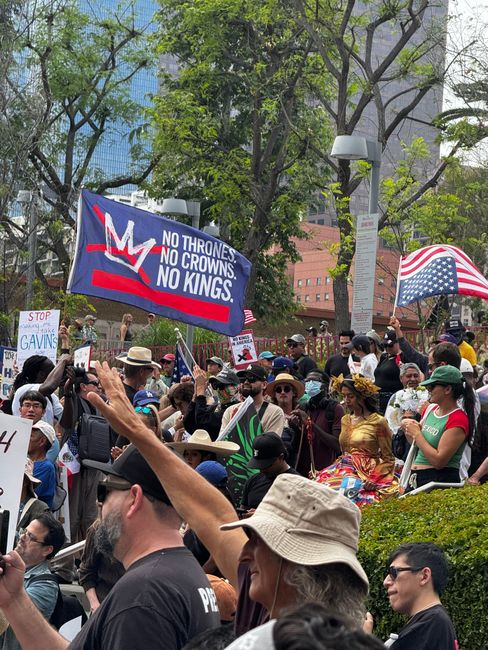
Los Angeles Protests, Curfew, Mass Arrests, Unrest Spreads: Trump-Newsom Feud Intensifies Amidst Crisis
The streets of Los Angeles became a battleground as widespread protests, initially sparked by the murder of George Floyd, escalated into nights of unrest, necessitating the imposition of a strict curfew and leading to mass arrests. This volatile situation quickly drew the attention of federal and state leadership, igniting a bitter feud between President Donald Trump and California Governor Gavin Newsom. The unfolding crisis in one of America’s largest cities mirrored a growing national tension, characterized by escalating demonstrations against police brutality and systemic racism, often met with forceful law enforcement responses. The spread of unrest beyond initial flashpoints in downtown LA to other neighborhoods underscored the depth of public anger and frustration, creating a complex and challenging landscape for city and state officials attempting to restore order while addressing the underlying grievances.
The catalyst for the Los Angeles protests was the horrific videotaped killing of George Floyd by a Minneapolis police officer on May 25, 2020. News of Floyd’s death sent shockwaves across the nation, igniting a surge of anger and demanding justice. In Los Angeles, demonstrations began peacefully, with thousands gathering in public spaces to voice their condemnation of police brutality and demand accountability for Floyd’s death and the long history of racial injustice against Black Americans. However, as days turned into nights, the atmosphere shifted. Looting and vandalism began to occur in several areas, particularly along Melrose Avenue and in the Miracle Mile district, known for their retail establishments. Businesses were damaged, and goods were stolen, transforming the nature of the protests for some observers and creating a narrative of chaos that would soon be amplified by political leaders.
The escalating unrest compelled Los Angeles Mayor Eric Garcetti to implement a citywide curfew, initially set to begin at 8:30 PM on Saturday, May 30th. This measure, designed to deter further looting and violence and allow law enforcement to regain control, proved to be a controversial one. The curfew was extended and enforced with increasing severity in the following nights. Law enforcement agencies, including the LAPD and the Sheriff’s Department, were deployed in significant numbers, often in riot gear. The enforcement of the curfew resulted in widespread mass arrests. Reports indicated thousands of individuals were taken into custody across the city over the weekend, with charges ranging from curfew violations to looting and resisting arrest. The sheer volume of arrests raised concerns about due process and the tactics employed by law enforcement, with many arrestees claiming they were detained without committing any offenses beyond being on the streets after curfew.
The unrest in Los Angeles was not an isolated incident. Similar scenes of protest and sometimes destructive behavior unfolded in cities across California and the United States. This nationwide phenomenon created a sense of a larger societal breakdown, which President Trump was quick to capitalize on. Trump adopted a hardline stance, frequently calling for a strong, militarized response to quell the protests. He condemned the "thugs" and "anarchists" he claimed were hijacking peaceful demonstrations and repeatedly threatened to deploy federal troops to cities experiencing significant unrest, including Los Angeles, if local authorities were perceived as failing to restore order. His rhetoric often blamed progressive politicians and governors for the perceived chaos, framing the protests as a failure of liberal governance.
This approach immediately put President Trump at odds with California Governor Gavin Newsom. Newsom, a Democrat, advocated for a more nuanced approach, acknowledging the legitimacy of the protestors’ grievances while also condemning the violence and destruction. He criticized Trump’s calls for federal intervention, arguing that it would only escalate tensions and further inflame the situation. The Governor emphasized the importance of de-escalation, dialogue, and addressing the root causes of the unrest, including systemic racism and police misconduct. The Trump-Newsom feud became a prominent feature of the national news cycle, with each leader using the Los Angeles crisis and the broader protest movement as a platform to attack the other’s policies and leadership style.
Trump’s narrative frequently centered on law and order, portraying himself as the defender of civilization against a tide of lawlessness. He accused Newsom and other Democratic governors of being weak and unwilling to use the necessary force to restore order. Newsom, in turn, accused Trump of exacerbating the crisis with his inflammatory rhetoric and divisive policies. This political battle played out against the backdrop of a deeply divided nation, grappling with the dual crises of a public health pandemic and a widespread reckoning with racial injustice. The intensity of the protests in Los Angeles, a city with a diverse population and a history of civil unrest, made it a focal point for this national conflict.
The economic impact of the protests and the associated looting was significant for Los Angeles. Many businesses, already struggling due to COVID-19 lockdowns, suffered extensive damage, leading to closures and job losses. The Melrose Avenue area, in particular, which had been a vibrant shopping destination, bore the brunt of the destruction, with numerous storefronts shattered and inventory looted. This economic fallout added another layer of complexity to the crisis, as officials grappled with not only restoring public safety but also facilitating the recovery of affected communities and businesses. The long-term consequences for the city’s economy and its social fabric remained a serious concern.
The mass arrests in Los Angeles also sparked a wave of legal challenges and public scrutiny. Civil liberties organizations and defense attorneys raised concerns about the scale of the arrests, the conditions in detention facilities, and the potential for overcharging and wrongful convictions. Numerous videos emerged online depicting alleged instances of excessive force by law enforcement officers during protests and arrests, fueling further anger and demands for accountability within the police departments. The LAPD and Sheriff’s Department found themselves under intense pressure to justify their tactics and to address the widespread public distrust.
The Trump-Newsom feud, while largely political, had real-world implications for how the crisis in Los Angeles was managed. Trump’s threats of federal intervention often created uncertainty and anxiety for state and local officials. Newsom, while pushing back against federal overreach, also had to navigate the political realities of a president eager to project an image of decisive action. This dynamic sometimes complicated efforts to coordinate a unified response to the unrest and to develop effective strategies for de-escalation and community engagement.
As the initial wave of intense protests and unrest began to subside in Los Angeles, the long-term implications of the events remained a subject of intense debate and analysis. The demonstrations highlighted deep-seated issues of racial inequality, police brutality, and economic disparity that continue to plague American society. The forceful response by law enforcement and the mass arrests raised critical questions about the balance between public order and civil liberties. The Trump-Newsom feud served as a stark illustration of the partisan polarization that characterized the nation’s response to these complex challenges, with each side framing the events through their own ideological lenses.
The protests in Los Angeles, amplified by the national discourse and the high-profile feud between the President and the Governor, served as a microcosm of the broader societal upheaval occurring across the United States. The desire for justice, the demand for systemic change, and the tensions surrounding law enforcement response all converged in the streets of the city, leaving an indelible mark on its history and prompting ongoing discussions about the path forward for a nation grappling with its identity and its future. The spread of unrest beyond initial containment, the implementation of curfews, and the significant number of mass arrests underscored the gravity of the situation, while the political sparring added another layer of intensity to an already combustible environment. The legacy of these events would undoubtedly continue to shape policy discussions and social movements for years to come.
